By CookieGrove Editorial Desk. Last updated June 2026.
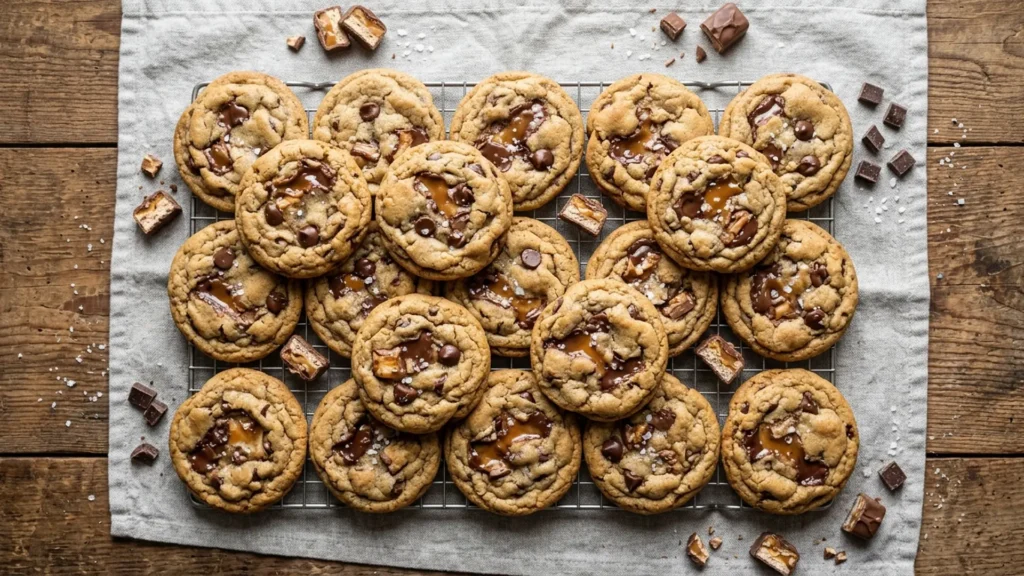
Cookies with Milky Way bars work in three ways: chopped into the dough, stuffed whole in the center, or layered into sheet-pan bars. The chopped method is the easiest and most reliable; freeze the chopped candy for 15 to 20 minutes first so the caramel does not leak, fold it in by hand, and bake at 350F for 10 to 12 minutes. Pull them while the centers still look soft, and never refrigerate the finished cookies or the caramel turns rock hard.
These cookies are a good use for a bowl of leftover Milky Ways. The candy melts into pockets of caramel, nougat, and chocolate that beat any chocolate chip. But Milky Ways fight you if you treat them like chips. The caramel leaks, welds to the pan, and hardens if you mishandle the heat. Below are the three methods, which dough holds the candy best, the freeze-and-bury trick that controls the caramel, and a troubleshooting table for the messes that happen when you wing it.
Three Ways to Get Milky Way Into a Cookie
The candy can go into a cookie three different ways, and each gives a different result. The recipe pages online usually show only one. Here is the full comparison so you can pick by effort and payoff.
| Method | How | Result | Best for |
|---|---|---|---|
| Chopped in | Chop bars, fold into dough, scoop and bake | Caramel pockets throughout, even chocolate distribution | Everyday baking, leftover candy |
| Stuffed center | Encase a whole mini bar between two dough disks | A molten caramel core, dramatic when warm | Showpiece cookies, serving fresh and gooey |
| Sheet-pan bars | Press dough in a pan, bake, press candy on top, bake again | Easy slab cut into squares, candy on top | Feeding a crowd with minimal effort |
My honest preference is the chopped method for everyday baking. It spreads the candy through every bite, bakes evenly, and does not demand the careful sealing the stuffed version needs. The stuffed cookie is a stunner when you want a molten center to pull apart at the table, but it is fussier and best eaten warm. The bar version is the lazy weeknight answer when you just want something sweet without scooping trays.
Chop the Candy Right
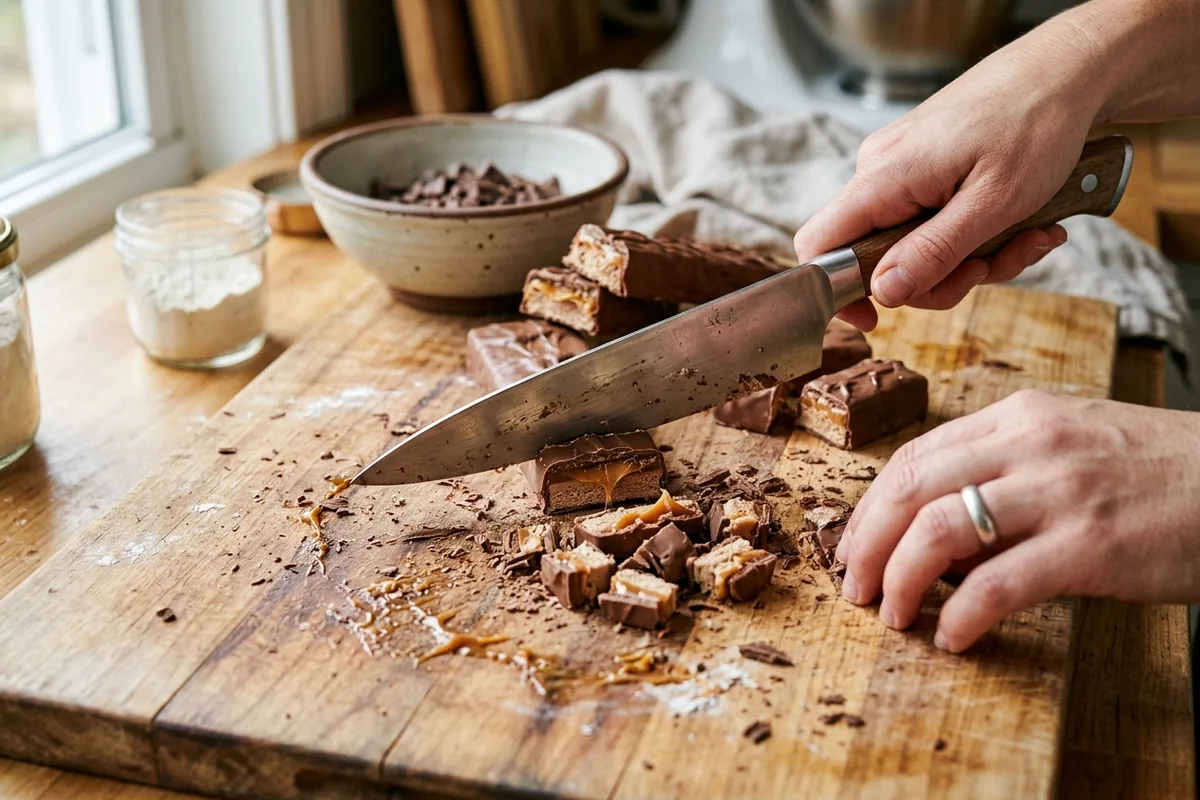
How you cut the bars matters more than people expect. Use a sharp knife and chop into even pieces, roughly half-inch chunks, so each piece carries all three layers: caramel, nougat, and chocolate. Uneven chopping separates the soft caramel from the chocolate and makes the caramel pool and leak. A clean, even chop keeps the candy intact through the bake.
For chopped-in cookies, fold the candy into the dough by hand with a spatula or wooden spoon. Do not use an electric mixer; the thick dough drags the chunks around and smears the caramel. A gentle fold keeps the pieces whole and the dough clean. Full-size bars or fun-size both work; fun-size bars are easier to chop into tidy pieces and are usually what is left in the Halloween bowl anyway.
The Freeze and Bury Trick for Caramel Control
Here is the technique that solves the number one problem with these cookies, called freeze and bury. Caramel is the troublemaker. It melts fast, runs out of the cookie, and welds to the pan into a sticky mess. Two moves fix it.
First, freeze the chopped candy for 15 to 20 minutes before folding it into the dough. Cold caramel melts slower and stays put longer, so it sets into pockets inside the cookie instead of running out the sides. Second, bury the candy. When you scoop the dough, tuck any exposed pieces toward the center and cover them with dough, keeping caramel away from the edges where it would touch the pan and leak. A few chunks peeking up on top look great, but keep the bulk buried.
And always bake on parchment paper, never a greased or bare pan. Whatever caramel does escape lands on the parchment and peels right off once cool, instead of cementing your cookies to the sheet. On a bare pan, cookies can come up with their caramel bottoms left behind. Parchment ended that problem for good.
Pick a Dough That Holds the Candy
Milky Way chunks are heavy and wet compared to chocolate chips, so the dough has to support them. A sturdier dough with more brown sugar and a bit more flour holds the candy in suspension and resists overspreading. A thin, butter-heavy dough lets the candy sink and the cookie spread into a greasy puddle around it.
Chilling the dough is doubly important here. Cold dough spreads slower, which keeps the heavy candy from sinking to the bottom and gives the cookie time to set around the caramel. Chill the scooped dough balls at least 30 minutes, or freeze them, before baking. If you want a proven chewy base to start from, the brown-sugar-forward dough behind these sourdough discard chocolate chip cookies holds add-ins beautifully, and a pumpkin-spiced dough like these pumpkin chocolate chip cookies pairs surprisingly well with caramel in the fall.
Baking, Doneness, and Why You Must Not Chill the Cookies
Bake chopped Milky Way cookies at 350F for 10 to 12 minutes, or stuffed ones at 375F for 10 to 15 minutes. Pull them when the edges are set but the centers still look slightly underbaked; they finish on the hot pan. This is the most important doneness rule for any candy cookie, because overbaking is what turns soft caramel into a hard, tooth-cracking shard.
Let the cookies cool on the pan for a few minutes so the caramel firms enough to lift them without tearing, then move them to a rack. Here is the counterintuitive part: do not refrigerate the finished cookies. Cold sets the caramel hard. Store them at room temperature so the caramel stays soft and chewy. If you want that warm, gooey, stretchy caramel experience, a few seconds in the microwave revives day-old cookies. The recipe team at America’s Test Kitchen covers caramel behavior in baking in depth if you want the science, and Bon Appetit has good notes on folding heavy mix-ins into cookie dough.
Troubleshooting Cookies With Milky Way Bars
Read the mess, find the cause, fix it next batch.
| Problem | Likely cause | The fix |
|---|---|---|
| Caramel leaked and welded to the pan | Candy near the edges, bare pan | Bury candy in the center, always use parchment, freeze chopped candy first |
| Caramel turned hard and brittle | Overbaked or refrigerated | Pull when centers look soft; store at room temperature, never the fridge |
| Candy sank to the bottom | Dough too soft or warm | Chill dough 30 min; use a sturdier brown-sugar dough |
| Cookies spread too thin | Butter too warm, dough not chilled | Chill scooped dough; raise oven 15F to set edges faster |
| Stuffed candy burst out the side | Edges not sealed | Crimp the two dough disks fully around the candy before baking |
One extra tip for the stuffed version: completely encase the bar. Flatten two equal disks of dough, set a mini Milky Way on one, top with the other, and pinch the edges all the way around so no candy shows. Any gap is where the molten caramel escapes. Seal it like a tiny dumpling and the center stays a gooey surprise.
The Stuffed Method, Step by Step
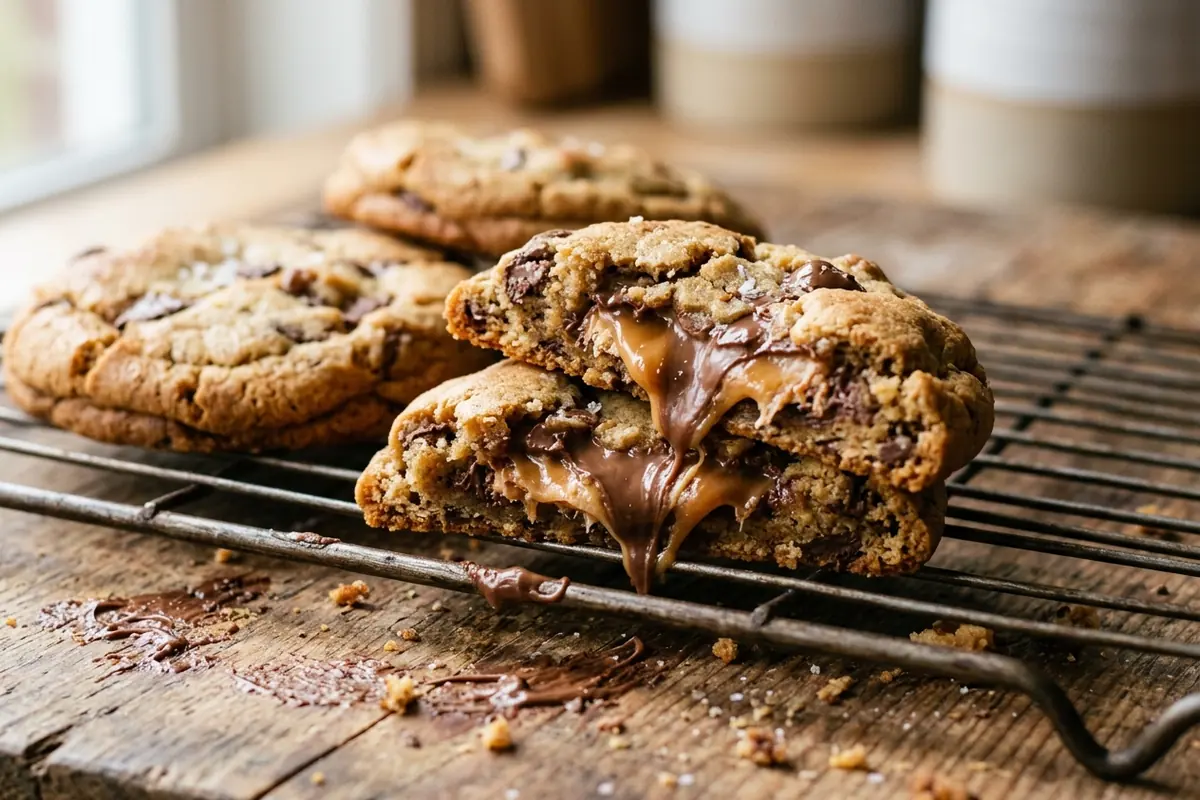
If you want the molten-center showpiece, the stuffed cookie is worth the extra few minutes. Start with a sturdy chocolate chip dough and chill it so it is easy to handle. Scoop two equal portions, about a tablespoon each, and flatten both into disks in your palm. Set a fun-size or mini Milky Way in the center of one disk, lay the second disk on top, and pinch the edges together all the way around. Then roll the whole thing gently into a ball so the seam disappears and the candy is fully sealed inside.
The seal is everything. Any gap, any thin spot, and the caramel finds it and escapes during the bake, leaving you with a hollow cookie and a puddle on the pan. Take the extra few seconds to crimp and smooth. Bake at 375F for 10 to 15 minutes until light golden, and rotate the sheet halfway through for even color. Serve these warm, within twenty minutes of baking, when the center is still molten and stretches when you pull the cookie apart. That pull is the whole point of a stuffed cookie, and it does not last once they fully cool.
One useful trick: freeze the mini bars solid before stuffing. A frozen bar takes longer to melt, which buys the dough time to set around it before the caramel goes fully liquid, so the candy stays put in the center instead of sinking or bursting. It is the same freeze-and-bury logic applied to whole bars.
A Halloween Leftover Story
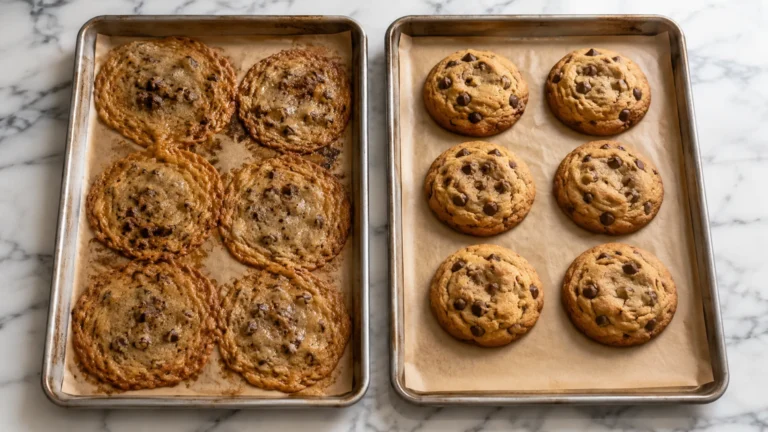
A common mistake is tossing chopped bars into a thin, buttery dough, skipping the chill, and baking them on a bare, greased pan. The result is a sheet of merged, flat cookies cemented to the pan by hardened caramel, many of them missing their bottoms once pried up. It was a mess.
Every rule in this guide came from fixing that one disaster. Sturdier dough so they did not merge. Chilling so the candy did not sink. Freezing the chopped candy and burying it so the caramel stayed inside. Parchment so nothing welded to the pan. And pulling them soft, never refrigerating, so the caramel stayed chewy. The candy is rarely the problem; the technique is.
Make-Ahead and Storage
These freeze well, which makes them a smart make-ahead for the holidays. Scoop the dough with the candy already folded in, freeze the balls solid on a tray, then bag them. Bake straight from frozen, adding a minute or two, and the freezing even helps keep the caramel from running. Baked cookies also freeze for up to 3 months; thaw at room temperature and warm briefly to revive the caramel.
At room temperature in an airtight container, the cookies keep about 3 days with the caramel staying soft. The reduced-sugar approach in these low sugar oatmeal cookies shows how a firmer dough stores well, which is useful when you are loading a dough with heavy candy. And the buttery, structured approach behind these chessman cookies is a reminder that a sturdy base dough is what lets any add-in shine without the cookie falling apart.
Variations and Other Candy Bars
The same methods work with almost any chocolate-caramel bar, so do not stop at Milky Way. Snickers add peanuts and crunch, Twix bring a cookie layer, Caramel and Three Musketeers behave much like Milky Way. A handful of flaky sea salt on top of any caramel cookie is a small move that makes the sweetness pop. You can also brown the butter in your base dough for a nutty depth that flatters caramel.
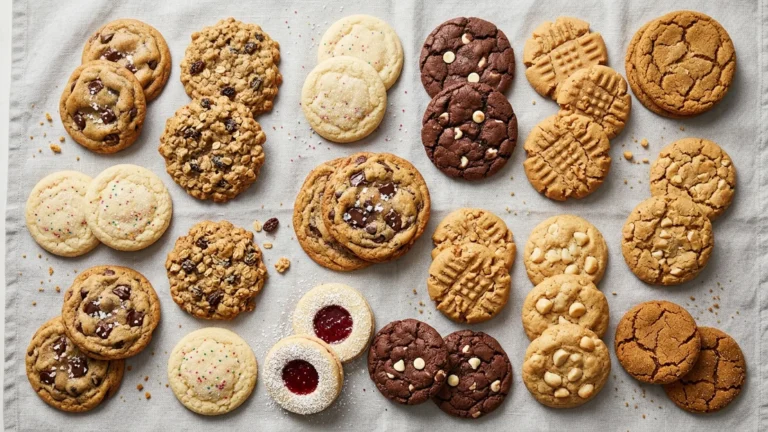
For a holiday cookie tin, mix a few candy-bar cookies in with classics for variety, or sandwich a thin caramel cookie with a chocolate one. You can also press an extra chunk of candy onto each dough ball right before baking so a glossy pocket of caramel shows on top, which makes the cookies look as good as they taste. Drizzling a little melted chocolate over the cooled cookies is another easy upgrade for a gift box.
If you bake for someone avoiding wheat, the methods translate to a gluten-free dough too; the caramel does not care what flour it sits in, and the gluten-free desserts hub at RecipesBend has sturdy base doughs that hold heavy add-ins. Just remember a gluten-free dough can be softer, so chill it a little longer so the heavy candy does not sink. Whatever bar you choose, the freeze-and-bury rule and the no-fridge rule still apply, and a pinch of flaky salt makes the caramel taste even better.
Why This Matters
Cookies with Milky Way bars are simple in theory and messy in practice, and the difference is a few small rules. Freeze the chopped candy, bury it away from the edges, bake on parchment, pull the cookies while soft, and keep them at room temperature so the caramel stays chewy. Choose the method that fits your day: chopped for everyday, stuffed for a showpiece, bars for a crowd. Get the caramel under control and a bowl of leftover candy becomes the best cookie on the tray.
FAQ
How do you keep the caramel from leaking out of Milky Way cookies?
Freeze the chopped candy for 15 to 20 minutes before folding it into the dough, bury the pieces toward the center away from the edges, and bake on parchment paper. Cold caramel melts slower and stays in the cookie, and parchment lets any escaped caramel peel right off.
What temperature do you bake Milky Way cookies at?
Bake chopped-in Milky Way cookies at 350F for 10 to 12 minutes. Stuffed cookies bake at 375F for 10 to 15 minutes. In both cases, pull them when the edges are set but the centers still look slightly underbaked, so the caramel stays soft.
Why is the caramel in my cookies hard?
You either overbaked the cookies or refrigerated them. Both set the caramel hard. Pull cookies while the centers look soft, store them at room temperature instead of the fridge, and warm a day-old cookie for a few seconds to bring back the gooey caramel.
Should I chop the Milky Way bars or stuff them whole?
Chopped is easier and spreads caramel through every bite, which is best for everyday baking. Stuffing a whole mini bar gives a dramatic molten center but takes more care to seal. Both work; choose based on whether you want even pockets or one gooey core.
What kind of dough works best for candy bar cookies?
A sturdier dough with more brown sugar and a bit more flour holds the heavy candy without overspreading. Chill the dough at least 30 minutes so the candy does not sink and the cookie sets around the caramel.
Can I use other candy bars instead of Milky Way?
Yes. Snickers, Twix, Caramel, and Three Musketeers all work with the same methods. The freeze-and-bury and no-refrigerator rules apply to any chocolate-caramel bar. A sprinkle of flaky salt on top complements all of them.
How long do Milky Way cookies stay fresh?
Stored airtight at room temperature, they keep about 3 days and the caramel stays chewy. You can freeze the baked cookies up to 3 months or freeze the dough balls and bake from frozen, adding a minute or two.