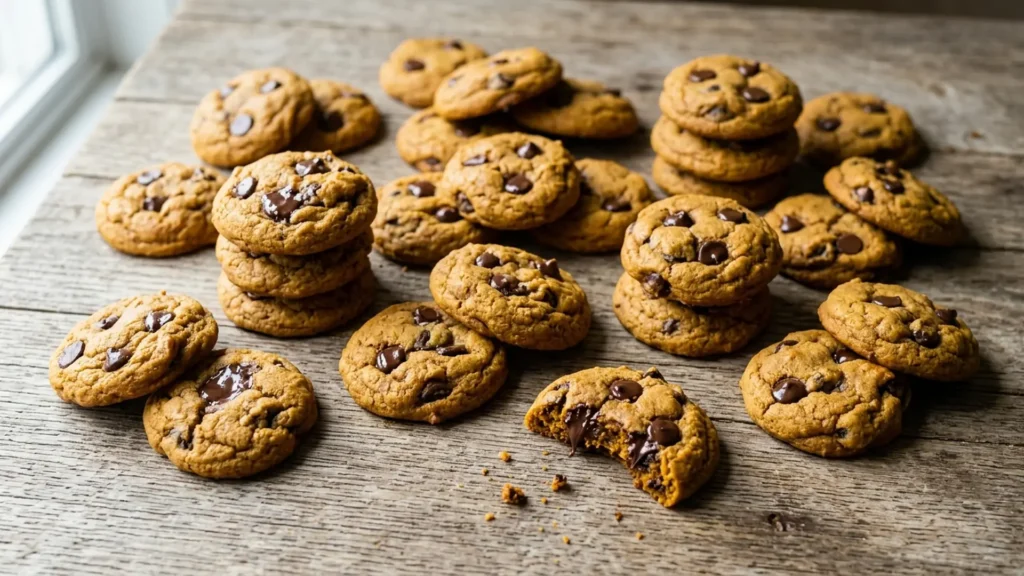
Pumpkin chocolate chip cookies have a reputation problem, and it is entirely about texture: most recipes turn out soft, fluffy, and cakey instead of the chewy, fudgy cookie people actually want. The culprit is the pumpkin itself. Canned pumpkin puree is roughly 90 percent water, so every spoonful you add floods the dough with moisture that makes the cookie rise and set like a little muffin top rather than spread into a chewy disk. The good news is that this is a solvable problem, and once you understand where the water comes from and how to counter it, you can bake a pumpkin chocolate chip cookie with crisp edges, a chewy fudgy center, and pools of melted chocolate that holds its own against any classic chip cookie. This guide lays out which moisture-control tricks matter, in what order, so you never have to settle for a cakey batch again.
Why Pumpkin Makes Cookies Cakey
To fix the problem you have to understand it. A chewy cookie depends on a specific balance: enough fat and sugar to keep things tender and spreadable, and just enough flour and structure to hold the shape. Pumpkin puree wrecks that balance by dumping a large amount of water into the dough. That water does two things, both bad for chewiness. It hydrates the flour and develops more structure, and it turns to steam in the oven, puffing the cookie up from the inside like a cake.
The result is the familiar fluffy, domed, slightly bready pumpkin cookie. It is not undercooked or wrong, it is just cakey, because the dough behaved more like a quick bread batter than a cookie dough. Every technique that follows exists to remove water, replace water with fat, or limit the air and structure that water encourages. Get those three levers right and the same pumpkin flavor lands in a chewy cookie instead of a cakey one. The whole craft of a good pumpkin cookie is moisture management.
Blot the Pumpkin to Concentrate It
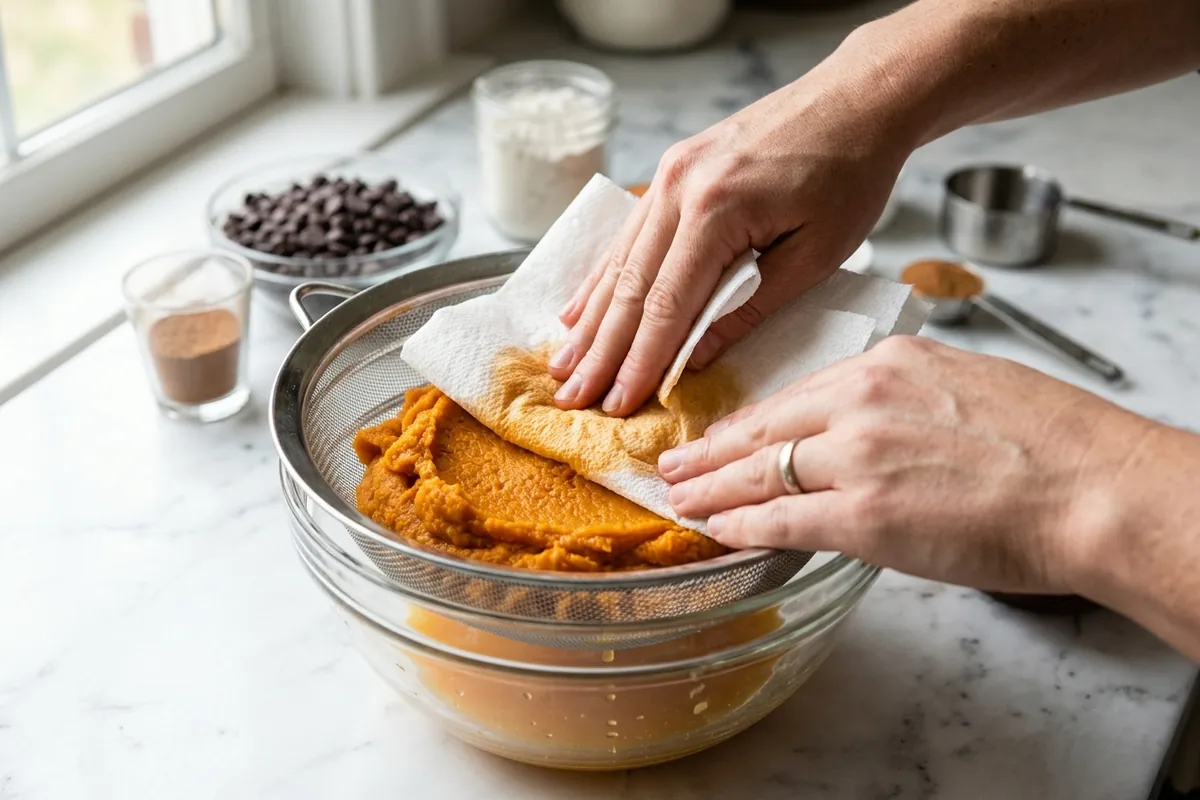
The most direct fix is to remove water from the pumpkin before it ever touches the dough. Spread your measured pumpkin puree across a plate in a thin layer, press a folded paper towel onto the surface, and let it pull up moisture. Peel the towel away, refold to a dry side, and repeat two or three times. You will watch a third of a cup of puree shrink to about a quarter cup of thick, concentrated pumpkin. That removed liquid is exactly the water that would have made your cookies cakey.
Blotting does more than cut moisture; it concentrates flavor too, so the cookie tastes more of pumpkin, not less, even though you are using less volume. Do not skip this step thinking a small amount of pumpkin is harmless. Even a quarter cup of un-blotted puree carries enough water to tip a batch toward cakey. If you have time, you can also gently cook the puree in a skillet to drive off water, which deepens the flavor further, but the paper-towel method is faster and works well enough for most batches.
Use Less Pumpkin Than You Think
People assume a pumpkin cookie needs a lot of pumpkin, and that instinct is the second cause of cakey results. The best chewy recipes use a surprisingly small amount, often just a quarter cup of puree for a full batch, sometimes a single heaping scoop. That is enough to deliver clear pumpkin flavor and color without flooding the dough. More pumpkin means more water means more cake.
This is the trade most home bakers get wrong: they double the pumpkin chasing more flavor and end up with a fluffier, blander cookie. Flavor comes from concentration and spice, not volume. Pair a small amount of blotted pumpkin with a generous, well-balanced spice blend and the cookie tastes intensely of fall while staying chewy. If you want a richer pumpkin presence, lean on the blotting and the spices rather than adding more wet puree. For another cookie where the fat source rather than added liquid drives the texture, compare the cream-based crumb of the whipped cream cookie.
Skip the Egg White, Keep the Yolk
Eggs are mostly water too, and the white is the watery part while the yolk is the rich, fatty part. A whole egg adds both flavor-boosting fat and texture-wrecking water. The simplest pro move for chewy pumpkin cookies is to use only the egg yolk and discard or save the white. You keep the binding and richness the yolk provides while cutting out a meaningful chunk of liquid, roughly a third of the egg’s water content.
The yolk also brings emulsifiers that help the fat and moisture combine into a smooth, tender dough, which improves the final texture beyond just the water savings. Some chewy recipes drop the egg entirely and rely on the pumpkin and melted butter for binding, but a single yolk is the reliable middle path: enough structure to hold the cookie together, not so much water that it puffs. If a recipe calls for a whole egg and your cookies keep coming out cakey, switching to a yolk alone is one of the highest-impact changes you can make.
Melted or Brown Butter Beats Creamed Butter
How you treat the butter decides how much air goes into the dough and how much water stays in it. Creaming softened butter with sugar whips in air, which lifts the cookie and pushes it toward cakey. Using melted butter instead skips that aeration entirely, so the cookie stays dense and chewy. Melted butter also coats the flour in fat more thoroughly, limiting gluten development and keeping the crumb tender.
Browning the butter takes this a step further. When you melt butter and cook it until the milk solids turn golden and nutty, you also drive off about 15 percent of its water as steam. That lost water directly offsets the moisture the pumpkin adds, which is why so many of the best chewy pumpkin cookie recipes insist on brown butter. The bonus is flavor: the toasty, butterscotch notes of brown butter are a natural match for warm pumpkin spice. Cool the brown butter for 15 to 20 minutes before mixing so it does not cook the egg yolk, then proceed as normal. For more techniques that trade water for fat to build chewiness, the team keeps a running list of cookie tips and lore.
Dial Back the Leavening and the Bake Time
Leavening is the last hidden source of puff. Pumpkin cookie recipes often carry a full teaspoon of baking soda or powder, which on top of all that steam from the pumpkin inflates the cookie like a cupcake. Chewy versions cut the leavening way down, often to a quarter teaspoon each of baking soda and baking powder, just enough to lift the cookie slightly without turning it into cake. If your cookies dome and stay tall, too much leavening is a likely cause.
Bake time matters just as much. Pull the cookies while the edges are set but the centers still look soft and slightly underbaked, usually around 9 to 11 minutes at 350 degrees Fahrenheit. They finish cooking from residual heat as they cool on the pan, and that carryover is what gives you a chewy, fudgy center. Bake until the centers look fully done and you will have driven off too much moisture and set the structure too firmly, which reads as dry and, ironically, cakey. Let them cool on the sheet a good 20 minutes before moving, since a warm pumpkin cookie is fragile.
A Reliable Chewy Recipe Framework
Blot 1/3 cup pumpkin puree down to a scant 1/4 cup. Brown 1/2 cup butter and cool it. Whisk together about 1 1/2 cups flour, 1 1/2 teaspoons pumpkin pie spice, 1 teaspoon cinnamon, 1/4 teaspoon baking soda, 1/4 teaspoon baking powder, and 1 teaspoon salt. Stir the cooled brown butter with 1 cup brown sugar and 1/2 cup granulated sugar until moistened, then mix in 1 egg yolk, the blotted pumpkin, and 1 teaspoon vanilla. Fold in the dry ingredients, then about 6 ounces of chopped dark chocolate.
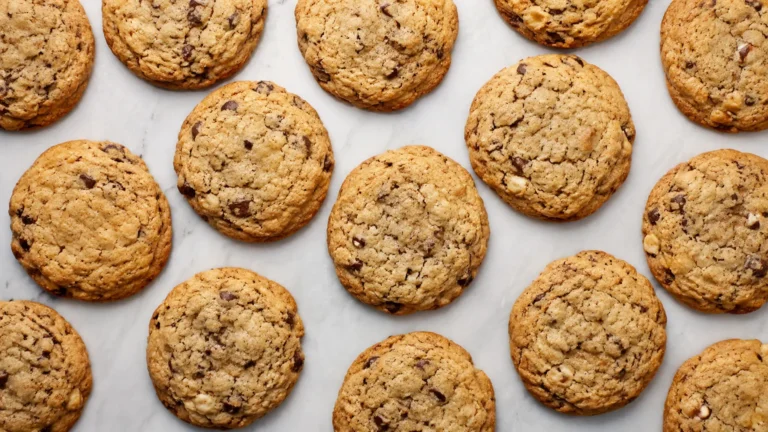
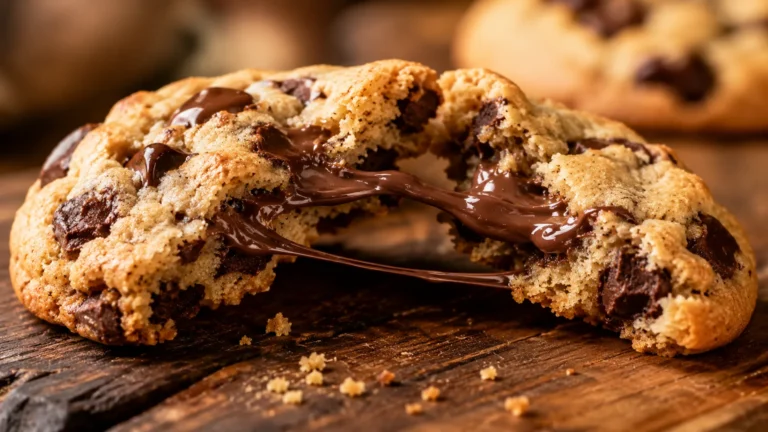
Scoop into large 3-tablespoon portions spaced 3 inches apart. Bake at 350 degrees Fahrenheit for about 10 minutes, until the edges are set and the centers still look gooey. Finish with flaky salt and cool on the pan 20 minutes. Brown sugar over white pulls the cookie chewy because it holds moisture and adds a faint molasses note that flatters the spice. The large scoop size matters too: a bigger cookie keeps a soft center while the edges crisp, which is exactly the chewy-fudgy contrast you are after.
Spices, Chocolate, and Finishing Touches
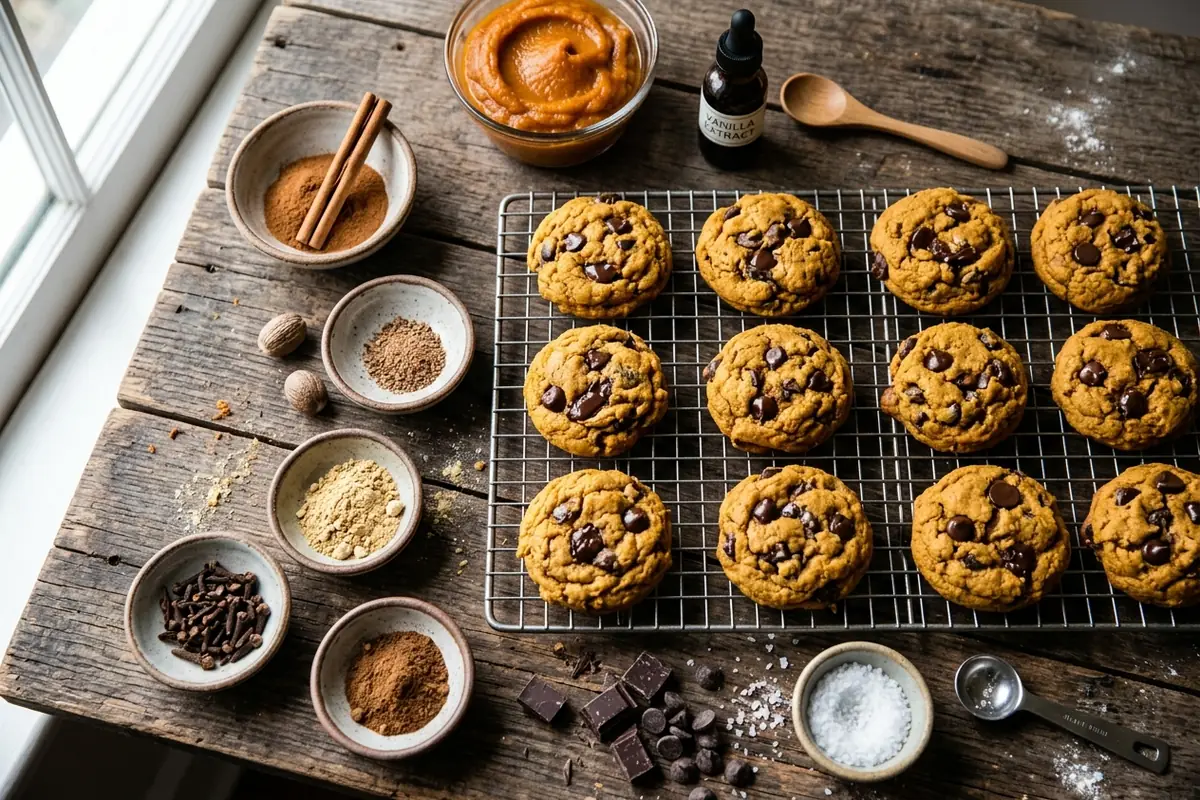
Spice is where you build the pumpkin personality, especially since you are using little puree. Pumpkin pie spice is a blend of cinnamon, ginger, clove, allspice, and nutmeg; a good homemade ratio is three parts cinnamon, two parts ginger, and one part each of allspice, nutmeg, and clove. Extra straight cinnamon on top of the blend deepens the warm note. Be generous, because the spices carry the flavor that a small amount of pumpkin cannot.
For chocolate, chopped dark chocolate at 60 to 70 percent cacao melts into glossy pools and balances the sweetness better than milk chocolate chips. The slight bitterness plays against the warm spice. Press a few extra chocolate pieces onto the tops of the dough balls before baking for the bakery look. A sprinkle of flaky sea salt after baking sharpens both the chocolate and the spice and keeps the cookie from tasting flat or one-note. Chopped toasted pecans are an optional add-in that echoes the brown butter beautifully.
Measure Flour Accurately to Avoid the Cakey Trap
One overlooked cause of cakey, puffy cookies has nothing to do with pumpkin at all: too much flour. When you scoop a measuring cup directly through the flour bag, you pack in far more than the recipe intends, sometimes 20 to 30 percent extra. That surplus flour soaks up the available moisture, stiffens the dough, and stops the cookie from spreading, so it bakes up tall and bready instead of chewy and flat. If your cookies barely spread and stay domed even after you blot the pumpkin and use a yolk, excess flour is the likely reason.
The reliable fix is a kitchen scale. Weigh the flour to about 190 grams for one and a half cups and you remove the guesswork entirely. If you only have cups, use the spoon-and-level method: stir the flour to loosen it, spoon it lightly into the cup without tapping, and sweep the top flat with a straight edge. Never pack it down. Accurate flour also makes your recipe repeatable, so once you nail a chewy batch you can hit it again every time instead of wondering why one batch spread and the next did not. Combined with the moisture-control steps, correct flour measurement is what separates a consistently chewy cookie from a hit-or-miss one.
Make-Ahead and Scaling the Recipe
This dough is forgiving to make ahead, which matters during a busy fall baking season. You can mix the dough, scoop it, and refrigerate the balls for up to two days before baking, which actually deepens the spice flavor as it rests. Bring the dough balls to a cool room temperature for a few minutes before baking so they spread properly, or bake straight from cold for a slightly thicker cookie. The recipe also doubles cleanly if you are baking for a crowd, just keep blotting the pumpkin in proportion so the extra moisture does not creep back in.
If you halve the recipe, the single egg yolk can be tricky to split; in that case use the whole small yolk and pull back the pumpkin by a tablespoon to keep the moisture balance. Scaling is mostly about holding the ratios steady, and the one ratio you must never relax is the moisture one. Every doubling of pumpkin, egg, and liquid has to be matched by the same blotting and brown-butter discipline that made the original batch chewy.
Storing Pumpkin Chocolate Chip Cookies
These cookies keep well thanks to the moisture pumpkin provides, staying soft for four to five days in an airtight container at room temperature. Because they retain moisture, store them in a single layer or between parchment so they do not stick together. They also freeze well, both baked and as dough. Freeze baked cookies in a sealed bag for up to three months and thaw at room temperature.
For bake-ahead convenience, scoop the dough into balls, freeze them solid on a tray, then bag them and bake straight from frozen, adding two to four minutes to the time. One caution: do not leave these cookies out uncovered, because the higher moisture content makes them more prone to drying on the surface than a plain chip cookie. Sealed storage keeps the chewy texture you worked so hard to build, and it is worth the small effort after dialing in every moisture-control step.
Frequently Asked Questions
Why are my pumpkin chocolate chip cookies cakey?
Canned pumpkin is about 90 percent water, and that moisture hydrates the flour and turns to steam in the oven, puffing the cookie like a cake. Too much leavening and creamed butter add even more air. To fix it, blot the pumpkin, use less of it, switch to an egg yolk and melted or brown butter, and cut the leavening down.
How do I blot pumpkin puree?
Spread the measured puree thin on a plate, press a folded paper towel onto the surface to absorb water, then peel it off and repeat with a dry side two or three times. A third of a cup of puree reduces to about a quarter cup of thick, concentrated pumpkin. This removes the water that causes cakiness and concentrates the flavor.
How much pumpkin should I use?
Less than you would expect, often just a quarter cup of blotted puree for a full batch. More pumpkin means more water and a fluffier, blander cookie. Build pumpkin flavor through concentration and a generous spice blend rather than by adding more wet puree.
Should I use a whole egg or just the yolk?
Just the yolk for a chewy cookie. The egg white is mostly water, which works against chewiness, while the yolk adds fat, binding, and emulsifiers that keep the dough tender. Dropping the white removes a meaningful amount of liquid and is one of the highest-impact changes for fixing cakey cookies.
Do I have to brown the butter?
It is not strictly required, but it helps a lot. Browning drives off about 15 percent of the butter’s water, which offsets the moisture from the pumpkin, and it adds nutty, toffee flavor that suits pumpkin spice. At minimum use melted rather than creamed butter to avoid whipping in air that makes the cookie puff.
How long do they stay fresh?
Stored airtight at room temperature, they stay soft four to five days, longer than many cookies because of the pumpkin’s moisture. Keep them sealed so the surface does not dry out. Baked cookies and scooped dough both freeze for up to three months; bake dough straight from frozen with a couple of extra minutes.
Pumpkin chocolate chip cookies do not have to be cakey. The entire fix is moisture management: blot the pumpkin, use a small amount, keep only the yolk, reach for brown butter, and ease off the leavening and the bake time. Do those things and you get a chewy, spiced, chocolate-studded cookie worth baking all autumn. For the science of how water, fat, and leavening shape cookie texture, America’s Test Kitchen keeps a deep technical library at America’s Test Kitchen, and Bon Appetit covers brown butter and chewy cookie methods at Bon Appetit.