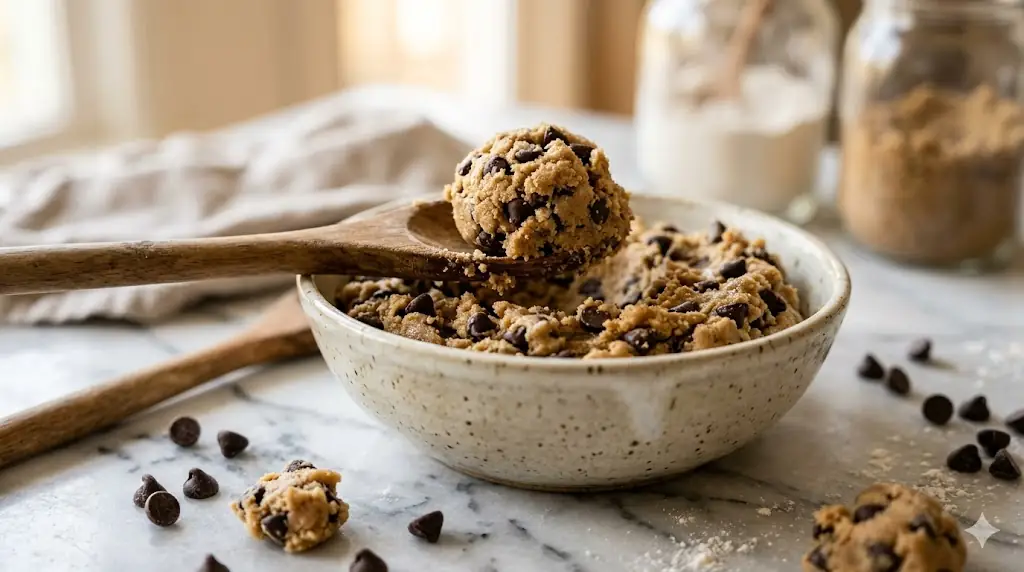
Cookie dough is the part of baking where most cookies are won or lost. By the time a tray goes into the oven, the spread, the chew, and the crumb are mostly decided. A handful of dough habits separates a flat, greasy disappointment from a bakery-style cookie with crisp edges and a soft center. This guide walks through what cookie dough actually is, how long it keeps in the fridge and freezer, whether it is safe to eat raw, and how to read the dough so you can fix problems before they bake in. None of this is a single recipe. It is the dough knowledge that makes every recipe behave.
The science here stays practical and the numbers specific, because vague advice like “chill until firm” is exactly what leaves bakers guessing. Where temperatures and times matter, they are given. Where a step is about safety, this guide says so plainly and points to the food-safety authorities.
What Cookie Dough Actually Is
Cookie dough is a fat-rich, low-moisture mixture, and that single fact explains most of its behavior. Where bread dough is built on water and gluten, cookie dough is built on butter (or another fat), sugar, flour, eggs, and a leavener. The ratio of those five things decides whether a cookie spreads thin and crisp or stays thick and cakey. When you understand what each ingredient is doing, troubleshooting stops feeling like guesswork.
Butter does three jobs at once. When you cream it with sugar, the sugar crystals cut tiny air pockets into the fat, which gives lift. The water in butter (around 16 to 18 percent) turns to steam in the oven and puffs the cookie. And as butter melts, the dough loosens and spreads. That is why dough temperature matters so much: warm butter spreads early and fast, while cold butter holds its shape longer and gives a thicker cookie.
Sugar is not just sweetness. Granulated sugar promotes spread and crisp edges; brown sugar, because it holds more moisture and is slightly acidic, gives a softer, chewier cookie with more color. Flour and its gluten provide structure, while eggs bind everything and add moisture and richness. The leavener (baking soda, baking powder, or both) controls rise and browning. Change any one of these and the dough changes character, which is the whole reason the troubleshooting later in this guide works.
Is It Safe to Eat Raw Cookie Dough?
This is one of the most common questions, and the honest answer is no, not the ordinary kind. Standard homemade cookie dough is not safe to eat raw, and the reason has nothing to do with squeamishness. There are two separate hazards in the bowl: raw eggs and raw flour.
Most people already know raw eggs can carry Salmonella. Fewer people know that raw flour is the bigger surprise risk. Flour is a raw agricultural product. It is milled from grain that was grown in fields, and it is not treated to kill bacteria before it reaches your pantry. The U.S. Centers for Disease Control and Prevention has tied multiple outbreaks of E. coli to raw flour in cookie dough and cake batter. Grinding and bleaching do not make flour safe to eat; only heat does. That means a “no-egg” dough is still not safe if it contains untreated flour.
The good news is that you can make dough that is genuinely safe to eat raw. The fix is two steps: leave out the eggs entirely, and heat-treat the flour to kill bacteria before mixing. The South Dakota State University Extension lays out the method in its guide on how to make a safe, ready-to-eat cookie dough. The principle is to bring the flour to a high enough internal temperature, then cool it before combining it with butter, sugar, and a little milk. Edible cookie dough sold in stores follows the same logic with heat-treated flour and no raw egg.
One more safety habit worth keeping: keep raw flour and eggs away from ready-to-eat food, and wash bowls, beaters, and hands after handling dough. Children are especially drawn to the bowl, so a heat-treated edible batch is the safest way to let them join in.
How Long Cookie Dough Lasts: Fridge and Freezer
Cookie dough is a make-ahead baker’s best friend, but only if you store it at the right temperature for the right window. Leaving dough on the counter is the one habit to break: at room temperature, dough should not sit out longer than two hours, because the eggs and dairy in it are in the bacterial danger zone. Everything else is a question of cold storage.
| Storage method | Where | How long | Best for |
|---|---|---|---|
| Counter (room temp) | 68-72 F | Up to 2 hours only | Resting dough briefly before shaping |
| Refrigerator | 40 F or below | 3 to 5 days | Make-ahead, hydrating flour, flavor development |
| Freezer (raw balls) | 0 F | 2 to 3 months for best quality | Bake-on-demand single cookies |
| Freezer (log/slab) | 0 F | 2 to 3 months for best quality | Slice-and-bake and bar cookies |
In the refrigerator, most homemade doughs hold their quality for three to five days at 40 F or below, kept in an airtight container or wrapped tightly so the surface does not dry out or pick up fridge odors. The chill is not just storage; it also lets the flour fully hydrate and the flavors deepen, which is why many bakers swear a rested chocolate chip dough tastes better on day two. If you want to go longer than a few days, move to the freezer rather than pushing the fridge.
In the freezer at 0 F, raw cookie dough stays safe almost indefinitely, but quality is the limiting factor, not safety. For the best flavor and texture, use frozen dough within two to three months. After that it is still safe to bake, but it can pick up freezer odors and lose a little of its fresh-baked character. Michigan State University Extension covers the practical side of freezing cookies and dough if you want a second authoritative reference on timing and method.
How to Freeze Cookie Dough the Right Way
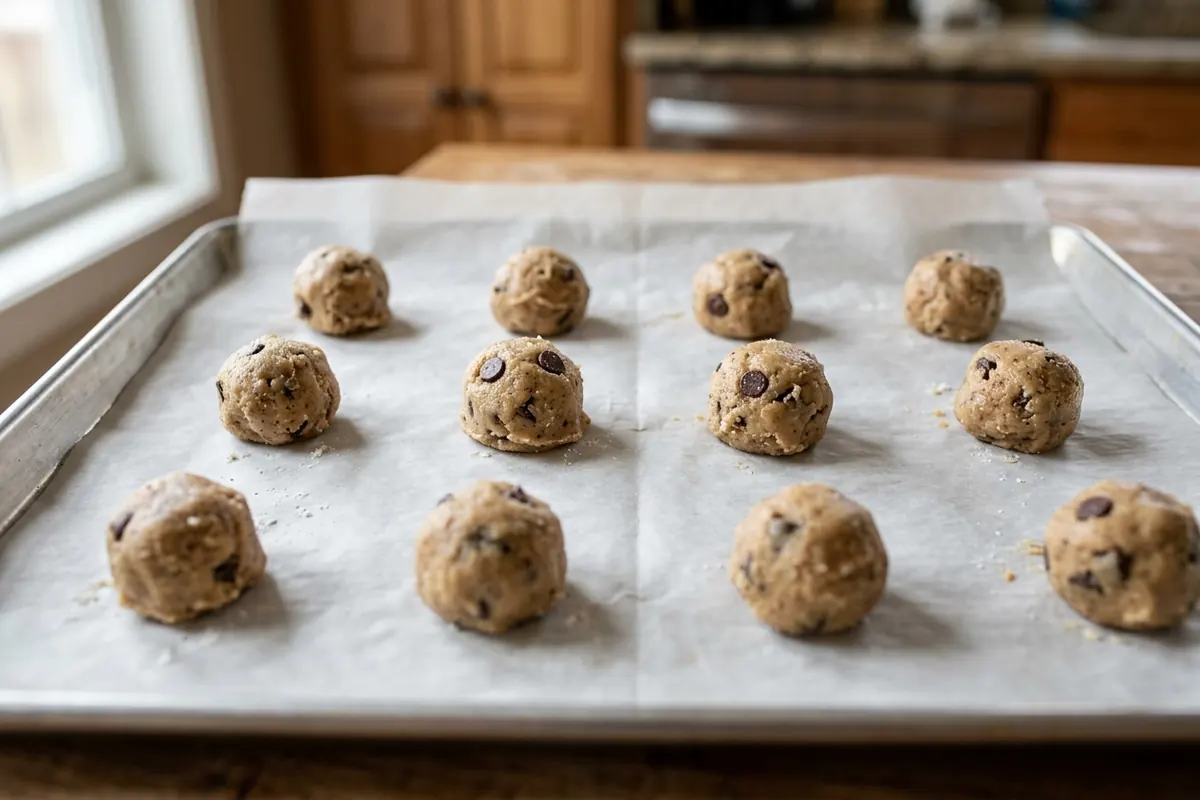
Freezing dough well is mostly about portioning before you freeze, not after. The technique that works for nearly every drop cookie is the flash-freeze: scoop the dough into balls, line a sheet pan with parchment, space the balls so they are not touching, and freeze them solid for about one hour. Once they are firm, transfer them to a labeled freezer bag or airtight container and press out the air. Because they froze individually first, they will not clump into one frozen brick, and you can bake one cookie or twelve straight from the freezer.
Slice-and-bake doughs (shortbread, sugar logs, classic icebox cookies) freeze even more easily. Shape the dough into a tight log, wrap it in parchment and then a layer of plastic or foil, and freeze. When you want cookies, slice off as many rounds as you need while the log is still semi-frozen, which gives the cleanest cut.
Always label the bag with the dough type and the date, and add the baking temperature if you bake several kinds, because frozen dough balls all start to look alike. A few simple rules keep frozen dough tasting fresh: freeze it as soon as it is mixed rather than after it has sat in the fridge for days, keep it deep in the freezer rather than in the door where the temperature swings, and double-bag strongly scented doughs so they do not trade flavors with whatever else is in there.
Which Doughs Freeze Well, and Which Do Not
Not every dough survives the freezer, and knowing the difference saves you from a disappointing bake. The deciding factor is structure. Stiff, fat-based doughs freeze beautifully because there is little free water to form damaging ice crystals. Light, foam-based batters do not, because freezing collapses the air you worked to whip in.
| Dough type | Freezes well? | Notes |
|---|---|---|
| Drop (chocolate chip, oatmeal) | Yes, excellent | Scoop into balls and freeze on a tray first |
| Slice-and-bake (shortbread, sugar log) | Yes, excellent | Wrap the log tight; slice while semi-frozen |
| Cut-out / rolled | Yes, with care | Freeze flat disks, not a ball; roll after a short thaw |
| Thumbprint and filled | Partly | Freeze the dough; add jam or filling after baking |
| Meringue and macaron batter | No | Whipped foams collapse; bake fresh |
| Very wet batters (florentine, tuile) | No | Too loose to portion or hold shape |
The reliable freezers are the everyday favorites. Drop doughs such as chocolate chip cookies and oatmeal cookies are the gold standard for freezing, and slice-and-bake doughs are nearly reliable. Cut-out doughs freeze fine if you freeze them as flat disks rather than a thick ball, so they thaw evenly enough to roll. Where people get into trouble is with delicate batters: meringues, macarons, and lacy tuiles depend on whipped air or a very loose, high-sugar batter, and neither holds up to freezing. For those, mix and bake the same day.
Baking Cookie Dough Straight From Frozen
One of the best things about frozen dough balls is that you usually do not need to thaw them. For most drop cookies, you bake from frozen at the recipe’s normal temperature and simply add one to two extra minutes, watching the edges for color rather than trusting the clock. Baking from frozen actually helps the dough hold its shape, so you often get a slightly thicker, more bakery-looking cookie than from room-temperature dough.
There are a couple of exceptions. Rolled cut-out doughs need a short thaw, just until they are pliable enough to roll without cracking, but not so warm that the butter softens and the shapes lose their crisp edges. If a recipe calls for pressing the dough flat or stamping a design, let frozen balls sit five to ten minutes so they yield to the press. And if you are baking a slice-and-bake log, slice it while it is still semi-frozen for clean rounds, then bake with the small added time. When in doubt, bake one test cookie first and adjust the time before you commit a full sheet.
Reading and Fixing Cookie Dough Before It Bakes
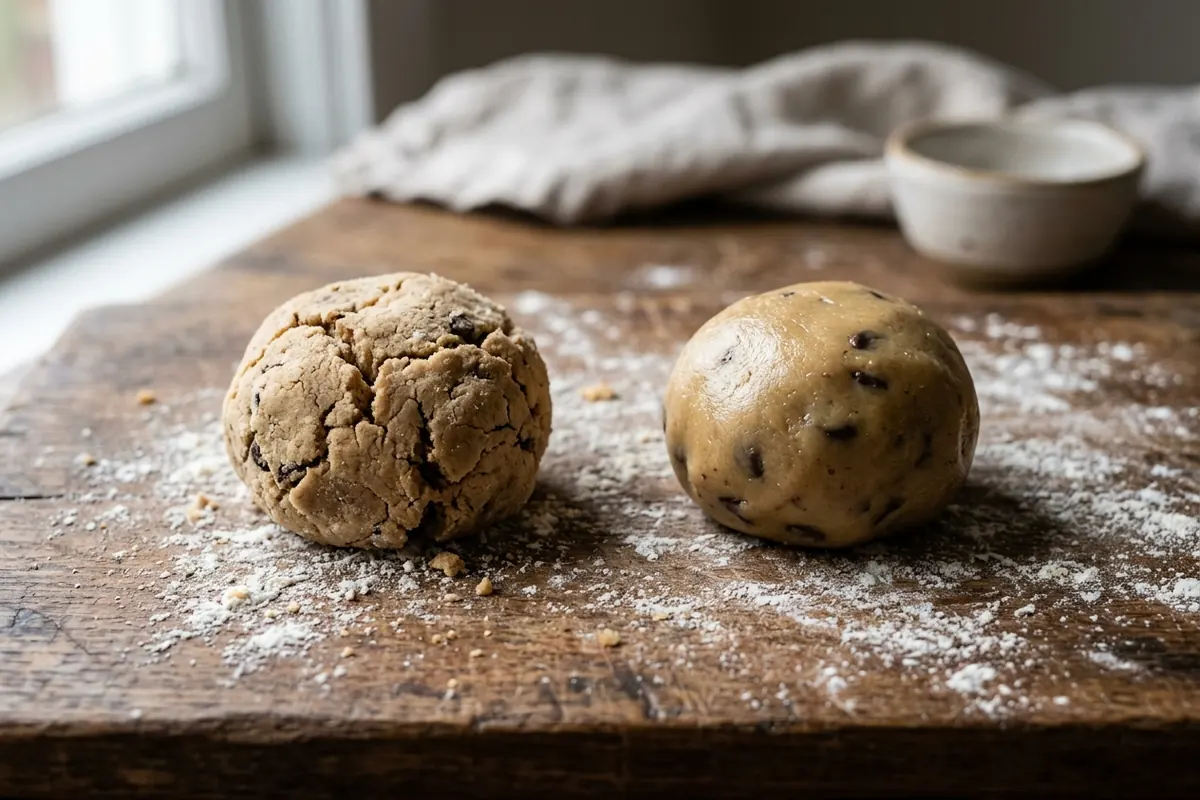
The most useful skill in cookie baking is reading the dough in the bowl and fixing it before it ever hits the oven. Almost every classic cookie failure traces back to one of a few dough conditions, and once you can name the cause you can correct it in seconds.
| Problem | Likely cause | Fix next time |
|---|---|---|
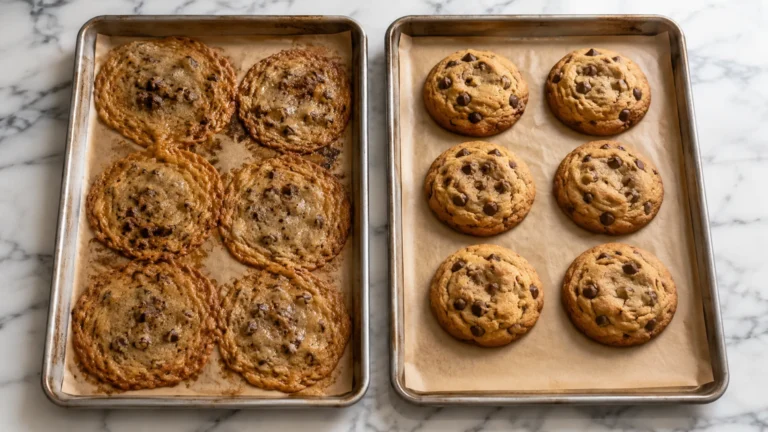
| Cookies spread flat | Butter too warm, too little flour, hot pan | Chill dough 30-60 min; measure flour by weight; cool pans |
| Cookies stay domed and pale | Too much flour, oven too hot, over-chilled | Spoon-and-level flour; check oven temp; rest dough 10 min |
| Dry, crumbly dough | Over-measured flour or low moisture | Add 1-2 tsp milk; mix just until it comes together |
| Tough, dense cookies | Overmixed after adding flour | Mix flour in on low just until no streaks remain |
| Greasy, lacy edges | Too much butter or sugar, warm dough | Chill well; verify butter and sugar amounts |
Two themes run through that whole table. The first is flour measurement. Scooping the measuring cup directly into the bag packs in far more flour than spooning it in and leveling off, and that single habit is the most common reason cookies turn out dry, tough, or stubbornly domed. If you bake often, a kitchen scale removes the guesswork entirely; weighing flour is the single biggest accuracy upgrade most home bakers can make.
The second theme is temperature and mixing. Warm dough spreads; cold dough holds. If your kitchen runs hot or your butter got too soft, a short chill is the cure for thin, greasy cookies. And once the flour goes in, mix only until the streaks disappear. Every extra turn of the mixer builds gluten, and gluten is what turns a tender cookie tough. Treat the dough gently after the flour joins the party. For dietary variations, the same physics apply with different ingredients: gluten-free dessert doughs need extra rest so the starches hydrate, and low-carb and keto baking doughs behave differently because almond and coconut flours hold moisture in their own way.
Chilling Dough: Why It Matters and How Long
Chilling is the step bakers skip when they are impatient, and it is also the step that fixes the most problems. Cold dough does three good things. It firms up the butter so the cookies spread less and bake thicker. It gives the flour time to absorb the liquid, which makes a smoother dough and a more even bake. And it lets the sugars and proteins develop deeper, more caramelized flavor. A thirty-minute chill is enough to control spread; an overnight rest of twenty-four to seventy-two hours is where the richest flavor lives, which is why so many of the best chocolate chip recipes ask you to wait a day.
There is a balance, though. Dough chilled past its window can become hard to scoop and may stay too domed and pale because the fat is too firm to spread. If your dough has been refrigerated for a couple of days, let it sit at room temperature for ten to fifteen minutes before scooping so it shapes cleanly and bakes evenly. For no-bake styles such as no-bake cookies, chilling is not about controlling spread at all; it is what sets the cookie, since there is no oven step to firm it up.
Make-Ahead Strategy: Dough on Demand
The smartest way to use everything above is to treat dough as a pantry staple rather than a same-day project. A batch of sugar cookie dough or chocolate chip dough rarely needs to be baked all at once. Scoop and flash-freeze most of it, bag it by type and date, and keep a rotating stash so fresh cookies are always twenty minutes away. This is how bakeries deliver consistent cookies all day: they portion and chill in advance, then bake to order.
A practical rhythm looks like this. Mix a double batch, bake a few right away, refrigerate enough for the next two or three days, and freeze the rest in portioned balls for the next couple of months. Label everything. With that system you get the flavor benefit of a rested dough, the convenience of bake-on-demand cookies, and zero waste, because nothing sits in the bowl long enough to go off.
Frequently Asked Questions
How long does cookie dough last in the fridge?
Most homemade cookie dough keeps three to five days in the refrigerator at 40 F or below when wrapped tightly or sealed in an airtight container. Beyond that, freeze it rather than risk spoilage. Never leave dough at room temperature for more than two hours.
Can I bake cookie dough straight from the freezer?
Yes. For most drop cookies, bake frozen dough balls at the recipe’s usual temperature and add one to two extra minutes, judging doneness by the color of the edges. Baking from frozen helps the cookies hold their shape. Only rolled cut-out doughs need a short thaw before shaping.
Why do my cookies spread too thin and flat?
The usual causes are butter that was too warm, too little flour, or a hot baking sheet. Chill the dough for 30 to 60 minutes, measure flour by weight or by the spoon-and-level method, and always start with a fully cooled pan so the dough does not begin melting before it bakes.
Is it safe to eat raw cookie dough?
Standard homemade dough is not safe to eat raw because of both raw eggs and untreated raw flour, which can carry Salmonella and E. coli. To make dough safe to eat without baking, leave out the eggs and heat-treat the flour, or buy edible cookie dough made with heat-treated flour and no raw egg.