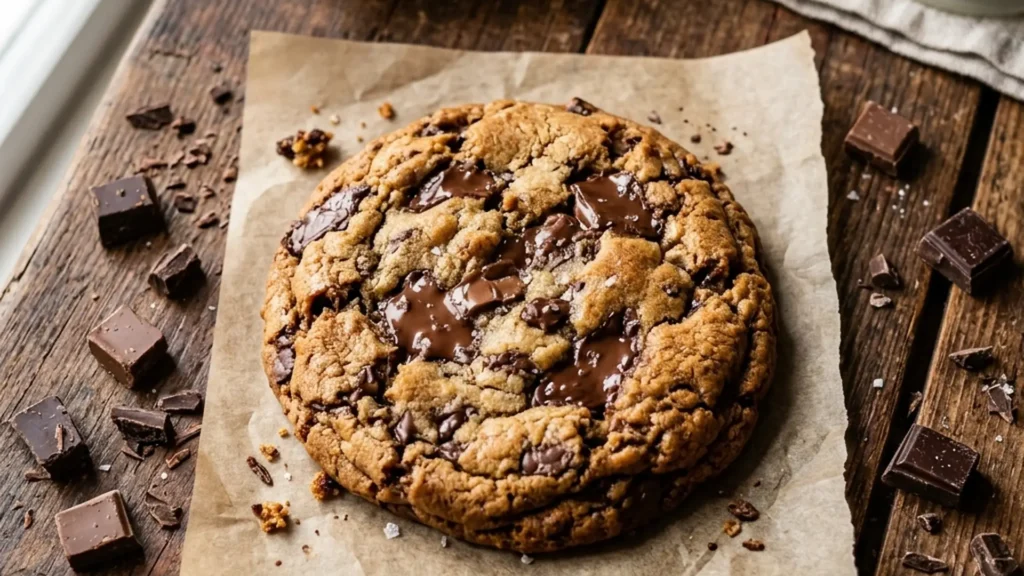
Double chunk chocolate cookie recipes promise rich, fudgy, melty results, but most home bakers end up with something closer to a dry brownie or a cakey muffin top. The fix comes down to three things almost no recipe explains together: matching your cocoa to the right leavening, blooming the cocoa so it tastes like chocolate instead of dust, and choosing a chunk strategy that gives you those glossy melted pools on top. Get those right and you get a cookie with crisp edges, a fudgy center, and chocolate in two forms in every bite.
Quick answer first. A double chunk chocolate cookie is a chocolate cookie, made with cocoa powder, that is loaded with chunks of chopped chocolate rather than chips. For a fudgy result, use plenty of brown sugar for moisture and chew, bloom Dutch-process cocoa in melted butter, pair it with baking powder, and pull the cookies at 9 to 11 minutes while the centers still look set but soft. Underbaking by a minute is the difference between fudgy and dry.
What Makes It a Double Chocolate Cookie
The double in the name means chocolate twice. Once as cocoa powder worked into the dough, which gives the cookie its dark color and deep base flavor, and again as chunks of real chopped chocolate folded through. That second form is what separates these from a plain chocolate cookie. Chunks, not chips, matter here because chopped bar chocolate melts into uneven pools and thin shards instead of holding their shape the way stabilized chips do. You want melty puddles, so reach for a chocolate bar and a knife.
The cocoa is the soul of the cookie, and it is where most recipes quietly go wrong. Cocoa powder is far drier than flour and slightly bitter, so it changes both the moisture balance and the chemistry of the dough. Treat it like flour and you get a dry, flat, faintly metallic cookie. Treat it with respect and you get something rich.
The Cocoa and Leavening Rule Nobody Spells Out
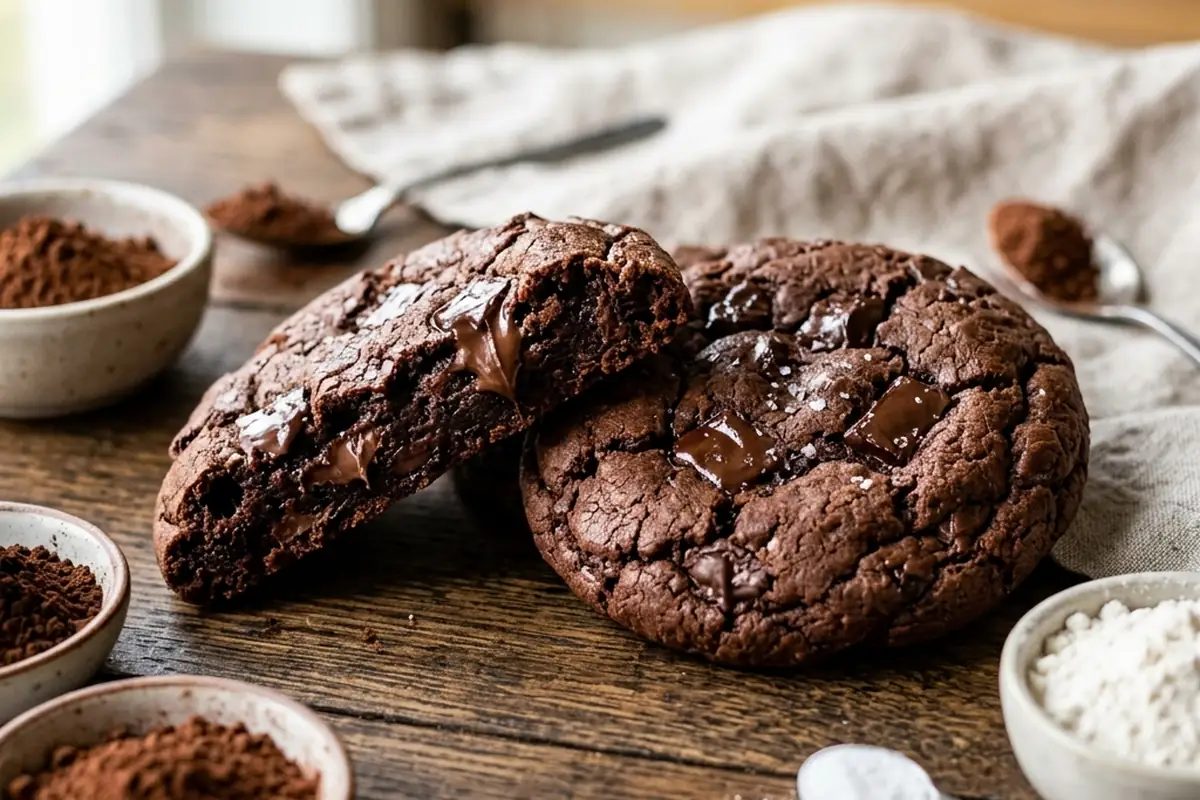
This is the most important paragraph in the article, so read it twice. There are two kinds of cocoa powder, and they are not interchangeable when it comes to leavening. Natural cocoa is acidic. Dutch-process cocoa has been treated with an alkali to neutralize that acid, which makes it darker, smoother, and less sharp.
Here is the rule. Natural cocoa, being acidic, reacts with baking soda, which is a base, so recipes built on natural cocoa lean on baking soda for lift. Dutch-process cocoa is pH-neutral and has nothing for baking soda to react with, so it needs baking powder, which carries its own acid. Use the wrong pairing and your cookies come out flat, oddly textured, or with a soapy, metallic aftertaste from unreacted soda. My go-to is Dutch-process cocoa with baking powder plus a small amount of soda for browning, which gives a darker color and a rounder, less bitter chocolate flavor. America’s Test Kitchen has run side-by-side tests on cocoa types and confirms Dutch-process delivers a deeper, smoother chocolate note in baked goods (see their cocoa testing at America’s Test Kitchen).
A Quick Decision Line
If your recipe calls for baking soda only, use natural cocoa. If it calls for baking powder, use Dutch-process. If you want to swap cocoas, adjust the leavening to match, or your cookies will not behave. This one rule fixes more failed chocolate cookies than any other tweak.
Bloom the Cocoa or It Tastes Like Dust
Cocoa powder holds its flavor in fat-soluble compounds that stay locked up if you just stir the powder into a cold dough. Blooming means dissolving the cocoa in something hot and fatty so those compounds release. The easiest way is to melt your butter, then whisk the cocoa directly into the warm butter until it forms a smooth, glossy paste before you add anything else. The difference is dramatic; bloomed cocoa tastes like chocolate, unbloomed cocoa tastes faintly like cardboard.
Blooming cocoa in melted butter is worth doing for every chocolate cookie. The cocoa releases more aroma the moment it hits the warm butter, and the baked cookies come out with a deeper chocolate flavor. It takes 30 seconds and costs nothing. If you take only one technique from this page, take this one alongside the cocoa rule above.
The Chunk Strategy for Melty Pools
A great double chunk cookie has chocolate in three textures: deep cocoa in the dough, soft melted pools, and the occasional firmer bite of a chunk that held its shape. You build that on purpose. Chop a good semisweet or dark bar (around 60 percent cocoa) into uneven pieces, roughly a quarter inch to a half inch. The small shards melt into the dough and create thin veins; the bigger chunks stay gooey in the center.
The move that makes them look bakery-perfect is reserving chocolate for the top. Fold most of the chunks into the dough, but hold back a handful. When the cookies come out of the oven, or in the last 2 minutes of baking, press a few reserved chunks onto the surface so they melt into glossy puddles right where everyone can see them. For 24 cookies, use about 8 ounces of chopped chocolate total and reserve roughly an ounce for the tops.
One detail that separates a good chunk cookie from a great one: do not chop your chocolate too evenly. When you cut a bar, you naturally get some fine shavings and dust along with the clean chunks. Keep that dust. The fine bits dissolve into the dough and spread chocolate flavor through every bite, while the larger pieces stay intact and gooey. If you use uniform, pre-cut chunks, you lose those flavor veins. A rough hand chop gives you the full range, which is exactly what you want, and it is faster than trying to make every piece the same size.
Step by Step Fudgy Double Chunk Chocolate Cookies
Melt 1 cup unsalted butter, then whisk in 1/2 cup Dutch-process cocoa until smooth and let it cool slightly. Stir in 1 cup granulated sugar and 2/3 cup packed light brown sugar; the brown sugar is doing the heavy lifting for chew and moisture, so do not cut it. Beat in 2 eggs and 1.5 teaspoons vanilla. In another bowl whisk 2.75 cups all-purpose flour, 1 teaspoon baking powder, 1/2 teaspoon baking soda, and 1 teaspoon fine salt.
Fold the dry into the wet in three additions until just combined; overmixing builds gluten and toughens the cookie. Fold in most of 8 ounces chopped chocolate, reserving a little. Chill the dough 30 minutes if it feels soft. Scoop large 2.5-tablespoon mounds, space them 2 inches apart, and bake at 350F for 9 to 11 minutes until the edges are set but the centers still look soft and slightly underdone. Press reserved chunks on top, let them rest on the hot sheet 5 minutes, and resist eating one until it sets, which is genuinely hard.
The Ingredients That Actually Change the Cookie
Some choices matter and some are noise. Butter is the foundation, and melted butter (rather than creamed softened butter) is what gives these cookies their dense, fudgy chew. Creaming whips air into the dough and pushes it toward cakey, which is the opposite of what you want here. Melt it, bloom your cocoa in it, and you are already most of the way to fudgy.
Sugar is a texture tool, not just sweetness. The brown sugar holds moisture and gives chew because it is hygroscopic, pulling water from the air and into the cookie. The granulated sugar promotes spread and crisp edges. A ratio of roughly 60 percent granulated to 40 percent brown gives crisp edges with a soft middle. Push it toward more brown sugar for a chewier, softer cookie; push toward granulated for thinner, crispier ones.
The chocolate itself is worth spending on. A cheap baking bar with low cocoa content and a lot of stabilizers will not pool the way a good 60 to 70 percent bar does. A couple of bars of decent semisweet and dark chocolate are worth keeping on hand specifically for chopping into cookies. Eggs bind and add structure; for a slightly fudgier result you can use one whole egg plus two yolks instead of two whole eggs, since the extra fat from the yolks deepens the chew.
Controlling Thickness and Spread
Thickness is something you control, not something that happens to you. If your cookies spread too thin and flat, the dough was warm, the butter was too soft after melting, or there is too little flour. Chill the dough for 30 to 60 minutes and bake on a cool sheet. Cold dough holds its shape and gives you tall, thick cookies with gooey centers. A hot baking sheet melts the fat before the cookie can set, so let your sheets cool between batches.
If your cookies stay in stubborn tall mounds and never spread, your dough is too dry or too cold, or you packed in too much flour and cocoa. Flatten the dough balls slightly before baking, or add a tablespoon of milk to loosen the dough. The flattening trick at the end of baking, gently pressing a measuring cup onto each warm cookie, also helps you dial in a denser, chewier texture and a more even, bakery-style shape. It suits nearly every batch because it makes the cookies look intentional.
Troubleshooting Double Chunk Chocolate Cookies
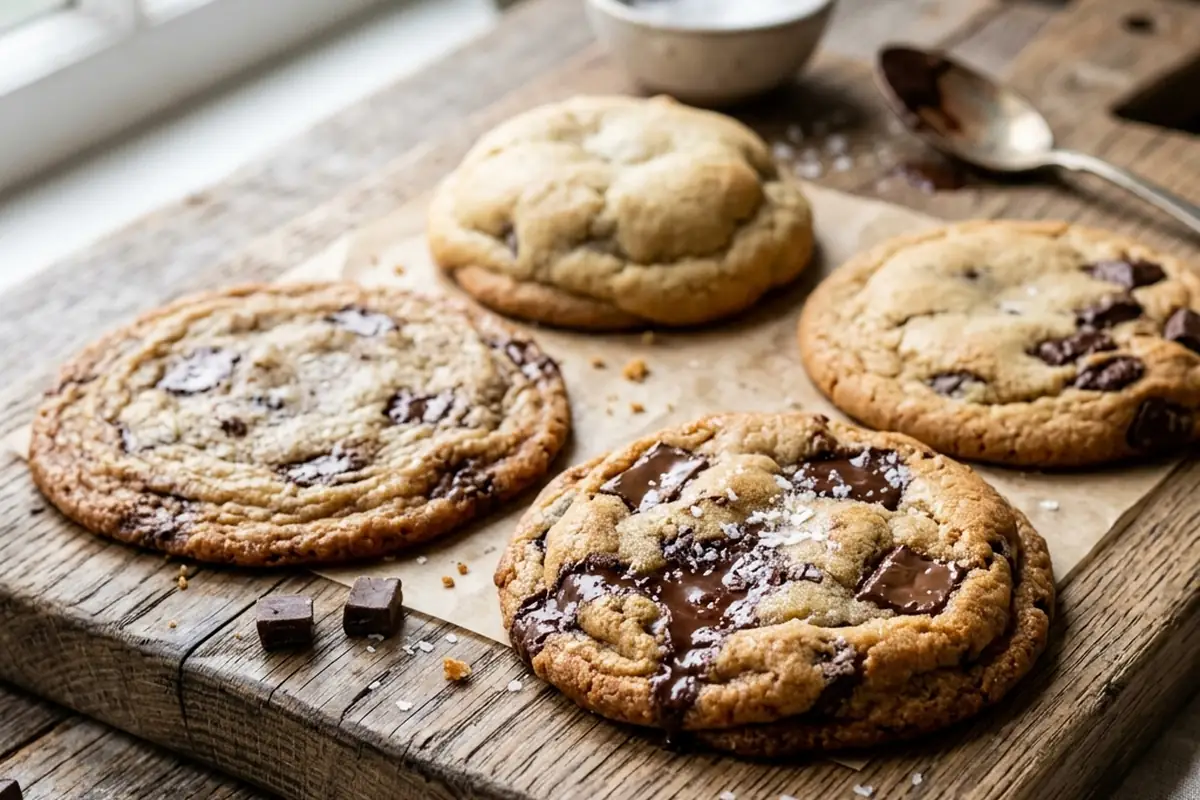
When these go wrong, it is almost always one of a handful of causes. Here is how to read your cookie.
Cakey instead of fudgy. Too much flour, too much cocoa, or too much baking powder. Cocoa is drying, so an over-floured dough plus cocoa reads as a brownie that forgot how to be a cookie. Spoon and level your flour, and do not exceed the leavening in the recipe.
Dry and crumbly. Overbaked, or the cocoa was not bloomed. These cookies finish baking on the hot sheet, so pull them while the centers look underdone. Blooming the cocoa also helps it hold moisture in the dough.
No chew at all. Not enough brown sugar. Brown sugar holds moisture and gives the signature chew; if you swapped it all for granulated, the cookie turns crisp and snappy rather than fudgy.
Bitter or metallic aftertaste. Either too much Dutch cocoa without enough sugar and salt to balance it, or the wrong cocoa-leavening pairing leaving unreacted baking soda. Add a pinch more salt, check your cocoa-and-leavening match, and taste the dough before baking.
No melty pools. You used chips instead of chopped bar chocolate. Chips are formulated to hold their shape and resist melting. Chop a real bar and reserve some for the tops.
Scaling Up and High-Altitude Notes
To double the batch, double everything except the leavening and salt, which you should increase by about 1.75 times rather than the full 2, since they scale a little non-linearly in big doughs. Fold the chunks in by hand so the mixer does not pulverize them into the dough. Bake in batches rather than crowding the oven, which steams the cookies and keeps them from setting properly.
Above roughly 3,000 feet, the thinner air makes leavening expand faster and moisture evaporate quicker, so chocolate cookies can spread and dry out. Reduce the baking powder slightly, add 1 to 2 tablespoons of flour for structure, and raise the oven to 360 to 365F so the cookies set before they over-spread. Bon Appetit has a clear primer on how altitude shifts baking that is worth bookmarking if you bake in the mountains (Bon Appetit).
Dairy-Free and Storage
For a dairy-free double chunk cookie, use a plant butter with at least 79 percent fat and dairy-free dark chocolate for both the cocoa-dough flavor and the chunks. Plant butter holds a little less water, so add a tablespoon of plant milk to keep the dough from going dry. The texture stays close to the original, fudgy and rich.
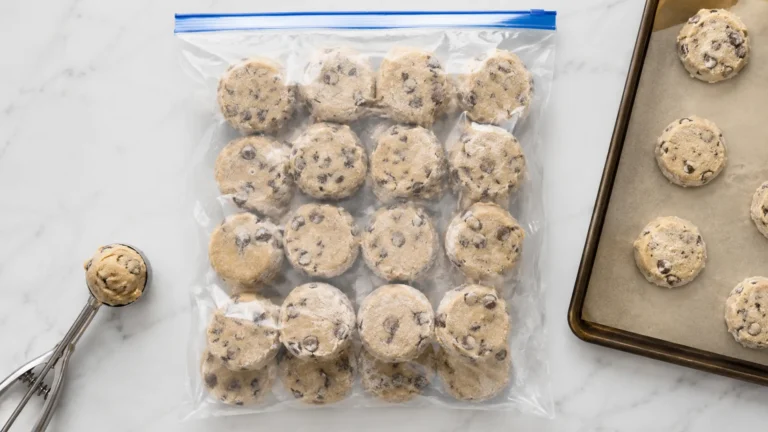
Baked cookies keep 4 to 5 days in an airtight container at room temperature; a slice of bread tucked in keeps them soft and chewy. They freeze well baked for up to 3 months. As with most cookies, freezing raw scooped dough balls works best; bake from frozen with an extra 1 to 2 minutes for fresh cookies on demand. If your brown sugar has hardened into a brick before you start, the fast fixes in the guide on how to soften brown sugar will get it scoopable again, and brown sugar really is doing the fudgy work here.
Variations Worth Trying
The base takes well to additions. For a mocha version, dissolve 1 teaspoon instant espresso powder into the warm cocoa-butter mixture; coffee amplifies chocolate without tasting like coffee. For double chocolate with a salty edge, finish each cookie with flaky sea salt right out of the oven. If you want a nutty crunch against the fudge, fold in 1/2 cup toasted chopped pecans or hazelnuts, scaling back the chocolate a touch so the dough still holds. For a peanut-chocolate spin, swap a third of the chunks for peanut butter chips, an idea that leans on the same flavor logic as these peanut butter chocolate bars. And if you like a chewy oat texture under your chocolate, the structure tricks in these peanut butter snickerdoodles translate over for a heartier cookie.
Frequently Asked Questions
What is the difference between double chocolate chunk and regular chocolate chip cookies?
Double chocolate means the dough itself is chocolate, made with cocoa powder, and then loaded with chocolate chunks on top of that. A regular chocolate chip cookie has a plain vanilla dough with chips mixed in. The double version is darker, richer, and more intensely chocolatey.
Should I use Dutch-process or natural cocoa?
It depends on your leavening. Dutch-process is smoother and darker and needs baking powder; natural cocoa is sharper and acidic and reacts with baking soda. Match the cocoa to the leavening in your recipe, or the cookies turn out flat or metallic. Dutch-process with baking powder gives a rounder flavor.
Why are my double chocolate cookies cakey?
Usually too much flour or cocoa, or too much baking powder. Cocoa is very dry, so an over-measured dough bakes up like cake. Spoon and level your flour, keep the leavening to the recipe amount, and use enough brown sugar for moisture.
Can I use chocolate chips instead of chunks?
You can, but you lose the melty pools that define these cookies. Chips are made to hold their shape and resist melting. Chopping a real chocolate bar gives you both gooey puddles and firmer bites, which is the whole point of a chunk cookie.
Why do I bloom the cocoa?
Blooming dissolves cocoa’s fat-soluble flavor compounds in hot butter so the cookie tastes like real chocolate instead of dry cocoa dust. Whisk the cocoa into your melted butter until glossy before adding the sugars. It takes 30 seconds and makes a big flavor difference.
How do I keep them fudgy and soft?
Underbake slightly, pulling them while the centers still look soft, use plenty of brown sugar, and store them airtight with a slice of bread. Overbaking is the number one cause of dry chocolate cookies, so trust the underdone look and let them finish on the hot sheet.
Bottom Line
A great double chunk chocolate cookie is built on three decisions made before you ever turn on the oven: the right cocoa for your leavening, cocoa bloomed in warm butter, and chopped bar chocolate with some held back for the top. Add enough brown sugar for chew, pull the cookies a minute early, and you land in fudgy territory every time. Skip those steps and you get the dry, cakey version that disappoints. Now you know exactly which levers to pull, so the fudgy one is yours.