Almond meal chocolate chip cookies behave nothing like the flour cookies most of us grew up baking, and that single fact is why so many batches come out greasy, flat, or crumbling apart on the cooling rack. This style of baked cookie follows its own set of rules, and the dough rarely behaves the same way twice. Almond meal has no gluten, holds far more fat, and browns faster than wheat flour, so the timing, the scoop size, and even the way you rest the dough all shift. Once you understand what the ground almonds are actually doing inside the oven, you can turn out a cookie with crisp lacy edges and a soft, almost fudgy middle that rivals any classic chip cookie. This guide walks through every step, from picking the right grind to fixing the three failures that send most home bakers back to all-purpose flour.
Almond Meal Versus Almond Flour: They Are Not the Same
The single most common reason a batch fails is using the wrong product, because the bag rarely makes the difference obvious. Almond meal is ground from whole almonds with the skins left on, so it is coarser, darker, and flecked with brown. Almond flour is ground from blanched almonds with the skins removed, then sifted to a fine, pale powder. Both work in chocolate chip cookies, but they bake differently. Almond meal gives you more texture, a slightly nuttier flavor, and edges that crisp a touch faster thanks to the skins. Almond flour produces a softer, more uniform crumb and a paler cookie.
For a cookie you can interchange them, but you should expect almond meal to spread a hair more and to look rustic and speckled rather than smooth. If a recipe was written for fine almond flour and you swap in coarse meal cup for cup, the dough will feel wetter because coarse grinds pack less densely. Almond meal weighs about 96 grams per cup, so adjust by a tablespoon or two rather than trusting volume alone. When you want the best of both worlds, do what the better recipes quietly recommend and blend the two: three parts almond meal to one part fine flour gives you texture plus enough fine particles to hold the cookie together.
Why These Cookies Spread, Slump, and Turn Greasy
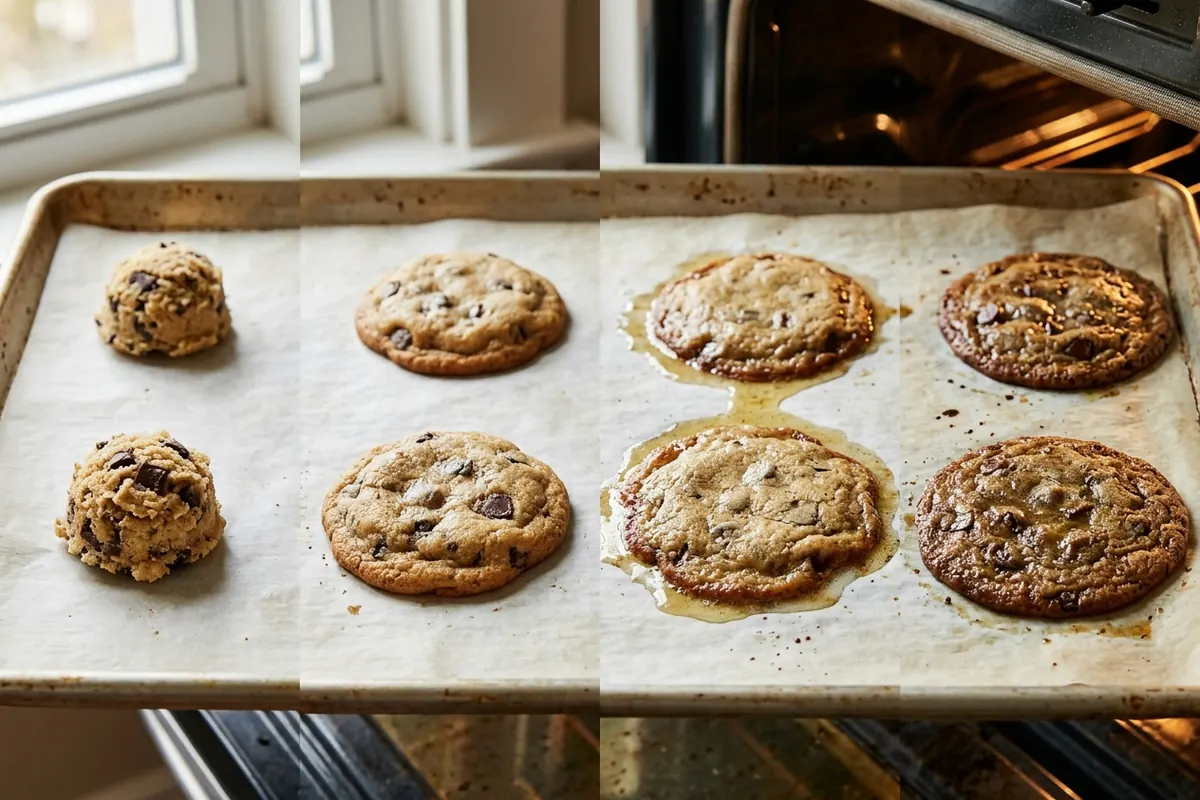
Ground almonds are roughly half fat by weight. That is wonderful for flavor and tenderness, but it means an almond meal dough carries far more oil than a wheat dough before you ever add butter. When that fat warms up, it melts and the cookie loses its shape fast. This is the root cause behind the two most common complaints: cookies that spread into one giant sheet, and cookies that leave a slick of grease on the parchment.
The fix is temperature control at three points. First, chill the dough until it is firm and cold, never room temperature when it hits the pan. Second, do not over-grease or over-oil the recipe; almond meal already supplies fat, so a leaner butter or coconut oil amount than a wheat recipe is usually right. Third, bake hot and fast, 350 to 375 degrees Fahrenheit, so the edges set before the whole cookie can liquefy. If your cookies still pool, your dough was too warm or your fat ratio was too high. A cookie that spreads thin and crisps all the way through is not ruined, by the way; it just became a different, snappier cookie.
Binding the Dough: Eggs, Aquafaba, and the Crumble Problem
With no gluten, an almond meal cookie relies entirely on its binder and its fat to hold together. Skip or shortchange the binder and you get the third classic failure: a cookie that looks perfect, then collapses into sand the moment you lift it. A standard egg-based version uses one large egg per roughly two cups of meal, and the egg proteins set during baking to lock the crumb. That set happens late, which is exactly why you must let these cookies cool fully on the pan before moving them. Lift a warm almond cookie and it falls apart; wait fifteen minutes and the same cookie holds firm.
For a vegan version, whipped aquafaba, the brine from a can of chickpeas, is the standard egg replacement. Beat it to soft, loose peaks before folding it in, because the trapped air gives the cookie lift that ground almonds cannot provide on their own. Aquafaba is finicky: under-whip it and the cookie crumbles, over-whip it and the cookie spreads. A pinch of cream of tartar stabilizes the foam if it refuses to hold. Either way, do not overmix once the wet and dry meet, because the structure you are building is fragile and stirring knocks the air right back out.
A Reliable Recipe You Can Build On
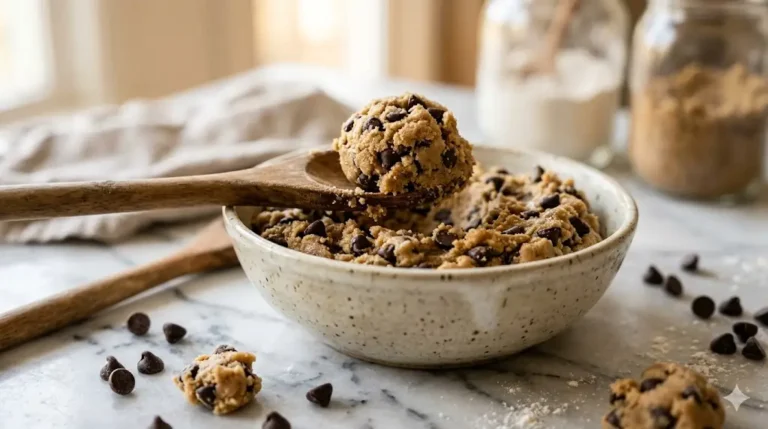
Here is the standard version. Whisk together 1 3/4 cups almond meal, 1/2 teaspoon baking soda, and 1/2 teaspoon fine salt. In a separate bowl, beat 6 tablespoons softened butter or melted-and-cooled coconut oil with 1/2 cup packed brown sugar and 1/4 cup white sugar until creamy. Add 1 large egg and 1 teaspoon vanilla, then beat smooth. Stir the dry mix into the wet just until no dry streaks remain, then fold in 3/4 cup chocolate chips. The dough will look soft and slightly oily; that is correct.
Chill the bowl for at least 45 minutes, or scoop first onto a tray and chill the portioned balls. Bake on parchment at 350 degrees Fahrenheit for 11 to 13 minutes, until the edges are golden but the centers still look underdone. Pull them early. They finish setting from residual heat as they cool. Brown sugar matters here: it holds moisture and pushes the cookie toward chewy, while white sugar promotes crisp edges, so the blend gives you both in one bite. If you want the texture comparison, the same trick of balancing fat and sugar shows up in this dairy-driven take on a soft cookie, the whipped cream cookie, where the fat source changes the whole crumb.
Chilling, Scooping, and Spacing for Even Bakes
Chilling does more than stop spread. It hydrates the almond meal, letting the ground nuts soak up moisture so the baked cookie is less likely to feel wet or oily in the center. Thirty minutes is the minimum; an hour is better, and overnight gives the deepest flavor as the sugars dissolve fully. If you are short on time, freezing the scooped balls for fifteen minutes works in a pinch.
Scoop size and spacing matter more with almond meal because these cookies spread unpredictably. Use a level 1.5-tablespoon scoop for consistency and leave a full two to three inches between portions, more than you would for a wheat cookie, because the high fat content pushes the edges out. Bake one test cookie first if you are using a new brand of meal; that single cookie tells you whether to flatten the dough slightly or leave it domed. Rotate the sheet halfway through, since the skins in almond meal brown quickly and uneven oven hot spots will scorch one side before the other catches up.
Reading Doneness and Nailing the Texture
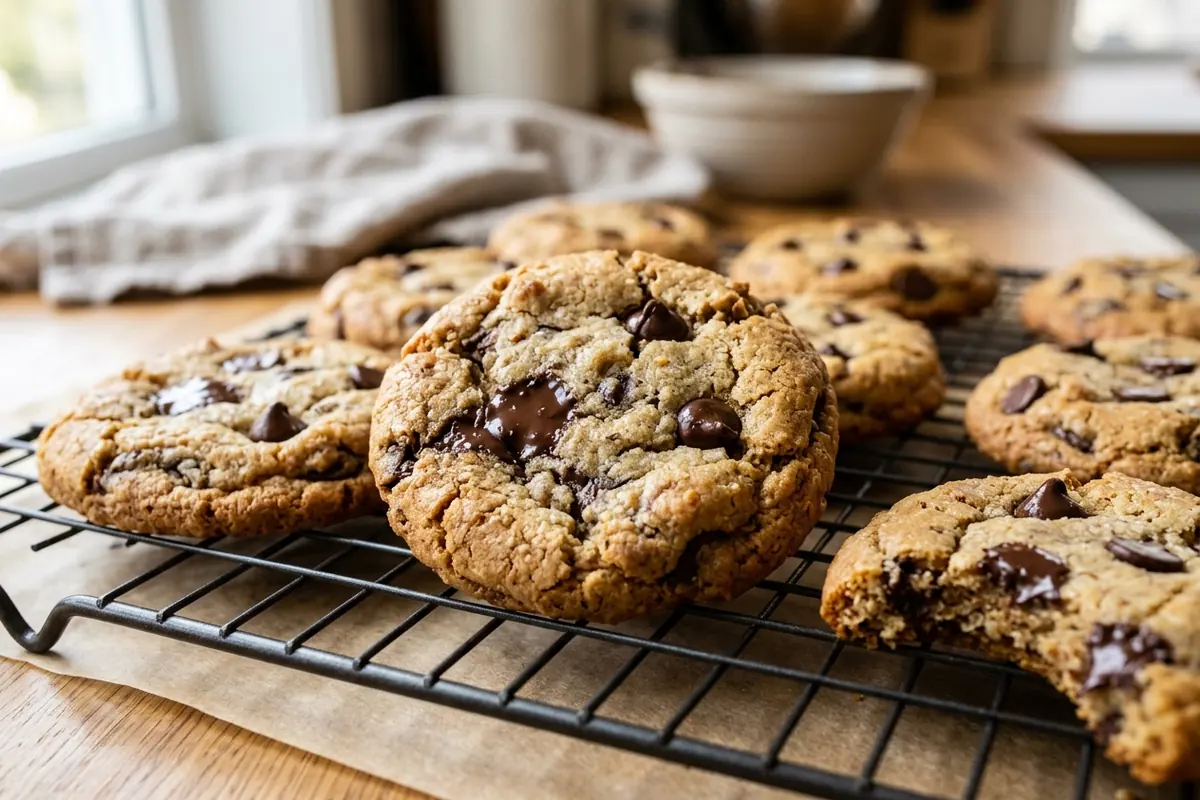
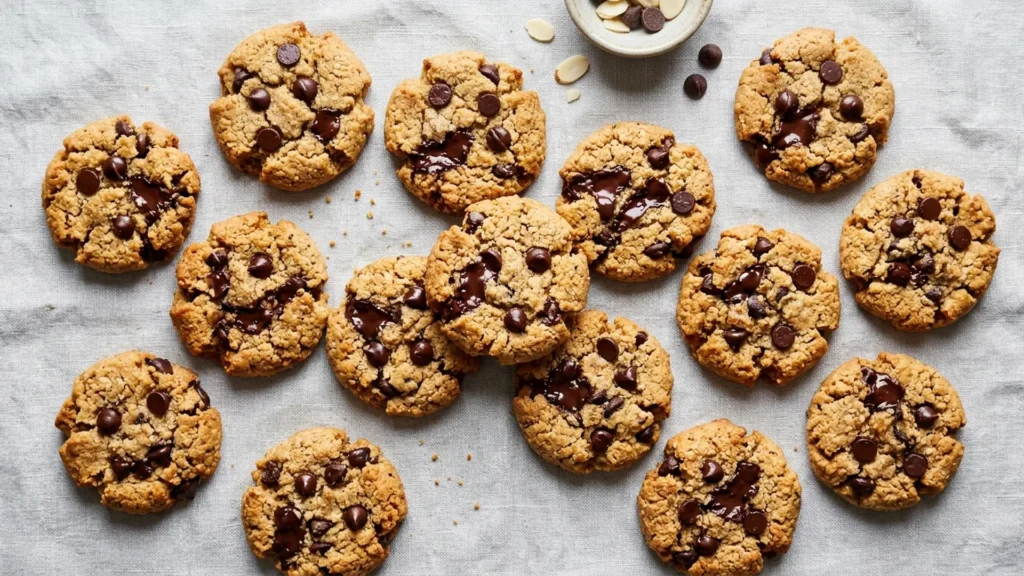
Almond meal cookies lie to you about doneness. They look pale and raw in the center when they are actually finished, and if you wait for the middle to look set the way a flour cookie does, you will overbake them into something hard and dry. Trust the edges instead. The moment the rim turns golden and the center has lost its wet shine, take the tray out. The cookie will be soft enough to dent with a fingertip, and that is exactly right.
Texture is a dial you control with three levers. More brown sugar and a shorter bake give you a chewy, soft cookie. More white sugar, a thinner scoop, and an extra minute or two give you a crisp, snappy cookie with lacy edges, which is the effect several test kitchens praise in almond meal specifically. A higher oven temperature of 375 degrees sets the edges fast for a crisp-edge, soft-center contrast. Once you know which way each lever pushes, you can repeat your favorite version on demand instead of hoping the batch turns out.
Storing Dough and Baked Cookies
Because the fat in almond meal can go rancid faster than refined flour, storage deserves real attention. Baked cookies keep three to four days in an airtight container at room temperature; tuck a slice of sandwich bread in the container to keep soft versions soft. For longer storage, freeze baked cookies in a sealed bag for up to two months and thaw at room temperature.
The dough freezes beautifully, which is the real advantage of this style. Scoop the chilled dough into balls, freeze them solid on a tray, then bag them. Bake straight from frozen, adding two to four minutes to the time, so you can have two fresh cookies on a weeknight without committing to a whole batch. If you keep a stash of almond flour or meal on hand for grain-free baking, store the bag itself in the freezer; it doubles the shelf life and your cookies will taste cleaner for it. For more ways cookie ingredients behave once they hit the kitchen, the team has cataloged plenty in this roundup of cookie tips and lore.
Flavor Variations That Actually Work
The nutty base of almond meal pairs with more than chocolate. Toast a half cup of sliced almonds in a dry skillet for two to three minutes and fold them in for crunch and a deeper roasted note. A half cup of unsweetened shredded coconut leans the cookie toward a macaroon character and adds chew. Swap a few tablespoons of the chocolate chips for chopped dark chocolate at 70 percent cacao if you want a less sweet, more grown-up cookie. A scrape of orange zest or a quarter teaspoon of almond extract amplifies the almond flavor without changing the structure.
Keep your add-ins under about a cup total so the dough still binds, and chop large pieces small since the fragile crumb cannot hold heavy chunks the way a gluten dough can. Flaky sea salt on top before baking is the one finishing touch not to skip, because the salt cuts the richness of all that almond fat and makes the chocolate taste more like chocolate. Dried cherries or chopped freeze-dried raspberries also play well against the nutty base, adding tartness that keeps a rich cookie from feeling heavy. If you go that route, keep the fruit dry rather than fresh, since extra moisture in a low-structure dough is the fastest path back to spreading and sogginess.
One last variation worth trying is browning the butter before you cream it. Almond meal already leans nutty, and brown butter pushes that flavor further into a toffee-caramel range that tastes far more complex than the effort suggests. Melt the butter, let it bubble until the milk solids turn golden and smell like hazelnuts, then cool it until it firms back up before using it in the recipe. The water you cook off changes the fat slightly, so chill the dough a few extra minutes to compensate. The result is a cookie that tastes bakery-made from pantry staples.
Measuring Almond Meal Accurately
Volume measuring is where a lot of almond meal recipes quietly go wrong, because the grind changes how the meal packs into a cup. A loosely scooped cup of coarse meal can weigh thirty percent less than a firmly packed cup of fine flour, and that gap is enough to turn a balanced dough into a wet, sloppy one or a dry, sandy one. The fix is a kitchen scale. Almond meal weighs roughly 96 grams per cup, and weighing it removes the guesswork. If you only have measuring cups, use the spoon-and-level method: spoon the meal into the cup without tapping it down, then sweep the excess off with a flat edge. Never scoop the cup directly through the bag, which compacts the meal and gives you far too much.
Brand matters too. Some grocery almond meals are coarse and damp, almost paste-like from the natural oils, while others are dry and powdery. A damp, oily meal will make a softer, faster-spreading cookie, so if your dough feels slick, hold back a tablespoon of any added fat and lean on chilling. When you switch brands, bake one test cookie before committing the whole tray. That single cookie tells you whether the new meal needs a touch more dry ingredient, a longer chill, or a slightly cooler oven, and it saves you from scrapping a dozen at once. Consistency in measuring is the difference between a recipe you can repeat and one that surprises you every time.
Frequently Asked Questions
Can I use almond meal and almond flour interchangeably in this recipe?
Yes, in chocolate chip cookies they swap well. Almond meal gives a coarser, speckled, slightly nuttier cookie that spreads a touch more, while almond flour gives a smoother, paler crumb. If a recipe is written for fine almond flour, expect the meal version to look more rustic and to need a tablespoon or two more dry ingredient if the dough feels too loose.
Why do my almond meal cookies fall apart?
Almond meal has no gluten, so the cookie holds together only through its binder and fat. The most common cause is lifting the cookies while still warm; they set as they cool, so leave them on the pan for at least fifteen minutes. A too-small egg or under-whipped aquafaba also weakens the structure, as does overmixing the dough after the wet and dry meet.
Do I have to chill almond meal cookie dough?
For best results, yes. Chilling firms the high-fat dough so it does not spread into a puddle, and it lets the ground almonds hydrate so the baked center is not greasy or wet. Thirty minutes is the minimum; an hour or overnight is better. If pressed for time, freeze the scooped balls for fifteen minutes instead.
Why are my cookies greasy on the bottom?
Ground almonds are about half fat, so adding a full wheat-recipe amount of butter or oil leaves too much fat in the dough. Cut the added fat back, chill the dough cold before baking, and bake hot enough that the edges set quickly. A little browning on the parchment is normal, but a slick pool means the dough was too warm or too rich.
How do I know when they are done if the center still looks raw?
Trust the edges, not the center. Almond meal cookies look underbaked in the middle even when finished. Pull the tray the moment the rims turn golden and the center loses its wet shine; the cookie will firm up as it cools. Waiting for the center to look fully set overbakes them into a hard, dry texture.
Can I freeze the dough?
Almond meal dough freezes very well. Scoop it into balls, freeze them solid on a tray, then transfer to a sealed bag for up to two months. Bake straight from frozen and add two to four minutes to the time. This is the easiest way to keep fresh-baked cookies on hand without baking a full batch at once.
Almond meal chocolate chip cookies reward bakers who respect what ground almonds are: fatty, gluten-free, and fast to brown. Chill the dough, watch the edges, cool them fully, and you will trade those flat greasy failures for a cookie with a crisp rim and a soft, nutty center. For deeper technique on getting cookies to set the way you want, America’s Test Kitchen breaks down the science of fat and sugar in baking at America’s Test Kitchen, and Bon Appetit keeps a strong library of chip cookie methods at Bon Appetit worth reading alongside this guide.