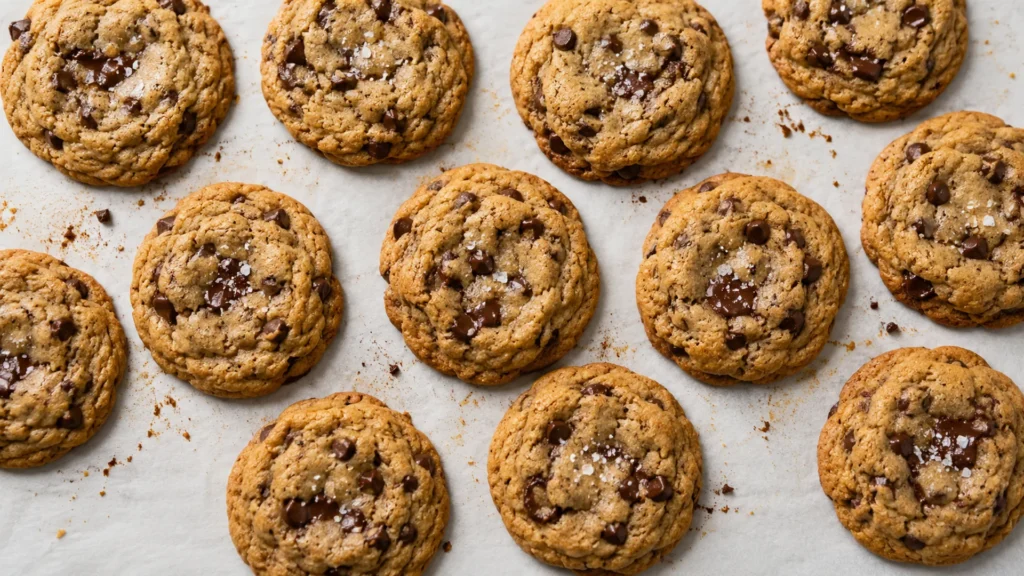
Brown butter chocolate chip cookies take the most familiar cookie in the world and give it a deep, toasty, caramel-nutty backbone that plain butter cannot touch. The change is one extra step, browning the butter on the stove before you mix, but that step rewrites the flavor and, if you are not careful, the texture too. Browning drives off water from the butter, which means a brown butter dough behaves differently from a standard one and needs small adjustments to stay chewy instead of dry. This guide walks through exactly how to brown butter without burning it, why the milk and chill steps matter, the full ingredient logic, baking specifics in US units, and how brown butter cookies compare to the regular version, so you get the nutty depth without sacrificing the soft center everyone wants.
The two failure points with this cookie are always the same: people either underbrown the butter so it tastes like a regular cookie with extra effort, or they overbrown it and chase out so much moisture that the cookies turn dry and sandy. Both are fixable once you understand what browning actually does. That is the place to start, because the whole recipe hinges on it.
What Browning the Butter Actually Does
Butter is roughly eighty percent fat, sixteen percent water, and a small fraction of milk solids, which are proteins and sugars. When you heat butter, the water boils off as steam, and once the water is gone the milk solids hit the hot pan and toast, turning golden brown and developing hundreds of nutty, caramel, toffee-like aroma compounds. That toasting is the Maillard browning reaction, the same one that browns toast and seared meat, and it is the entire point of brown butter.
The catch is that browning removes water. A standard cookie relies on the water in butter to hydrate the flour and keep the crumb tender. Take that water out and the dough runs drier, so brown butter cookies can bake up crumbly or sandy if you do not put a little moisture back. The two standard fixes are adding a tablespoon or two of milk to the dough, or leaning on extra brown sugar and an additional egg yolk, both of which restore moisture and chew. Understanding this one trade-off is what separates a great brown butter cookie from a dry disappointment.
How to Brown Butter Without Burning It
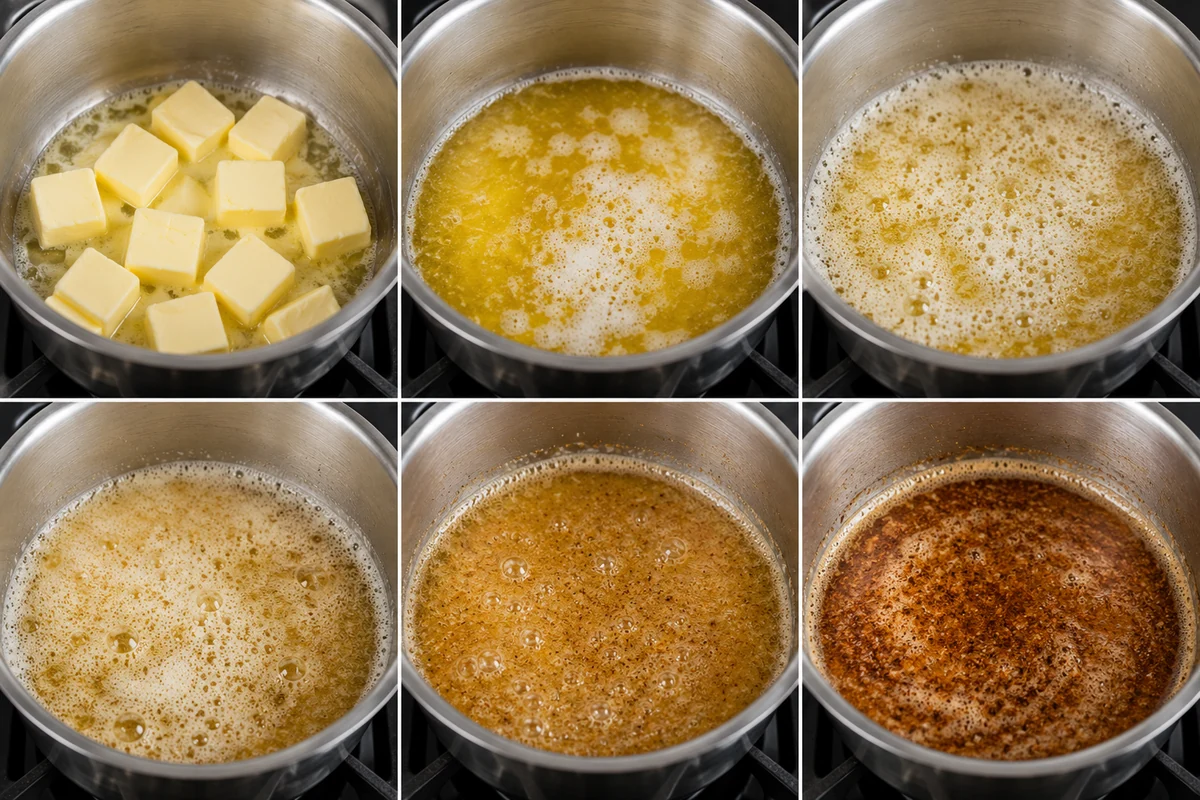
Browning butter is simple but unforgiving, because the line between perfectly nutty and acrid burnt is about sixty seconds. Use a light-colored pan, not a dark nonstick one, so you can actually see the color of the milk solids as they toast. A stainless steel skillet or saucepan is ideal.
Cut the butter into even pieces so it melts uniformly, and set the pan over medium to medium-low heat. Low and steady wins here. The butter melts, then foams as the water boils off, and the foam can hide what is happening underneath, so stir and scrape the bottom constantly with a silicone spatula. After a few minutes the foam subsides, the bubbles get smaller, and you will see golden-brown specks of toasted milk solids on the bottom and smell a warm, nutty, almost hazelnut aroma. That is your cue. Pull the pan off the heat immediately, because the residual pan heat keeps cooking the butter and it can scorch in seconds. Scrape every brown speck into your bowl, since those toasted solids carry most of the flavor. If you see black flecks or smell anything sharp or burnt, start over, because burnt butter is bitter and cannot be saved.
Why You Have to Cool the Brown Butter
Hot brown butter is the most common reason these cookies fail, and the fix is patience. If you cream or mix hot melted butter into your sugar and eggs, two bad things happen: the heat can start cooking the eggs, and the fully melted, warm fat makes a slack dough that spreads into thin, greasy cookies in the oven.
Let the brown butter cool until it is no longer hot, ideally back to a soft, scoopable, mayonnaise-like consistency. Some recipes chill it until it solidifies, around ninety minutes in the fridge, then bring it back to a soft solid so you can cream it like normal softened butter for a thicker, chewier cookie. At minimum, let it cool to barely warm before mixing. This single wait is the difference between a thick, chewy cookie and a flat, oily one, so do not skip it no matter how eager you are.
The Ingredient Logic
Every ingredient in a brown butter chocolate chip cookie has a job, and a few are tuned specifically to counter the moisture browning removes.
Brown butter brings the nutty, caramel flavor. Brown sugar should make up the larger share of your sugar, because its molasses adds moisture and chew and amplifies the caramel notes from the browned butter; a typical split leans toward brown over granulated. Granulated sugar adds a little crispness and helps the edges set. An extra egg yolk beyond the whole egg adds fat and richness without the extra water and protein of another white, which keeps the cookies tender and chewy. A tablespoon or two of milk replaces the water lost in browning. Cornstarch, in many recipes, softens the crumb by limiting gluten and giving a tender, almost melt-in-the-mouth texture. Flaky sea salt on top is not optional here, because salt against caramel and chocolate is what makes these taste like a bakery cookie. Use good chopped chocolate or large chips so you get pools and pockets of melted chocolate rather than uniform little dots.
| Ingredient | Its job here |
|---|---|
| Brown butter | Nutty, caramel, toffee flavor |
| Brown sugar (more) | Moisture, chew, caramel depth |
| Granulated sugar (less) | Crisp edges, spread |
| Extra egg yolk | Richness and chew |
| Milk (1-2 Tbsp) | Replaces water lost in browning |
| Flaky salt on top | Balances sweetness, bakery finish |
Why Chilling the Dough Matters
Beyond cooling the butter, chilling the finished dough does two things for brown butter cookies. First, it firms the fat so the cookies hold their shape and bake up thick instead of spreading thin. Second, and this is the underrated part, resting the dough lets the flour fully hydrate and lets the sugars draw moisture, which deepens flavor and improves texture. A dough rested overnight bakes into a noticeably more caramelized, complex cookie than the same dough baked immediately.
For brown butter cookies specifically, a chill of at least two hours, and ideally overnight, is worth the wait because the browned-butter flavor compounds keep developing and melding into the dough. If you are short on time, even thirty minutes in the fridge helps control spread. Bake the dough cold, straight from the fridge, for the thickest result. This rest-and-develop principle applies to standard cookies too; our base chocolate chip cookies guide explains how chilling reshapes texture across the board.
Baking: Temperature and Timing
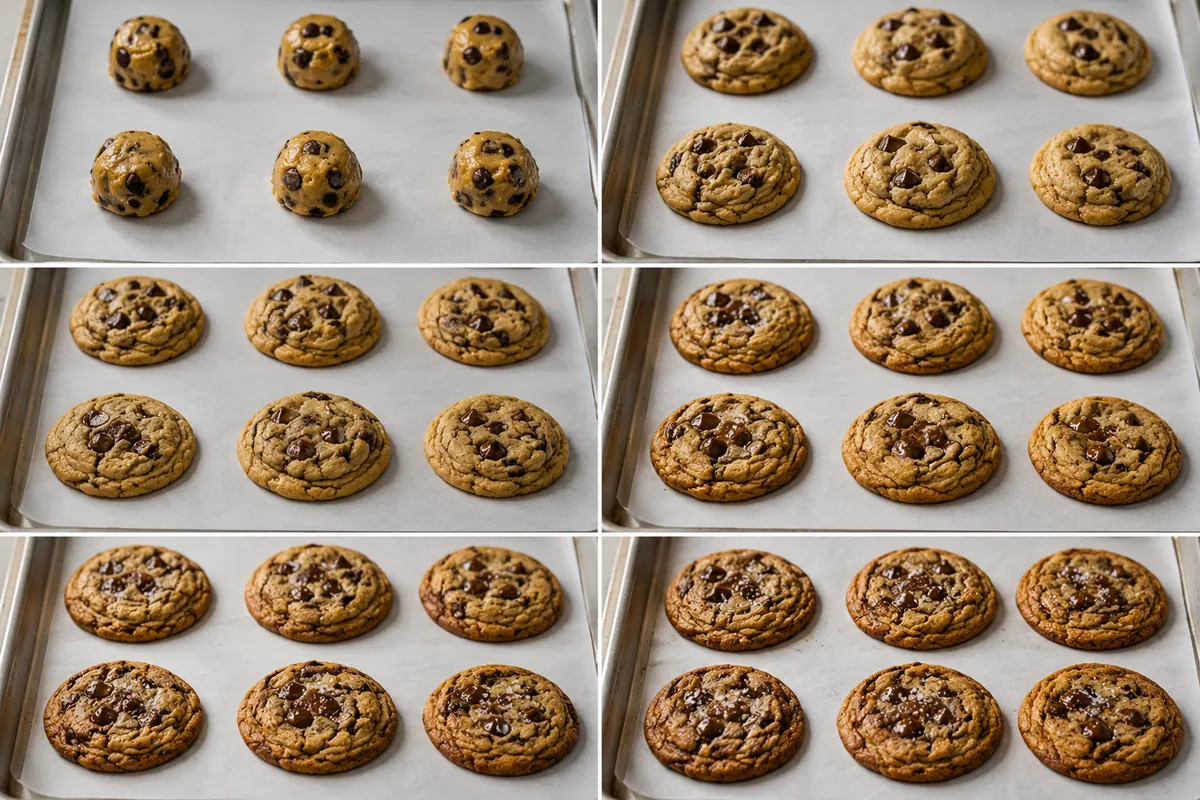
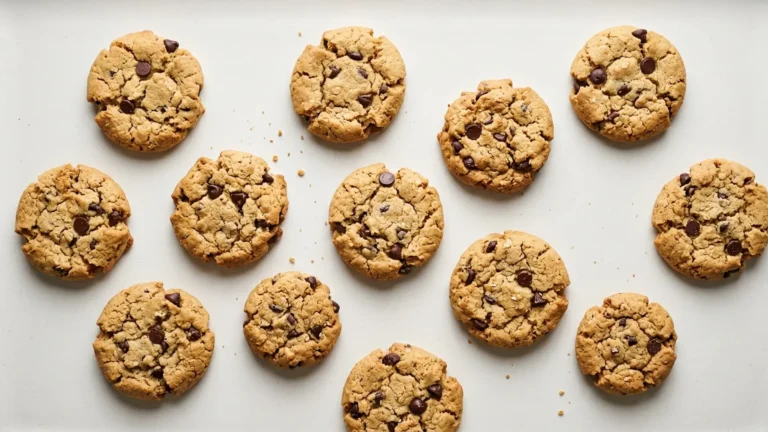
Bake brown butter chocolate chip cookies at 350 to 375 degrees Fahrenheit. The lower end bakes more evenly for a uniformly soft cookie, while 375 sets the edges faster and gives a crisp-edge, gooey-center contrast that suits these rich cookies well. For thick bakery-style cookies, portion generously, around three to four tablespoons of dough per cookie, and bake for roughly 11 to 14 minutes depending on size.
Pull them when the edges are set and golden but the centers still look slightly puffed and underdone. They will look not-quite-done, and that is correct, because they finish setting on the hot sheet over the next five minutes, which is what keeps the center soft and chewy. If you want photo-worthy round cookies, swirl a round cutter or a wide glass around each cookie the moment it leaves the oven while it is still soft, nudging the edges into a circle. Press a few extra chocolate pieces and a pinch of flaky salt onto the tops right after baking for that bakery look. Always bake on a cool, parchment-lined sheet so the rich dough does not spread before the structure sets.
Brown Butter vs Regular Butter Cookies
It helps to know what you actually gain and give up by browning. In flavor, brown butter wins clearly: it adds a nutty, toffee, caramel complexity that a regular chocolate chip cookie simply does not have, and that depth pairs beautifully with chocolate and a hit of salt. The cost is texture risk and time. A regular butter cookie has all its water intact, so it is more forgiving and stays moist with no special effort. A brown butter cookie needs the moisture-restoring tweaks above and an extra browning-and-cooling step.
So when should you brown the butter? Brown it when flavor is the priority and you have time, which means most of the time you are baking for people who care. Skip it when you want a fast, reliable batch or when the cookie is heavily flavored with other things that would mask the nutty notes. For a side-by-side, bake half a batch each way and taste them cooled; the brown butter version tastes more grown-up and complex, while the plain version tastes cleaner and sweeter. Neither is wrong, but once you taste the brown butter depth, it is hard to go back for a serious chocolate chip cookie.
One practical note on yield: browning a cup of butter does not leave you with a full cup of brown butter, because you boil off the water as steam and lose a little volume to the foam and the toasted solids that cling to the pan. You typically end up with a couple of tablespoons less than you started with. This matters because the missing fat changes the ratio in your dough. The clean fix is to weigh the brown butter after it cools and top it back up to the original weight with a small piece of fresh softened butter, which keeps the fat content where the recipe expects it. Bakers who skip this step and use only the reduced brown butter often wonder why their cookies come out drier and flatter than a friend’s; the answer is simply that they baked with less fat than the recipe was written for.
Storage, Freezing, and Make-Ahead
These cookies keep well because the brown sugar and yolk hold moisture. Store cooled cookies in an airtight container at room temperature for up to five days, and drop a slice of sandwich bread in the container to keep them soft, since the cookies pull moisture from the bread. Do not refrigerate baked cookies, which dries them out.
The dough freezes excellently and, given the flavor benefit of resting, freezing is almost an upgrade. Scoop the chilled dough into balls, freeze them solid on a tray, then bag them for up to three months. Bake straight from frozen with one to two extra minutes. This makes brown butter cookies a great make-ahead option for the holidays, since you do the browning and mixing once and bake fresh, warm cookies on demand. You can also freeze the brown butter itself in advance if you want to get the fiddly step out of the way early. The same browning trick works in other chewy doughs too; it adds real depth to oatmeal cookies where the toasty notes play off the oats.
Troubleshooting Common Failures
Cookies came out dry or sandy. Too much moisture was browned off, or there was too much flour. Add a tablespoon of milk to the dough next time, lean more on brown sugar, weigh your flour, and pull the cookies a touch earlier.
Cookies spread thin and greasy. The brown butter was still warm when mixed, or the dough was not chilled. Cool the butter fully and chill the dough before baking on a cool sheet.
Butter tastes bitter or burnt. It went past brown to scorched. Use a light pan, medium-low heat, stir constantly, and pull it the instant it smells nutty and turns amber.
No nutty flavor at all. The butter was underbrowned, pulled while still pale. Cook it until you see real golden-brown specks on the bottom and smell a distinct nutty aroma, not just melted butter.
For deeper technique on the browning step and on cookie texture science generally, the testers at Cook’s Illustrated have run extensive trials on brown butter ratios, and the editors at Bon Appetit cover the cool-and-rest timing in detail.
Frequently Asked Questions
Why are my brown butter cookies dry?
Browning butter removes its water content, and if you do not replace that moisture the dough bakes up dry or sandy. Add a tablespoon or two of milk to the dough, use more brown sugar than granulated, add an extra egg yolk for richness, weigh your flour so you are not adding too much, and pull the cookies while the centers still look slightly underdone.
Do I have to chill brown butter cookie dough?
You should. Chilling firms the fat so the cookies bake thick instead of spreading thin, and resting lets the flour hydrate and the brown butter flavor deepen. Chill at least two hours, ideally overnight, and bake the dough cold for the thickest cookies. Even thirty minutes helps control spread if you are short on time.
How do I know when the butter is browned enough?
Watch and smell. After the butter melts and foams, the foam subsides and you will see golden-brown specks of toasted milk solids on the bottom of the pan and smell a warm, nutty, hazelnut-like aroma. That is the moment to pull it off the heat. If you see black flecks or smell anything sharp, it has burned and you should start over.
Can I use brown butter in any chocolate chip cookie recipe?
Mostly yes, but adjust for the lost moisture. Substitute brown butter for the regular butter, then add a tablespoon or two of milk or an extra egg yolk to compensate, and chill the dough since melted butter spreads more. Without those tweaks the cookies can come out flatter and drier than the original recipe intended.
What kind of pan should I use to brown butter?
Use a light-colored stainless steel pan, never a dark nonstick one. The light surface lets you see the milk solids turning brown so you can stop at the right moment. In a dark pan you cannot judge the color and you are far more likely to burn the butter.
Can I freeze brown butter chocolate chip cookie dough?
Yes, and it is one of the best doughs to freeze because resting only improves the flavor. Scoop the chilled dough into balls, freeze them solid on a tray, then transfer to a bag for up to three months. Bake straight from frozen with one to two extra minutes for fresh, warm cookies any time.
Bottom Line
Brown butter chocolate chip cookies are a regular cookie with one transformative upgrade, and the whole recipe revolves around handling the browned butter correctly. Brown the butter slowly in a light pan until it smells nutty and shows golden specks, then cool it so it does not make a greasy, spreading dough. Put back the moisture that browning removed with extra brown sugar, an egg yolk, and a splash of milk, then chill the dough so the cookies bake thick and the flavor deepens. Bake to just-underdone centers, finish with flaky salt, and you get a cookie with toffee-deep flavor and a soft, chewy center that beats the plain version every time you have the few extra minutes to make it.