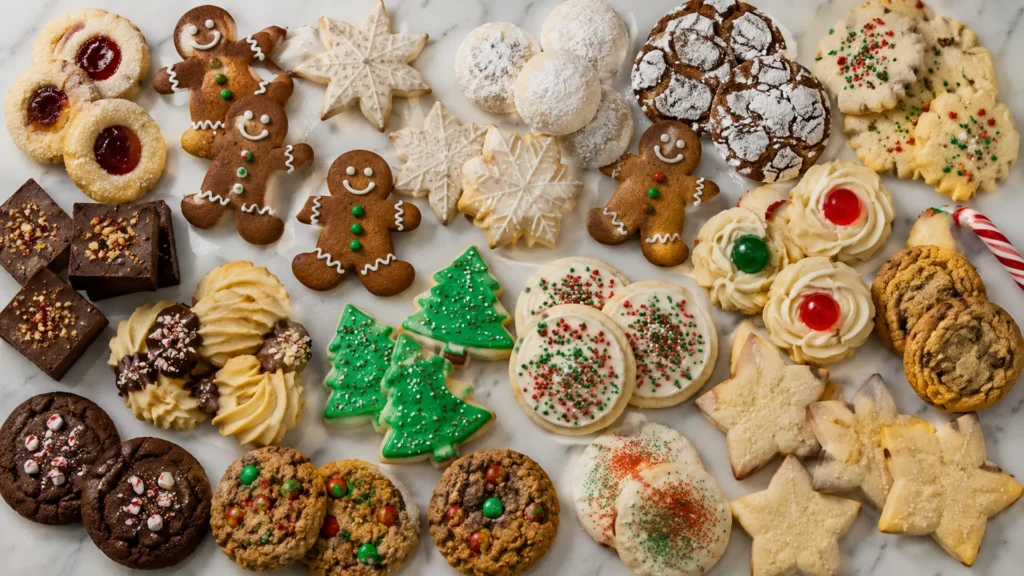
Christmas cookies are less about any single recipe and more about a system: choosing the right mix of doughs, baking them so they all turn out, storing them so they stay fresh until the holiday, and packing them so they survive a gift box or a mail trip. I bake hundreds of holiday cookies every December at the bench, and the questions are always the same. Which cookies should I make together? How far ahead can I start? What freezes and what does not? Why did half my batch spread into one giant cookie? This guide answers all of it in plain US units, walking from planning a cookie box through dough types, the bake itself, troubleshooting, storage, freezing, and shipping, so your December baking runs like a kitchen that has done this before.
The single biggest mistake home bakers make at Christmas is treating it like a normal baking day, then panicking when they need six dozen cookies in three flavors by Friday. The fix is to think in stages. Some doughs can be made weeks ahead and frozen. Some cookies bake and keep for two weeks. Some are best baked the day before. Once you sort your recipes into those buckets, the whole season gets calm. Let me start with how to plan a batch so you never end up baking at midnight on the twenty-fourth.
Plan the Cookie Box First
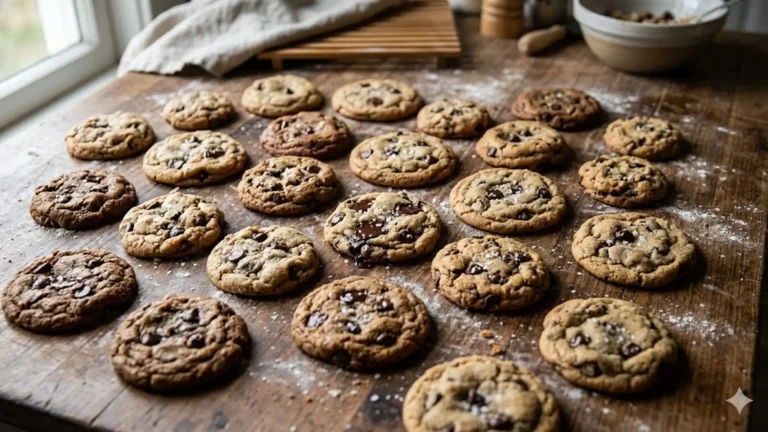
Before you pick recipes, decide what your cookie box needs to do. A good holiday assortment has variety in texture, color, and flavor, not five versions of the same chewy brown cookie. Aim for a mix: one crisp cookie, one soft and chewy cookie, one cut-out or decorated cookie for color, one rich chocolate cookie, and one buttery shortbread or thumbprint. That spread covers every palate and looks generous in a box without requiring ten recipes.
The second planning move is to group recipes by shared ingredients and shared oven temperature. If three of your cookies bake at 350 degrees Fahrenheit and use brown sugar, you can cream a big batch of the base and split it, or at least bake them back to back without changing the oven. Batching this way cuts your active time in half. Write your list, then sort it into doughs you can freeze ahead, cookies that keep two weeks, and cookies best baked last. That single sheet of paper is the most useful tool in holiday baking.
A Sample Five-Cookie Assortment
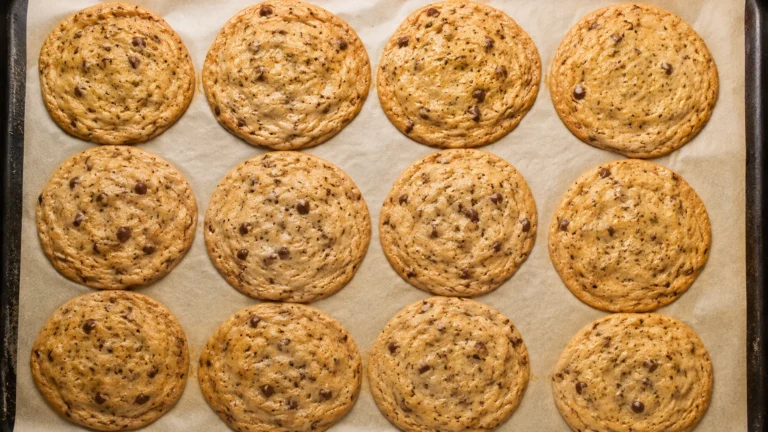
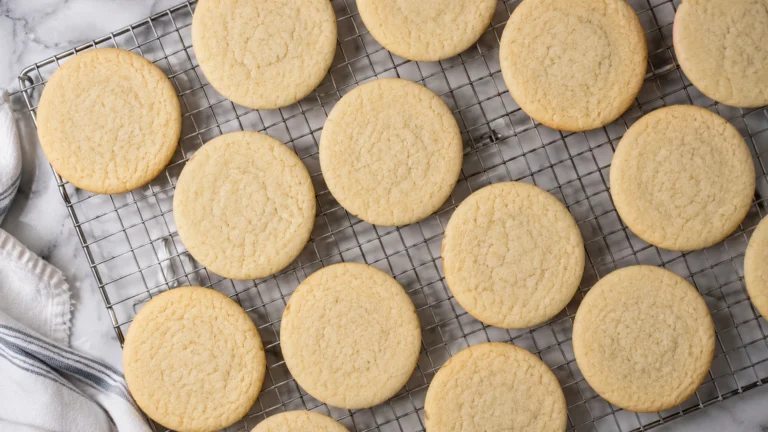
A reliable box that hits every texture might be: classic cut-out sugar cookies for color and decorating, chewy chocolate chip cookies as the crowd favorite, soft spiced gingerbread or molasses cookies for the holiday flavor, buttery thumbprints with jam for a fancy-looking but easy option, and a no-bake or shortbread cookie that needs no oven time at all. If you want the crowd-pleaser dialed in, our guide to chocolate chip cookies covers the exact bakery-style texture that disappears first off any holiday tray.
The Main Categories of Christmas Cookie
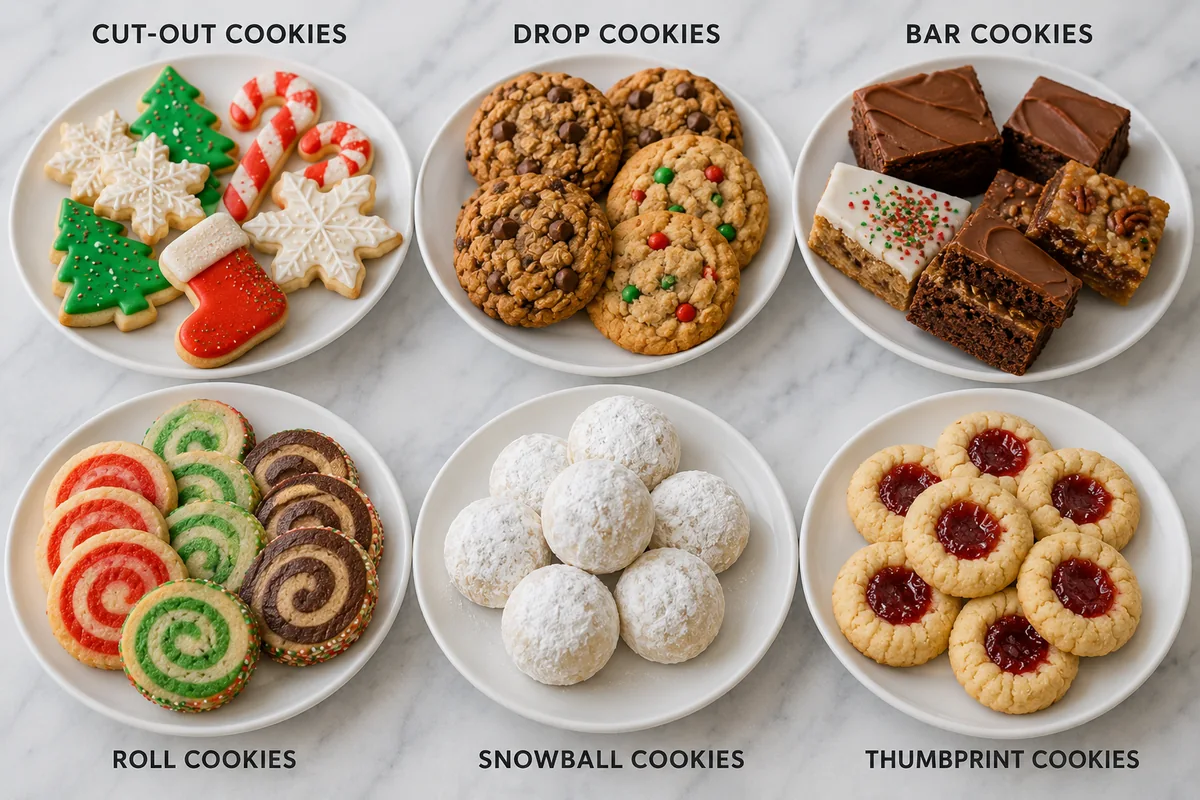
Holiday cookies fall into a handful of working categories, and knowing which one you are baking tells you how to handle the dough.
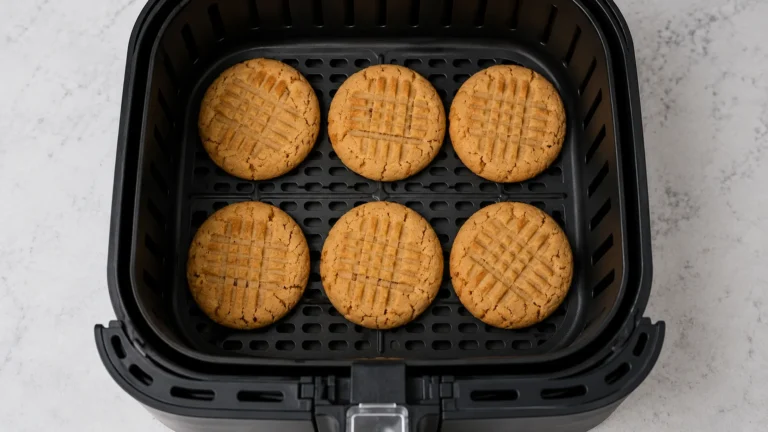
Drop cookies are scooped and baked as rounds, like chocolate chip, oatmeal, and snickerdoodles. They are the fastest and most forgiving, since they are not meant to hold a precise shape. Cut-out cookies are rolled flat and cut with cutters, then usually decorated. These are the showpieces, and they demand a firmer, chilled dough so the shapes hold. Slice-and-bake (icebox) cookies are shaped into a log, chilled, and sliced, which makes them perfect for make-ahead baking. Thumbprint and filled cookies are rolled into balls, dented, and filled with jam or chocolate. Shortbread is a high-butter, low-sugar dough that bakes crisp and tender and keeps beautifully. Each category has a different tolerance for warm dough and overworking, which is exactly why grouping them matters.
Make-Ahead: What to Do and When
The secret to a sane December is doing the slow parts early. Here is a working timeline that spreads the load instead of cramming it into one day.
Three to four weeks ahead: Make and freeze cookie doughs. Most doughs freeze for up to three months with no loss of quality, so this is the time to mix your cut-out, drop, and slice-and-bake doughs and stash them. One to two weeks ahead: Bake the cookies that store well, like gingerbread, shortbread, biscotti, and most undecorated drop cookies, and keep them in airtight containers. A few days ahead: Bake the cookies that are best fresh and decorate your cut-outs once the bases have cooled and set. The day before or the day of: Assemble boxes, dust with powdered sugar, and add any final garnish that would otherwise go stale.
This staging works because cookie quality degrades in different ways. A buttery shortbread is happy for two weeks; a delicate meringue or a powdered-sugar cookie wants to be made closer to serving. Sort your list accordingly and you will never be ambushed by a deadline.
The Bake: Getting Every Batch Right
Most holiday cookie failures come down to a few mechanical issues that are easy to fix once you know them. The fixes are the same across nearly every recipe.
Weigh your flour. The number one cause of dry, dense, or tough cookies is too much flour from scooping the cup straight into the bag, which packs in far more than a recipe intends. Use a scale, or at minimum spoon the flour into the cup and level it off. Soften butter properly. Butter for creaming should be cool to the touch and dentable but not greasy or melting; over-soft butter creams into a loose dough that spreads. Use a cookie scoop. Uniform size means uniform baking, so a tray of same-size cookies all finishes at once instead of leaving some raw and some burnt. Bake on a cool sheet. A warm pan starts melting the butter before the oven can set the structure, which causes spread. Keep a spare pan so you are not loading dough onto a hot tray between batches.
For temperature, most drop and cut-out cookies bake at 350 to 375 degrees Fahrenheit. The lower end gives more even baking and a softer result; the higher end sets the edges faster for a chewier center. Bake one tray at a time on the middle rack for the most even color. If you must bake two trays, rotate them top to bottom and front to back halfway through. Pull most cookies when the edges are set and lightly browned but the centers still look slightly underdone, because they finish cooking on the hot sheet for the first five minutes out of the oven. That carryover is what keeps the centers soft.
| Problem | Most likely cause | Fix |
|---|---|---|
| Cookies spread flat | Warm dough or hot pan | Chill dough, use a cool sheet |
| Dry and crumbly | Too much flour | Weigh flour, do not overbake |
| Tough and dense | Overmixed dough | Mix flour in just until combined |
| Cut-outs lose shape | Dough not chilled | Chill rolled slab two hours |
| Burnt bottoms | Rack too low, dark pan | Middle rack, line with parchment |
Cut-Out and Decorated Cookies
Cut-out cookies are the visual centerpiece of a holiday box, and they live or die by chilling. Cold dough means cold butter, and cold butter takes longer to melt, which holds your snowflake or tree as a crisp shape instead of a spread blob. The trick the best recipes use is to roll the soft dough flat between sheets of parchment first, then chill the flat slab for at least two hours. A pre-chilled ball is too stiff to roll without cracking, while a chilled slab cuts cleanly. Press your cutters straight down without twisting, since twisting drags and rounds the edges, and return the cut shapes to the fridge for ten minutes if they soften while you work.
For decorating, royal icing dries hard and holds sharp piped detail, flooding, and stacking, which is why detailed cookies use it. Buttercream is softer, richer, and more beginner-friendly but never fully hardens, so it does not stack cleanly. Whichever you choose, the cookies must be completely cool before you ice them or the icing will slide. Our full sugar cookies guide breaks down the rolling, chilling, and icing process in step-by-step detail if cut-outs are your weak spot.
Storing Baked Christmas Cookies
Once cookies are baked and fully cooled, how you store them decides whether they are still good on the holiday. Cool them completely first, because trapping any residual warmth in a sealed container creates condensation that turns cookies soggy or moldy.
Store crisp and soft cookies separately. Crisp cookies like shortbread and biscotti stay crisp in a loosely covered tin with a little air flow, while soft cookies like chewy chocolate chip want a fully airtight container. If you mix them, the crisp ones go soft and the soft ones go stale. To keep soft cookies soft, drop a slice of sandwich bread into the container; the cookies pull moisture from the bread and stay tender for days. Most baked cookies keep at room temperature for about one to two weeks, with shortbread and gingerbread on the longer end and delicate or frosted cookies on the shorter end. Do not refrigerate baked cookies, since the fridge dries them out and can transfer odors.
Freezing Cookies and Cookie Dough
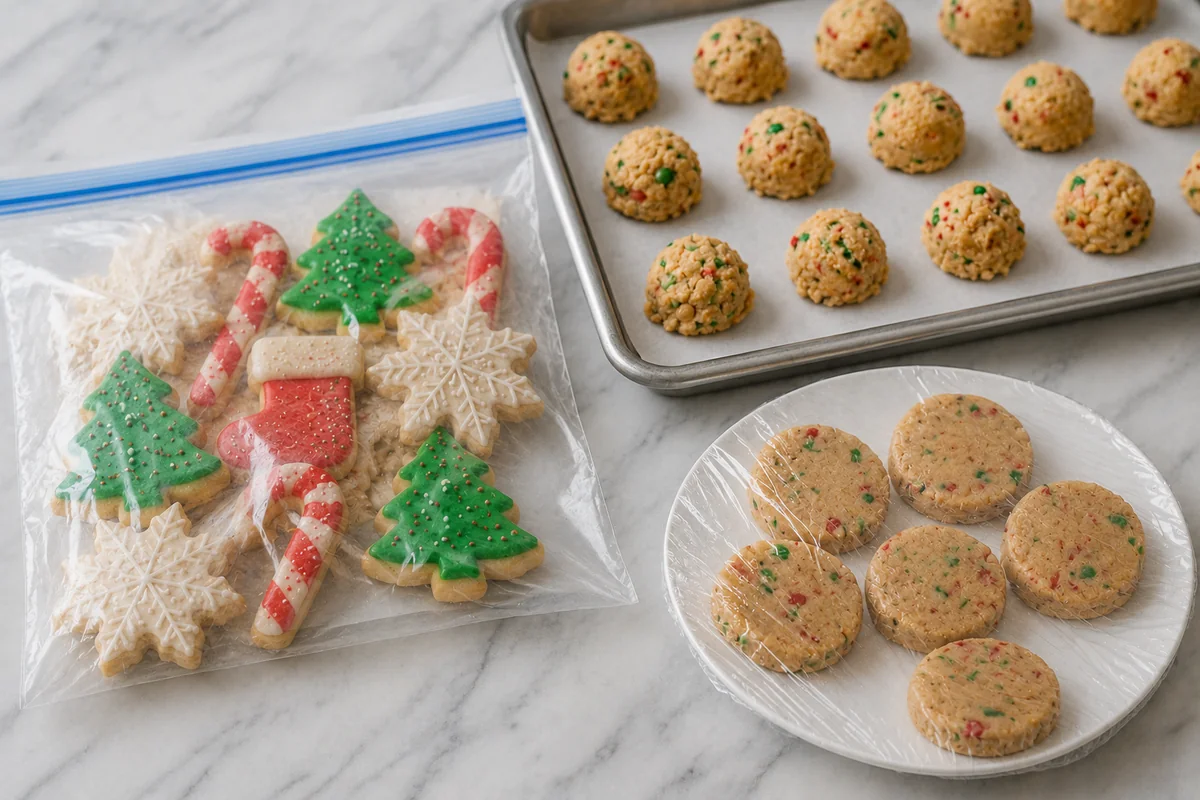
Freezing is the real engine of stress-free holiday baking, and you can freeze either the raw dough or the baked cookies depending on your plan.
Freezing dough is the better choice for most cookies because you bake them fresh on demand. Scoop drop cookies into balls and freeze them solid on a tray, then transfer to a bag; bake straight from frozen with one to two extra minutes. Freeze cut-out dough as a flat, wrapped slab or as pre-cut shapes. Slice-and-bake logs freeze beautifully and slice straight from the freezer. Most doughs keep three months frozen. Freezing baked cookies works well for sturdy, undecorated cookies; cool them fully, layer them between parchment in an airtight container, and freeze for up to three months, then thaw at room temperature. Decorated cookies can be frozen too, but freeze them undecorated and ice them after thawing for the cleanest look. For the full breakdown on timing and baking from frozen, see our guide to freezing cookie dough, which is the backbone of any make-ahead holiday plan.
Gifting and Shipping Cookies
A cookie box is only as good as it arrives, so packaging is part of the recipe at Christmas. For a hand-delivered box, line a sturdy tin or box with parchment or tissue, and pack cookies snugly so they do not slide and break. Keep flavors from bleeding into each other by separating strong cookies like peppermint or anything with a glaze from delicate shortbread.
For mailing, choose cookies that travel well: sturdy drop cookies, bar cookies, biscotti, and shortbread survive a trip far better than delicate, thinly iced, or crumbly cookies. Wrap cookies in pairs back to back so the flat sides protect each other, then pack them tightly in a rigid container with crumpled parchment filling any gaps, since movement is what breaks cookies in transit. Avoid frostings and fillings that need refrigeration. Ship early in the week so the box does not sit in a warehouse over a weekend, and label it clearly. A box that arrives intact and fresh is worth more than a fancier cookie that turns up as crumbs.
Smart Flavor Upgrades for the Season
Small additions turn standard cookies into holiday cookies without new recipes. A quarter teaspoon of almond extract alongside vanilla gives that classic bakery flavor people cannot quite place. Citrus zest, especially orange, creamed into the butter brightens any dough and reads as festive. Warm spices like cinnamon, ginger, nutmeg, and clove turn a plain dough into a spiced holiday one. Mix-ins like crushed peppermint, dried cranberries, white chocolate, and toasted nuts add color and crunch to drop cookies. The one rule is to add flavor without adding liquid, since extra wet ingredients change how the dough spreads. Browning your butter before creaming is another easy upgrade that adds deep, nutty, caramel notes to any butter-based cookie, and it works in nearly every holiday recipe. While you are stocking up on extracts and spices, the spice authorities at America’s Test Kitchen have done the legwork on which holiday flavorings actually hold up through baking.
What the Testing Kitchens Agree On
The independent recipe kitchens converge on the same holiday fundamentals, which is the strongest signal that they are real rules and not preference. The editors at Bon Appetit stress baking one sheet at a time and rotating for even color, while the testers at America’s Test Kitchen emphasize weighing flour and chilling dough to control spread. When kitchens that test independently land on the same advice, treat it as settled: weigh your flour, chill your dough, bake on a cool sheet on the middle rack, and pull cookies while the centers still look slightly underdone. Those four habits fix the large majority of holiday baking problems before they happen.
Frequently Asked Questions
How far ahead can I make Christmas cookies?
You can freeze most cookie doughs up to three months ahead, so the doughs can be mixed weeks early. Baked cookies that store well, like shortbread, gingerbread, and undecorated drop cookies, keep one to two weeks in an airtight container at room temperature. Delicate, frosted, or powdered cookies are best baked a few days before serving. Plan in stages: freeze doughs early, bake sturdy cookies a week or two out, and save fragile ones for last.
What is the best way to keep cookies soft?
Store soft cookies in a fully airtight container once they are completely cool, and drop a slice of sandwich bread in with them. The cookies pull moisture from the bread and stay tender for several days. Keep soft cookies separate from crisp ones, because storing them together makes the crisp cookies go soft and the soft cookies go stale.
Why do my cookies spread into one flat sheet?
The dough was too warm, the butter was over-softened or melted, or you loaded the dough onto a hot pan. Chill the dough until firm, make sure your butter is cool and dentable rather than greasy when you cream it, and always bake on a fully cooled sheet. Too little flour or too much sugar in the recipe also encourages spread, so weigh your ingredients.
Can I freeze decorated Christmas cookies?
Yes, but for the cleanest result freeze the cookie bases undecorated, then thaw and decorate after. If you must freeze them already iced, let the icing dry completely hard first, then freeze in a single layer and thaw still covered so condensation forms on the wrap rather than the icing. Royal icing freezes better than soft buttercream.
Which Christmas cookies ship the best?
Sturdy cookies travel best: thick drop cookies, bar cookies, biscotti, and shortbread. Wrap cookies in pairs flat-side to flat-side, pack them tightly in a rigid box with crumpled parchment filling all gaps, and avoid anything with soft frosting or fillings that need refrigeration. Ship early in the week so the package does not sit over a weekend.
What temperature should I bake Christmas cookies at?
Most drop and cut-out cookies bake at 350 to 375 degrees Fahrenheit on the middle rack. The lower end gives softer, more even results, and the higher end sets the edges faster for a chewier center. Bake one tray at a time when you can, and pull the cookies when the edges are set but the centers still look slightly underdone, since they finish on the hot sheet.
Bottom Line
Great Christmas cookies come from planning more than from any single recipe. Build a box with variety in texture and color, then sort your recipes into doughs you can freeze weeks ahead, cookies that keep for two weeks, and cookies best baked last. Weigh your flour, chill your dough, and bake on a cool sheet on the middle rack to dodge the common failures. Store crisp and soft cookies separately, keep the soft ones with a slice of bread, and freeze whatever you can to spread the work out. Pack and ship sturdy cookies with care, and your holiday baking turns from a frantic all-nighter into a calm, well-stocked tin you are proud to give away.