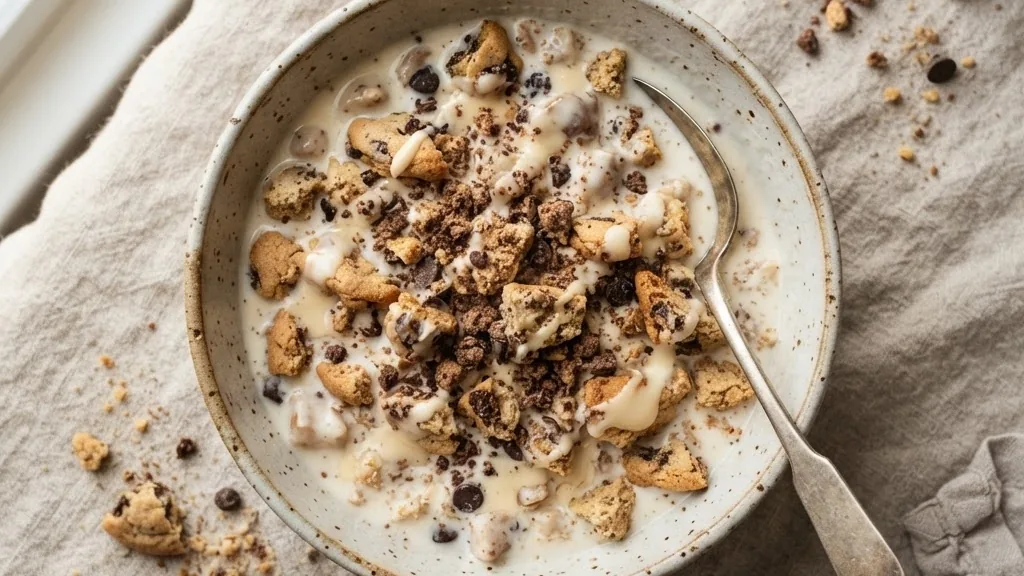
Cookie Milk Stew Leonard’s is the seasonal, sugar-cookie-flavored dairy milk sold in a half gallon glass bottle that disappears from shelves every December, which is exactly why a home cook needs a copycat worth making. The product first appeared in 2016 and turned into a TikTok obsession across 2024 and 2025, but the chain only stocks it during one month and only across eight stores in Connecticut, New York, and New Jersey. If you do not live near one, the store cannot help you. A good recipe can. This guide gives you two tested-ratio methods, dairy-free swaps, latte and cold-foam uses, storage, scaling math, troubleshooting, and the food-labeling rules behind the bottle.
Quick answer: Cookie Milk Stew Leonard’s is not a stew and not a milk replacement. It is a sweet, buttery, vanilla-forward dairy milk flavored to taste like a sugar cookie dunked in milk, sold in a 64 fl oz glass bottle in December only. To copy it at home, either stir sugar, vanilla, almond extract, and a pinch of cinnamon into whole milk, or blend four sugar cookies into four cups of milk and strain through cheesecloth. The infusion method tastes closer to the real thing. Both keep for a few days chilled.
What Cookie Milk Stew Leonard’s Actually Is
Cookie milk is a limited-run flavored dairy milk, not a dessert soup and not a coffee mixer. Stew Leonard’s introduced it in 2016 and sells it in a half gallon (64 fl oz) glass bottle. The chain built its reputation on speed and freshness, moving product farm-to-store in as little as roughly 24 hours, and the milk itself is marketed as free of artificial growth hormones (rBST) and antibiotics. Flavor-wise, expect sweet, buttery, and heavy on vanilla, the taste people describe as a sugar cookie dunked in a glass of milk.
- Format: 64 fl oz glass bottle, sold whole and cold.
- Season: December only, and stock is deliberately limited.
- Footprint: 8 store locations across three states.
- Claim on the carton: no rBST, no antibiotics.
The retailer earned its nickname long before the milk existed. The New York Times called Stew Leonard’s the “Disneyland of Dairy Stores” back in 1983, and Guinness World Records has cited the chain for its sales per unit of retail area. That credibility is part of why the cookie milk went viral instead of staying a regional curiosity. It also explains why the product commands a price premium relative to a plain half gallon of milk: shoppers are paying for novelty and for a brand that has spent four decades building a reputation for freshness and theater in the dairy aisle.
Worth separating out clearly: this is a seasonal marketing product, not a year-round SKU. That single fact drives everything else in this guide, from why a copycat matters to why the store’s own pages cannot help most readers. A shopper searching in July has zero chance of finding the real bottle on a shelf, no matter how good the store’s website looks.
The Copycat Recipe: Two Methods That Actually Work
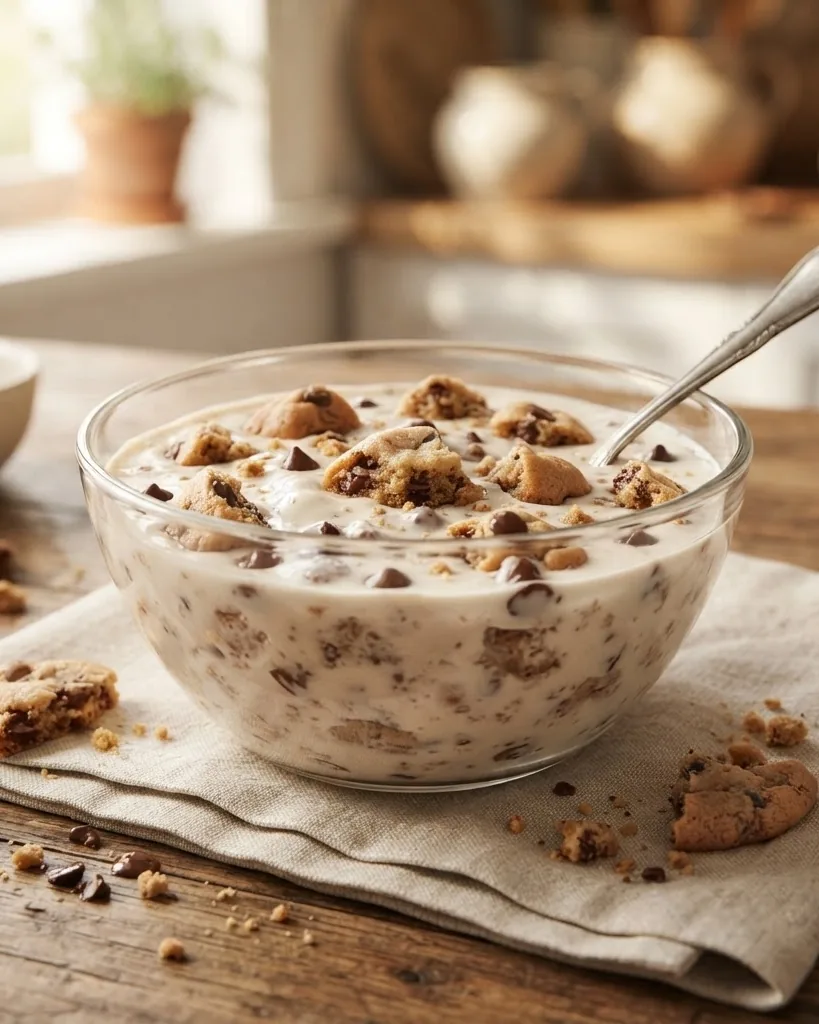
The copycat splits into two clean methods, and which one you pick decides how close you land to the bottle. The flavored method stirs sweetener and extracts into milk for a fast, smooth result. The infusion method blends real sugar cookies into milk and strains the mixture, which pulls in browned-butter and baked-dough notes that extracts alone cannot fake. Ranking recipes cluster around consistent ratios: one popular version uses 4 cups whole milk plus an optional 1 cup heavy cream, while a viral TikTok build uses 4 cups milk with 4 sugar cookies and 1 tsp vanilla, blended and then strained through cheesecloth.
Method A, flavored (fast). Whisk sweetener, vanilla, a small hit of almond extract, and a pinch of cinnamon or nutmeg into 4 cups cold whole milk. Add 1 cup heavy cream if you want it richer and closer to the bottle’s body. Chill and shake before pouring. Start with 3 tablespoons sugar for the full batch, taste, and add more in half-tablespoon steps rather than dumping in sugar all at once, since flavored milk is easy to oversweeten and hard to correct once it is too sweet.
Method B, infusion (closest copy). Blend 4 sugar cookies into 4 cups milk with 1 tsp vanilla, then strain through cheesecloth to catch the crumb. You lose a little volume to the strainer, so expect slightly under a half gallon from a full batch. Blend in short pulses rather than one long run, since a continuous blend warms the milk slightly and can make the crumb harder to strain out cleanly afterward.
Step by step for Method B: break the cookies into rough pieces first, add them to the milk in a blender, pulse five or six times until the cookies are broken down but not liquefied, then let the mixture rest for two minutes so the crumb hydrates and softens. Pour through a double layer of cheesecloth set over a bowl, twist the cloth gently to press out the last of the liquid, and discard the solids. Stir in the vanilla after straining rather than before, since blending vanilla directly with hot-adjacent friction from the blender blade can dull its aroma slightly.
- Want it dessert-sweet? Method B with brown-butter cookies.
- Want speed and clarity? Method A, no straining.
- Want body without cream? Use whole milk, skip the 2%.
For a broader sense of how cookie flavor carries into other bakes, the browned-butter approach in these chewy brown butter marshmallow crispy cookies is the same principle that makes Method B taste baked rather than merely sweet. A neighboring buyer-and-recipe walkthrough, Cookie Milk Stew Leonard’s: The Complete Buyer and Recipe Guide, runs parallel testing if you want a second set of ratios to compare against.
Scaling the Batch and Common Mistakes
Both methods scale linearly, which makes batch planning easy. Doubling Method A to 8 cups milk needs roughly 6 tablespoons sugar, 2 teaspoons vanilla, and a scant half teaspoon almond extract, plus 2 cups heavy cream if you are using it. For Method B, doubling means 8 cups milk and 8 cookies, but straining takes noticeably longer since you are pushing twice the crumb through the same cheesecloth, so budget extra time rather than rushing the press.
The most common mistake is oversweetening Method A because sugar dissolved into cold milk tastes less sweet immediately than it will once fully mixed and chilled for an hour. Taste again after the milk has rested in the fridge, not just right after whisking. The second common mistake is skipping the rest step in Method B and straining while the crumb is still dry and clumped, which clogs the cheesecloth and wastes milk in the solids. The third is using stale or very hard cookies in Method B, which blend unevenly and leave gritty bits that slip through the strainer.
- Oversweet Method A: rest it chilled, then re-taste before adding more sugar.
- Clogged strainer in Method B: let the blended mixture sit two minutes before pouring.
- Gritty texture: use soft, fresh cookies, not stale ones, for the infusion.
- Too thin: add the optional heavy cream rather than more milk.
Substitutions, Dairy-Free Swaps, and Getting the Body Right
Substitutions change texture more than flavor, so choose your base by mouthfeel first. Whole milk gives the closest body to the real bottle because milkfat carries the buttery vanilla note. Two percent thins it out and reads watery once sugar is added. For dairy-free, oat milk is the strongest stand-in since its natural sweetness and viscosity mimic cream better than almond milk, which tends to taste thin and slightly bitter under vanilla. If you want richness without going full cream, blend in a splash of oat cream or add the optional 1 cup heavy cream to the 4 cups of dairy base.
- Whole milk: closest to the store bottle.
- 2% milk: lighter, but flavor reads diluted.
- Oat milk: best dairy-free swap for body and sweetness.
- Almond milk: works, but thin; boost vanilla to compensate.
Sweetener is the second lever. White sugar keeps the flavor clean and neutral, which is what the sugar-cookie profile wants. Maple syrup shifts it toward warmth and a faint caramel edge, pleasant but no longer a straight copy. The USDA defines whole milk by its milkfat content, and that fat is doing real flavor work here, so if you swap to a lower-fat base, lean harder on the extracts to keep the cookie note present. Curious how a different dairy base changes the label math? These A2 cow milk nutrition facts break down what actually sits behind the panel.
A third lever people overlook is salt. A tiny pinch, less than an eighth of a teaspoon per four cups, sharpens the sweetness and makes the vanilla read cleaner, the same trick bakers use in cookie dough itself. Skip it if you are sensitive to sodium, but for most palates it closes some of the gap between a flat homemade batch and the rounder flavor of the real bottle.
Uses Beyond the Glass: Lattes, Cold Foam, and Baking
Cookie milk earns its keep once you stop treating it as a drink and start using it as an ingredient. The single strongest use is a cookie-milk latte, hot or iced, where the sweetened dairy replaces both milk and syrup in one pour. Steam it or shake it over ice, add espresso, and skip the sugar you would normally dose. From there the range opens up fast, and this is precisely the territory none of the news pieces or the official product page bother to cover.
- Cookie-milk latte, hot or iced, no added syrup needed.
- Cold foam: whip chilled cookie milk with a frother and float it on cold brew.
- Coffee creamer: pour it straight into drip coffee.
- French toast custard: soak bread in it instead of plain milk.
- Overnight oats: use it as the liquid for a dessert-leaning breakfast.
If you want to understand why the frothing behaves the way it does, the physics of milk foam and dissolved sugar is laid out in this coffee science primer, and the coffee-forward crowd chasing macros will find a natural fit in these high-protein recipes that pair cleanly with a lower-sugar version of the milk. For the baking side, treat cookie milk exactly as you would flavored dairy in any batter. The citrus swap in these cranberry orange cookie bars shows how a single flavored liquid can steer a whole bake.
For the cold foam specifically, chill the milk fully before frothing, since warm milk foams thinner and collapses faster. A handheld frother works, but a French press pumped ten to fifteen times gets a denser foam that sits on top of cold brew rather than mixing straight in. If you use Method A for the foam, hold back on the heavy cream, since too much fat can actually make foam collapse faster rather than hold longer.
Permits, Inspections, and Food-Safety Compliance for Selling It
Anyone thinking about bottling and selling a cookie milk copycat crosses out of the home kitchen and into federal dairy oversight, and the compliance load is real. The U.S. Food and Drug Administration governs milk labeling, including the nutrition panel and the framework around the rBST-free claim, which traces back to the FDA’s 1994 interim guidance on labeling milk from cows not treated with the hormone. The U.S. Department of Agriculture handles dairy grading and the USDA Organic certification if you want to make an organic swap on the carton. The Food Safety and Inspection Service, the CDC, FoodSafety.gov, and nutrition.gov all sit in the broader food-safety and consumer-information ecosystem you would answer to.
What this costs an operator is not a single flat fee but a stack of obligations. Pasteurization equipment, plant inspection, and label review each carry their own time and money before a bottle can legally ship. The rBST-free claim in particular is not free text: under the FDA framework it must be truthful, not misleading, and typically paired with the standard disclaimer that no significant difference has been shown between milk from treated and untreated cows.
- FDA: nutrition labeling and the rBST claim framework.
- USDA: dairy grading and USDA Organic certification.
- FSIS and CDC: broader food-safety oversight and outbreak surveillance.
- FoodSafety.gov and nutrition.gov: consumer guidance and label literacy.
You can read the FDA’s own explanation of the rules on the Nutrition Facts label directly, and the USDA lays out its organic program on its organic topic page. For a home cook, none of this applies. For anyone imagining a small-batch business, this stack of permits, inspections, and label review adds real time and cost before a single bottle can legally ship.
Real Bottle vs Copycat vs Store Dupes: An Honest Comparison
The real bottle, your copycat, and the retail dupes each win on a different axis, so the right choice depends on what you value most. The store product launched at $4.99 per half gallon in 2016 and moves incredibly fast, with some locations selling out in under 2 hours according to the chain’s own Instagram. The copycat is available all twelve months and costs whatever your milk and cookies cost. Target sells a “Sugar Cookie Milk” that is notably brown-colored, and Walmart carries its own version, both of which trade freshness for national availability.
| Option | Availability | Accuracy | Notes |
|---|---|---|---|
| Real Stew Leonard’s | December, 8 stores | Reference | Sold out fast, glass bottle |
| Copycat, Method B | Year-round | Closest home copy | Requires straining |
| Target Sugar Cookie Milk | National | Off-color, sweeter | Brown-tinted |
| Walmart version | National | Varies | Convenience pick |
Sarah Hollis Leclerc, a marketing manager at the chain, told Fox News Digital that the cookie milk is “a holiday treat,” not a milk replacement, which is the honest frame for all of it. This is dessert in a glass. The copycat gets you a genuinely close taste year-round, but the December bottle remains the benchmark everyone else is chasing.
Cost is worth breaking down further. A half gallon of whole milk plus a sleeve of sugar cookies typically runs well under the price of the real bottle once you account for the trip, the wait, and the risk of the store selling out before you arrive. The tradeoff is time: the copycat takes fifteen to twenty minutes of active work, while the real bottle takes however long a December store run takes, plus the gamble that stock is still there when you get there.
Nutrition, Storage, and Making a Lighter Version
Treat cookie milk as an indulgence and portion it like one, because the sugar load is high whether you buy it or make it. The exact panel on the store bottle should be read straight off the label rather than estimated, since flavored dairy milks vary widely. For a rough sense of the category, the chain’s chocolate low-fat milk runs about 170 calories, 28 g of sugar, and 8 g of protein per 1 cup, and a sugar-cookie milk skews sweeter still. That comparison is a reference point only, not the cookie milk’s own numbers.
Homemade storage is simple: keep it refrigerated and drink it within a few days, treating it like any fresh dairy you have opened and flavored. The infusion method spoils no faster than the milk you started with, but the added cookie solids mean you should not push it. Store it in a sealed glass or plastic container, shake before each pour since natural separation is normal, and smell-check before drinking past day four regardless of the printed sell-by date on the milk carton you started from.
- Lighter build: cut added sugar, lean on vanilla and cinnamon for perceived sweetness.
- Higher-protein build: use a protein-fortified base and skip the heavy cream.
- Dairy-free build: oat milk base, maple syrup, extra vanilla.
For a lighter build specifically, cutting sugar by half and adding an extra quarter teaspoon of vanilla plus a pinch more cinnamon keeps the perceived sweetness high without the actual sugar load climbing. This matters most if you plan to drink it daily through December rather than as a one-off treat, since the calorie and sugar totals add up fast across a half gallon consumed over a week.
For dietary swaps that carry flavor without dairy fat, the gluten-free crumb structure in these chewy almond flour cookies makes a solid infusion cookie for Method B when you need to skip wheat. And if you are matching the milk to a plated cookie, the warm-spice profile of Slaton Bakery ginger snap cookies pairs against the vanilla sweetness better than a plain sugar cookie does.
Where to Buy the Real One and Sister Flavors
For the minority who want the actual bottle, the buying window is narrow and the geography is fixed. The milk appears in December across the eight Stew Leonard’s stores in Connecticut, New York, and New Jersey, and Goldbelly ships some of the chain’s products nationally for anyone outside that radius. Because stock sells out in under 2 hours at some locations, the practical advice is to go early on a restock day rather than assume it will be there in the afternoon.
The cookie milk sits inside a rotating lineup of seasonal dairy flavors worth knowing if you like the format. Reported sister and seasonal flavors include Cookies and Cream, Shamrock Mint, an Easter Bunny milk, and a Monster flavor, each tied to its own calendar moment. That rotation is part of why the brand keeps generating attention; a butter-dipped soft-serve cone from Stew Leonard Jr. pulled more than 16 million views on Instagram, with the butter ice cream selling for $5 in Norwalk, Newington, and Danbury.
- Cookies and Cream: closest sibling to the cookie milk.
- Shamrock Mint: spring, mint-forward.
- Easter Bunny and Monster: holiday novelty runs.
If a specific store is out of stock, calling ahead before driving over saves the trip, since staff generally know the same day whether a restock truck is expected. Goldbelly shipping also carries its own lead time, so ordering the week Thanksgiving passes gives more breathing room than waiting until mid-December when demand and shipping volume both spike at once.
Frequently Asked Questions
Is Cookie Milk Stew Leonard’s available all year?
No. It is a December-only seasonal release sold across the eight Stew Leonard’s stores in Connecticut, New York, and New Jersey. Stock is deliberately limited, and some locations have sold out in under two hours. If you want it outside December, a copycat recipe is your only reliable option, which is why the at-home version matters year-round.
How much does the real bottle cost?
At its 2016 launch it sold for $4.99 per half gallon (64 fl oz) in a glass bottle. That is the documented historical price rather than a guaranteed current figure, since seasonal pricing shifts year to year. Check the store or Goldbelly listing before buying, and expect the copycat to cost roughly whatever your milk and cookies run you.
Is cookie milk alcoholic or kid-friendly?
It is not alcoholic. It is flavored dairy milk, sweet and vanilla-forward, and marketed as free of artificial growth hormones and antibiotics. The chain frames it as a holiday treat rather than a nutritional milk, so treat it as dessert. It is kid-friendly in the same way any sugary flavored milk is, meaning fine in moderation.
Can I freeze the homemade version?
Freezing dairy milk changes its texture and can cause the fat and water to separate, so the homemade cookie milk is best kept refrigerated and consumed within a few days. If you must freeze it, plan to use it in cooking or baking afterward, where a slightly grainy texture will not matter, rather than drinking it cold straight from thaw.
Is cookie milk gluten-free?
It depends entirely on the cookies used. The flavored Method A, using milk, sugar, vanilla, and spices, contains no wheat. The infusion Method B is only gluten-free if you blend gluten-free cookies into the milk. Standard sugar cookies contain wheat flour, so swap in an almond-flour or certified gluten-free cookie if that is a requirement for you.
How close does the copycat get to the real thing?
The infusion method, blending four real sugar cookies into four cups of milk and straining through cheesecloth, lands closest because it captures baked-dough and buttery notes that extracts miss. The flavored method is faster and cleaner but reads more like sweet vanilla milk. Neither is a perfect clone, but Method B is convincing enough that most drinkers cannot tell blind.
Can I make a single-serving batch instead of a full half gallon?
Yes. Scale either method down to one cup of milk, roughly three quarters of a tablespoon of sugar for Method A, or one quarter of a cookie for Method B. Single servings are easiest with Method A since there is no straining step to manage at a small volume, and it gives you a quick way to taste-test a ratio before committing to a full batch.