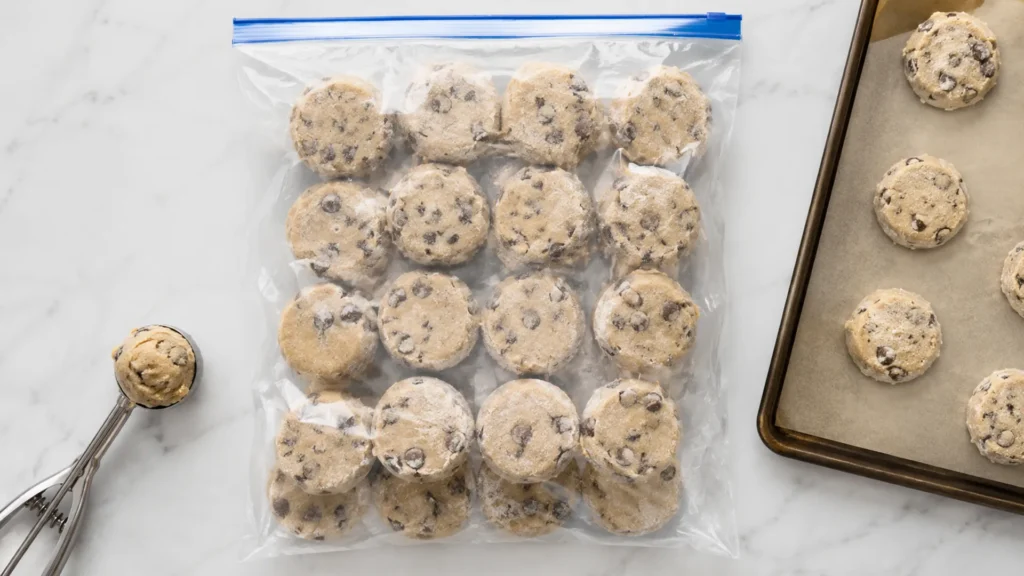
Can you freeze cookie dough? Yes, and it might be the single most useful habit in home baking. Almost any drop-style cookie dough freezes beautifully for up to three months, which means you can mix one batch and bake fresh, warm cookies a few at a time whenever you want them, with no bowl to wash and no leftovers going stale. Freezing dough is better than freezing baked cookies, because what comes out of the oven is genuinely just-baked rather than thawed. The method takes ten minutes and pays you back for weeks.
This guide covers which doughs freeze well and which do not, exactly how to portion and freeze dough so it does not clump or get freezer burn, how long it keeps, the two ways to bake it (straight from frozen or thawed), why frozen dough actually makes thicker cookies, and how to handle cut-out and rolled doughs. By the end you will keep a stash of dough balls in the freezer and never be more than fifteen minutes from a fresh cookie.
The Short Answer
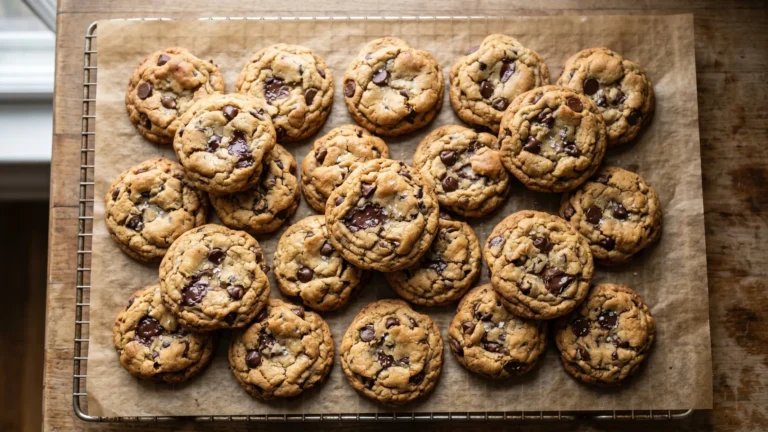
Yes, you can freeze cookie dough, and most standard doughs freeze without any loss of quality. Drop cookies like chocolate chip, oatmeal, peanut butter, and sugar cookies are the easiest and most reliable. The trick is to portion the dough before freezing, freeze the pieces solid on a tray first so they do not stick together, then store them in an airtight bag. Done this way, the dough keeps for up to three months and bakes on demand. A few delicate doughs are exceptions, which we will get to, but the everyday cookies most people bake are all excellent candidates.
Why Freezing Dough Beats Freezing Cookies
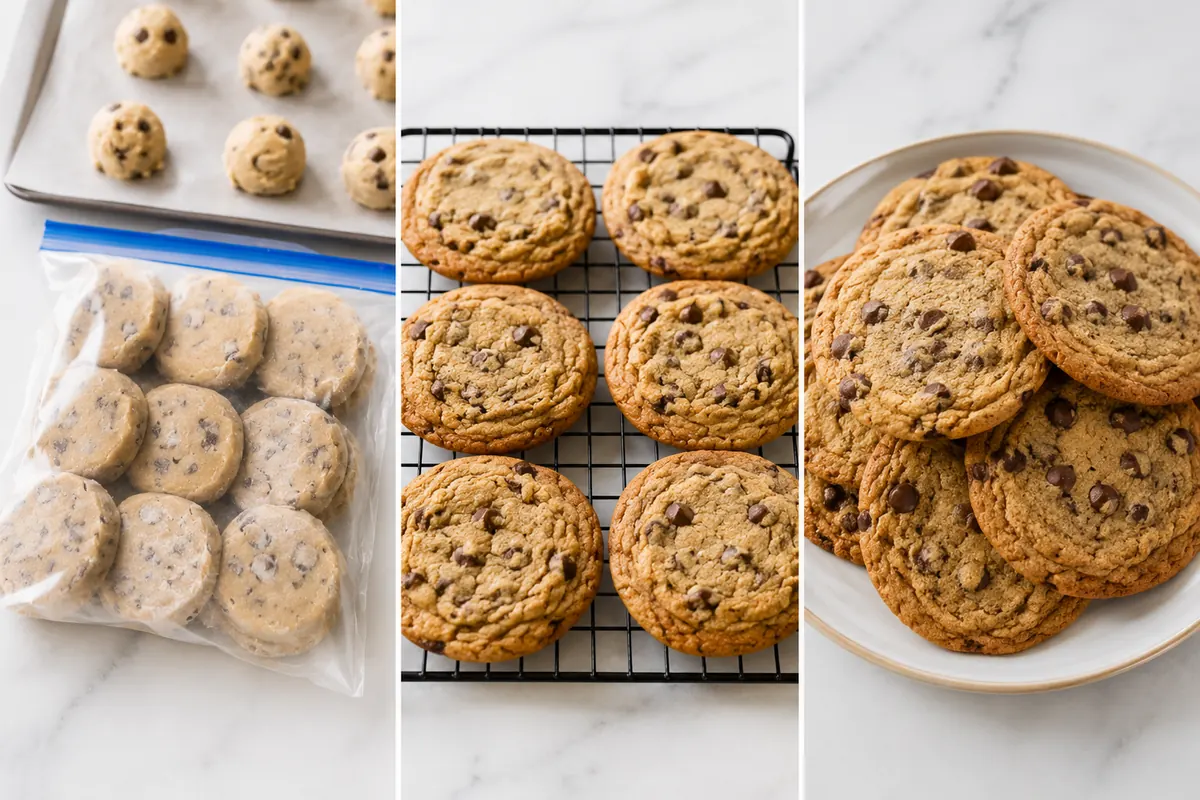
Both work, but freezing the dough has real advantages. The biggest is freshness: a cookie baked from frozen dough tastes like it was made from scratch that minute, because it was, while a frozen-then-thawed baked cookie is a day-old cookie at best. Freezing dough also lets you bake exactly how many you want, so two people are not staring down three dozen cookies. It cuts waste, since dough you would not use up fresh goes straight to the freezer instead of the trash. And it is a genuine time-saver for the holidays or a busy week, letting you do the mixing once and the baking whenever. There is even a texture bonus, covered below, since cold dough bakes thicker. For all those reasons, scooping dough into the freezer is one of the smartest things a regular baker can do.
Which Doughs Freeze Well, and Which Do Not
Most do, but it helps to know the lines. Drop cookie doughs, the scoop-and-bake kind, are the gold standard and freeze flawlessly. Stiffer doughs for cut-out and rolled cookies freeze well too, usually as a flat disc you thaw before rolling. Slice-and-bake doughs freeze perfectly as a log you cut while still partly frozen. The doughs to be cautious with are the delicate ones: thin batters for lace cookies and tuiles, anything leavened with whipped egg whites like meringues and some macaron batters, and very wet doughs that depend on being baked immediately. Thumbprint and filled cookies should be frozen unfilled, with the jam or chocolate added after baking. When in doubt, a sturdy, scoopable dough is almost always freezer-safe, while a thin, airy, or batter-like one may not be.
How to Freeze Cookie Dough Step by Step
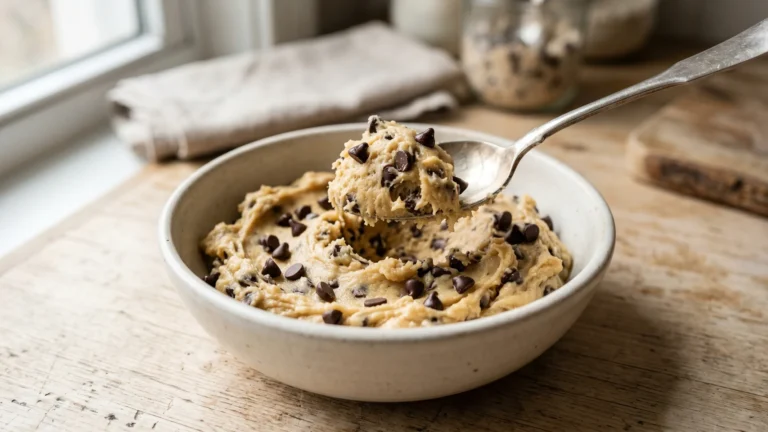
- Mix the dough as usual, right up to the point where you would bake it.
- Portion it into balls with a cookie scoop so each piece is ready to bake later, and line a baking sheet with parchment.
- Arrange the dough balls on the tray in a single layer, not touching, and freeze them flat until solid, usually one to two hours. This flash-freeze step is what stops them clumping into one mass.
- Transfer the frozen balls to an airtight freezer bag or container, press out as much air as you can, and seal.
- Label the bag with the cookie type, the baking temperature and time, and the date, so future you knows exactly what to do.
That label matters more than it sounds, because a frozen dough ball gives no clue what recipe it came from or how to bake it. Writing the temperature and time on the bag turns a mystery lump into a fifteen-minute fresh batch. Pressing the air out is the other key step, since air is what causes freezer burn and off flavors over time.
How Long Does Frozen Cookie Dough Last?
Frozen cookie dough keeps for up to three months at full quality, and it stays safe well beyond that, though the flavor slowly fades and the risk of freezer burn rises. For the best results, aim to bake it within about six weeks, which is comfortably within the window where it tastes freshly made. Always store it airtight with the air pressed out, and keep it in the back of the freezer rather than the door, where the temperature swings every time it opens. In the fridge rather than the freezer, the same dough keeps only three to five days, so the freezer is the right tool any time you are planning more than a few days ahead. For a fuller breakdown of dough and cookie timelines, see our guide on how long homemade cookies last.
Baking Cookie Dough From Frozen
You have two good options, and neither is hard.
Straight from frozen
This is the convenient way. Place the frozen dough balls on a lined baking sheet, and bake at the recipe’s temperature, or about twenty-five degrees lower, adding two to five extra minutes to the time. Pull them when the edges are golden but the centers still look slightly underdone, since they will finish setting as they cool. There is no need to thaw, which is the whole appeal: fresh cookies on fifteen minutes notice.
Thawed first
If you prefer to bake exactly as the recipe is written, let the dough balls thaw in the fridge overnight, then bake at the normal temperature and time. This is handy when you are baking a large batch for an event and want predictable results. Either method works well, so the choice comes down to whether you want speed or to follow the recipe to the letter.
Why Frozen Dough Makes Thicker Cookies
Here is the texture bonus: the colder the dough is when it hits the oven, the thicker the cookie. Cold butter in the frozen dough takes longer to melt, so the cookie has more time to set its structure before it can spread, which is exactly the mechanism that prevents flat cookies. Bakers who struggle with cookies spreading too much often find that baking from frozen solves the problem on its own. If your cookies tend to bake thin, freezing the dough is a reliable fix, and you can read the full set of causes and solutions in our guide on why cookies turn out flat. So freezing is not just about convenience; it can genuinely improve the cookie.
Freezing Cut-Out and Rolled Dough
Stiffer doughs for rolled and cut-out cookies freeze a little differently. The easiest approach is to shape the dough into a flat disc, wrap it tightly in plastic and then a freezer bag, and freeze it that way; a disc thaws faster and more evenly than a thick ball. When you are ready, thaw it in the fridge until it is firm but rollable, then roll, cut, and bake as usual. You can also roll the dough between parchment sheets before freezing, so it is ready to cut the moment it thaws. For slice-and-bake doughs, freeze the dough as a log, then slice the rounds while still partly frozen for clean edges. A holiday cut-out like snowflake cookies is a perfect candidate for making the dough weeks ahead and baking fresh closer to the day.
Should You Freeze the Dough or the Baked Cookies?
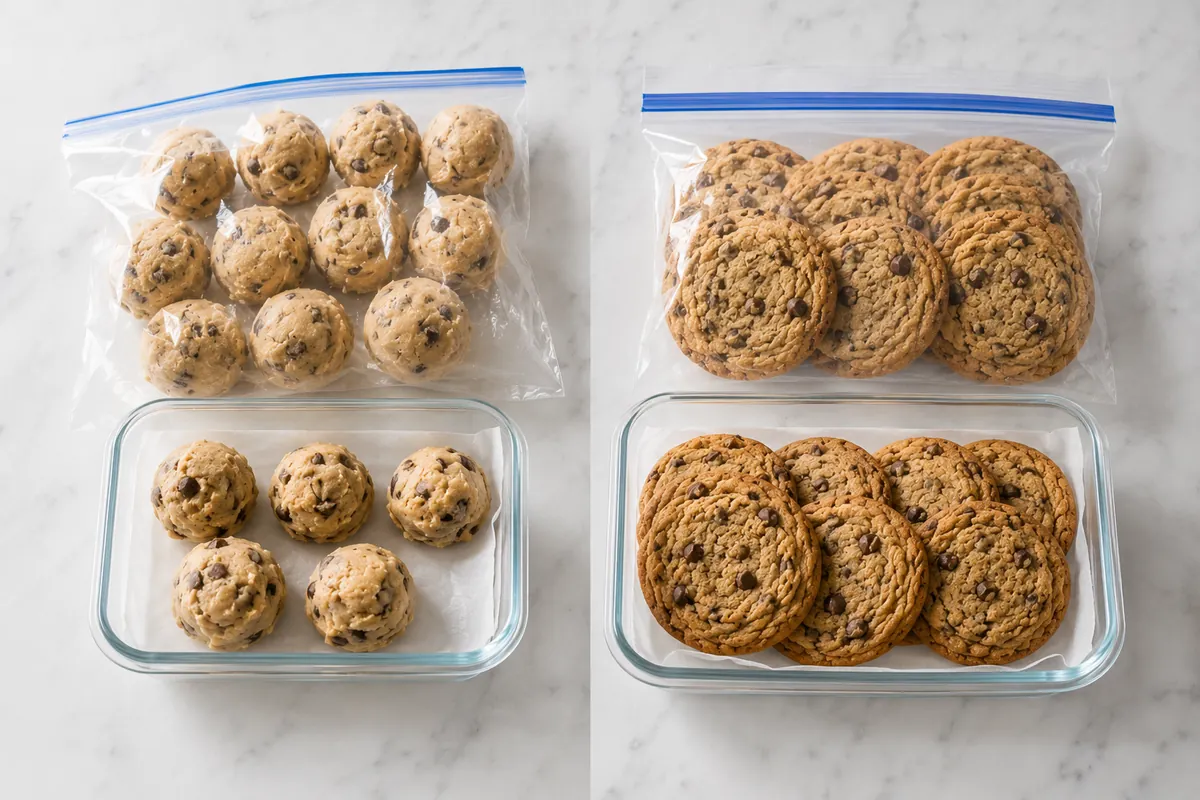
You can freeze either, and both keep for a few months, but they serve different needs. Freezing dough gives you the fresher result, because every cookie is baked to order and tastes like it was just made, which is why most bakers prefer it. Freezing baked cookies is the better move when you need them ready to grab with no oven time, such as for a lunchbox or a quick treat, and when you have already baked more than you can eat. Baked cookies thaw at room temperature in fifteen to thirty minutes, while frozen dough needs the oven but rewards you with that warm, soft-centered, just-baked quality. A practical compromise many people use is to bake half a batch now and freeze the other half as dough, so they have fresh cookies today and the makings of fresh cookies later. If freezing baked cookies, cool them completely, freeze in a single layer first, then bag them with parchment between any frosted ones so they do not stick.
Thawing and Food Safety
Frozen dough is low-risk, but a few habits keep it safe and good. Thaw dough in the fridge rather than on the counter when you are not baking straight from frozen, since a slow, cold thaw keeps it out of the temperature range where bacteria grow. Do not let dough sit out at room temperature for hours to soften, as that both risks safety and lets the butter warm and the cookies spread. Bake dough that contains raw egg rather than tasting it, because freezing does not kill bacteria, it only pauses them. And once dough has fully thawed, bake it rather than refreezing, since a second freeze degrades the texture. Treated sensibly, frozen cookie dough is one of the safest and most convenient things in the freezer.
A Make-Ahead Plan for the Holidays
Freezing dough turns holiday baking from a marathon into a series of short, calm sessions. Instead of spending one exhausting day mixing and baking dozens of cookies, you can make several doughs over a few evenings, portion and freeze them, and then bake fresh trays as you need them through the season. Cookie swaps, gifts, and last-minute guests all become easy when a labeled bag of dough is fifteen minutes from a fresh batch. Stagger your mixing across a couple of weeks, keep a running list taped to the freezer of what is in there and how to bake each one, and pull dough the morning of an event so it is ready. This approach also spreads out the work and the dishes, and it means the cookies people eat are always fresh rather than baked days early and going stale, which ties back to the timelines in our guide on how long homemade cookies last.
A Few Practical Tips
- Flash-freeze first on a tray so dough balls do not fuse into a block.
- Label everything with the cookie, the temperature and time, and the date.
- Press out the air to prevent freezer burn and off flavors.
- Freeze unfilled for thumbprint and sandwich cookies; add filling after baking.
- Bake from frozen for thicker cookies, adding a couple of minutes.
- Keep it in the back of the freezer, away from the door’s temperature swings.
These small habits are what separate dough that bakes like fresh from dough that tastes freezer-tired. The same freeze-ahead approach works across styles, from rich double chocolate cookies to allergy-aware baking, since a tray of gluten-free dough balls freezes and bakes on demand just the same. For the testing behind why cold dough behaves the way it does, America’s Test Kitchen and Cook’s Illustrated are dependable references.
Freezing Cookie Dough vs Storing It in the Fridge
Both buy you time, but they suit different timelines. The fridge is right for the short game, keeping dough usable for three to five days, which is perfect if you are baking later this week or want to chill dough overnight for a thicker cookie. The freezer is for anything beyond that, stretching the same dough to three months. The texture results differ too: refrigerated dough bakes a touch thicker than fresh because the butter is cold, while frozen dough bakes thickest of all. A simple rule covers most situations: if you will bake within a few days, the fridge is easier since there is no thawing; if it is longer than that, or you are not sure when you will bake, go straight to the freezer in portioned balls so nothing is wasted. Keeping a small stash in each is the most flexible setup, with a day or two of dough in the fridge and a long-term reserve in the freezer.
Frequently Asked Questions
Can you freeze cookie dough?
Yes, most cookie dough freezes well for up to three months, especially drop cookies like chocolate chip, oatmeal, and sugar. Portion it into balls, freeze them solid on a tray first so they do not stick, then store them in an airtight bag with the air pressed out.
How long can you freeze cookie dough?
Frozen cookie dough keeps at full quality for up to three months, and tastes freshest if baked within about six weeks. It remains safe longer, but the flavor fades and freezer burn becomes more likely. Always store it airtight with as much air removed as possible.
Do you have to thaw frozen cookie dough before baking?
No, you can bake most drop cookies straight from frozen. Bake at the recipe temperature or about twenty-five degrees lower, and add two to five minutes. If you prefer, thaw the dough balls in the fridge overnight and bake exactly as the recipe directs.
Does freezing cookie dough make cookies thicker?
Yes. The colder the dough, the longer the butter takes to melt in the oven, so the cookie sets before it can spread, giving a thicker result. Baking from frozen is a common fix for cookies that otherwise turn out flat.
What cookie dough does not freeze well?
Delicate and batter-like doughs are the exceptions, including thin lace cookies, tuiles, meringues, and some macaron batters that rely on whipped egg whites. Filled and thumbprint cookies should be frozen unfilled, with the filling added after baking.
Can you refreeze cookie dough?
It is best not to refreeze dough that has fully thawed, since each thaw and refreeze cycle degrades texture and adds time at unsafe temperatures. Freeze the dough once in portions, and pull out only what you plan to bake so the rest stays frozen.
Bottom Line
Freezing cookie dough is one of the best habits a baker can pick up: mix once, then bake fresh, warm cookies a few at a time for up to three months. Scoop the dough into balls, flash-freeze them on a tray, bag them airtight with a label, and bake straight from frozen for cookies that are not just convenient but often thicker and better than dough baked right away. Keep a stash in the freezer and a fresh batch is always fifteen minutes away.