Why are my cookies flat? In almost every case it is because the butter melted and the sugar turned to liquid before the cookie had a chance to set, so the dough spread into a thin, greasy puddle instead of holding its shape. Flat cookies are not bad luck. They are the predictable result of a handful of fixable mistakes, usually involving butter that was too warm, dough that was not chilled, or a recipe that is short on flour. Once you know which lever caused the spread, the fix takes a single batch.
This guide walks through the eight things that actually flatten cookies, in roughly the order they trip people up, with the specific fix for each. There is a quick-reference table, a section on rescuing dough that is already spreading, and a prevention checklist you can run before the next tray goes in. By the end you will know exactly why your last batch went flat and how to get tall, chewy cookies instead.
The Quick Answer: Spread Is a Race
Every cookie is a race between two things: the fats and sugars melting and spreading outward, and the eggs and flour setting into a structure that locks the shape in place. When the dough is cold and the recipe is balanced, the structure wins early and you get a thick cookie. When the butter is too soft, the sugar too high, or the leavening dead, the spreading wins and you get a flat one. Almost everything below is just a different way of tipping that race toward spreading or toward setting. Keep that picture in mind and the causes stop feeling random.
Cause 1: The Butter Was Too Warm or Melted
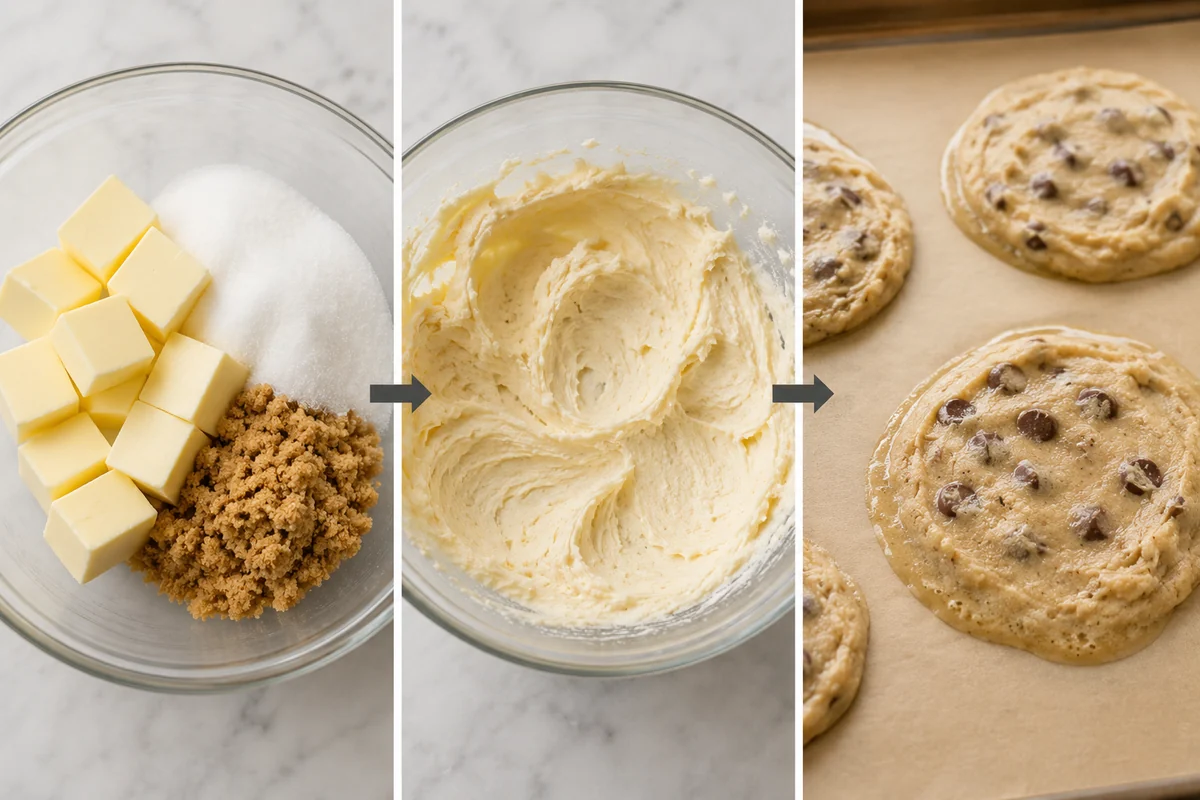
This is the single most common reason, and it catches experienced bakers too. Cookie recipes call for softened butter, which should be cool to the touch and just pliable enough to dent with a finger, not greasy, shiny, or melting at the edges. Butter that has gone too soft, or that was melted and not cooled, starts as a near-liquid, so the dough has nothing to hold its height and it floods outward the moment it hits the heat. If you softened butter in the microwave and any part went translucent, it is too far gone. Let it firm back up in the fridge before you cream it, and in future leave cold butter on the counter for only thirty to sixty minutes.
Cause 2: You Over-Creamed the Butter and Sugar
Creaming butter and sugar whips air into the dough and is a good thing in moderation, but beating it too long is a hidden cause of flat cookies. Over-creaming warms the butter from the friction and can break its emulsion, so fat leaks out during baking and the cookie spreads thin and greasy. Cream only until the mixture is light and fluffy, usually two to three minutes on medium, then stop. If your kitchen is warm, cut it shorter. The goal is aerated, not whipped to oblivion.
Cause 3: Not Enough Flour
Flour is the structure, so too little of it means nothing to hold the cookie up. The usual culprit is measuring by scooping the cup directly into the bag, which compacts the flour and, paradoxically, leaves you with less than the recipe intends once it settles, or the spoon-and-level method gone wrong. The reliable fix is to weigh flour on a kitchen scale, since a cup of all-purpose flour should be about 120 grams and most people scoop closer to 100. If you do not own a scale, fluff the flour, spoon it lightly into the cup, and level it off with a knife rather than scooping and packing.
Cause 4: Too Much Sugar or Butter
Sugar melts into liquid as it bakes, so a recipe heavy on sugar simply has more liquid to spread, and white granulated sugar spreads more than brown sugar, which holds moisture and gives lift. Too much butter does the same thing from the fat side. If a trusted recipe still bakes flat, weigh your sugar and butter to confirm you are using the right amounts, and if everything checks out you can reduce the sugar by a tablespoon or two or shift some white sugar to brown for a thicker, chewier result. Precision matters more in cookies than almost any other bake.
Cause 5: Old or Missing Leavening
Baking soda and baking powder are what push a cookie up, and they lose their power over time. Leavening that has sat in the cupboard for a year may be nearly dead, so the cookie never gets its lift and bakes flat and dense. Check the dates, and replace baking soda and powder every six months to a year. You can test baking powder by stirring a spoonful into hot water; it should fizz immediately. If a recipe calls for leavening and you accidentally left it out, that alone will flatten the whole batch.
Cause 6: You Skipped Chilling the Dough
Chilling is the most powerful anti-flat tool there is, and skipping it is why so many first attempts spread. Cold dough means cold butter, and cold butter takes longer to melt in the oven, which buys time for the structure to set before the cookie can spread. Chill the dough for at least thirty minutes to an hour, and overnight is even better for flavor and thickness. This is especially important on a warm day or if your dough felt soft. If you are baking in batches, keep the unused dough in the fridge between trays rather than leaving it out on the counter going soft.
Cause 7: Hot Pans, Greased Pans, and Foil
The baking surface matters more than people expect. Placing dough on a hot pan straight from the previous batch starts the butter melting before the cookies even reach the oven, so always let pans cool between rounds or use a second cool one. Greasing a sheet that does not need it adds fat and encourages spread, and a foil-lined sheet conducts heat in a way that thins cookies out. Line your pans with unbleached parchment paper or a silicone mat instead, on a fully cooled sheet, and you remove three causes of flatness at once.
Cause 8: The Oven Temperature Is Off
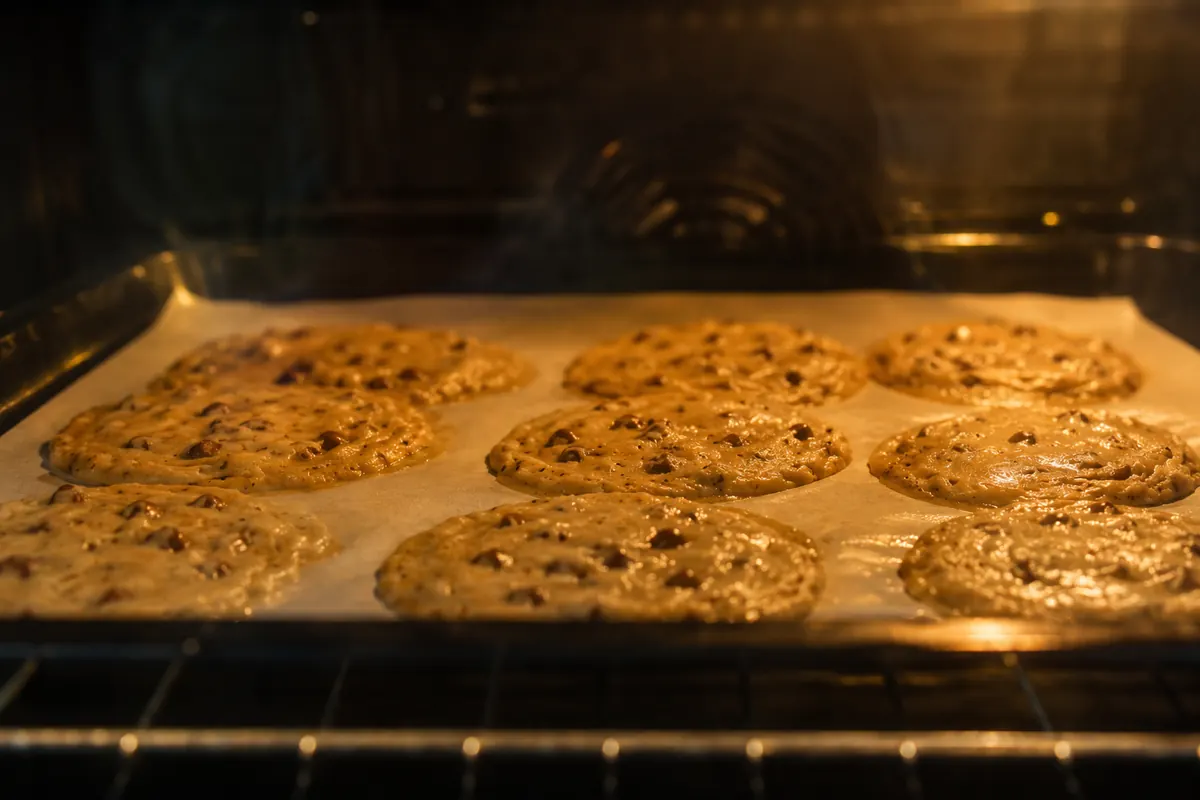
An oven that runs cooler than the dial says will let cookies spread for too long before the heat sets them. Many home ovens are off by twenty-five degrees or more, and you would never know without checking. Use an inexpensive oven thermometer to confirm the real temperature, and preheat fully before the first tray, since a not-quite-hot oven is effectively a cool one. If your cookies brown too slowly and spread a lot, a low oven is a prime suspect. The reliable testing kitchens like America’s Test Kitchen and Cook’s Illustrated hammer this point because it quietly ruins more bakes than any single ingredient.
| Cause | Fix |
|---|---|
| Butter too warm or melted | Use cool, pliable butter; chill if too soft |
| Over-creamed butter and sugar | Cream just 2-3 minutes until fluffy |
| Not enough flour | Weigh flour, about 120 g per cup |
| Too much sugar or butter | Weigh them; shift white sugar to brown |
| Old or missing leavening | Replace every 6-12 months; test it |
| Dough not chilled | Chill 30-60 min, or overnight |
| Hot, greased, or foil pans | Cool pans, parchment or silicone mat |
| Oven runs cool | Check with an oven thermometer |
How to Rescue Dough That Is Already Spreading
If the first tray came out flat and you still have dough, you can usually save the rest without starting over. The fastest fix is to chill the remaining dough hard, thirty minutes in the fridge or fifteen in the freezer, which firms the butter and shrinks the spread immediately. If the dough seems wet or greasy, work in an extra tablespoon or two of flour, since a touch more structure counters excess fat and sugar. Make sure your next pan is cool and lined with parchment, and confirm the oven is fully heated. These three moves, colder dough, a little more flour, and a cool lined pan, will turn a flat batch into a respectable one mid-bake. For a guaranteed thick result while you troubleshoot, a sturdy bar recipe like loaded cookie bars sidesteps spread entirely because it bakes in a pan.
The Prevention Checklist
Run through this before the next batch and flat cookies become rare.
- Butter cool and pliable, never melted or greasy.
- Cream just until fluffy, two to three minutes, no more.
- Weigh the flour, around 120 grams per cup, or spoon and level.
- Chill the dough at least thirty minutes, longer if you can.
- Fresh leavening, replaced within the last year.
- Cool, parchment-lined pans, never hot, greased, or foil.
- Verified oven temperature with a thermometer, fully preheated.
Get those seven right and the structure wins the race almost every time. The same fundamentals carry over to nearly any cookie, from delicate snowflake cookies to rich double chocolate cookies, and even to allergy-aware baking, since the chill-and-weigh approach is exactly what makes gluten-free cookies hold their shape too.
Test-Bake One Cookie First
Here is the move that saves an entire batch: before you commit a full tray, bake a single test cookie. Scoop one ball, bake it according to the recipe, and watch what it does. If it spreads into a thin disc, you have learned, at the cost of one cookie, that something needs adjusting, and you can fix the rest of the dough before any of it is wasted. A test cookie tells you almost everything in eight to ten minutes. If it spread too much, chill the remaining dough harder and consider a spoonful more flour. If it stayed too domed and did not spread at all, the dough may be too cold or too floury and can sit a few minutes at room temperature. This one habit, borrowed from professional bakeries, turns guesswork into a quick experiment, and it is especially worth doing with a new recipe or on a hot day when butter behaves unpredictably. The first cookie is your insurance policy for the other twenty-three.
White Sugar, Brown Sugar, and Spread
The sugar you use changes how flat a cookie bakes, and it is an easy lever to pull. White granulated sugar melts freely and encourages spread, giving thin, crisp, lacy edges. Brown sugar holds moisture and is slightly acidic, which helps cookies rise and stay thicker and chewier. If your cookies bake flatter than you like, shifting some of the white sugar to brown nudges them taller without changing much else. The ratio of the two is one of the main reasons two recipes for the same cookie can look completely different coming out of the oven. This is also why simply swapping sugars between recipes can backfire, since you are changing the spread along with the sweetness. When you want a thick, soft cookie, lean brown; when you want a thin, crisp one, lean white, and you can dial the texture in over a couple of batches.
Does the Type of Cookie Matter?
Not every flat cookie is a mistake, because some cookies are supposed to be thin. Lace cookies, florentines, and many shortbread and tuile styles are designed to spread into delicate, crisp rounds, so flatness there is the goal, not a flaw. The troubleshooting in this guide is aimed at cookies that should be thick and chewy, like classic chocolate chip, sugar, and oatmeal cookies, where excessive spread is unwanted. Drop cookies made with lots of butter and sugar are the most spread-prone and benefit most from chilling, while dough-heavy cookies and cut-out cookies hold their shape more naturally. Knowing which camp your cookie belongs to keeps you from over-correcting, since adding flour and chilling a cookie that is meant to be thin will just make it dense. Match your expectations to the style first, then troubleshoot only the cookies that genuinely came out flatter than intended.
Frequently Asked Questions
Why are my cookies flat even though I followed the recipe?
The most likely reasons are butter that was too warm and dough that was not chilled, both of which let the cookie spread before it sets. Old baking soda or powder, a cup of flour that was under-measured, and an oven running cool are the next suspects. Weigh your flour, chill the dough, and check your leavening dates.
Does chilling cookie dough really stop them from going flat?
Yes, it is the single most effective fix. Cold dough keeps the butter solid longer in the oven, so the cookie has time to set its structure before it can spread. Chill for at least thirty minutes, or overnight for even thicker, more flavorful cookies.
Should I add more flour to stop cookies spreading?
A little can help if the dough is wet or greasy. Try adding one to two extra tablespoons of flour, since more flour gives the cookie more structure to resist spreading. Be careful not to overdo it, though, because too much flour makes cookies dry and cakey.
Why do my cookies spread but the recipe works for others?
Small differences add up. Your butter may be softer, your flour measured lighter, your oven cooler, or your pans warmer than theirs. Weigh your ingredients, chill the dough, use a cool parchment-lined pan, and verify your oven temperature to match their conditions.
Can old baking soda make cookies flat?
Yes. Baking soda and powder lose their leavening power over time, so cookies made with stale leavening rise less and bake flatter and denser. Replace them every six months to a year, and test baking powder by dropping a spoonful into hot water to see if it fizzes.
Are flat cookies still safe to eat?
Absolutely. Flat cookies are a texture problem, not a safety one, as long as they are baked through. They may be thinner and crispier than you wanted, but they are perfectly fine to eat while you adjust the dough for the next batch.
Bottom Line
Flat cookies come down to one thing: the dough spread before it set. Tip the race back toward setting by using cool, pliable butter, weighing your flour, chilling the dough for at least thirty minutes, baking on cool parchment-lined pans, and confirming your oven is actually at temperature with fresh leavening in the mix. Fix the one or two that apply to your kitchen and the next tray will stand tall and chewy. Keep the prevention checklist near the mixer, and flat cookies stop being a mystery and start being a thing of the past. And remember the test-cookie habit: when you are unsure, bake one first, read what it tells you, and adjust the rest of the dough before committing the whole tray. That single cookie is the fastest feedback in all of baking, and it turns every batch into a small, reliable experiment rather than a roll of the dice.