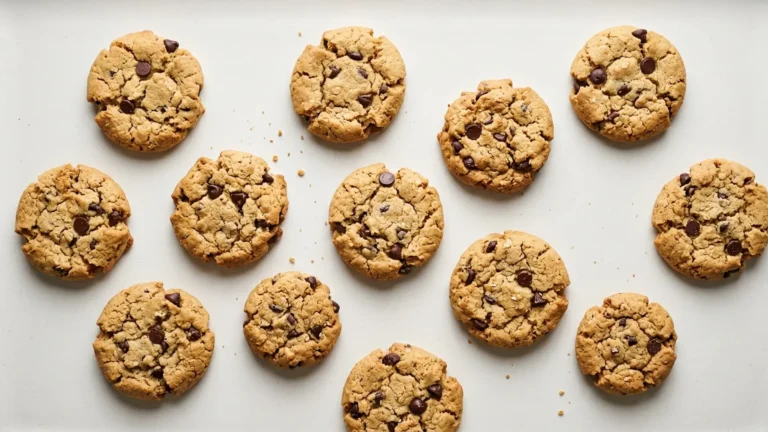
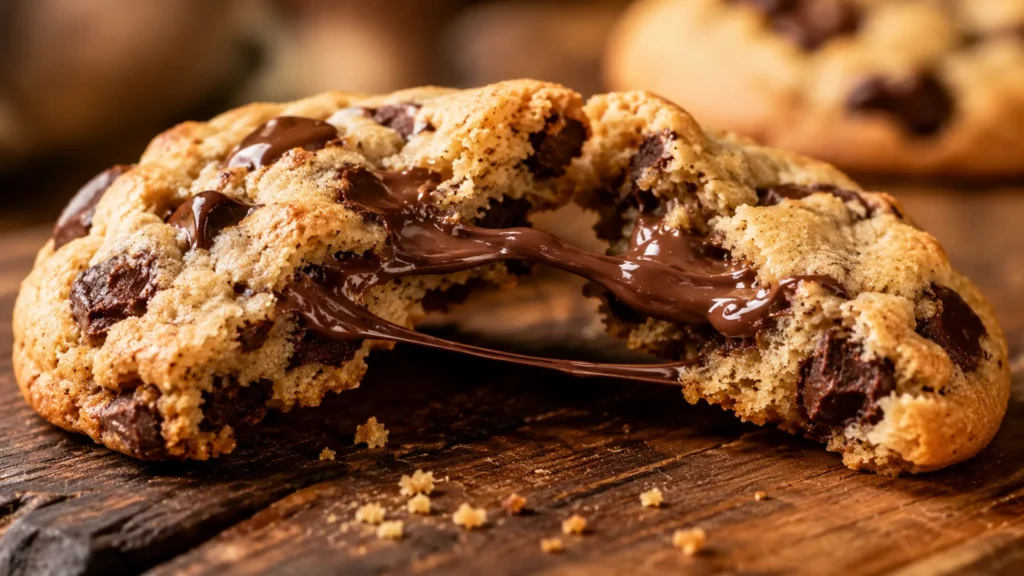
Learning how to make chewy cookies is less about a single secret ingredient and more about steering moisture, sugar, and fat so the finished cookie bends instead of snaps. Chew is a texture you build on purpose. A chewy cookie holds onto water, leans on the right sugars, uses a little extra protein for elasticity, and comes out of the oven a touch underbaked so it firms up soft rather than crisp. Once you understand the four or five levers, you can pull chew out of almost any cookie recipe without a rewrite.
Crisp and chewy sit at opposite ends of the same dial. A crisp cookie is dry and full of crunch because the moisture baked off and the sugar set into a glassy crackle. A chewy cookie keeps moisture trapped inside a slightly elastic structure. Everything below is about keeping water in the dough, choosing sugars that hold it, and building just enough gluten to give that pleasant pull. Get those three right and chew follows.
It helps to picture what chew actually is in the mouth. A chewy cookie resists your bite for a moment, then gives, then springs back a little. That resistance comes from an elastic protein network holding moisture, almost like a very soft bread. A crisp cookie offers no resistance at all, just a clean snap and then crumbs. Cakey cookies, the third category, are dry and tender but fall apart without any pull. Most people who want chewy cookies are accidentally making cakey or crispy ones, and the fixes for each are different. Knowing which of the three you are getting tells you exactly which lever to pull.
Brown Sugar Is Your Best Friend
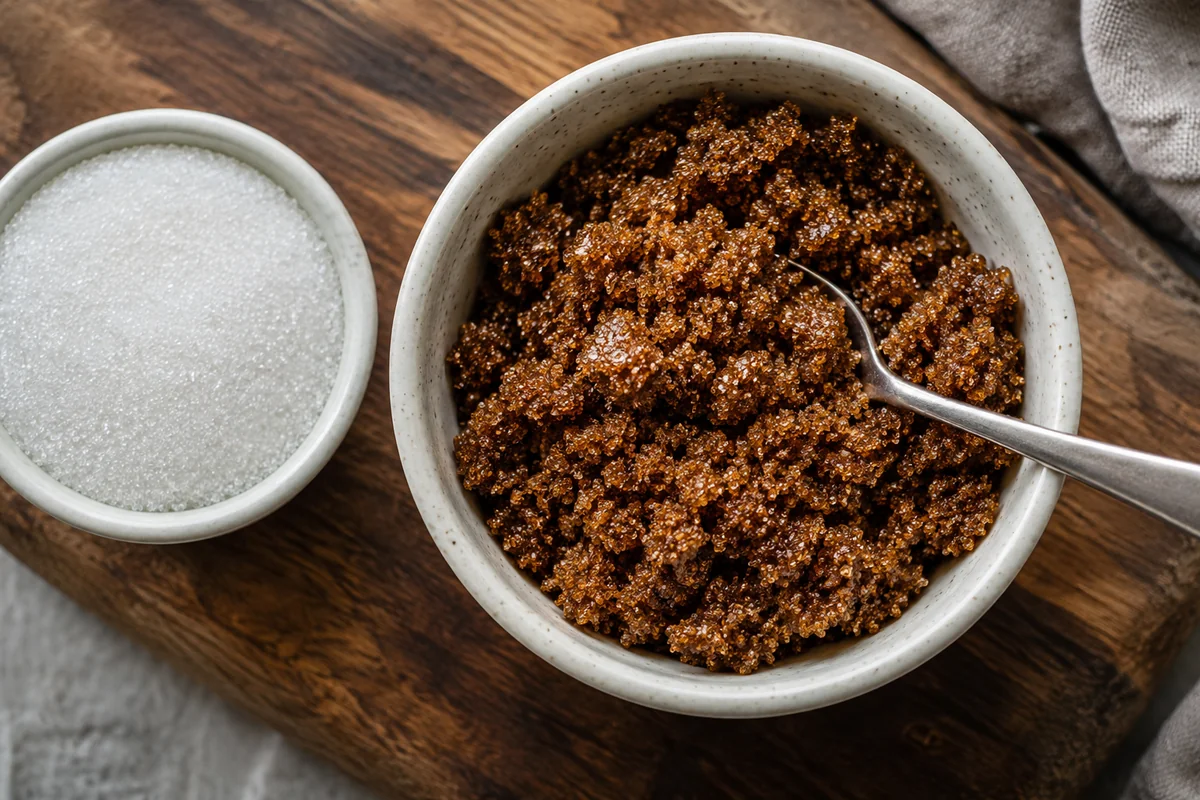
If you change one thing today, raise the ratio of brown sugar to white sugar. Brown sugar is granulated sugar with molasses added back in, and molasses is hygroscopic, meaning it grabs and holds water. That trapped moisture is what makes a cookie bend. White sugar, by contrast, promotes spread and crisp edges and dries the cookie as it bakes. A cookie that is mostly white sugar tends to shatter. A cookie that is mostly brown sugar tends to chew.
My default for a chewy cookie is to flip the usual ratio so brown sugar dominates, often two parts brown to one part white, and sometimes all brown. Dark brown sugar has more molasses than light brown, so it pulls even harder toward chew and adds a deeper, almost caramel note. The trade-off is color and a slightly softer set, which is exactly what you want here. For the full picture of what molasses does to texture and flavor, this deep dive into molasses cookies breaks it down with a recipe built entirely around that pull. The chemistry of how molasses and brown sugar hold moisture is summarized well in the overview of brown sugar.
| Lever | For more chew | Why it works |
|---|---|---|
| Sugar choice | More brown, less white | Molasses holds moisture; white sugar dries and crisps. |
| Fat | Melted butter, not creamed | Skips aeration, denser crumb, more bend. |
| Eggs | Extra yolk, hold a white back | Yolk adds fat and emulsion; whites dry and crisp. |
| Flour | Touch of bread flour | More protein builds elastic gluten for pull. |
| Bake | Pull 1 to 2 minutes early | Carryover sets the center soft, not dry. |
Melt the Butter Instead of Creaming It
Creaming softened butter with sugar whips air into the dough, which gives you a lighter, cakier, more domed cookie. For chew, you want the opposite. Melting the butter skips the aeration step and gives you a denser dough that bakes into a tighter, bendier crumb. Melted butter also coats the flour with fat faster and frees up water to interact with the proteins, which changes the texture in a chewy direction.
There is a useful trick here. Browning a portion of the melted butter, cooking it until the milk solids turn golden and smell nutty, adds toffee depth without changing the chew much. Let browned butter cool before mixing so it does not cook the eggs. One caution: melted butter spreads more, so a melted-butter dough almost always needs a rest in the fridge before baking, or it goes flat. If flat cookies are a recurring problem, the chilling logic carries straight over to chew.
Play the Egg Yolk Game
Eggs are two ingredients in one shell. The yolk is fat, water, and emulsifiers that keep a cookie tender and moist. The white is mostly water and protein that dries out and crisps as it bakes, the same way a meringue goes crunchy. For chew, tilt toward yolks. A common move is to use one whole egg plus one extra yolk in a standard batch, or to drop one white entirely. The extra yolk adds richness and binds moisture, while pulling a white reduces the drying, crisping protein.
This is a small change with an outsized effect on bite. Do not go overboard, because too many yolks make a greasy, dense cookie that never quite sets. One extra yolk per dozen-plus batch is the sweet spot. If you bake eggless for diet or allergy reasons, the binder you choose matters even more, since most egg substitutes lean either crisp or cakey rather than chewy, and you compensate with extra brown sugar and a shorter bake.
Temperature of the eggs matters less than people think, but it is worth a note. Room-temperature eggs blend more evenly into a melted-butter dough and emulsify better, which gives a smoother, more uniform crumb. Cold eggs straight from the fridge can seize warm melted butter into little clumps. If you forgot to set the eggs out, drop them in a bowl of warm water for five minutes before you start. It is a tiny habit that keeps the dough cohesive, and a cohesive dough bakes into a more even chew rather than a patchy mix of dry and greasy spots.
Mind Your Hydration and Mix-Ins
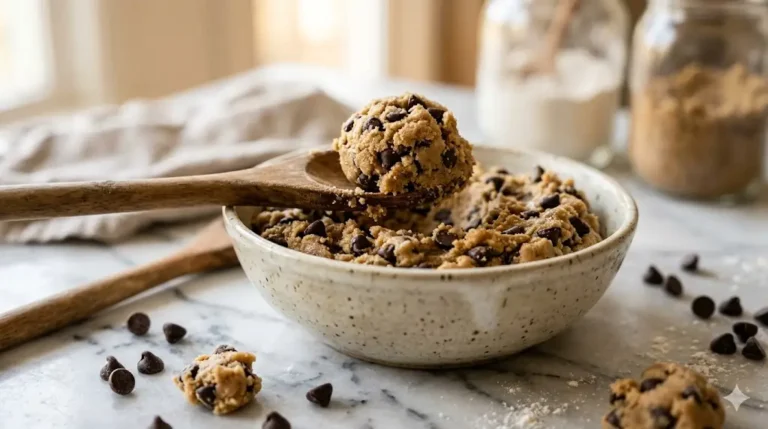
Hydration is the word bakers use for how much water is in a dough relative to flour, and chew lives or dies by it. Every wet ingredient counts toward hydration: eggs, the water inside butter, vanilla, milk, and even the molasses in brown sugar. A dough that is too dry bakes crumbly and short. A dough that is too wet spreads thin and crisps at the edges. The chewy sweet spot is a dough that feels soft and a little tacky but still holds a ball. If your dough feels stiff and dry, a single tablespoon of milk can shift it toward chew without rewriting the recipe.
Mix-ins change the texture more than people expect. Oats absorb water and firm up the crumb, which is why oatmeal cookies chew differently than plain ones. Chopped nuts add crunch that fights chew, so go lighter if pure chew is the goal. Chocolate matters too. Big melty chunks create soft pockets and can keep the surrounding crumb tender, while a lot of small chips dries the dough slightly because each chip displaces moist dough with a dry inclusion. None of this means you cannot load a cookie up, but if you want maximum chew, keep the dry, crunchy add-ins modest and lean on chocolate and brown sugar instead.
Scoop size is a sneaky chew lever as well. A bigger dough ball has more interior that stays moist while the outside sets, so larger cookies are almost always chewier than thin little ones at the same bake time. If your cookies keep coming out crisp, try doubling the scoop and pulling them a minute earlier. The thicker mound traps moisture in the middle, and you get that bakery-style cookie with set edges and a soft, bendy center. Small thin scoops bake through too fast and crisp before any chew can develop.
Use a Little More Protein in the Flour
Gluten is the protein network that gives chew its characteristic pull. All-purpose flour has a moderate protein content and gives a balanced cookie. Bread flour has more protein, so swapping a portion of your all-purpose for bread flour builds a stronger gluten network and a chewier bite. Replacing about a quarter to a half of the flour with bread flour works well in a chewy recipe. Go all bread flour and the cookie can turn tough, so blend rather than replace.
Mixing matters too. Once the flour goes in, stir only until no dry streaks remain. Overmixing develops too much gluten and crosses from pleasant chew into tough and bready. You want enough structure to pull, not enough to fight your teeth. The role of gluten in elasticity is laid out clearly in the reference on gluten, which helps explain why protein content is such a powerful lever for texture.
Underbake on Purpose
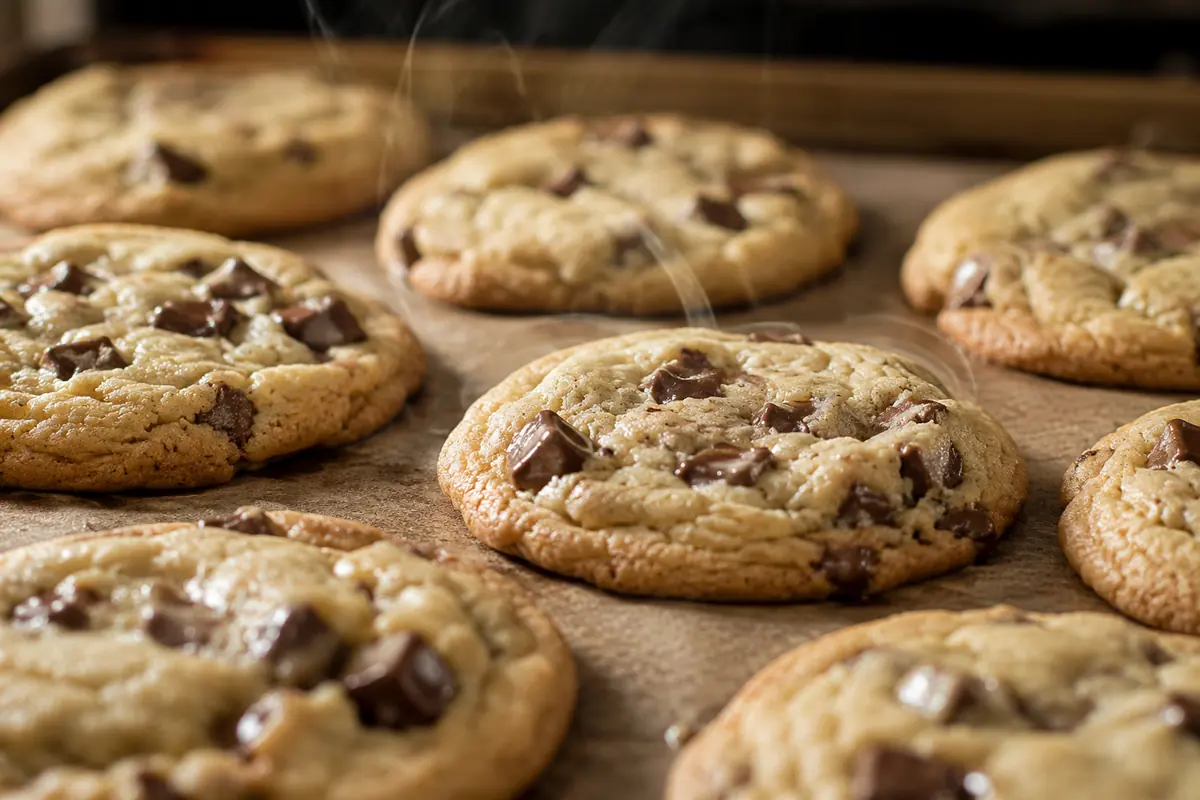
This is where most home bakers lose the chew. Cookies keep cooking after they leave the oven because the hot pan and the hot interior continue to set the crumb. That is carryover. If you bake a cookie until it looks fully done at the center, it will be dry and crisp once it cools. For chew, pull the tray when the edges are set and lightly golden but the centers still look soft, underdone, even slightly puffed. They will look not ready. Trust it.
Let the cookies rest on the hot pan for three to five minutes before moving them. During that rest the centers finish setting from residual heat while staying moist. Move them too soon and they fall apart; leave them on the pan too long and the bottoms overbake. Two to three minutes early on the oven timer plus a pan rest is the reliable combination. A digital timer beats guessing, because 90 seconds is the difference between chewy and crunchy.
Cornstarch, Resting, and the Finishing Touches
A teaspoon or two of cornstarch in the dry mix is a quiet chew booster. Cornstarch softens the crumb by interfering slightly with gluten and holding the structure tender, which is why so many soft-batch recipes include it. It will not save a recipe that is wrong everywhere else, but on top of the brown sugar and melted butter levers it nudges texture in the right direction.
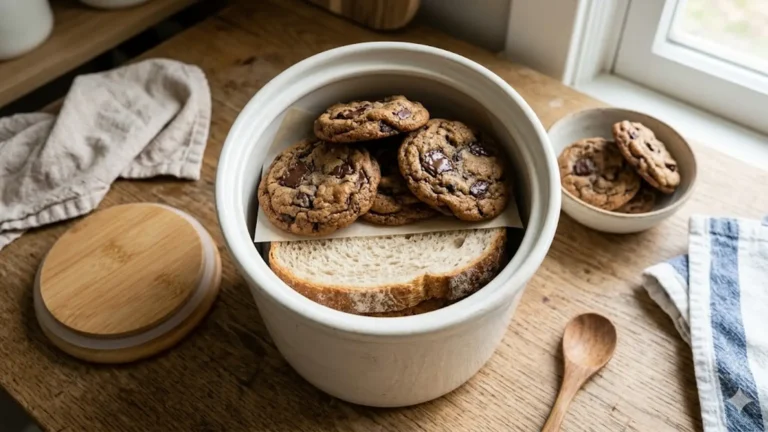
Resting the dough also matters for chew, not just for spread control. An overnight rest lets the flour fully hydrate so the water is bound into the dough rather than sitting free, which gives a more even, chewy crumb and deeper flavor as the proteins and sugars react. If you want the same soft texture to survive past day one, storage is its own skill, and the moisture tricks that keep a cookie bendy for days come from baking with humidity in mind, similar to how the right cookie pairs with a glossy dessert sauce for serving when you want a soft, indulgent finish.
There is a counterintuitive trade-off in resting that is worth naming. The longer dough rests, the more the flour drinks up the free water, and a fully hydrated dough actually spreads a little less and bakes a touch firmer. So if you rest dough for two or three days, you may want to bake it slightly less to keep the chew, since the structure is already stronger. This is why the same recipe can taste different on day one versus day three of a chilled batch. Neither is wrong. Knowing the dough changes as it sits lets you adjust the bake time by a minute and keep the texture exactly where you like it.
Humidity in your kitchen quietly affects chew too. On a humid summer day, flour carries more moisture and sugar pulls water from the air, so doughs run softer and cookies stay chewier longer. In a dry winter kitchen with the heat running, the opposite happens and cookies firm up and crisp faster after baking. You cannot control the weather, but you can compensate. Add a touch more brown sugar or a teaspoon of milk in dry conditions, and hold back a little liquid when the air is heavy. Bakers who chase consistency learn to read the room before they read the recipe.
One more for the bakers who avoid refined sugar or grains: chew is harder to hit without molasses and gluten, but not impossible. Sweeteners like allulose and certain sugar alcohols behave differently in the oven, and grain-free flours hold moisture in their own way. Bakers in those lanes have worked out clever swaps, and you can see the texture logic in action across these low-carb keto dessert ideas, where the goal of soft and rich without standard sugar runs through every recipe.
Putting the Levers Together
Before you stack the levers, a quick word on consistency. The reason your cookies come out chewy one week and crisp the next is rarely a bad recipe. It is usually an uncontrolled variable: a slightly hotter oven, a bigger egg, butter that was warmer than last time, or a longer bake because you got distracted. If you want chewy cookies every single time, weigh your ingredients, use a timer, and keep notes on what worked. Baking rewards the same boring discipline that good cooking does, and chew is repeatable once you pin down your variables instead of eyeballing them.
You do not need all of these at once. Start with sugar and bake time, because those two give the biggest jump for the least effort. Switch to mostly brown sugar and pull the tray two minutes early with a pan rest, and most recipes turn noticeably chewier on the first try. If you want to push further, add the extra yolk, melt the butter, and blend in a little bread flour. Stack the levers gradually so you can feel what each one does, and you will end up with a chewy cookie tuned to exactly the bend you like.
For a worked example of these levers in a single recipe, this walkthrough of classic chocolate chip cookies shows how brown sugar, an extra yolk, and a careful underbake combine into the soft, bendy texture most people are chasing. The Maillard browning that gives a chewy cookie its toasty edge flavor is the same reaction explained in the reference on the Maillard reaction, and understanding it helps you brown for flavor without drying out the chew.
Frequently Asked Questions
What is the single best change to make chewy cookies?
Raise the brown sugar and lower the white sugar, then pull the cookies from the oven one to two minutes early. Brown sugar holds moisture because of its molasses, which keeps the cookie soft and bendy, while underbaking leaves the centers moist so carryover heat sets them tender rather than crisp. Those two changes alone turn most recipes chewy.
Does melted butter make cookies chewier than creamed butter?
Yes. Creaming whips air into the butter for a lighter, cakier cookie, while melted butter skips that aeration and produces a denser, chewier crumb. Melted butter also frees water to interact with the flour proteins, which favors chew. Just chill the dough afterward, because melted butter spreads more and can flatten the cookie.
Why do my cookies turn out crispy instead of chewy?
Crispy usually means too much white sugar, too long in the oven, or too many egg whites, all of which dry the cookie out. Shift toward brown sugar, drop one egg white or add a yolk, and pull the tray while the centers still look soft. Chewy cookies should look slightly underbaked when they come out.
Can I make chewy cookies without bread flour?
Absolutely. Bread flour adds extra pull, but the bigger chew levers are brown sugar, melted butter, an extra egg yolk, and a short bake. All-purpose flour makes excellent chewy cookies on its own. A teaspoon of cornstarch in the dry mix also softens the crumb if you want more tenderness without changing the flour.