By CookieGrove Editorial Desk. Last updated June 2026.
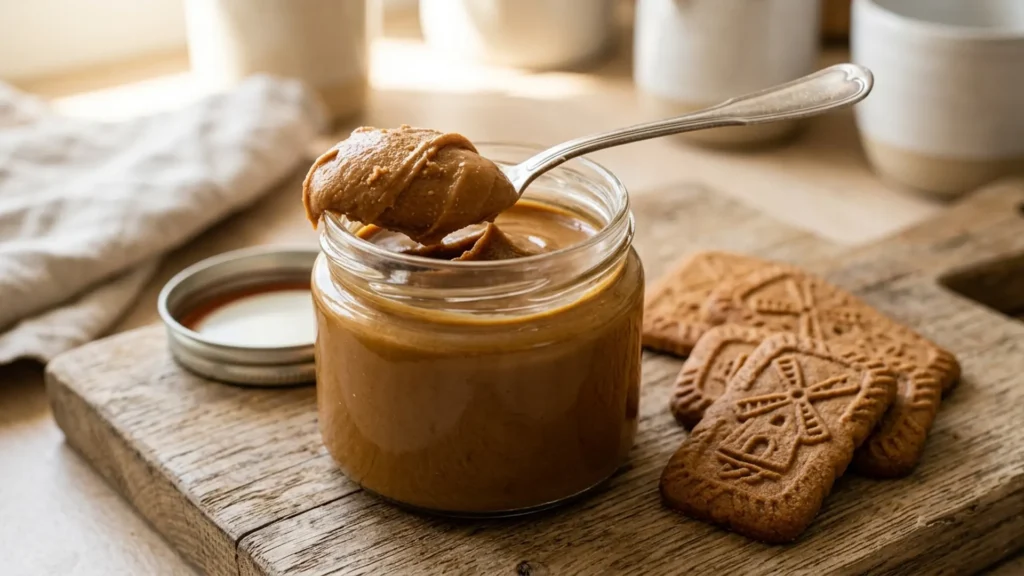
Cookie butter is a smooth, spreadable paste made from crushed spiced cookies, usually Belgian speculoos or Biscoff, blended with oil and a little sugar until it reaches the texture of peanut butter. It tastes like caramel, cinnamon, and brown sugar in a jar, and it goes on toast, into baking, over ice cream, or straight off the spoon. If you have seen jars of it next to the nut butters and wondered what exactly it is, this guide explains what it is made of, how it differs from peanut butter, how to make it at home, and the best ways to use it.
Cookie butter is simpler than most people expect in anything baked: it really is just cookies turned into a spread. Understanding that one fact tells you almost everything about how to use it, why it is so sweet, and why a homemade version is easy to pull off. Below you will find the full breakdown, including how cookie butter behaves in baking, which brands are worth buying, and a quick homemade method.
What Cookie Butter Is Made From
Commercial cookie butter starts with speculoos, a thin, crisp, spiced shortcrust biscuit from Belgium and the Netherlands traditionally eaten around the winter holidays. The cookies are ground to a fine powder, then blended with vegetable oil, sugar, and an emulsifier until the mixture turns into a smooth, scoopable paste. That is the whole formula. The spice blend in the original cookies, heavy on cinnamon with hints of nutmeg, clove, and ginger, is what gives cookie butter its warm, gingerbread-adjacent flavor. You can read more about the cookie that started it all on the speculaas reference page, which covers the spice mix and the holiday history.
Because it is built from cookies rather than nuts, cookie butter is essentially a dessert in spread form. There is no roasted-nut backbone to balance the sweetness, so it reads as sweeter and more confection-like than any nut butter. The caramel note comes from the sugar in the original cookies browning during their first bake, which is why good cookie butter tastes toasty rather than flatly sweet.
Cookie Butter Versus Peanut Butter
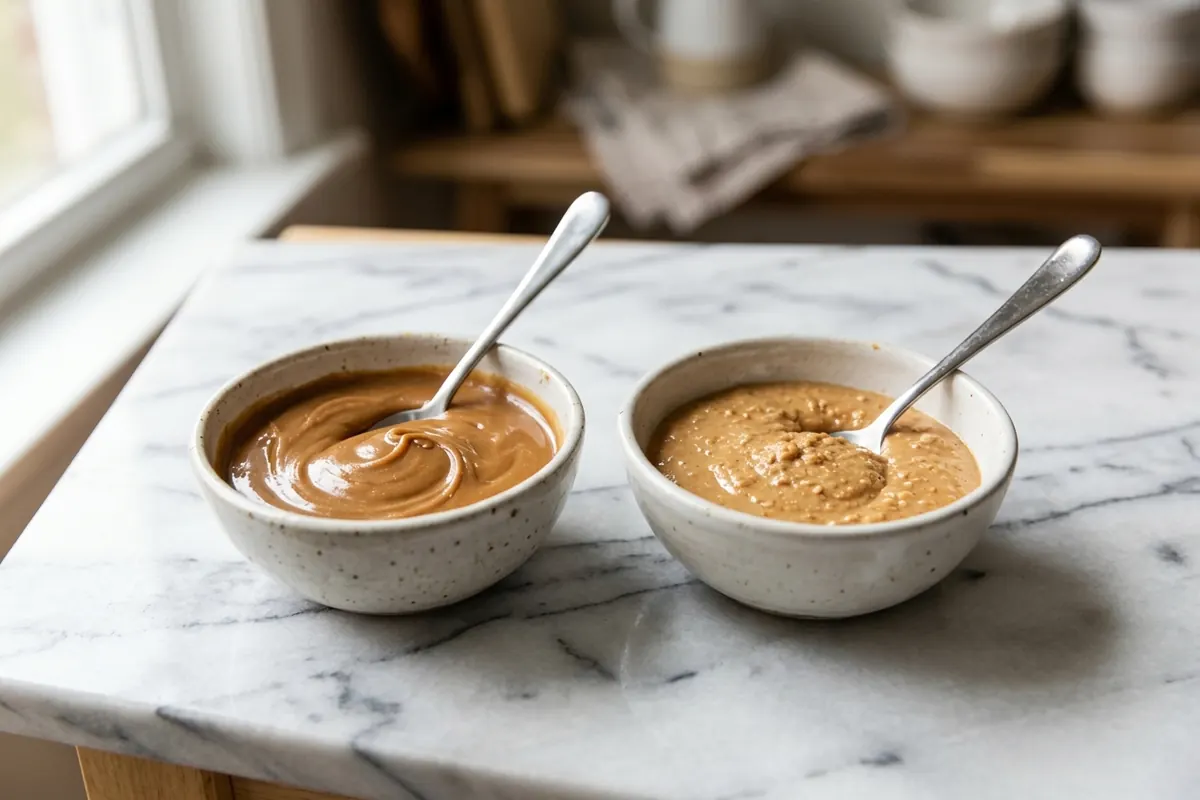
People reach for cookie butter as a peanut butter alternative, especially in nut-free homes, so it is worth being clear about how the two differ. They share a texture and a spot in the pantry, but they are not nutritional or culinary equals.
| Cookie butter | Peanut butter | |
|---|---|---|
| Made from | Crushed speculoos cookies, oil, sugar | Roasted ground peanuts |
| Flavor | Caramel, cinnamon, brown-sugar spice | Nutty, savory, mildly sweet |
| Protein | Low (about 1 g per 2 tbsp) | High (about 7 g per 2 tbsp) |
| Texture | Smooth or crunchy, very spreadable | Smooth or chunky, denser |
| Best use | Dessert spread, baking mix-in, topping | Sandwiches, savory sauces, protein boost |
The headline difference is protein. Peanut butter is a genuine source of protein and healthy fat, which is why it works in a savory sandwich or a post-workout snack. Cookie butter has very little protein and is mostly sugar and oil, so it belongs in the dessert column, not the breakfast-staple column. That does not make it bad, it just means you should treat it the way you treat frosting or chocolate spread, not the way you treat peanut butter. For a true nut-free swap in baking, our guide to peanut butter cookies covers which substitutes hold up in a cookie and which do not, and cookie butter behaves more like a flavor than a structural ingredient.
Is Cookie Butter the Same as Biscoff?
This is the most common point of confusion, so here is the clean answer. Biscoff is a brand. Lotus Biscoff is the company that makes the famous caramelized speculoos cookies served on airplanes, and Lotus Biscoff Spread is their version of cookie butter. So all Biscoff spread is cookie butter, but not all cookie butter is Biscoff. Trader Joe’s Speculoos Cookie Butter, generic store brands, and homemade versions are all cookie butter made from the same style of spiced cookie. You can see the original cookie and the brand history on the Biscoff reference page.
In practice the brands taste similar because they all start from the same speculoos base. The differences are subtle: some are a touch sweeter, some a touch spicier, and the crunchy versions fold in small cookie pieces for texture. If you are buying for the first time, the smooth original is the safest choice, and you can graduate to crunchy once you know you like it.
Best Cookie Butter Brands
You do not need to overthink this, but a few names come up again and again for good reason.
| Brand | Notes |
|---|---|
| Lotus Biscoff | The original Belgian speculoos spread; smooth and crunchy |
| Trader Joe Speculoos | Widely loved store-brand version, smooth and crunchy |
| Generic store brands | Often cheaper; check that cookies are the first ingredient |
| Homemade | Blend speculoos cookies with a little oil and milk |
One buying tip that matters: read the ingredient list and make sure the cookies, listed as speculoos or biscuits, are the first ingredient. Cheaper imitations sometimes lead with oil and sugar and use very little actual cookie, which gives you a greasy, flatly sweet spread without the toasty spice that makes cookie butter worth eating. The better the cookie content, the more the spread tastes like an actual baked good.
How to Use Cookie Butter
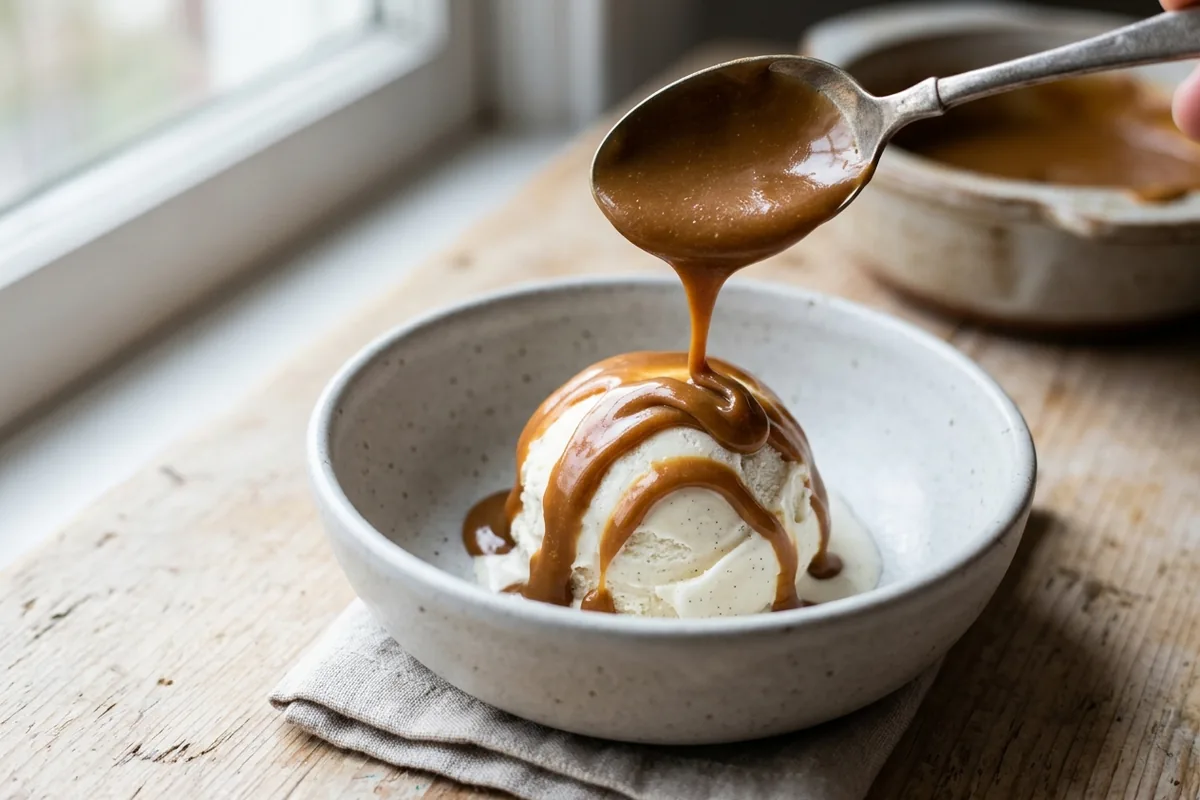
This is where cookie butter earns its place. Because it is sweet and softens when warmed, it works as a spread, a topping, and a baking ingredient, often all in the same kitchen.
As a spread, it is excellent on toast, warm waffles, or pancakes, and even better when you let the heat from the bread loosen it slightly. As a topping, warm it for a few seconds in the microwave until it is pourable, then drizzle it over vanilla ice cream, a slice of cheesecake, or fresh apple and pear slices. As a dip, it is a crowd-pleaser with pretzels, graham crackers, or strawberries. For a quick dessert sauce that goes beyond the jar, our partners walk through warm, pourable sweet sauces in their dessert sauces collection, and cookie butter thins out the same way with a splash of warm milk or cream.
Baking with cookie butter
In baking, cookie butter is a flavor powerhouse but a structural lightweight. You can swirl it into brownie or blondie batter, use it as the filling in thumbprint or sandwich cookies, fold it into buttercream, or stuff it into the center of a cookie before baking for a molten core. What you cannot do is treat it like butter or peanut butter and expect it to provide structure, because it is mostly sugar and oil and will make a dough greasy and prone to spreading if you add too much. Use it as an accent, a swirl, a filling, or a glaze, not as the main fat.
If you bake gluten-free, note that standard cookie butter is made from wheat-based cookies and is not gluten-free. There are gluten-free versions, but always check the label. For ideas on building gluten-free treats around a spread like this, the gluten-free desserts collection from our network is a good starting point for safe swaps.
How to Make Cookie Butter at Home
Homemade cookie butter is genuinely easy and lets you control the sweetness and spice. Start with about two cups of speculoos or any crisp, spiced cookie, and grind them in a food processor until they are a fine powder. With the processor running, drizzle in two to three tablespoons of a neutral oil and a few tablespoons of warm milk or sweetened condensed milk, a little at a time, until the mixture turns smooth and spreadable. Taste and adjust: a pinch of cinnamon deepens the spice, a little extra oil loosens the texture, and a pinch of salt sharpens the whole thing.
Store homemade cookie butter in a clean jar in the refrigerator, where it will keep for about two weeks. It firms up cold, so let it sit at room temperature or warm it briefly before spreading. Because there are no preservatives, it will not last as long as the commercial jars, but the flavor is fresher and you can dial it exactly to your taste. The same technique works with leftover or slightly stale cookies, which makes it a smart way to use up a batch that went a little crisp.
Storing Cookie Butter So It Stays Smooth
Commercial cookie butter is shelf-stable thanks to its high sugar and oil content, so an unopened jar lives happily in the pantry and an opened one is fine at room temperature for weeks. The one thing to watch is oil separation: like natural nut butters, some cookie butters develop a thin layer of oil on top, especially the less-processed brands. Just stir it back in with a clean knife and the texture returns. Keep the jar tightly closed so the surface does not dry out and form a crust.
Homemade cookie butter is a different animal because it contains fresh milk and no preservatives. Keep it refrigerated in a clean, airtight jar and use it within about two weeks. It firms up considerably when cold, which is normal, so pull it out ahead of time or warm a spoonful for a few seconds before spreading. If your homemade batch seizes or turns grainy after chilling, a short, gentle warming and a quick stir usually smooths it back out, since the issue is simply the butter and oil firming unevenly in the cold.
Common Cookie Butter Mistakes
The most frequent mistake is treating cookie butter like a structural baking fat. Because it looks and spreads like peanut butter, people swap it one-for-one into recipes that rely on the fat and protein of a nut butter, and the result is a greasy, overly sweet, flat cookie that spreads too much. Cookie butter is a flavor and a filling, not a fat replacement. Use it as a swirl, a center, or a glaze, and keep the recipe’s original butter or oil in place.
The second mistake is overheating it. Cookie butter loosens beautifully with a few seconds of gentle warmth, but if you microwave it too long it can scorch and turn bitter, or split into oil and solids. Warm it in short bursts and stir, the same way you would handle melting chocolate. The third mistake is buying the cheapest jar without checking the label; if oil and sugar lead the ingredient list instead of cookies, you get a greasy spread that misses the toasty, spiced character that makes cookie butter worth eating in the first place.
Cookie Butter Around the World
It helps to remember that cookie butter is a modern spin on a very old cookie. Speculoos, the spiced biscuit at the heart of the spread, has been baked in Belgium and the Netherlands for centuries, traditionally pressed into carved wooden molds and eaten around the feast of Saint Nicholas in early winter. The warm spice profile, cinnamon forward with supporting notes of nutmeg, clove, and ginger, is essentially a holiday flavor, which is part of why cookie butter tastes festive and comforting even out of season.
The spread itself is a relatively recent invention, popularized in Europe and then carried to North America by retailers who placed it beside the nut butters, where its peanut-butter-like texture made it an easy sell. Today you will find cookie butter folded into ice cream, layered into cheesecakes, piped into pastries, and sold in crunchy and smooth versions across many brands. Knowing that it started as a holiday cookie makes it easier to use well: lean into the warm spice, pair it with things that suit cinnamon and caramel, and treat it as the dessert ingredient it has always been at heart.
Cookie Butter for Special Diets
Because cookie butter is so popular, people often ask whether it fits particular diets, and the honest answer is that it depends entirely on the jar. Standard cookie butter is made from wheat-based speculoos cookies, so it is not gluten-free unless the label specifically says so; gluten-free versions exist but you have to look for them. Many cookie butters are accidentally vegan, since the classic formula uses vegetable oil rather than dairy butter and contains no eggs, but formulas vary by brand, so a quick label check is the only reliable way to confirm it.
What no version of cookie butter will ever be is low in sugar or a source of protein, because it is fundamentally cookies turned into a spread. If you are managing sugar or want a spread with real staying power, cookie butter is a treat to enjoy in small amounts rather than a daily staple, and a nut or seed butter is the better everyday choice. The smartest approach is to know what cookie butter is for, lean into its dessert strengths, and let other spreads handle the jobs it was never built to do, which keeps your expectations and your jar both in the right place.
Frequently Asked Questions
Is cookie butter healthy?
Cookie butter is a treat, not a health food. It is mostly sugar and oil with very little protein or fiber, so it sits in the same category as chocolate spread or frosting rather than peanut butter. There is nothing wrong with enjoying it in moderation, but it should not be your go-to for a filling, balanced snack. If you want a spread that provides protein and staying power, a nut or seed butter is the better everyday choice.
Does cookie butter need to be refrigerated?
Commercial cookie butter does not need refrigeration before or after opening; it is shelf-stable thanks to its high sugar and oil content and stays spreadable at room temperature. Homemade cookie butter is different, because it contains fresh milk and no preservatives, so it should be kept in the fridge and used within about two weeks. Cold cookie butter firms up, so warm it briefly if you want it pourable.
Is cookie butter gluten-free or vegan?
Most standard cookie butter is not gluten-free, because it is made from wheat-based speculoos cookies. Many versions are accidentally vegan, since the classic recipe uses oil rather than butter and no eggs, but you must read the label every time, as formulas vary by brand. If you need a gluten-free or certified vegan version, look for one labeled as such rather than assuming.
What can I use instead of cookie butter?
For the spiced, caramelized flavor, the closest swaps are a smooth gingersnap or graham-based spread, or a thin layer of dulce de leche mixed with a pinch of cinnamon. For texture alone, in a recipe where you just need a sweet, spreadable mix-in, a chocolate hazelnut spread works, though the flavor will be very different. In a pinch you can blend crushed speculoos or gingersnaps with a little oil and milk to make a quick homemade version in minutes. If you want to understand where a spiced, crisp cookie like speculoos sits among the broader cookie families, our guide to the types of cookies places it alongside shortbread and other crisp, low-moisture styles, and the original Belgian biscuit is the same one made famous by Lotus Biscoff.