By Hazel Bendgrove, CookieGrove. Last updated June 2026.
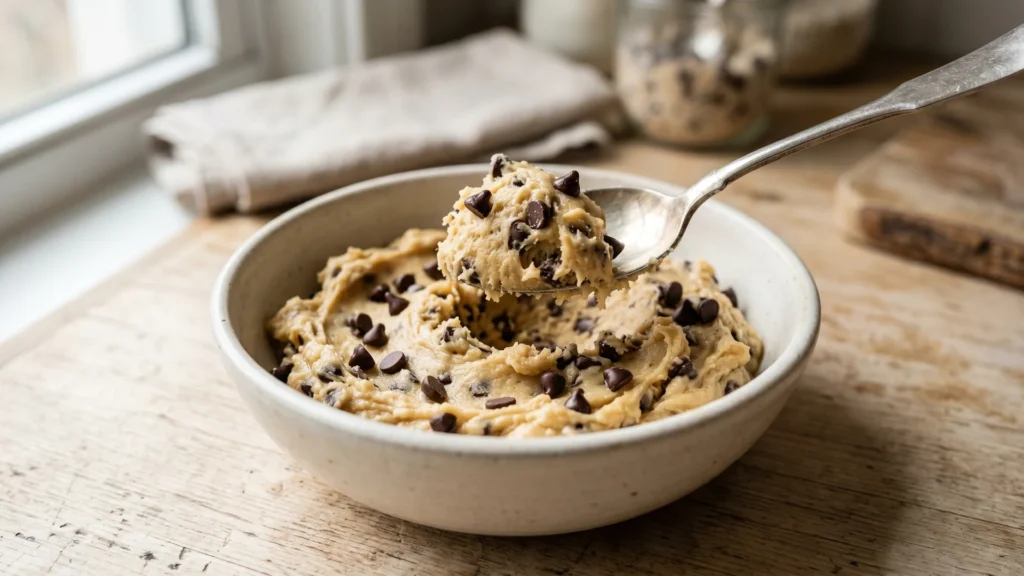
Edible cookie dough is cookie dough built specifically to be eaten raw, never baked. It differs from regular dough in two ways that matter for safety: it contains no raw eggs, and the flour is heat-treated to kill bacteria. Get those two things right and you can enjoy the scoopable, brown-sugar pleasure of raw dough without the food-safety risk. This guide explains exactly why regular cookie dough is not safe to eat raw, how to heat-treat flour properly, and how to build an edible dough that stays soft and spoonable.
I get asked about this constantly, because the craving for raw dough is universal and the safety advice can feel confusing. The good news is that the fix is simple and quick once you understand the two real hazards. Below you will find the science in plain terms, a step-by-step method for treating flour, the differences between edible and regular dough, and the mistakes that trip people up.
Why You Cannot Eat Regular Cookie Dough Raw
There are two separate hazards in raw cookie dough, and most people only know about one of them. The first is raw eggs, which can carry Salmonella. That risk is real but well known, and it is why classic advice says do not lick the spoon. The second hazard surprises people: raw flour itself. Flour is a raw agricultural product, milled from grain that grows in open fields, and it can carry harmful bacteria, most notably certain strains of E. coli. Milling does not kill those bacteria, so the flour in your bag is, in food-safety terms, raw.
This is not a theoretical worry. Public-health agencies have linked multiple multi-state outbreaks of illness to raw flour, with people getting sick from tasting raw dough and batter. The 2019 E. coli outbreak traced to flour, documented by the CDC, sickened dozens of people across many states. Baking solves the problem because the oven’s heat kills the bacteria in both the egg and the flour, which is why a baked cookie is perfectly safe. The trick with edible dough is to remove or neutralize both hazards before the dough ever reaches your mouth.
Edible Dough Versus Regular Dough
Edible cookie dough is not just regular dough you decided to eat. It is reformulated so that it is both safe and pleasant to eat cold and soft. Here is how the two compare.
| Edible cookie dough | Regular cookie dough | |
|---|---|---|
| Eggs | None (or pasteurized substitute) | Raw eggs |
| Flour | Heat-treated to 165F | Raw flour |
| Leavening | Skipped or minimal | Baking soda or powder |
| Meant to be | Eaten raw, by the spoon | Baked into cookies |
| Texture | Soft, scoopable, stays soft | Firms up only after baking |
Notice that edible dough usually skips the leavening too. Baking soda and baking powder are there to make a cookie rise in the oven, and they have a slightly soapy, bitter taste when eaten raw, so there is no reason to include them in dough you will never bake. You also do not need eggs for structure, since you are not baking, so they are simply left out and replaced with a splash of milk or cream for moisture. The result is a dough that is built for the spoon, not the oven.
How to Heat-Treat Flour
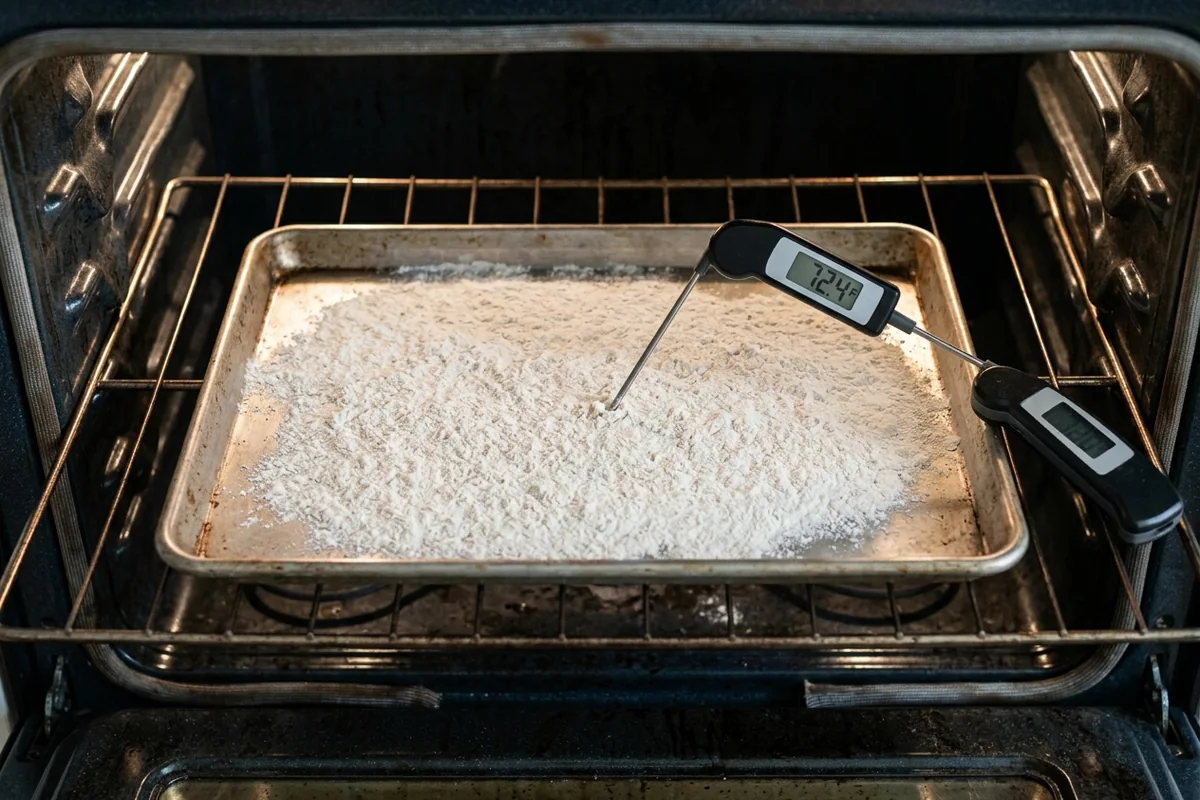
This is the step people skip, and it is the most important one for safety. Heating raw flour to a high enough temperature kills the bacteria that can be present. The target is 165F measured with an instant-read thermometer; do not guess by time alone, because ovens and microwaves vary and clumps heat unevenly.
| Method | How | Target |
|---|---|---|
| Oven | Spread flour on a sheet, bake at 350F for about 7 minutes | 165F internal |
| Microwave | Heat in 30-second bursts, stir between each | 165F internal |
| Check | Use an instant-read thermometer in the flour | Must reach 165F |
For the oven method, spread the flour in a thin, even layer on a rimmed baking sheet, bake at 350F, and start checking the temperature at around five to seven minutes, stirring once so the edges do not scorch while the middle lags. For the microwave method, spread the flour in a microwave-safe bowl and heat in 30-second bursts, stirring between each, until a thermometer pushed into the center reads 165F; this usually takes a minute and a half to two minutes total. Either way, let the flour cool completely and sift out any clumps before mixing it into your dough. King Arthur, a trusted baking authority, walks through the same temperature-based approach in its flour safety guidance, and the key point is identical: rely on a thermometer, not a timer.
You can heat-treat a large batch of flour at once and store the cooled, treated flour in an airtight container for whenever a dough craving hits. It keeps as long as regular flour. Doing this ahead removes the only real friction in making edible dough on a whim.
Building an Edible Dough That Stays Soft
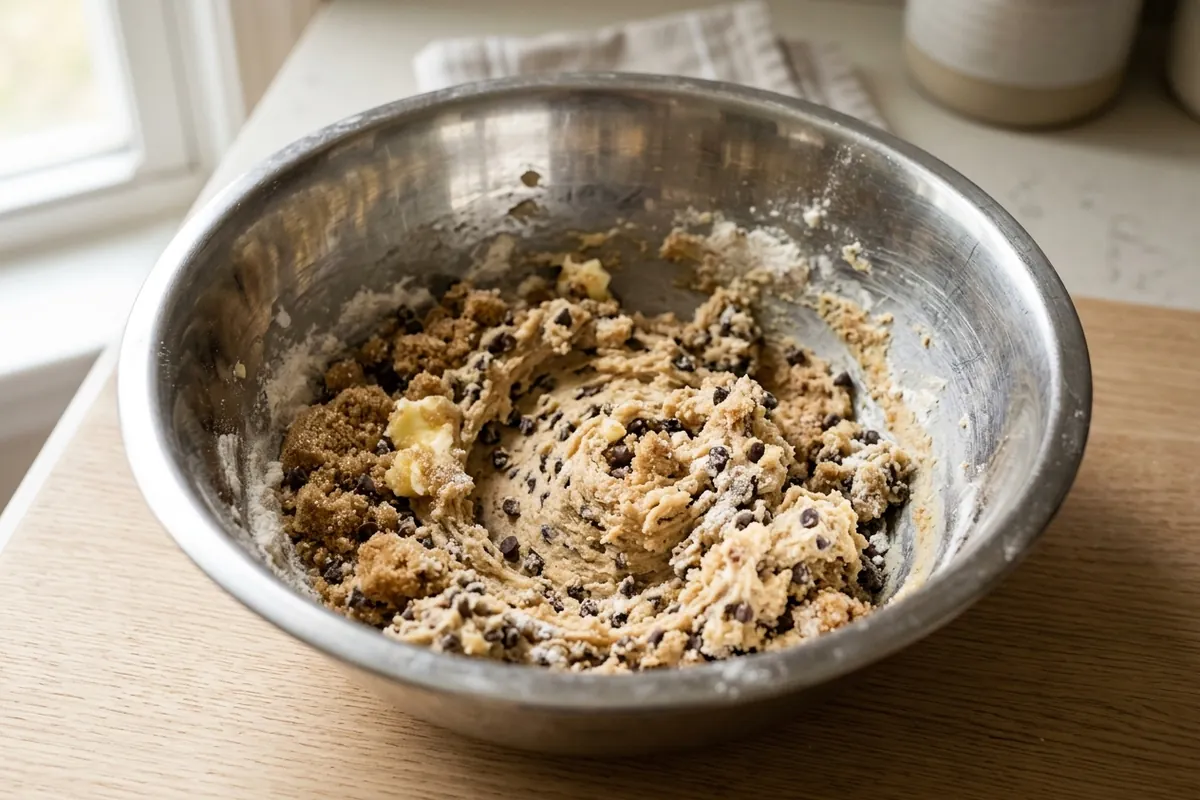
Once your flour is treated and cooled, the dough comes together like a quick frosting. Cream softened butter with brown and white sugar until smooth, add a splash of milk or cream and a little vanilla, then stir in the cooled heat-treated flour and a pinch of salt until you have a thick, scoopable dough. Fold in mini chocolate chips at the end. Because there are no eggs and no leavening, you cannot overmix it, and it will not toughen the way bakeable dough can.
Brown sugar is the secret to the right texture. It holds moisture and keeps the dough soft and slightly chewy rather than dry and crumbly, which is why edible dough leans more heavily on brown sugar than a typical bakeable recipe. If your dough comes out stiff, add milk a teaspoon at a time until it is spoonable; if it is too loose, add a little more treated flour. The texture you are after is somewhere between thick frosting and a soft truffle filling.
Storing Edible Cookie Dough
Edible dough keeps well, which is part of its appeal. Stored in an airtight container in the refrigerator, it stays good for about a week. It firms up cold because of the butter, so let it sit at room temperature for ten or fifteen minutes before eating if you prefer it soft and scoopable. For longer storage, edible dough freezes beautifully: scoop it into balls, freeze them on a tray, then transfer the frozen balls to a freezer bag and keep them for up to three months, eating them straight from frozen as a firm, fudgy treat. The same freezer logic applies to bakeable dough, which we cover in detail in our guide to whether you freeze cookie dough for later baking.
One caution worth repeating: edible dough is built without eggs and with treated flour precisely so it can sit in the fridge and be eaten cold over several days. Never do the reverse and store regular bakeable dough with the intent of eating it raw later, because the raw egg and untreated flour hazards do not go away in the fridge. If you want the full picture of how raw and bakeable doughs differ in handling and safety, our cookie dough guide covers both in one place.
Flavor Variations for Edible Dough
Once you have the safe base method down, the flavor possibilities open up, because you are no longer constrained by what bakes well. The classic is chocolate chip, but the same heat-treated-flour, no-egg base takes happily to almost any add-in. For a brown-sugar-forward dough, lean on more brown sugar and a splash of extra vanilla. For a peanut butter version, beat a couple of tablespoons of peanut butter into the creamed butter and sugar, then reduce the added milk slightly since the peanut butter brings its own fat and moisture.
Other directions worth trying: cocoa powder stirred into the base for a double-chocolate dough, a spoonful of sprinkles for a birthday-cake feel, or chopped toasted nuts and a pinch of flaky salt for a more grown-up version. Because nothing gets baked, you can taste and adjust as you go, which is half the fun. Just keep two rules: every bit of flour must be heat-treated first, and there are no raw eggs, ever. Within those two guardrails, the dough is a blank canvas.
Edible Dough as a Topping and Dessert Base
Edible dough is not only for eating by the spoon. Because it is safe and stays soft, it works as a topping and a building block in larger desserts. Scoop small balls of it over ice cream, fold chunks into a no-churn ice cream base, layer it into parfaits with whipped cream and crushed cookies, or press it into the bottom of a jar for a quick dessert cup. It also makes a fun filling for sandwiching between two baked cookies, giving you a soft, doughy center that a baked filling cannot replicate. It pairs naturally with other sweets, so a small scoop alongside a warm gluten-free dessert rounds out a plate nicely, and a spoonful next to a lower-sugar keto dessert gives you a doughy contrast without piling on more baked goods.
One thing to keep in mind for these uses is temperature. Edible dough firms up when cold and softens at room temperature, so for a scoopable topping you may want it slightly warmed, while for a layered, sliceable dessert you want it well chilled so it holds its shape. Plan around the butter: cold equals firm, warm equals soft and spreadable. That single fact lets you steer the texture for whatever you are building.
Keeping the Whole Process Safe
Food safety with raw dough comes down to consistency, not luck. The two hazards, raw egg and raw flour, are both fully addressed by the edible-dough method, but only if you actually do both steps every single time. The most common slip is heat-treating the flour but eyeballing the temperature instead of measuring it, which can leave the center of the flour below the 165F needed to kill bacteria. An inexpensive instant-read thermometer removes that guesswork and is the single most useful tool for safe edible dough.
It is also worth keeping clean habits around flour generally, since it is a raw ingredient. Wash your hands, bowls, and utensils after they touch raw flour, keep raw flour away from ready-to-eat foods, and never taste a dough or batter that contains untreated flour or raw egg, no matter how tempting. These are the same basic practices public-health agencies recommend, and they are easy to fold into your routine once you understand that flour is a raw food, not a finished one.
Why Edible Dough Is Worth Making Yourself
Store-bought edible cookie dough is convenient, but making it at home has real advantages beyond cost. You control the sugar, the add-ins, and the texture, and you avoid the stabilizers and preservatives that packaged versions use to sit on a shelf. Once you have a container of heat-treated flour ready in the pantry, a fresh batch comes together in about ten minutes with ingredients you already have, which is faster than a trip to the store and produces a softer, fresher dough.
Homemade also lets you scale the safety to your comfort. If you are serving children or anyone more vulnerable to foodborne illness, you can be extra careful: measure the flour temperature precisely, skip eggs entirely rather than using substitutes, and store the dough cold and use it within the week. That control is the real payoff. You get the nostalgic pleasure of eating raw-style cookie dough, you know exactly what went into it, and you have removed the genuine hazards that make licking the bowl of regular dough a bad idea. For anyone who loves dough but has held back over safety, this is the method that lets you enjoy it without the worry.
Troubleshooting Common Edible Dough Problems
A few issues come up again and again, and each has a simple fix. If the dough tastes faintly of raw flour or has a chalky note, the flour was probably not heated long enough or was not cooled and sifted before mixing; properly heat-treated, cooled flour should taste clean. If the dough is greasy, you likely creamed the butter while it was too warm or added too much, so pull back on the butter slightly and make sure it is softened, not melted. If it is gritty, the sugar did not dissolve enough during creaming, so beat the butter and sugar a little longer before adding the flour.
Texture is the most common complaint, and it almost always comes down to the balance of fat, sugar, and liquid. Too stiff means not enough milk; add it a teaspoon at a time. Too loose means too much liquid or not enough flour; add a spoonful of cooled treated flour until it firms up. Because there is no egg and no baking, you cannot ruin the dough by adjusting it, so treat the first batch as a chance to dial in the texture you like. Once you find your ratio, write it down, and every batch after that comes together the same way without guesswork.
Frequently Asked Questions
Is store-bought edible cookie dough safe to eat raw?
Yes, when it is labeled as edible or safe-to-eat raw, because reputable manufacturers use heat-treated flour and either pasteurized eggs or no eggs at all. That is different from refrigerated bakeable cookie dough, which is meant to be baked. Even though many brands of bakeable dough now use treated ingredients and say their dough is safe to eat, always read the package: only eat raw dough that is explicitly labeled as safe to do so.
Can I heat-treat flour in the microwave?
Yes. Spread the flour in a microwave-safe bowl and heat in 30-second bursts, stirring between each, until an instant-read thermometer pushed into the center reads 165F. It usually takes about a minute and a half to two minutes total. The microwave heats unevenly, so stirring and checking the temperature with a thermometer is essential; do not rely on time alone, and let the flour cool before mixing it into your dough.
Why is my edible cookie dough dry or crumbly?
The most common cause is not enough liquid to replace the eggs that a bakeable dough would have. Add milk or cream one teaspoon at a time and stir until the dough turns soft and scoopable. Leaning on brown sugar rather than all white sugar also helps, because brown sugar holds moisture. If you measured flour by scooping straight from the bag, you may have packed in too much; spoon and level the flour next time for a softer result.
Do I need to heat-treat flour if I leave out the eggs?
Yes. Skipping the eggs removes the Salmonella risk, but raw flour carries its own hazard from bacteria like E. coli, and that risk remains whether or not the dough contains eggs. To make raw dough safe you have to address both: leave out the raw eggs and heat-treat the flour to 165F. Doing only one of the two still leaves a real food-safety risk.