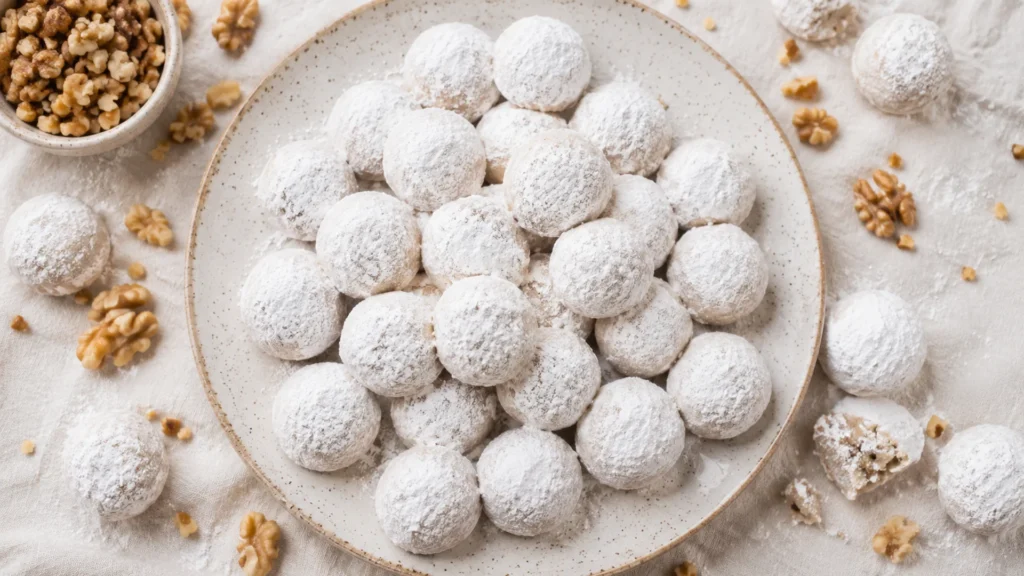
Mexican wedding cookies are the buttery, nutty, powdered-sugar-coated snowballs that go by a dozen names, polvorones de nuez, Russian tea cakes, snowball cookies, butterballs, and Swedish or Italian wedding cookies, and they are deceptively simple. Just butter, flour, finely chopped nuts, powdered sugar, and vanilla come together into a cookie that should melt in your mouth, hold its round shape, and wear a thick, even coat of powdered sugar that does not dissolve into a sticky mess. Miss a step and you get cookies that crumble apart, spread flat, taste flat and floury, or end up with a wet, patchy sugar coating. This guide covers the whole craft in US units: the dough that holds together, why and how to toast the nuts, the critical double sugar-dusting timing, the bake, and the troubleshooting for every failure, so your snowballs come out tender, round, and bright white every time.
Every holiday season the three complaints about these cookies are the same: they fell apart, the powdered sugar melted and went sticky, and they came out bland. All three are fixable, and the fixes are mostly about technique and timing rather than the ingredient list, which barely changes from recipe to recipe. The place to start is the dough, because a snowball that crumbles was built wrong.
What These Cookies Are and Why the Texture Is So Tender
Mexican wedding cookies are a shortbread-family cookie, meaning high butter, low sugar, no eggs, and no leavening in the classic version. That structure is exactly what gives the signature sandy, tender, melt-in-the-mouth crumb. With no egg to bind and no liquid to develop gluten, the cookie is held together only by butter and the small amount of moisture in it, which is why it is so delicate and why handling matters so much.
The powdered sugar in the dough, used instead of granulated, is part of the magic. Powdered sugar contains a little cornstarch and dissolves completely, so it gives a finer, more tender, less gritty crumb than granulated sugar would, and it keeps the cookie pale rather than browning. The finely ground nuts add richness, flavor, and a bit of structure. Understanding that this is a barely-bound, high-fat cookie tells you everything about how to handle it: gently, and not overbaked.
The Ingredient Logic and a Reliable Ratio
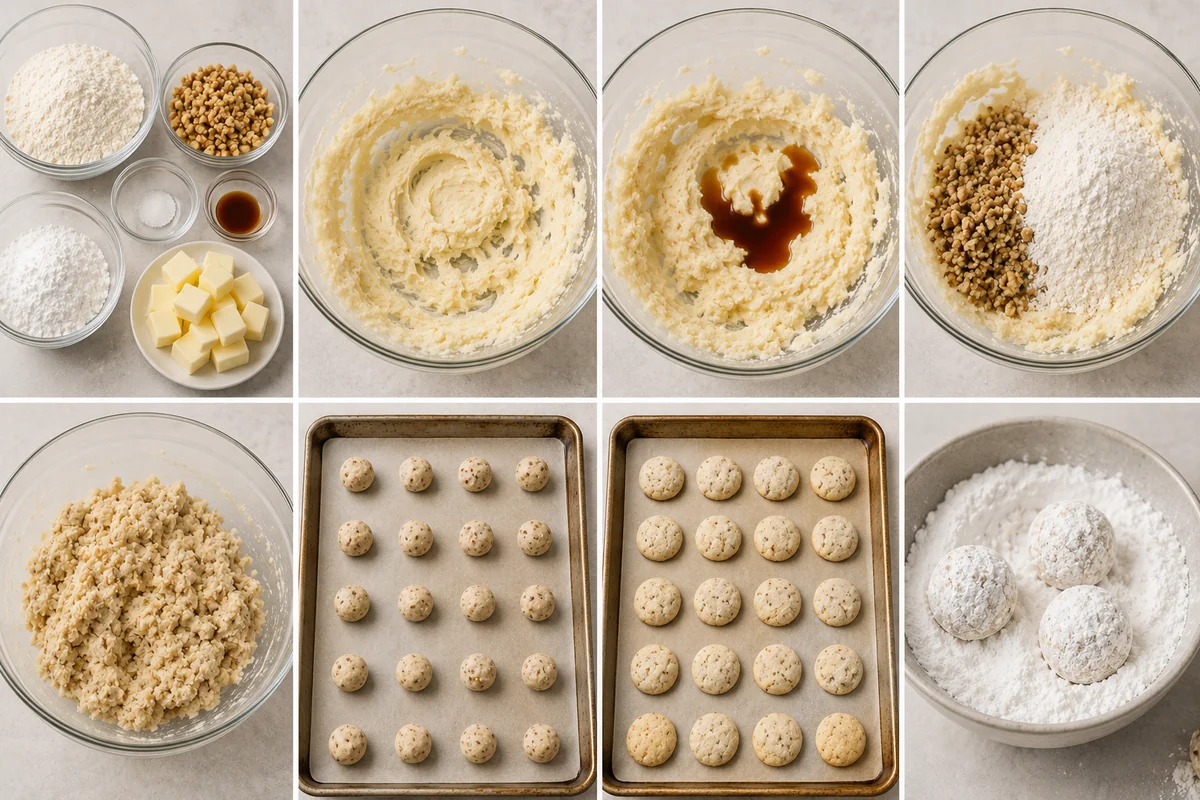
A dependable Mexican wedding cookie dough runs roughly: 1 cup (227 grams) softened unsalted butter, 1/2 cup (60 grams) powdered sugar for the dough, 1 teaspoon vanilla, 2 and 1/4 cups (281 grams) all-purpose flour, 1 cup finely ground toasted nuts, a good pinch of salt, and an optional teaspoon of cinnamon, plus another cup or so of powdered sugar for coating. Notice how much butter there is relative to sugar; that high fat and low sugar is the whole reason the cookie is so tender and sandy.
Each part earns its place. The butter is the structure and the flavor, since there is no egg, so use a good unsalted one and soften it properly to cool and dentable, not greasy. The powdered sugar in the dough keeps the crumb fine and the cookie pale, where granulated would make it grittier and encourage browning. The flour needs to be weighed, because an extra packed quarter cup is the fastest route to a dry, crumbly cookie that falls apart. The nuts bring flavor and a little structure. The salt is essential in a low-sugar cookie to keep it from tasting flat. Keep the ratio in mind and you can swap nuts or add spices without breaking the cookie.
Choosing and Toasting the Nuts
The nut is the flavor of this cookie, and both the choice and the prep matter more than people think. Pecans and walnuts are the most traditional for the Mexican polvorones de nuez version, with pecans giving a sweeter, butterier result and walnuts a slightly more bitter, earthy one. Almonds, hazelnuts, and even toasted pine nuts all work and each shifts the flavor. Whatever you choose, grind the nuts finely, almost to a meal, so they distribute evenly and do not break the delicate cookie apart with large chunks.
The step that separates a great snowball from a bland one is toasting the nuts before grinding them. Raw nuts taste flat and slightly soft, while toasted nuts develop a deep, warm, roasted flavor that carries the whole cookie. Spread the nuts on a sheet and toast them at 350 degrees Fahrenheit for about 8 to 10 minutes until fragrant and lightly golden, then cool them completely before grinding, since warm nuts turn to paste in a food processor. Cooling also matters because warm ground nuts release oil that makes the dough greasy. This one extra step is the single biggest flavor upgrade available for these cookies.
Mixing the Dough Without Overworking It
Because there is no egg and very little sugar, this dough can go from perfect to dry and crumbly fast, so mixing technique matters. Cream the softened butter with the powdered sugar until smooth and combined, but do not whip a lot of air into it the way you would for a cakey cookie, since too much aeration encourages spread. Add the vanilla, then add the flour, salt, and ground nuts and mix only until the dough just comes together.
The dough will look dry and sandy at first and may seem like it will not hold, but as you press it together the warmth of your hands and the butter bring it into a cohesive, slightly soft dough. If it truly will not come together, the butter may be too cold or there is slightly too much flour; let it warm a minute and press again. Do not add liquid to fix it, since water develops gluten and toughens the cookie. Overmixing once the flour is in is the most common cause of tough or crumbly results, so stop as soon as it coheres.
| Problem | Cause | Fix |
|---|---|---|
| Cookies crumble apart | Too much flour, overbaked | Weigh flour, pull when barely golden |
| Sugar coat goes sticky | Coated while too hot | First coat warm, second coat cool |
| Cookies taste bland | Raw nuts, not enough salt | Toast the nuts, add a real pinch of salt |
| Cookies spread flat | Butter too soft, dough warm | Chill dough, bake on a cool sheet |
| Cookies brown too much | Oven too hot, overbaked | 350 F, pull when bottoms just gold |
Shaping and Baking
Roll the dough into smooth one-inch balls between your palms, pressing any cracks closed so they bake round and even. Use a small scoop first for uniform size, since same-size cookies bake at the same rate. Space them about an inch apart on a parchment-lined sheet. These cookies barely spread, so they will come out close to the shape you put in, which means any lumps or cracks in the raw ball will still be there after baking, so take the extra few seconds to roll each one truly smooth. Bake one tray at a time on the middle rack for the most even, gentle heat, and rotate the pan halfway through if your oven has hot spots, since uneven heat will brown one side before the other.
Bake at 350 degrees Fahrenheit for about 12 to 15 minutes, until the bottoms are just lightly golden and the cookies are set but the tops are still pale. Because these are meant to be white snowballs, you do not want them to brown on top, so watch the bottoms rather than the tops for doneness. They are fragile and very soft straight out of the oven, so let them rest on the sheet for a few minutes to firm up before you move or coat them, or they will fall apart in your fingers. A chill of the shaped dough balls for 20 to 30 minutes before baking is optional but helps if your kitchen is warm or the dough feels soft, keeping the cookies round.
The Double Sugar Dusting: Timing Is Everything
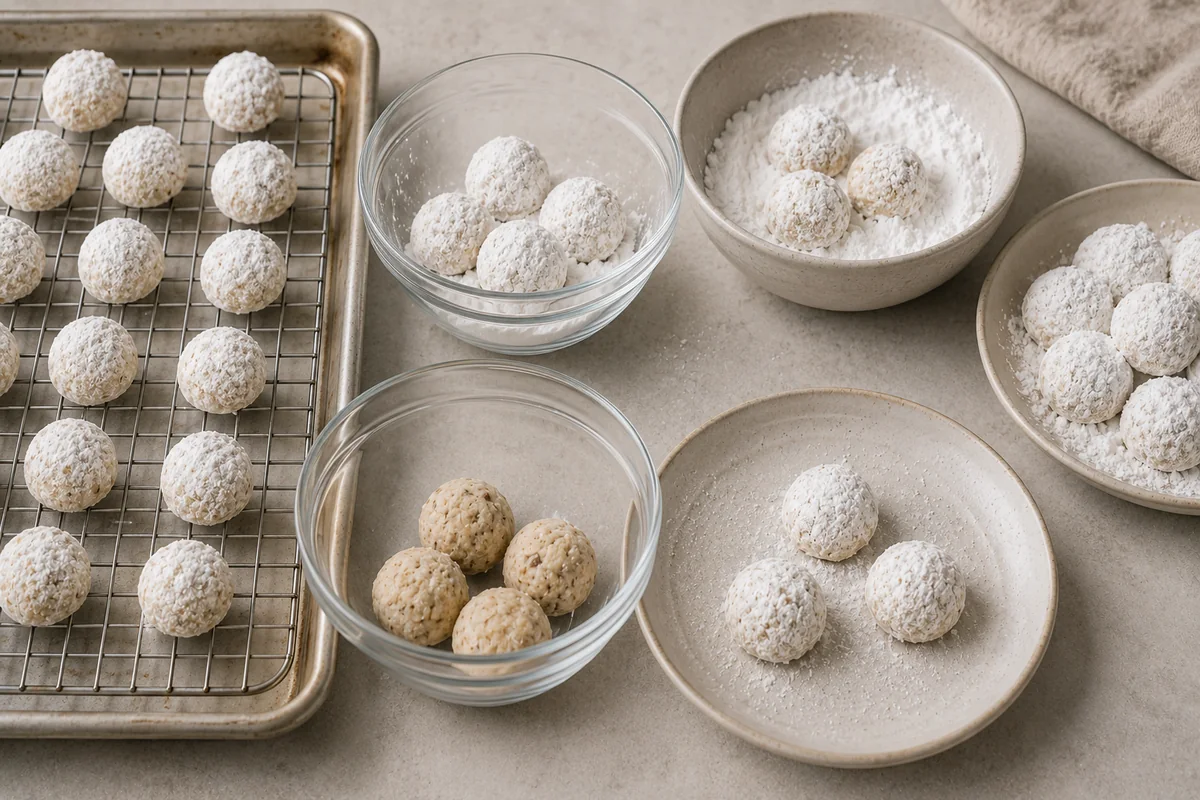
The iconic snowy coat is where most people go wrong, and the secret is two coats at two different temperatures. The first coat goes on while the cookies are still warm, not hot. Warm cookies are slightly tacky on the surface, so the first dusting of powdered sugar clings and even melts in a little, forming a base layer that sticks. If you coat them while they are oven-hot, the sugar dissolves completely into a wet, sticky, patchy glaze instead of a dry coat, so let them cool for about five to ten minutes first until just warm.
Then let the cookies cool completely, and give them a second coat of powdered sugar once they are at room temperature. This second dusting sits on top as a dry, bright white, snowy layer that does not dissolve, which is what gives the cookies their finished look. Skipping the second coat leaves them looking thin and patchy, since the first coat partly absorbs into the cookie. For the cleanest result, roll the cooled cookies gently in a bowl of powdered sugar or sift it over them. This two-stage method is the difference between a sticky beige cookie and a proper white snowball. Sift the sugar fresh just before serving for parties, since the coat softens slightly over a day in storage.
Flavor Variations and Make-Ahead Notes
The classic version often includes a teaspoon of cinnamon in the dough for warmth, which is traditional in the Mexican polvorones and pairs beautifully with pecans. You can mix a little cinnamon into the powdered sugar coating too for a spiced snowball. A small amount of almond extract alongside the vanilla deepens the nutty flavor, especially with almond-based versions. For citrus brightness, a little orange or lemon zest in the dough lifts the whole cookie. A pinch more salt than you think you need is the most underrated upgrade, since it sharpens the sweetness and stops the cookie from tasting flat. In Mexico and across Latin America these polvorones de nuez show up at Christmas, quinceaneras, baby showers, and weddings, which is where the English name comes from, so they are built to sit on a celebration table for hours; that is another reason the sturdy double sugar coat and the make-ahead freezing options below are so useful for a party.
These cookies store and freeze well, which makes them a holiday staple. Store the cooled, coated cookies in an airtight container at room temperature for up to a week, and add a fresh dusting of powdered sugar before serving since the coat softens over time. The dough freezes well as shaped balls; freeze them solid, bag them, and bake from frozen with an extra minute or two, then coat as usual. You can also freeze the baked cookies before coating, thaw them, and dust with sugar fresh. For more on prepping cookie dough ahead and baking from frozen, our freezing cookie dough guide lays out the full make-ahead plan, and the shortbread handling principles in our sugar cookies guide apply directly to this tender, low-sugar dough.
Troubleshooting Common Failures
Cookies crumble and fall apart. Too much flour or overbaked, which dries out the already-delicate crumb. Weigh your flour, grind the nuts finely so there are no big chunks, and pull the cookies when the bottoms are just gold. Let them firm on the sheet before handling.
The powdered sugar coating turned sticky and wet. You coated the cookies while they were too hot, dissolving the sugar. First coat when just warm, then give a second coat after the cookies are fully cool.
Cookies taste flat or floury. The nuts were not toasted, or there was not enough salt and vanilla. Toast and cool the nuts before grinding, use a real pinch of salt, and do not skimp on vanilla.
Cookies spread or browned too much. The butter was over-softened or the oven ran hot. Use cool, properly softened butter, chill the dough if it is soft, bake at 350 on a cool sheet, and watch the bottoms for doneness.
For tested technique on shortbread-style cookies and the role of toasting nuts, the kitchens at America’s Test Kitchen have run detailed trials, and the editors at Bon Appetit cover the powdered-sugar coating and crumb texture in depth.
Frequently Asked Questions
Why do my Mexican wedding cookies fall apart?
The cookie is a delicate, eggless shortbread, so it crumbles when there is too much flour or when it is overbaked and dried out. Weigh your flour instead of scooping, grind the nuts finely so large chunks do not break the cookie, and pull them from the oven when the bottoms are just lightly golden. Let them firm up on the sheet for a few minutes before you move them.
When should I roll them in powdered sugar?
Twice, at two temperatures. Give the first coat while the cookies are just warm, not hot, so the sugar clings and forms a base layer. After the cookies cool completely, give a second coat that stays dry and bright white. Coating while hot dissolves the sugar into a sticky glaze, and skipping the second coat leaves them looking thin and patchy.
Do I have to toast the nuts?
You should, because it is the single biggest flavor upgrade. Raw nuts taste flat, while toasted nuts develop a deep, warm, roasted flavor that carries the whole cookie. Toast them at 350 degrees Fahrenheit for 8 to 10 minutes until fragrant, then cool them completely before grinding so they do not turn to oily paste.
What nuts are best for Mexican wedding cookies?
Pecans and walnuts are the most traditional, with pecans giving a sweeter, butterier result and walnuts a slightly earthier one. Almonds and hazelnuts also work and shift the flavor. Whichever you use, toast them and grind them finely, almost to a meal, so they distribute evenly without breaking the delicate cookie apart.
Why is this cookie called so many different names?
The same buttery, nut-filled, powdered-sugar snowball appears across many cultures, so it picked up many names: polvorones de nuez in Mexico, Russian tea cakes, Italian or Swedish wedding cookies, butterballs, and snowball cookies. The recipes are nearly identical, differing mainly in the nut used and whether cinnamon is added.
Can I make Mexican wedding cookies ahead and freeze them?
Yes. Freeze the shaped dough balls solid, bag them, and bake from frozen with an extra minute or two, then coat in sugar. You can also freeze the baked cookies before coating, thaw them, and dust with powdered sugar fresh. Stored coated cookies keep about a week at room temperature; refresh the sugar coat before serving since it softens over time.
Bottom Line
Great Mexican wedding cookies come down to handling a delicate dough gently and nailing the sugar coating. Toast and finely grind your nuts for deep flavor, mix the eggless dough only until it just comes together, and shape smooth balls that bake round at 350 degrees. Watch the bottoms, not the tops, for doneness so the cookies stay pale and tender, and let them firm on the sheet before you touch them. Then coat them twice, once while warm and once after they cool, for that snowy white finish that does not go sticky. Add cinnamon or a pinch of salt to round out the flavor, freeze the dough for a holiday tray made in stages, and these buttery snowballs become one of the most reliable, beloved cookies on any festive plate.