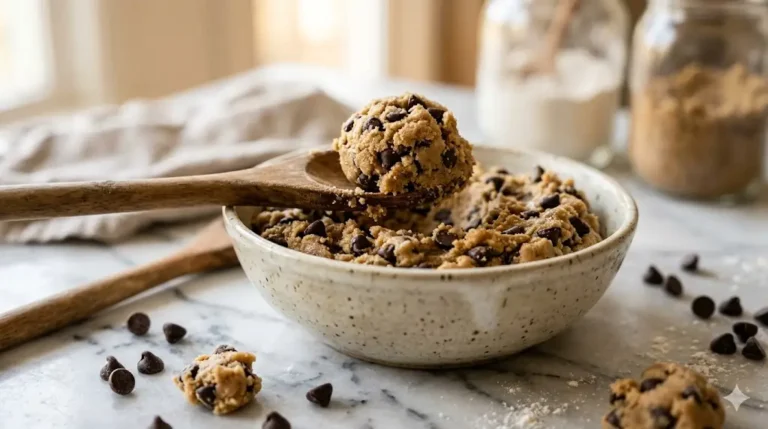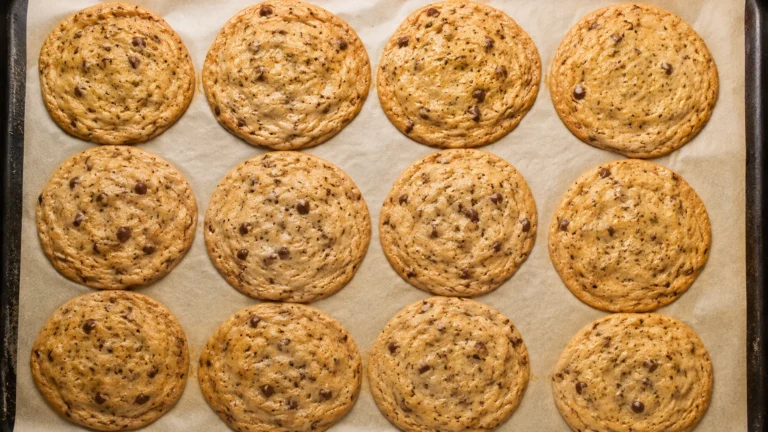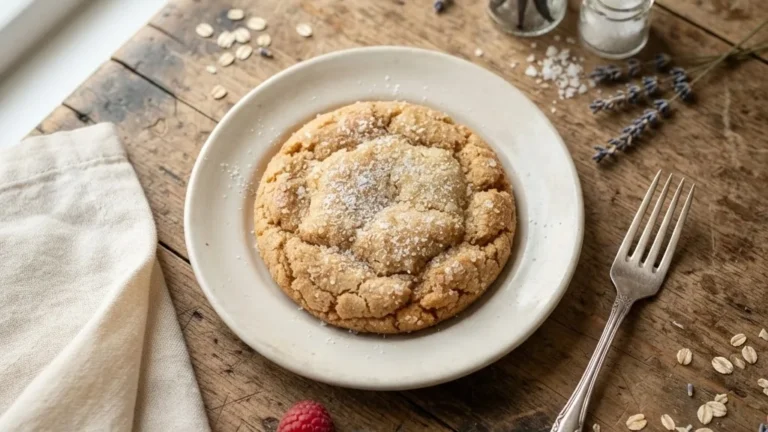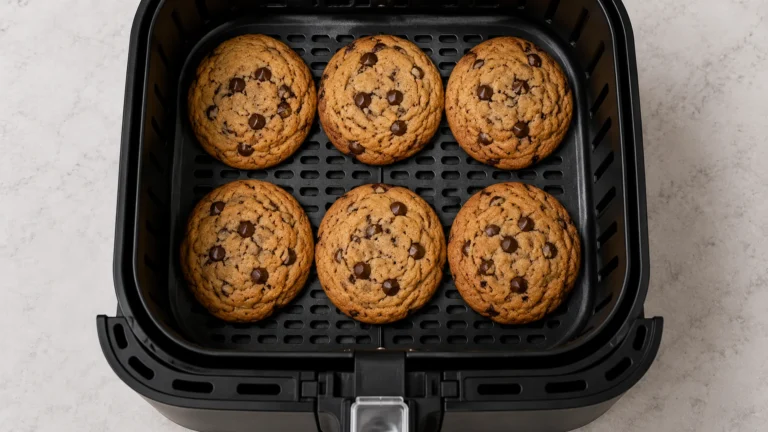
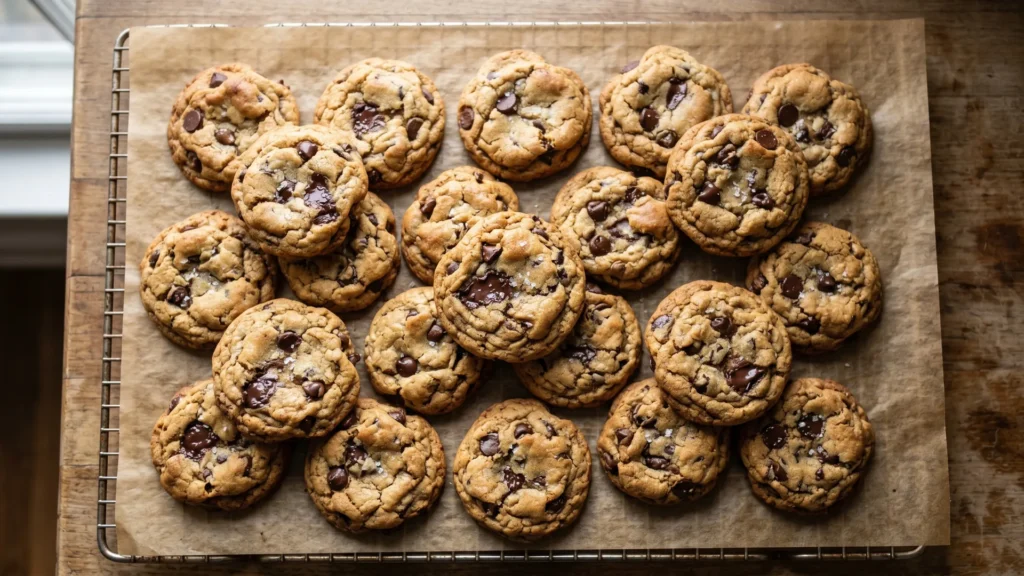
Sourdough discard chocolate chip cookies are one of the smartest ways to use up that jar of starter you would otherwise pour down the drain, and they bake into an excellent chip cookie. The discard does not make the cookie sour, which is the worry that keeps most people from trying it. Instead the mild acidity sharpens the chocolate and vanilla, adds a faint tang underneath all that brown sugar, and brings moisture that keeps the center soft for days. This guide covers how the discard amount, the rest time, and the butter treatment shape a baked batch: how much discard to use, whether it needs feeding, why an overnight rest changes everything, and how to fix a batch that bakes flat or stays cakey. Treat your discard as an ingredient with a job, not just leftovers, and these cookies repay the effort.
What Sourdough Discard Actually Does in a Cookie
Discard pulls triple duty. First, it is roughly equal parts flour and water by weight, so it contributes both structure and hydration in one scoop. That extra moisture is what gives these cookies their famously soft, chewy middle. Second, the discard is mildly acidic from the lactic and acetic acids the wild yeast and bacteria produced while it sat. That acidity does two useful things: it reacts with baking soda for a little lift, and it heightens the perception of the chocolate and vanilla so the cookie tastes more, not more sour. Third, if you let the dough rest, the enzymes in the discard slowly break down starches into simpler sugars, which deepens the flavor and improves browning.
The takeaway is that discard is not a gimmick. It is a functional ingredient that changes hydration, leavening, and flavor all at once. That is also why you cannot simply dump an unmeasured glob into a standard cookie recipe and expect it to work. Too much discard and the dough turns slack and spreads; too little and you lose the soft texture and tang that make the cookie worth baking.
How Much Discard, and Does It Need Feeding
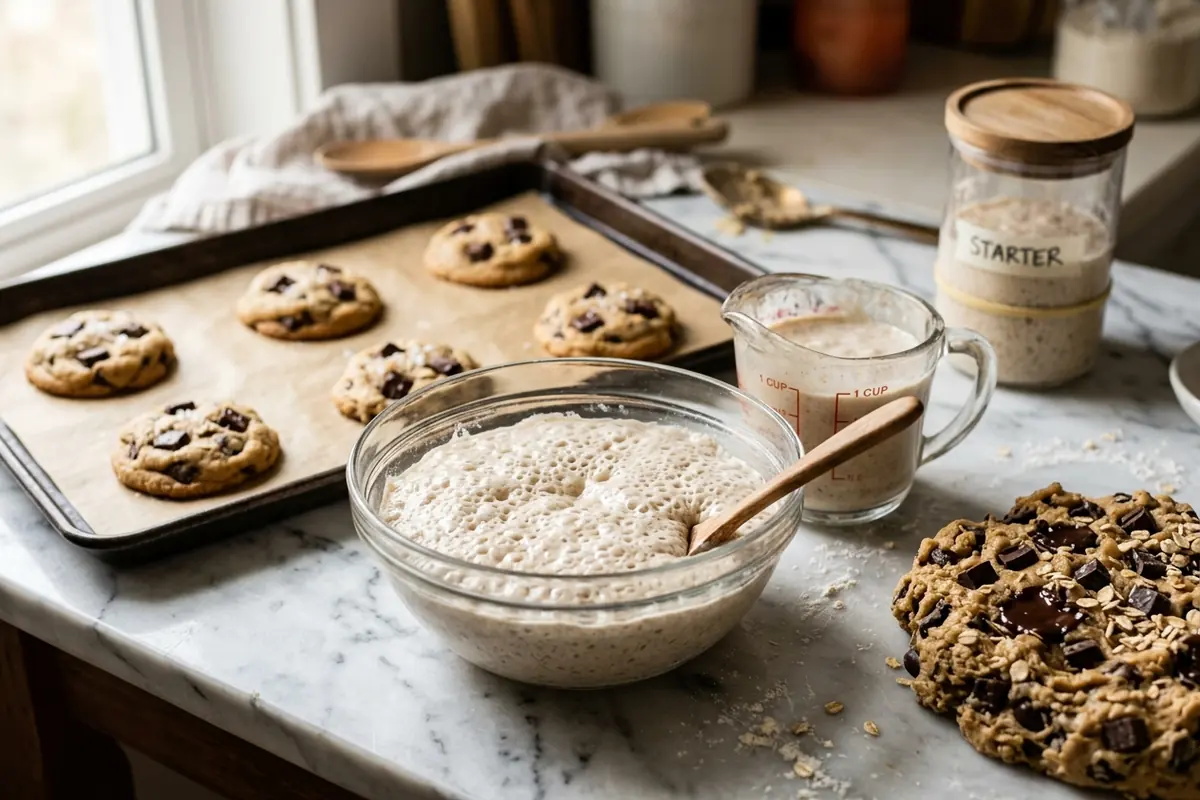
For a standard batch built on about two cups of flour, half a cup to a generous half cup of discard, roughly 113 to 135 grams, is the sweet spot. That amount adds noticeable moisture and tang without throwing the dough out of balance. You can use fed, active starter or unfed discard; both work, but they behave a little differently. Active, recently fed starter is milder and slightly more leavening because the yeast is alive and bubbling. Older, unfed discard is tangier and more acidic, which means stronger sourdough flavor and a touch more reaction with the baking soda.
Discard age is the lever most recipes ignore. Discard that is one to five days old gives the cleanest flavor: pleasant tang, no harshness. Push past a week or two in the fridge and the discard can turn sharp, sometimes with a layer of gray liquid called hooch on top. Stir the hooch back in for more tang or pour it off for a milder cookie, but if the discard smells like nail polish remover or alcohol, it has gone too far and will make the cookies taste off. When in doubt, use discard under a week old and you will never fight an unpleasant flavor.
Brown Butter: The Upgrade Worth the Extra Step
Almost every great sourdough discard cookie recipe browns the butter, and the reason goes beyond flavor. Browning melts the butter and cooks off some of its water, then toasts the milk solids into nutty, toffee-flavored bits. That nutty, butterscotch character pairs beautifully with the tang of the discard. Melt the butter over medium heat, swirl it until the foam subsides and the solids turn golden and smell like hazelnuts, then pour it out, flecks and all. Because browning drives off water, the dough loses some of the moisture the butter normally provides, which actually helps offset the extra water the discard brings in.
Here is the catch most people miss: melted brown butter makes a looser dough that spreads more. To control that, chill the brown butter until it firms back to a soft, opaque solid before you cream it with the sugar, or simply lean harder on the dough rest. If you skip browning entirely and use softened butter, the cookie still works; it just trades the toffee notes for a cleaner, brighter chocolate-and-tang profile. Both are good. Brown butter is the bakery-style version, plain butter is the everyday version.
The Overnight Rest Changes the Cookie
If you do one thing from this guide, rest the dough. A 30-minute chill firms the fat enough to bake right away, but resting the dough 12 to 24 hours, or even up to three days, transforms it. During that time the flour and discard fully hydrate, the discard’s enzymes break starches into sugars, and the whole dough develops a deeper, more complex flavor with stronger browning and crisper edges. Some bakers call the longer rest a fermentation, and people who find regular dough hard to digest sometimes prefer a longer ferment for that reason.
Practically, scoop the dough into balls before chilling so they are ready to bake on demand, or chill the whole bowl and scoop cold. Cookies baked from a long rest come out thinner with crackly tops and a richer flavor; cookies baked after just 30 minutes are puffier and milder. Neither is wrong, so choose based on the texture you want. If you want to see how resting and fat ratios reshape a soft cookie in a different direction, the whipped cream cookie takes the opposite approach with an airy, cream-based dough that is worth comparing.
A Reliable Recipe Framework
Brown 8 tablespoons of butter, cool it until firm. Beat the brown butter with 2/3 cup packed dark brown sugar and 1/2 cup granulated sugar until sandy and combined. Beat in 1/2 cup plus 1 tablespoon sourdough discard, 1 large egg, and 2 teaspoons vanilla until smooth. Whisk together about 1 1/2 cups flour, 1/2 teaspoon salt, 1/2 teaspoon baking powder, and 1/4 teaspoon baking soda, then stir into the wet mix just until combined. Fold in about 2 cups chopped chocolate, using bar chocolate rather than chips when you can.
Scoop into 2-tablespoon portions, then rest the dough in the fridge overnight. Bake at 350 to 375 degrees Fahrenheit. At 350, give larger cookies 16 to 20 minutes; at 375, smaller cookies need 12 to 15. Pull them when the edges are golden and set but the center still looks soft and underbaked. For an extra-gooey texture, tap the hot pan firmly on the counter twice the moment it comes out to deflate the puffed centers. Sprinkle with flaky salt and let them set on the sheet at least 10 minutes before moving.
Chopped Bar Chocolate Beats Chips Here
Chocolate chips are engineered to hold their shape, packed with stabilizers and emulsifiers that keep them from fully melting. In a sourdough cookie, where you want chocolate to puddle into glossy pockets and streak through the chewy crumb, those stabilizers work against you. Chopping a bar of 60 to 70 percent dark chocolate gives you shards of every size: some melt into pools, some hold their bite, and the dusty fragments tint the whole dough with cocoa. The result is more chocolate flavor distributed more evenly than chips can manage.
If chips are all you have, the cookie is still excellent, so do not let perfect be the enemy of good. But if you have ever wondered why bakery cookies have those dramatic chocolate veins, chopped bar chocolate is the answer. Save a handful of chunks to press onto the tops of the dough balls before baking for the photogenic, just-melted look. For more small ingredient swaps that punch above their weight, the team keeps a running list of cookie tips and lore.
Troubleshooting Flat, Cakey, and Bland Batches
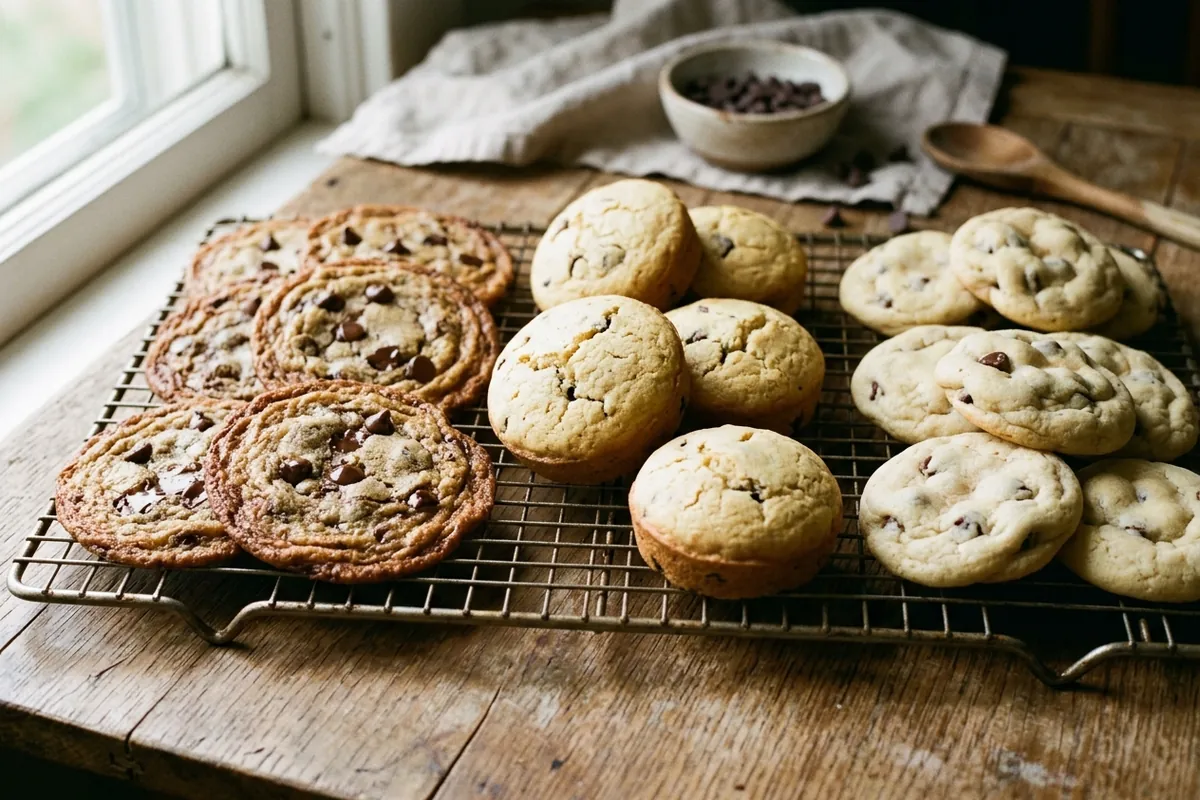
Three problems cover almost every disappointing batch. Flat, greasy cookies that spread into puddles almost always mean the dough was too warm, often because melted brown butter was not chilled or the dough skipped its rest. Chill harder and bake colder dough. Cakey, puffy cookies usually mean too much air was beaten into the dough or too much leavening; mix the dry ingredients in gently and just until combined, and check that you did not double the baking powder.
Bland cookies with no tang point to discard that was too fresh or too small in quantity, so use slightly older discard or nudge the amount up. Cookies that taste oddly sour or sharp mean the discard was too old; use a younger batch next time. If the cookies brown too fast on the bottom, your oven runs hot, so buy a cheap oven thermometer and trust it over the dial. Almost every cookie failure traces back to dough temperature, discard quality, or oven calibration, and each of those is easy to control once you know to look.
Balancing Hydration When You Add Discard
The reason you cannot just stir discard into your favorite cookie recipe is hydration. Most home starters run around 100 percent hydration, meaning equal weights of flour and water. So a half cup of discard at about 113 grams contributes roughly 56 grams of flour and 56 grams of water to your dough. That water is real and it adds up. If you ignore it, the dough turns slack and the cookies spread thin and pale.
Two adjustments keep the dough balanced. First, reduce the recipe’s added liquid or use a recipe written for discard from the start, which already accounts for the water. Second, lean on flour that builds structure: a portion of bread flour, with its higher protein, gives the dough more backbone to hold the extra moisture and bakes into a chewier cookie than all-purpose alone. Egg yolks instead of a whole egg are another pro trick, since yolks add richness and binding without the extra water a white brings. If your starter is a stiffer 50 percent hydration, it carries less water and you can use a little more of it. Knowing the hydration of your own starter takes the guesswork out and lets you adapt any recipe to the discard you actually have on hand.
Flavor Pairings That Suit the Tang
The gentle sourness of discard opens the door to add-ins that would overwhelm a sweeter dough. Toasted pecans or walnuts echo the nutty brown butter and add crunch. A spoonful of espresso powder deepens the chocolate without adding coffee flavor you can name. Dried tart cherries or cranberries play directly off the tang, turning the cookie almost into a chocolate-cherry bar. A scrape of orange zest brightens the whole thing and makes the chocolate sing.
Keep the total add-ins to about a cup so the dough still holds together, and chop large pieces small. Because the discard already carries flavor complexity, you need less of the loud stuff than you would in a plain cookie; a little goes a long way. Flaky salt on top is non-negotiable here, because the salt frames both the tang and the chocolate and stops the rich dough from tasting flat. If you want a holiday version, a quarter teaspoon of cinnamon and a pinch of cardamom turn the cookie warm and spiced without fighting the sourdough character, and a handful of toffee bits melts into chewy caramel pockets that suit the brown butter perfectly.
Storing Dough and Baked Cookies
Baked sourdough discard cookies keep four to five days in an airtight container at room temperature, and they stay soft longer than ordinary cookies thanks to the moisture from the discard. Drop a piece of bread in the container to keep them tender. The dough is the real prize for storage: scooped dough balls keep in the fridge up to three days, getting better with age, and they freeze for up to three months. Bake frozen dough straight from the freezer, adding two to four minutes to the time.
This freeze-ahead habit is what makes discard cookies a weekly ritual rather than a project. Every time you feed your starter, scoop the discard cookie dough, freeze the balls, and you build a stash you can bake two at a time whenever a craving hits. Nothing goes to waste, and you always have fresh cookies within twenty minutes. Keep your discard in a clean jar in the fridge between bakes and stir it before measuring so the hydration stays even.
Frequently Asked Questions
Do sourdough discard cookies taste sour?
No. With a normal amount of discard, the cookie is not sour. The mild acidity instead sharpens the chocolate and vanilla and adds a faint tang under the sweetness. You only get a genuinely sour flavor if you use very old, sharp discard or far more than the recipe calls for.
Does the sourdough discard need to be fed or active?
Either works. Fed, active starter is milder and adds a little leavening because the yeast is alive. Unfed discard is tangier and more acidic for stronger flavor. Both bake into great cookies, so use whichever you have, keeping in mind that older discard tastes tangier.
How old can my discard be?
One to five days old gives the cleanest flavor. Up to a week is fine. Past that, the discard can turn sharp and may form a layer of liquid called hooch on top; stir it in for more tang or pour it off. If it smells like alcohol or nail polish, it has gone too far and will taste off in the cookie.
Why did my cookies turn out flat and greasy?
The dough was almost certainly too warm. Melted brown butter and skipped rest time are the usual culprits. Chill the dough thoroughly before baking, scoop and chill the dough balls cold, and make sure your oven is not running hot. Cold dough holds its shape long enough for the edges to set before the cookie can spread.
Can I bake the dough right away or do I have to rest it?
You can bake after a short 30-minute chill, and the cookies will be good, just puffier and milder. Resting the dough overnight or up to three days hydrates the flour, lets the discard develop flavor, and gives thinner cookies with crisper edges and deeper taste. The rest is optional but strongly recommended.
Should I use chocolate chips or a chopped bar?
A chopped bar of 60 to 70 percent dark chocolate is better. Chips contain stabilizers that stop them from fully melting, while chopped bar chocolate melts into glossy pools and distributes more chocolate flavor through the dough. Chips still work fine if that is what you have on hand.
Sourdough discard chocolate chip cookies prove that the jar of starter on your counter is an ingredient, not waste. Measure your discard, brown your butter, rest the dough, and reach for chopped chocolate, and you will bake a soft, chewy, deeply flavored cookie that tastes better than most plain chip recipes. For the science behind how acidity and resting change a dough, King Arthur Baking keeps an excellent technical library at America’s Test Kitchen, and Bon Appetit covers brown butter technique in depth at Bon Appetit.