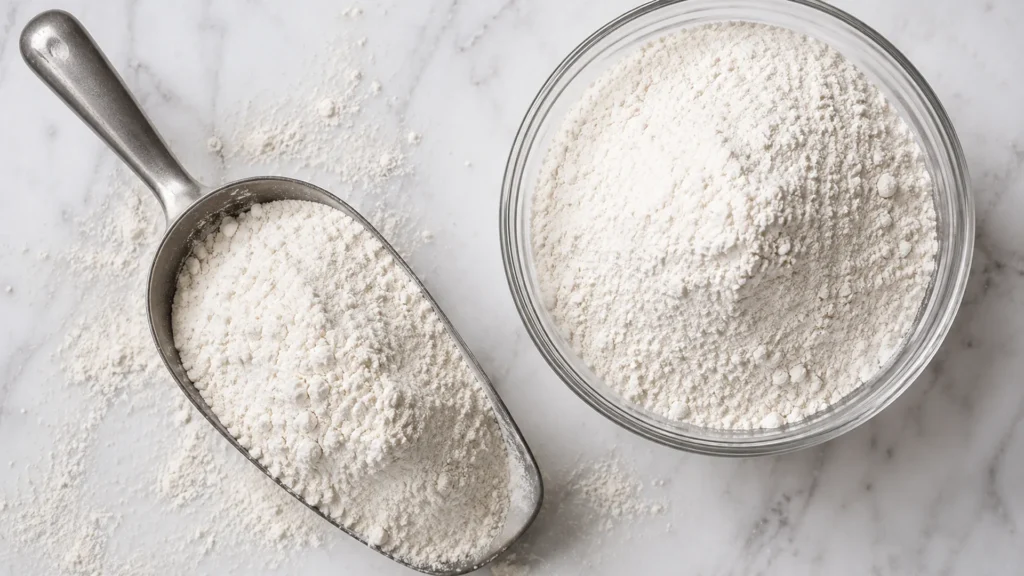
Can you use bread flour for cookies? Yes, and if you love a thick, chewy cookie, it might become your favorite swap. Bread flour has more protein than all-purpose flour, and that extra protein builds more gluten, which gives cookies a denser, chewier, taller texture with a satisfying pull. It is not a mistake or a compromise; many bakers reach for bread flour on purpose precisely to get that bakery-style chew. The substitution is simple, usually one to one, and the only thing to watch is that bread flour drinks up a little more liquid.
This guide explains exactly what bread flour does to a cookie and why, how to swap it for all-purpose flour without drying out the dough, when it is the right choice and when it is not, and how it compares to all-purpose and cake flour. There is a flour comparison table, a note on blending flours to dial in the texture you want, and answers to the related flour questions bakers ask. By the end you will know whether to reach for the bread flour bag the next time you bake.
The Short Answer
Yes, bread flour works in cookies and makes them chewier and thicker. You can substitute it one to one for all-purpose flour in most cookie recipes. Because bread flour absorbs more liquid, the dough can feel slightly stiffer, and if it seems dry you can add a teaspoon or two of liquid per cup of flour. The trade-off is texture: bread flour is the right call when you want chew and structure, and the wrong call when you want a tender, crumbly, melt-in-the-mouth cookie. For the everyday chocolate chip or oatmeal cookie, it is an easy upgrade toward chewiness.
The Science: Protein, Gluten, and Chew
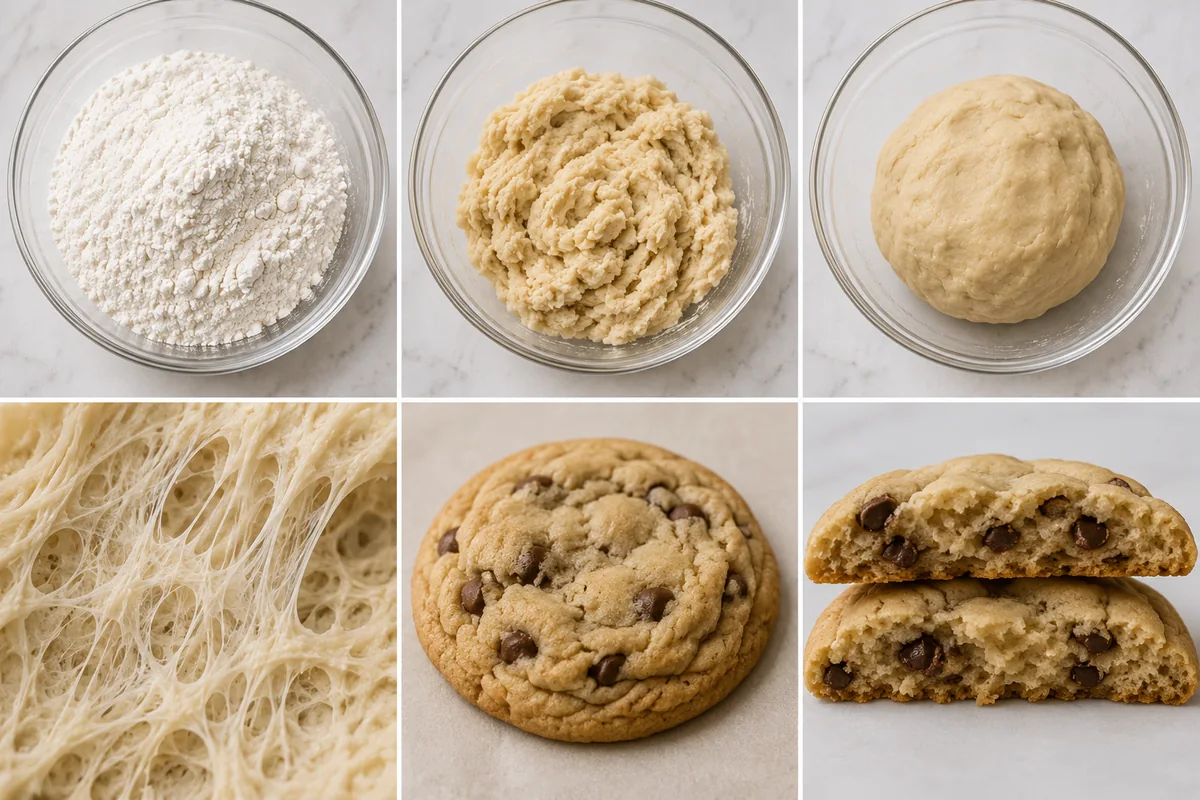
The difference between flours comes down to protein. All-purpose flour has around ten to twelve percent protein, while bread flour has about twelve to fourteen percent. When flour meets the liquid in a dough and gets mixed, that protein forms gluten, the elastic network that gives baked goods their structure and chew. More protein means more gluten, and more gluten means a chewier, more elastic result. In bread that network traps gas for a tall loaf; in cookies it gives that dense, satisfying chew and helps the cookie hold its height instead of spreading thin. So bread flour does not add some special ingredient, it simply has more of the protein that builds chew, and the cookie reflects it.
What Bread Flour Changes in a Cookie
Swapping in bread flour shifts several things at once, all in the direction of structure. Cookies come out chewier, with that pleasant elastic pull rather than a soft or crumbly bite. They bake thicker and taller, because the stronger gluten network resists spreading, which is the same reason bread flour can quietly fix cookies that bake too flat; the extra structure holds them up, a companion fix to the ones in our guide on why cookies turn out flat. The texture is a touch denser and breadier in the best sense, and the edges still crisp while the center stays chewy. The flavor barely changes, since this is a structural swap, not a flavor one. If chew and height are what you are after, every one of those changes is a win.
How to Substitute Bread Flour for All-Purpose
The swap is straightforward. Replace the all-purpose flour with the same amount of bread flour, measuring by weight if you can, since a cup of either should be about 120 grams and weighing avoids the packing errors that throw cookies off. Mix the dough just until combined, because over-mixing bread flour develops even more gluten and can make cookies tough rather than pleasantly chewy. If the dough feels stiff or dry, which can happen because bread flour soaks up more moisture, stir in a teaspoon or two of milk or water per cup of flour until it comes together. Then chill and bake as usual. That is the entire technique: same amount, gentle mixing, a splash more liquid if needed.
When to Use Bread Flour, and When to Skip It
Bread flour is the right choice for cookies that should be chewy and sturdy: classic chocolate chip, thick bakery-style cookies, oatmeal cookies, and anything you want to stand tall with a good pull. It is the wrong choice for cookies that are meant to be tender, delicate, or crumbly, like shortbread, sandies, many sugar cookies, and fine cut-out cookies, where extra gluten makes them tough and robs them of that melt-in-the-mouth quality. Delicate, snappy, or crisp-and-light cookies generally want less protein, not more. So before you swap, ask what texture the cookie is supposed to have: if the answer is chewy and substantial, bread flour helps, and if it is tender and short, stick with all-purpose or even cake flour.
| Flour | Protein | Cookie result |
|---|---|---|
| Bread flour | 12-14% | Chewy, thick, sturdy |
| All-purpose flour | 10-12% | Balanced, all-rounder |
| Cake flour | 7-9% | Tender, soft, crumbly |
Blend Flours to Dial In the Texture
You do not have to choose all bread flour or none. One of the best tricks is to blend bread flour with all-purpose to land exactly between chewy and tender. A common move is to use a mix, say half bread flour and half all-purpose, which gives more chew than all-purpose alone without the full density of straight bread flour. Adjust the ratio toward bread flour for more chew or toward all-purpose for more tenderness, and you can fine-tune a recipe to your exact preference over a couple of batches. This blending approach is how many bakery chocolate chip cookies get their signature texture, combining the structure of bread flour with the friendliness of all-purpose. It is also a smart way to use up a partial bag of bread flour without committing a whole recipe to it.
Other Cookie Flour Questions
Bread flour is not the only swap people ask about. Cake flour, with its low protein, does the opposite of bread flour, giving extra tender, soft, and crumbly cookies, so it suits delicate styles but will not give chew. Self-rising flour can be used but it already contains leavening and salt, so you must remove the baking powder and salt the recipe calls for or the cookies will be off. Whole wheat flour works in part, adding a nutty flavor and denser texture, but replacing all the flour with it makes heavy cookies, so many bakers use it for half. And gluten-free flour blends behave differently again, needing a binder like xanthan gum to mimic the structure wheat provides; the same chill-and-structure logic carries over to a rotation of gluten-free cookies. Knowing what each flour does lets you pick the texture rather than leave it to chance, whether you are baking rich double chocolate cookies or thick bars.
Bread Flour in Your Favorite Cookie Recipes
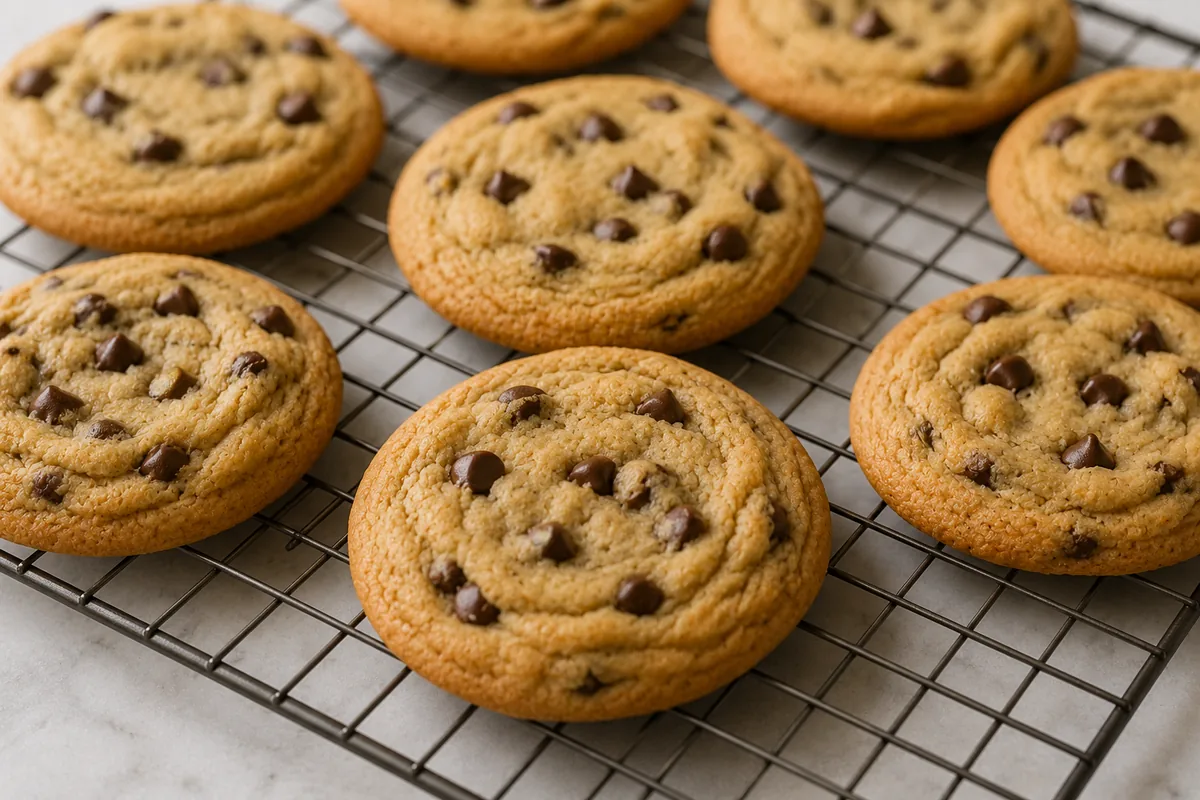
The swap plays out differently across the cookies people bake most. In chocolate chip cookies, bread flour is a star, giving the thick, chewy, slightly underbaked center that bakery-style recipes are famous for, which is why so many of them call for it outright. In oatmeal cookies, the extra structure stands up nicely to the oats and any add-ins, producing a hearty, chewy cookie that holds together well. In peanut butter cookies, bread flour adds chew without fighting the dense, rich texture those cookies already have. Where it struggles is in the tender camp: sugar cookies can turn tough and lose their delicate snap, and shortbread becomes chewy instead of crumbly, both of which work against the point of those cookies. The takeaway is to lean on bread flour for the substantial, chewy cookies and to leave it out of the fine, melt-in-the-mouth ones, and you will get the best of the flour rather than fighting it.
Bread Flour vs Pastry, Cake, and 00 Flour
Bread flour sits at the high-protein end of a whole spectrum, and knowing the neighbors helps you choose. Cake flour, at the low end around seven to nine percent protein, gives the most tender, soft, crumbly cookies and is the opposite tool to bread flour. Pastry flour falls between cake and all-purpose, around eight to ten percent, and makes tender cookies with a little more body than cake flour. All-purpose flour, in the middle, is the balanced default. Italian 00 flour is finely milled and varies in protein, so it behaves differently again and is really designed for pasta and pizza rather than cookies. For cookies, the useful mental model is simple: more protein means more chew and structure, less protein means more tenderness, and bread flour is the chew end of that line. Pick your spot on the spectrum based on whether you want a sturdy, chewy cookie or a soft, short one.
Buying and Storing Bread Flour
You do not need a fancy brand to get the benefit, since any standard bread flour has the higher protein that does the work, though brands vary slightly in protein within the bread-flour range. Store it like any flour, in an airtight container in a cool, dry spot, where it keeps for several months, or in the freezer for longer storage, which also protects it from pantry pests. If you only bake cookies occasionally, a smaller bag makes sense so it stays fresh, or you can blend down a larger bag with all-purpose over time. Bring frozen or refrigerated flour back to room temperature before baking so it does not chill the dough unexpectedly. None of this is demanding, but fresh, properly stored flour gives more consistent results than a bag that has sat open and stale, which can absorb odors and moisture from the pantry.
Why the Dough Feels Different
If you swap in bread flour and the dough seems stiffer or springier than usual, that is exactly what should happen, and it is not a problem. The extra protein both absorbs more liquid and forms a stronger, more elastic gluten network, so the dough feels firmer and a little more resistant as you mix and scoop it. That springiness is the same property that gives the baked cookie its chew. The only adjustment it sometimes calls for is a small splash of extra liquid if the dough is genuinely dry and crumbly rather than just firm, and a lighter hand on the mixing so you do not build even more gluten than you want. Once you have baked a batch or two, the slightly different feel of bread-flour dough becomes a reassuring sign that chewy cookies are on the way rather than something to worry about.
A Few Practical Tips
- Swap one to one by weight when possible, about 120 grams per cup.
- Mix gently, since over-mixing bread flour can make cookies tough.
- Add a splash of liquid if the dough feels dry, since bread flour absorbs more.
- Use it for chew, not for tender or crumbly cookies.
- Blend with all-purpose to fine-tune chewiness to taste.
- Chill the dough as usual for the thickest result.
Those small adjustments are all it takes to turn bread flour from a substitution into a deliberate upgrade. For the testing and science behind flour protein and cookie texture, America’s Test Kitchen and Cook’s Illustrated are reliable references, and the same structure-first thinking that improves a bar like loaded cookie bars applies to drop cookies too.
Frequently Asked Questions
Can you use bread flour instead of all-purpose flour for cookies?
Yes, you can substitute bread flour one to one for all-purpose in most cookie recipes. The cookies will be chewier, thicker, and sturdier because bread flour has more protein and builds more gluten. If the dough feels dry, add a teaspoon or two of liquid per cup of flour.
Does bread flour make cookies chewy?
Yes. Bread flour has higher protein than all-purpose, which forms more gluten when mixed with liquid, and more gluten gives a chewier, denser cookie with a satisfying pull. It also helps cookies bake thicker and resist spreading, so it is a favorite for bakery-style chewy cookies.
Do you need to change the recipe when using bread flour?
Usually only slightly. Swap the flour one to one, mix gently to avoid toughness, and add a small splash of liquid if the dough seems dry, since bread flour absorbs more moisture. Everything else, including chilling and baking, stays the same.
When should you not use bread flour for cookies?
Skip it for cookies meant to be tender, delicate, or crumbly, like shortbread, sandies, and fine sugar cookies, where extra gluten makes them tough. Those styles want all-purpose or low-protein cake flour instead, which keeps them short and soft.
Can you mix bread flour and all-purpose flour for cookies?
Yes, blending is a great way to control texture. Using part bread flour and part all-purpose gives more chew than all-purpose alone without the full density of straight bread flour. Adjust the ratio toward bread flour for more chew or all-purpose for more tenderness.
Will bread flour stop my cookies from spreading flat?
It can help. The stronger gluten network from bread flour gives cookies more structure, so they hold their height better and spread less than the same recipe made with all-purpose. It is not a cure for every cause of flat cookies, but combined with chilling the dough and accurate measuring, bread flour is a useful tool for a thicker result.
Is bread flour better than all-purpose for chocolate chip cookies?
It depends on the texture you want. Bread flour makes chocolate chip cookies chewier and thicker, which many people prefer, while all-purpose gives a more balanced, classic result. Many bakery-style recipes use bread flour or a blend specifically to get that signature chew.
Bottom Line
You can absolutely use bread flour for cookies, and it is one of the easiest ways to get a chewier, thicker, bakery-style result. The extra protein builds more gluten, which adds chew and structure and helps cookies hold their height. Swap it one to one, mix gently, add a splash of liquid if the dough is dry, and save it for cookies meant to be chewy rather than tender, leaving the delicate, crumbly cookies to all-purpose or cake flour where they belong. Blend it with all-purpose to fine-tune the texture, and you can dial your cookies in exactly the way you like them, batch after batch. The best way to learn what bread flour really does in your own kitchen, with your own oven and your favorite recipe, is to bake the same recipe twice, once with all-purpose and once with bread flour, and taste them side by side. The difference in chew and height is obvious in a single bite, and from then on you will reach for the right bag on purpose, choosing the texture you want rather than baking whatever the recipe happened to specify. That small experiment turns flour from an afterthought into one of the most powerful levers you have over how a cookie turns out.