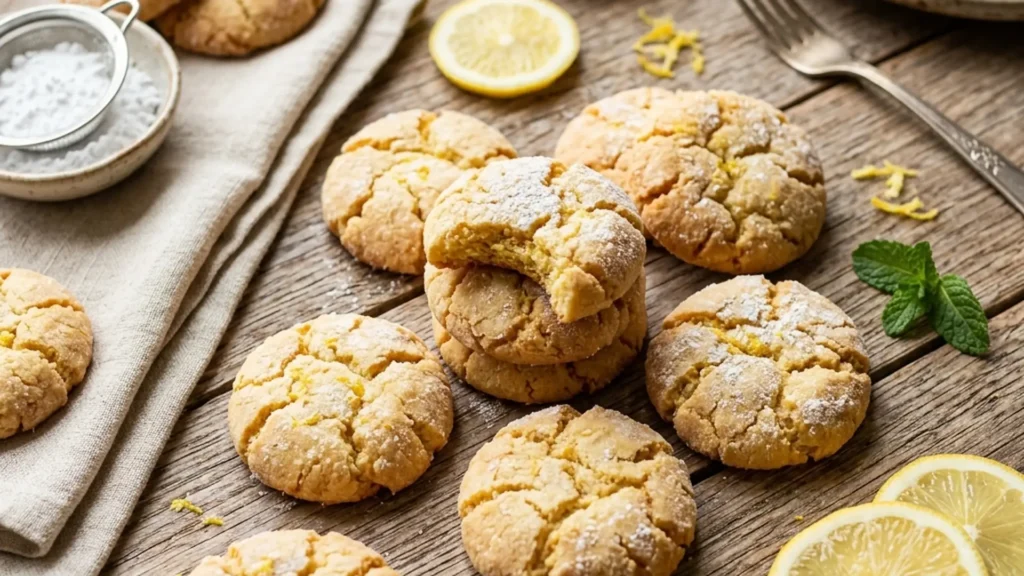
Lemon cookies live or die on two things most recipes never explain clearly: where the lemon flavor actually comes from, and how to dial the texture from soft and chewy to crisp and snappy without rewriting the whole recipe. Whether these are baked at sea level or at altitude, the difference between a flat, dull batch and a bright one comes down to a few measured choices. Get the zest right, cap the juice, and pick your texture lever on purpose. That is the whole game.
Here is the short answer if you only have a minute. For soft, chewy lemon cookies, cream softened butter with sugar, use one whole egg plus one extra yolk, lean on baking soda, and pull them at 9 to 10 minutes while the centers still look underbaked. For crisp lemon cookies, melt the butter, drop the extra yolk, switch to baking powder, press the dough thin, and bake 12 to 14 minutes until the edges turn pale gold. Same flavor base, two different cookies.
Where Lemon Flavor Really Comes From (and the Mistake That Kills It)
Most disappointing lemon cookies are not under-lemoned. They are under-zested. The bright, perfumey lemon note you are chasing lives in the colored part of the peel, packed into tiny oil glands. Lemon juice gives you sourness and a little aroma, but it cannot carry the whole flavor on its own. If you taste a cookie and think “this is just sweet and a bit tart,” you skipped the zest or you did not work it hard enough.
Lemon flavor works best treated as three layers, each one measured. For a batch of about 24 cookies, use the zest of 2 medium lemons, 2 tablespoons of fresh juice, and a quarter teaspoon of pure lemon extract as a safety net. The zest does the heavy lifting. The juice sharpens. The extract fills any gap if your lemons are tired and underripe in February.
The trick that doubles your payoff costs nothing. Before you cream the butter, dump the zest into the granulated sugar and rub it together with your fingertips for about 30 seconds until the sugar looks faintly yellow and smells like a lemon grove. You are crushing those oil glands into the sugar so the flavor spreads through every bite instead of sitting in clumps. America’s Test Kitchen has tested this rubbed-sugar method across citrus desserts and found it pulls noticeably more aroma into the dough than just tossing zest into the flour (see their citrus baking work at America’s Test Kitchen).
Why You Cannot Just Add More Juice
People assume the fix for weak lemon flavor is to pour in more juice. It is not. Lemon juice is water plus acid. Past about 2 to 3 tablespoons in a standard batch, that extra liquid thins the dough, makes the cookies spread into greasy puddles, and adds sourness without much aroma. Worse, the acid can react with baking soda too early and waste your leavening. For a louder lemon punch, add zest, not juice. Zest is concentrated flavor with almost no water.
Ingredient Choices That Actually Move the Needle
Not every ingredient swap matters. Some change the cookie a lot; others are marketing. Here is where your attention pays off.
Butter type is the big one. Unsalted butter lets you control the salt, and salt is what makes lemon read as bright rather than flat. If you only have salted butter, drop the added salt to a pinch or the cookie tastes muddy. European-style butter with higher fat (around 82 to 85 percent) gives a richer, more tender crumb, but it also spreads a little more, so chill the dough an extra 15 minutes if you use it.
Sugar is not just sweetness. Granulated sugar promotes spread and crisp edges. If you swap a quarter of it for light brown sugar, you add moisture and a faint caramel note that warms the lemon, plus the cookies stay soft longer because brown sugar is hygroscopic and grabs water from the air. For an everyday batch, 3/4 cup granulated plus 1/4 cup brown also works. For a clean, pale, lemonade-bright cookie, keep it all granulated.
Flour matters more than people think. All-purpose flour at around 10 to 12 percent protein is the standard, and the spoon-and-level method is non-negotiable: scooping straight from the bag packs in up to 20 percent extra flour and gives you dry, cracked cookies. For an even more tender bite, replace 2 tablespoons of the flour with cornstarch, which is already built into the base recipe. Cake flour makes the cookies almost too delicate for a hand-held cookie, so it is left out here.
Eggs are your texture dial, as the decision tree shows. Cold eggs do not emulsify well into creamed butter, so bring them to room temperature by sitting them in warm water for 5 minutes. A cold egg can break your butter-sugar mixture and give you a greasy, dense cookie no matter how good your lemon is.
The Bitterness Problem Nobody Warns You About
If your lemon cookies taste faintly bitter or medicinal, the culprit is almost always the white pith. That spongy layer under the colored peel is full of bitter compounds, and it is easy to grate into your zest if your tool is dull or you bear down too hard. Use a sharp microplane, hold the lemon at a slight angle, and rotate it the instant you see white. Take only the yellow. One pass per spot. If you are scrubbing the same patch three times, you are into the pith.
This single fix rescues more batches than any leavening tweak. Lemon cookies that taste “like cleaner” usually come from grating on the fine holes of a box grater and dragging the whole lemon back and forth.
The Texture Decision Tree: One Dough, Three Cookies
This is the part the popular recipes leave out. They hand you one finished cookie and never tell you which levers to pull if you want a different one. Here is how to think about it. Start from the same flavor base above, then choose your texture by adjusting these five controls.
| Lever | Soft and chewy | Crisp and snappy | Soft and cakey |
|---|---|---|---|
| Butter | Softened, creamed | Melted, cooled | Softened, creamed |
| Eggs | 1 whole + 1 yolk | 1 whole egg | 1 whole + 1 white |
| Leavening | Baking soda | Baking powder | Extra baking powder |
| Dough ball | Tall, 1.5 Tbsp | Pressed thin | Tall, 2 Tbsp |
| Bake at 350F | 9-10 min | 12-14 min | 11-12 min |
The logic underneath that table is simple once you see it. Extra egg yolk means more fat and emulsifiers, which keeps cookies soft and chewy. An egg white adds protein and water that sets into a lighter, cakier crumb. Melted butter and a thin shape encourage spread and crisping because there is less air structure and more surface area to dry out. Baking soda raises the dough’s pH, which browns and chews; baking powder keeps things paler and more tender. Pick the column you want and follow it down.
My Default and Why
For lemon, the soft-and-chewy column is the strongest pick. The slight chew gives the bright citrus something to cling to, and an underbaked center stays moist long enough that the cookies still taste fresh on day two. Cakey lemon cookies are fine, but they go stale fast and can read as muffin tops. That is a preference, not a law, so bake a small test batch of two columns and decide for your own kitchen.
Step by Step for Soft and Chewy Lemon Cookies
Cream 3/4 cup (1.5 sticks) softened unsalted butter with 1 cup granulated sugar that you have already rubbed with the zest of 2 lemons. Beat 2 to 3 minutes until pale and fluffy. Add 1 whole egg plus 1 yolk, 2 tablespoons fresh lemon juice, and 1/4 teaspoon lemon extract; mix just to combine. In a separate bowl, whisk 2 cups all-purpose flour, 1 teaspoon baking soda, 1 tablespoon cornstarch, and 1/2 teaspoon fine salt. The cornstarch is the secret to a softer, more tender bite; it interrupts gluten and holds moisture.
Fold the dry into the wet until no streaks remain. Do not overmix or you will build gluten and toughen the cookies. Scoop 1.5-tablespoon balls, roll each in granulated sugar, and chill the tray for 30 minutes if your kitchen is warm. Bake at 350F for 9 to 10 minutes. The centers should look puffy and slightly underdone. Let them sit on the hot sheet for 5 minutes to finish setting before moving them. If you want perfect circles, swirl a wide glass around each warm cookie the moment it comes out.
Five Common Lemon Cookie Failures and the Fix
When a batch goes wrong, it is usually one of these, and each has a specific cause rather than bad luck.
They spread into flat, greasy puddles. Your butter was too warm or melted when it should have been softened, or you added too much juice. Chill the dough for 30 to 60 minutes, cut the juice to 2 tablespoons, and make sure your baking sheet is cool between batches. A hot sheet melts the fat before the cookie can set.
They came out dry and cracked on top. Too much flour, almost always from scooping. Weigh your flour if you can; 2 cups all-purpose should land around 240 grams. Pull the cookies a minute earlier, because overbaking drives off the moisture that keeps them tender.
They are pale and taste raw in the middle. The oven runs cool or the dough balls were too big and tall. An oven thermometer is a few dollars and settles the question; many home ovens are off by 25F or more. Bump the temperature to 350F if you were lower, and flatten very tall dough balls slightly.
They taste flat despite plenty of lemon. Not enough salt. Salt sharpens citrus the way it sharpens everything. Bump to 1/2 teaspoon fine salt and rub the zest into the sugar so the flavor is evenly spread.
The glaze slid off or never set. You glazed warm cookies, or the glaze was too thin. Cool cookies completely first, and add liquid to the glaze a few drops at a time until it ribbons and holds a line for a second before melting back.
Soft and Chewy vs Crisp: A Real Taste Comparison
Here is how the two versions compare from the same lemon base, and the differences are worth knowing before you commit. The soft and chewy cookies had a denser, moister bite, and the lemon flavor felt rounder and lingered longer, probably because the higher fat coats your palate. They were the clear favorite with coffee and stayed good for two days. The crisp version snaps cleanly, reads sharper and more lemonade-like up front, and makes a better base for a glaze because the firm surface holds the icing without going soggy. Crisp cookies also travel better and keep their texture longer in a tin. If you are building an ice cream sandwich, go chewy. If you want a tea cookie or a glazed showpiece, go crisp. There is no wrong answer, just a choice you should make on purpose.
The Glaze, and When to Skip It
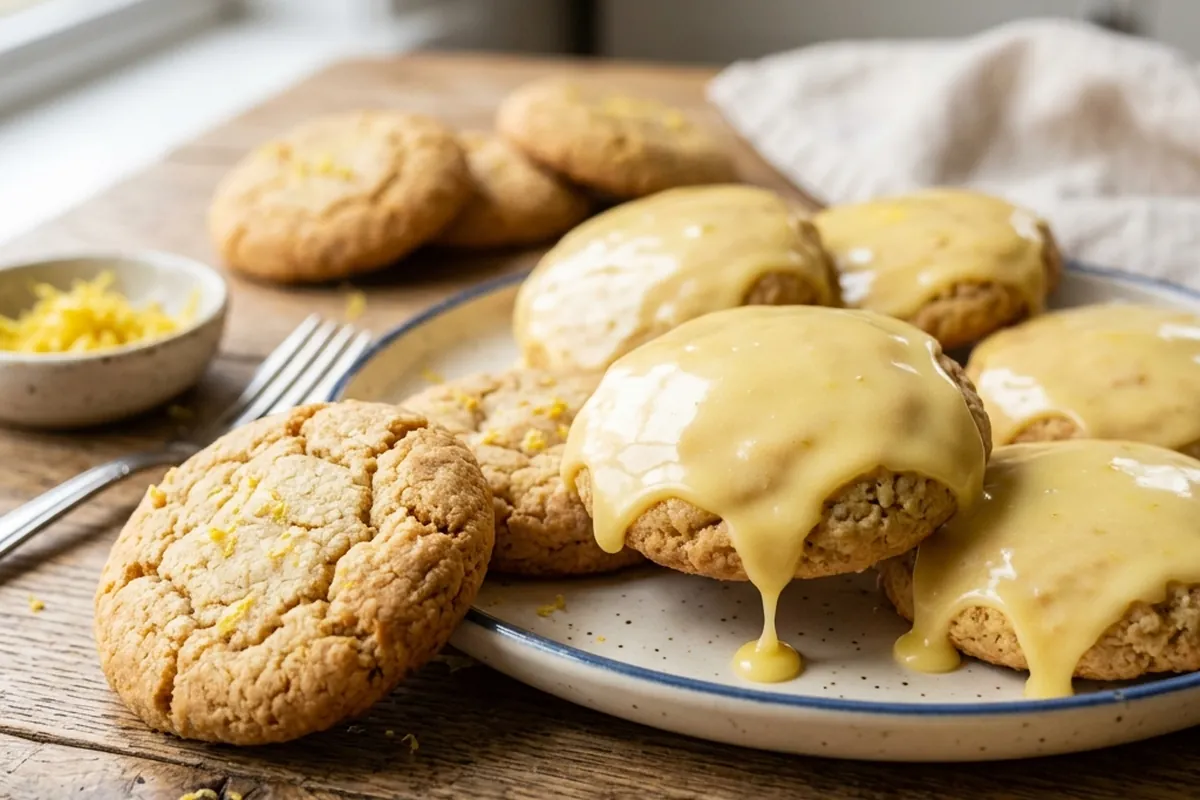
A lemon glaze turns a good cookie into a bakery-window cookie, but it is optional and it changes the texture. Whisk 1 cup powdered sugar with 1 tablespoon fresh lemon juice, 1/2 teaspoon zest, and water added a few drops at a time until it ribbons off the whisk. Dip the top of each fully cooled cookie or drizzle it. Let the glaze set for 30 minutes before stacking.
Skip the glaze if you rolled the dough in sugar, because the two together get cloying. Pick one finish, not both. For bake sale cookies that need to look polished, glaze. For everyday cookies with coffee, the sugar roll is plenty and far less sticky to store.
High-Altitude Lemon Cookies (Over 3,000 Feet)
Almost no lemon cookie recipe online covers this, and at 7,000 feet a standard batch can bake flat and greasy. Lower air pressure makes leavening expand faster and moisture evaporate quicker, so standard cookies spread, collapse, and dry out. The fixes are small but real.
Above roughly 3,000 feet, cut the baking soda by about a quarter (so 3/4 teaspoon instead of 1). Add 1 to 2 extra tablespoons of flour to firm the structure. Raise the oven to 365 to 375F so the cookies set before they over-spread, and shave a minute off the bake. You may also reduce sugar by a tablespoon, since sugar weakens structure and altitude already does that for you. Bon Appetit has a useful primer on how altitude shifts baking chemistry if you want the full reasoning (Bon Appetit).
Storage, Freezing, and Make-Ahead
Unglazed lemon cookies keep 3 to 4 days in an airtight container at room temperature with a slice of sandwich bread tossed in; the cookies pull moisture from the bread and stay soft. Glazed cookies are best within 2 days because the glaze slowly softens the surface. Both freeze well baked for up to 3 months, though freezing the raw dough balls is the better option.
To freeze dough, scoop and roll the balls, freeze them solid on a tray, then bag them. Bake straight from frozen and add 1 to 2 minutes. This is the way to keep fresh-baked lemon cookies on demand without making a full batch every time. If your brown-sugar-based doughs ever seize up hard in the freezer, the same softening tricks in the guide on how to soften brown sugar apply to firmed-up cookie dough too.
Variations Worth Trying
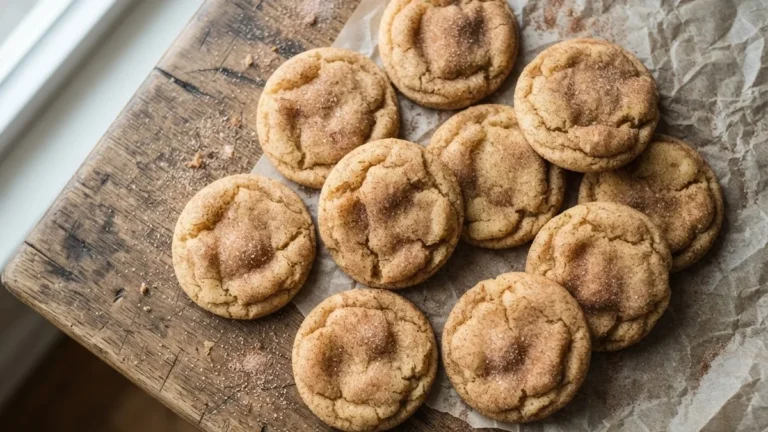
Lemon plays well with more partners than people expect. For a lemon-blueberry cookie, fold in 1/2 cup dried blueberries; fresh ones bleed and add water. For lemon-poppyseed, add 1 tablespoon poppy seeds to the dry mix. A lemon-lavender version takes 1/2 teaspoon culinary lavender ground into the sugar with the zest, but go light or it turns soapy. If you like a jammy center, take the thumbprint route and spoon in lemon curd; the method mirrors these raspberry walnut thumbprint cookies, just swap the filling. And for a cozy fall twist, the warm-spice approach in these pumpkin snickerdoodles shows how a sugar coating can carry a second flavor onto the cookie surface.
Frequently Asked Questions
Why are my lemon cookies not lemony enough?
You almost certainly need more zest, not more juice. Zest holds the aromatic oils that read as lemon; juice mostly adds sourness and water. Rub the zest of 2 lemons into your sugar before creaming, and add 1/4 teaspoon lemon extract as backup. Avoid pushing juice past 3 tablespoons or you will ruin the texture.
Why do my lemon cookies taste bitter?
You are grating the white pith under the peel. Use a sharp microplane, take only the yellow layer, and rotate the lemon as soon as you see white. One light pass per spot keeps the bitter compounds out.
Do I need to chill lemon cookie dough?
For the soft-and-chewy version with softened butter, a 30-minute chill helps if your kitchen is warm or your butter got soft, because it limits spread. The crisp melted-butter version actually benefits from spreading, so chilling is optional there.
Can I use bottled lemon juice?
You can in a pinch, but the flavor is flatter and slightly metallic. The real loss is the zest, which bottled juice cannot replace. If you only have bottled juice, lean harder on lemon extract and accept a less bright result.
How do I keep lemon cookies soft for days?
Store them airtight with a slice of bread, do not overbake (pull them while centers look underdone), and include cornstarch in the dough. These three together hold moisture far better than any single trick.
Can I make lemon cookies ahead for a party?
Yes. Freeze raw scooped dough balls for up to 3 months and bake from frozen with 1 to 2 extra minutes, or bake fully and freeze, then glaze the day of the event so the surface stays crisp and pretty.
Bottom Line
Great lemon cookies are not complicated, but they are specific. Treat lemon as three measured layers led by zest, protect the flavor by avoiding the pith and capping the juice, and choose your texture on purpose from the decision tree instead of hoping the recipe matches your mood. Bake a small test batch the first time, note which column you used, and you will own this recipe for good. Bright, soft, and unmistakably lemon every single time.