Chocolate crinkle cookies are fudgy chocolate cookies rolled in powdered sugar that crack open as they bake, leaving a snowy white surface split by deep dark fissures. The look is the whole appeal, and it is also where most batches go wrong: the cracks come out faint, the powdered sugar disappears into the dough, or the cookies bake up cakey instead of fudgy. None of that is bad luck. The crackle is a predictable result of how the powdered sugar coating behaves while the dough rises, and once you understand that, you can produce sharp, high-contrast cracks every single time. This guide covers the science of the crackle, the double-sugar-roll trick that guarantees it, why chilling is non-negotiable, and how to dial in a fudgy center.
These are a holiday-table staple for good reason. They look striking on a plate, they keep their soft centers for days, and the dough comes together in one bowl. If you can stir and chill, you can make them. The trick is treating the powdered sugar and the chill time as part of the recipe, not optional finishing touches.
It is worth saying up front what separates a great crinkle from a mediocre one, because it is not the chocolate or the sweetness. Almost any chocolate cookie tastes fine. What sets these apart is the visual drama of the crack and the fudgy give of the center, and both of those come from technique rather than ingredients. That is good news, because it means you do not need premium cocoa or a stand mixer to get a bakery result. You need to understand what the sugar coating and the chill are doing, and then execute those two steps with a little more care than a casual recipe suggests. Everything in this guide builds toward those two moves.
How the crackle actually forms
The signature crinkle is a controlled crack. When you roll a ball of chilled, moist chocolate dough in powdered sugar and put it in the oven, the dough warms and spreads outward and upward. The powdered sugar coating on the surface is drier and more rigid than the dough underneath, so as the dough expands the coating cannot stretch with it. It splits. Wherever it splits, the dark dough shows through, and the white sugar stays put on the raised sections. That contrast of white ridges and dark valleys is the crinkle.
Three conditions make the cracks deep and sharp. The dough has to rise (so leavening matters), the surface coating has to stay white and intact long enough to crack (so the sugar choice and amount matter), and the dough has to be cold enough that the outside sets before the inside finishes spreading (so chilling matters). Miss any one of those and you get a muddy, crack-free top. Hit all three and the crinkle is automatic.
It helps to picture the timeline inside the oven. In the first few minutes the cold dough warms and the leavening starts producing gas, which pushes the ball upward and outward. The surface, coated in dry sugar and exposed directly to the heat, sets into a thin shell faster than the moist interior. Then the interior keeps expanding underneath that set shell, and the shell has nowhere to go but apart. The cracks you see are the map of where the surface gave way under the pressure of the rising center. The reason chilling matters so much is that it widens the gap between when the surface sets and when the center finishes rising, which makes the cracks deeper and more defined. A warm dough sets surface and center almost together, so it barely cracks at all. The science writers at America’s Test Kitchen have explored how surface drying and interior rise interact in cookies, and the same principle is what governs the crinkle.
The double-sugar-roll trick
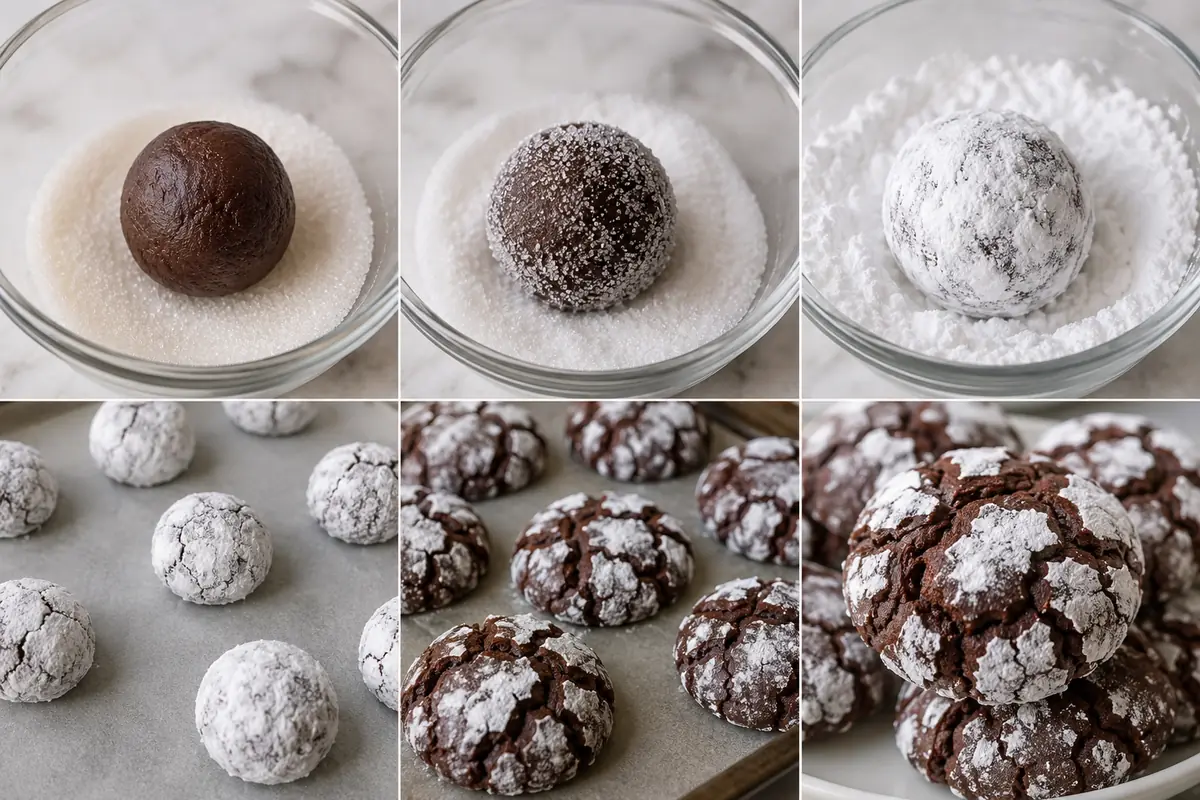
The single biggest upgrade to crinkle cookies is rolling each dough ball in granulated sugar first, then in powdered sugar. Most recipes skip straight to powdered sugar, and that is why the white coating so often vanishes: powdered sugar is fine and dissolves easily into the moist dough surface, so it gets absorbed and the cookie bakes out with barely any white left.
The granulated sugar layer solves this. The coarse granules sit on the dough surface and create a slightly dry barrier, so when you then roll the ball in powdered sugar, that powdered layer has something to cling to and is much less likely to be absorbed. The result is a thick, bright white coating that survives the oven and cracks cleanly. Coat each ball generously in the powdered sugar, more than feels necessary, because some always melts in.
| Coating method | Result |
|---|---|
| Powdered sugar only | Coating often absorbs; faint white, soft cracks |
| Granulated then powdered (double roll) | Thick white coating that survives; sharp, snowy cracks |
| Light powdered coating | Almost no white left after baking |
| Heavy powdered coating | Bright white, the cracks read clearly |
Why chilling is non-negotiable
Crinkle dough is wet and sticky, more like a thick brownie batter than a stiff cookie dough, because the moisture is what makes the centers fudgy. You cannot roll wet dough into neat balls, and unchilled dough spreads too fast in the oven, which flattens the cookies and pulls the cracks wide and shallow. Chilling firms the dough so you can handle it and slows the spread so the surface sets and cracks before the cookie collapses.
Chill the dough for at least two hours, and up to overnight. Two hours is the minimum for the dough to firm enough to roll; a longer chill gives even better-defined cracks and a slightly deeper flavor. Do the powdered sugar roll right before baking, not before chilling, so the coating is fresh and dry going into the oven. If you roll and then chill, the sugar weeps and the trick is lost.
Ingredients and what each one does
| Ingredient | Amount | What it does |
|---|---|---|
| Granulated sugar | 1 1/3 cups | Sweetness and structure; oil-based doughs use plenty |
| Vegetable oil | 1/2 cup | Keeps the centers fudgy and moist |
| Natural cocoa powder | 2/3 cup | Deep chocolate flavor and dark color |
| Eggs | 2 large | Binding, structure, and rise |
| Vanilla extract | 1 tsp | Rounds out the chocolate |
| All-purpose flour | 1 1/2 cups | Structure |
| Baking powder | 2 tsp | The rise that drives the crack |
| Salt | 1/4 tsp | Balances sweetness |
| Granulated sugar (for rolling) | 1/3 cup | First coat; the dry barrier |
| Powdered sugar (for rolling) | 2/3 cup | The white crackle coating |
Most classic crinkle recipes use oil rather than butter, and that is on purpose. Oil stays liquid at room temperature, so it keeps the centers soft and fudgy and the dough easy to mix. Butter would add flavor but also firm up as it cools, pushing the texture cakier. Baking powder, not baking soda, gives the steady lift that opens the cracks. For more on how leaveners change cookie texture, the baking guides at King Arthur Baking are a solid reference.
Step by step
1. Mix the dough
Whisk the granulated sugar, oil, and cocoa powder until combined and smooth. Beat in the eggs one at a time, then the vanilla. In a separate bowl whisk the flour, baking powder, and salt, then stir into the wet mixture until no dry streaks remain. The dough will be soft and sticky. That is correct.
2. Chill
Cover the bowl and refrigerate for at least two hours, or overnight. The dough needs to firm up enough to roll and to slow its spread in the oven. Do not skip or shorten this step; it is the difference between sharp cracks and flat, sad cookies.
3. Roll in both sugars
Heat the oven to 350 F (175 C). Scoop the chilled dough into balls (about 1.5 tablespoons each). Roll each ball first in granulated sugar, then roll it generously in powdered sugar until heavily coated. Place on a lined sheet a couple of inches apart.
4. Bake
Bake 10 to 12 minutes, until the cookies have spread, cracked, and the edges are set but the centers still look soft. Pull them while the middles look slightly underdone. They firm up as they cool, keeping the fudgy center you want. Overbaking dries them out and is the main reason crinkles turn cakey.
Fudgy versus cakey: controlling the texture
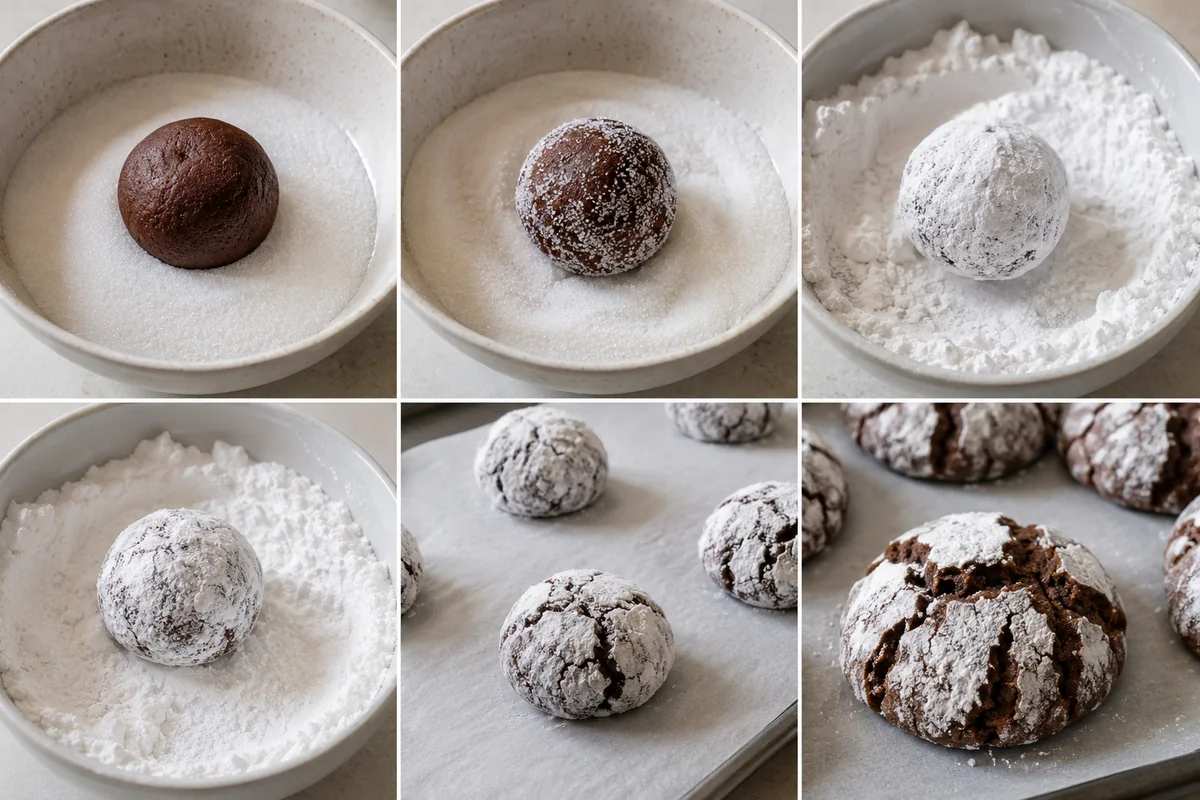
Crinkle cookies live on a spectrum from fudgy and brownie-like to light and cakey, and a few choices decide where yours land. For fudgy centers, use oil, keep the cocoa generous, and pull the cookies early. For a cakier crumb, more flour, more baking powder, and a longer bake push it that way. Most people want fudgy, so the recipe above leans there.
| For fudgy | For cakey |
|---|---|
| Use oil | Use butter |
| Generous cocoa | Less cocoa, more flour |
| Pull early, underbaked center | Bake until fully set |
| Minimum baking powder for rise | More baking powder |
If your cookies always come out cakey no matter what, the usual cause is overbaking. The center finishes setting on the hot pan after you pull it, so a cookie that looks done in the oven is already a step too far. The same early-pull instinct that keeps a chocolate chip cookie chewy keeps a crinkle fudgy.
The cocoa you choose also nudges the texture and flavor. Natural cocoa is acidic and gives a brighter, more classic chocolate note, while Dutch-process cocoa is darker, smoother, and less sharp. Either works in crinkles, but if you switch to Dutch-process you may want to nudge the leavening, since the acidity of natural cocoa interacts with the rise. For most home bakers, natural cocoa in the amounts above gives the deep color and reliable lift that crinkles depend on, so there is no need to overthink it unless you are chasing a specific darker look.
Make-ahead, storage, and freezing
Crinkle cookies are a good make-ahead choice. The dough has to chill anyway, so making it a day ahead costs you nothing. You can keep the mixed dough in the refrigerator for up to three days before rolling and baking, which spreads the work out for a busy baking week.
Baked cookies keep in an airtight container at room temperature for about five days and stay soft thanks to the oil. To freeze, freeze the baked cookies in a single layer, then stack them in a container for up to three months. You can also freeze the dough balls before the sugar roll, then thaw slightly, roll in both sugars, and bake. For the broader rules on what freezes well, see our guide on whether you can freeze cookie dough. These are a natural addition to any Christmas cookie lineup because they hold their looks and texture for days.
One small tip for the cleanest white if you are baking these ahead for a party: the powdered sugar can soak in over a day or two of storage, slightly dulling the bright contrast that makes crinkles look so good. If you want them photo-ready for an event, bake them the day before at the latest, and give the tops a light fresh dusting of powdered sugar through a fine sieve just before serving. It takes ten seconds and restores the snowy contrast even on cookies that have been sitting in a tin. This is the same finishing move bakeries use to keep a display tray looking freshly baked all afternoon.
Troubleshooting chocolate crinkle cookies
| Problem | Likely cause | Fix |
|---|---|---|
| Powdered sugar disappeared | Single powdered coat absorbed into wet dough | Do the granulated-then-powdered double roll; coat heavily |
| No cracks formed | Dough too warm or too little leavening | Chill at least 2 hours; check baking powder is fresh |
| Cookies spread flat | Dough not chilled or oven too cool | Chill longer; confirm oven is at 350 F |
| Cakey, dry texture | Overbaked or too much flour | Pull when centers look underdone; weigh flour |
| Cracks are wide and shallow | Too much spread before the surface set | Chill dough firmer; do not flatten the balls |
| Bitter or flat flavor | Old cocoa or too little salt | Use fresh cocoa; do not skip the salt |
The two failures that account for most disappointing batches are the vanishing sugar and the missing crack, and both are fixed the same way: double-roll the sugar and chill the dough properly. Nail those two and the cookies look like the photos.
Variations
Crinkle cookies take well to small tweaks. Add a teaspoon of instant espresso powder to the dough to deepen the chocolate without adding coffee flavor. Stir in a half cup of chocolate chips for melty pockets, or a little peppermint extract for a holiday version. You can also swap the chocolate base for other crinkle flavors using the same powdered-sugar method, such as lemon or red velvet, but the chocolate version is the classic and the highest contrast. However you flavor them, the double sugar roll and the chill are what make any crinkle work, so keep those constant and change everything else freely.
Frequently asked questions
Why did my crinkle cookies not crack?
Usually the dough was too warm or the leavening was weak. The cracks form when the dough rises and the dry sugar coating splits. If the dough spreads before it sets, or it does not rise enough, you get no cracks. Chill the dough at least two hours and make sure your baking powder is fresh.
Why does the powdered sugar disappear when I bake them?
Powdered sugar is fine and dissolves into the moist dough surface, so a single light coat gets absorbed. Roll each ball in granulated sugar first to create a dry barrier, then roll heavily in powdered sugar. The double coat survives the oven and stays bright white.
Do I have to chill crinkle cookie dough?
Yes. The dough is wet and sticky and cannot be rolled into balls or hold its shape without chilling. Cold dough also spreads slower, which lets the surface set and crack before the cookie flattens. Chill at least two hours, longer if you can.
Can I use butter instead of oil?
You can, but it changes the texture. Oil keeps the centers fudgy and the dough soft. Butter adds flavor but firms up as it cools and pushes the cookies toward a cakier crumb. For classic fudgy crinkles, oil is the better choice.
How do I keep crinkle cookies fudgy?
Use oil, keep the cocoa generous, and pull the cookies from the oven while the centers still look slightly underdone. They finish setting on the hot pan as they cool. Overbaking is the main cause of cakey, dry crinkles.
Can I make the dough ahead of time?
Yes. The dough keeps in the refrigerator for up to three days, which works well since it needs to chill anyway. Roll the balls in both sugars right before baking, not before storing, so the coating goes in fresh and dry.
Bottom line
Sharp, snowy chocolate crinkle cookies are not a matter of luck. The crackle forms when a rising, fudgy dough splits its dry sugar coating, so three things make it work every time: roll each ball in granulated sugar and then heavily in powdered sugar so the white survives, chill the dough at least two hours so it sets before it spreads, and pull the cookies while the centers still look underdone so they stay fudgy. Do that and you get bakery-looking crinkles with deep cracks and soft middles, the kind that anchor a holiday plate. Skip the double roll or the chill and you will see exactly why those two steps are the recipe, not the garnish.