
Lemon cookies using cake mix are the fastest way to get bright, bakery-style lemon crinkle cookies without measuring out flour, baking powder, and salt. A box of lemon cake mix already has the dry ingredients balanced for you, so you only add a couple of wet ingredients, roll the dough in powdered sugar, and bake. In well under 30 minutes you get soft, chewy cookies with that signature crackled top. This guide covers two reliable versions, the trick to the best crinkle, and how to make the lemon flavor really pop.
If you have made cookies from scratch before, this shortcut will feel almost too easy. If you have not, it is a perfect first recipe, because the cake mix does the hard part for you.
Why Use Cake Mix for Lemon Cookies?
A boxed cake mix is essentially pre-measured flour, sugar, leavening, and flavor. Turning it into cookies means you skip the most fiddly steps of baking and still get a consistent result every time. For lemon cookies specifically, the mix gives you an even, tender crumb and a gentle citrus base that you can boost with fresh zest. It is cheaper than a specialty bakery box, faster than scratch, and nearly foolproof, which is why cake-mix cookies have become a staple for busy bakers and beginners alike. For the broader method behind the trick, see our guide to cake mix cookies.

Ingredients
There are two popular ways to make these, and both start with one box of lemon cake mix. Pick the version that matches the texture you want.
Oil version (classic lemon crinkle)
- 1 box (about 15.25 oz) lemon cake mix
- 2 large eggs
- 1/3 cup vegetable or canola oil
- Optional: 1 teaspoon lemon zest and 1 tablespoon lemon juice for a brighter flavor
- About 1/2 cup powdered sugar, for rolling
Cool Whip version (extra soft and cakey)
- 1 box (about 15.25 oz) lemon cake mix
- 1 tub (8 oz) whipped topping, thawed
- 1 large egg
- About 1/2 cup powdered sugar, for rolling
The oil version gives you a denser, chewier cookie, while the whipped-topping version bakes up lighter and more cake-like. Both roll in powdered sugar for the crinkle effect.
How to Make Lemon Cookies Using Cake Mix
The steps below are for the oil version, but the method is the same for the Cool Whip version; you just swap the wet ingredients.
1. Mix the dough
In a large bowl, stir together the cake mix, eggs, and oil (plus the zest and juice if using) until a thick, smooth dough forms. It will be stickier than regular cookie dough, which is normal.
2. Chill the dough
Refrigerate the dough for 15 to 20 minutes. This firms it up so it is easier to roll and helps the cookies hold their shape with a deeper crackle. Do not skip this step if your dough feels very sticky.
3. Heat the oven and prep your pans
Preheat the oven to 350 F and line your baking sheets with parchment paper or a silicone mat. This keeps the cookies from sticking and stops the bottoms from over-browning.
4. Scoop and roll
Scoop about a tablespoon of dough per cookie, roll it into a ball, then roll it generously in powdered sugar until fully coated. A thick coat gives you whiter, more dramatic cracks. Place the balls about 2 inches apart on the sheet.
5. Bake
Bake for 8 to 12 minutes, until the cookies have spread, cracked, and set around the edges but still look slightly soft in the center. They firm up as they cool, so pulling them a touch early keeps them chewy.
6. Cool
Let the cookies cool on the baking sheet for 5 minutes before moving them to a wire rack to finish cooling. They are fragile while hot and set up perfectly with that short rest.
The Secret to the Best Crinkle
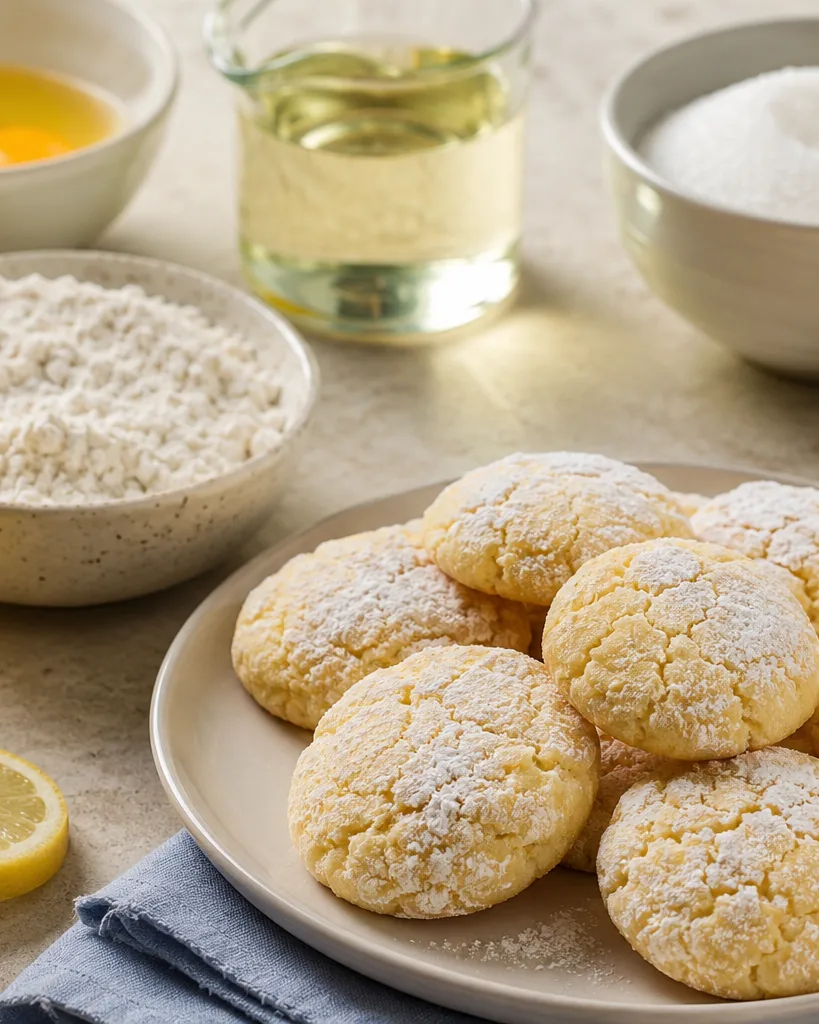
The crackled top that gives crinkle cookies their name is pure powdered sugar magic. As the dough balls spread and rise in the oven, the sugar coating on the outside cracks apart, revealing the lemon dough underneath in a snowy, fractured pattern. Two things give you the best crinkle: a generous coating of powdered sugar, and well-chilled dough that spreads slowly enough to crack rather than melt flat. For the whitest cracks, some bakers roll the dough balls first in granulated sugar and then in powdered sugar, which keeps the powdered layer from dissolving into the dough.
How to Make the Lemon Flavor Pop
Boxed lemon cake mix has a pleasant but mild citrus flavor on its own. If you want cookies that taste vividly of fresh lemon, a few easy additions make a big difference. Stir in the zest of one lemon, which carries most of the fruit’s aromatic oils, along with a tablespoon of fresh lemon juice. A quarter teaspoon of lemon extract intensifies it further without adding liquid. These small touches turn a convenient cookie into one that tastes homemade, and they are the difference between fine and genuinely bright.
Easy Variations
Once you have the base down, the recipe is a blank canvas. Try any of these:
- White chocolate chips: Fold in half a cup for sweet, creamy bursts against the tart lemon.
- Lemon glaze: Drizzle cooled cookies with a simple mix of powdered sugar and lemon juice for a bakery finish.
- Almond twist: A quarter teaspoon of almond extract pairs beautifully with lemon.
- Berry swap: Use the same method with strawberry or funfetti cake mix when you want a different color and flavor.
- Poppy seeds: A tablespoon adds the classic lemon-poppyseed look and a gentle crunch.
Tips for Perfect Cookies Every Time
These small habits keep your results consistent batch after batch:
- Use a cookie scoop so every cookie is the same size and bakes evenly.
- Do not overbake. The cookies should look slightly underdone in the center when you pull them; they finish setting on the hot pan.
- Chill if the dough is sticky. A short rest in the fridge makes rolling far easier and improves the crackle.
- Coat generously. A thin dusting of powdered sugar disappears into the dough; a thick coat makes the crinkle.
- Cool fully before stacking so the cookies do not stick together or smear their sugar tops.
Storing and Freezing
These cookies keep well, which makes them great for making ahead. Store fully cooled cookies in an airtight container at room temperature for up to 5 days; there is no need to refrigerate them. To keep them longer, freeze the baked cookies in a sealed container for up to three months and thaw at room temperature. You can also freeze the rolled, sugar-coated dough balls on a tray, then transfer them to a bag and bake straight from frozen, adding a minute or two to the time. Either way, you can have fresh lemon cookies on short notice.
A Quick Food-Safety Note
As tempting as it is to taste the dough, raw cake-mix cookie dough is not safe to eat. It contains both raw eggs and raw flour, and the USDA and food-safety experts warn that raw flour can carry bacteria just as raw eggs can. Bake the cookies fully before tasting, and if you want a safe dough to snack on, look for recipes made with heat-treated flour and no eggs. Reputable baking resources like King Arthur Baking cover safe dough handling in detail. For more cookie inspiration once you have mastered these, our lemon cookies guide offers a from-scratch take.
Troubleshooting Common Problems
Cake-mix cookies are forgiving, but a few issues come up often. Here is how to fix them.
| Problem | Likely cause | Fix |
|---|---|---|
| Cookies spread too thin | Dough too warm or too wet | Chill the dough 15 to 20 minutes; add a little extra cake mix |
| No crinkle cracks | Too little powdered sugar, or dough too soft | Coat generously; chill before baking |
| Cookies are dry or hard | Overbaked | Pull them at 8 to 10 minutes while centers look soft |
| Sugar coating melted in | Rolled while dough was warm | Roll cold dough; double-coat with granulated then powdered sugar |
| Uneven sizes and bake | Hand-scooped portions | Use a cookie scoop for uniform balls |
Most problems trace back to two things: dough temperature and bake time. Keep the dough cold and pull the cookies a little early, and you will avoid the majority of issues.
What to Expect From Each Version
It helps to know how the two methods differ before you choose. The oil version produces a cookie with a bit more structure and chew, closer to a traditional crinkle cookie, and it holds up well for stacking and gifting. The whipped-topping version is softer and more delicate, almost like a bite of lemon cake, and it tends to be a touch lighter in sweetness because the topping replaces the oil.
Neither is better; they simply suit different cravings. If you want a sturdy cookie to pack in a tin, reach for the oil version. If you want something pillowy that melts in your mouth, the whipped-topping version wins. Trying both side by side is a fun way to find your favorite, and since they share most ingredients, it is easy to make a batch of each.
Serving and Gift Ideas
The snowy, crackled tops make these cookies look far more impressive than the effort they take, which is exactly why they shine as gifts and at gatherings. Stack them in a clear cellophane bag tied with ribbon for an easy homemade present, or arrange them on a platter with other bar cookies and bites for a dessert table. Their bright lemon flavor makes them especially welcome in spring and summer, at baby and bridal showers, and alongside a pot of tea. For a more finished look, drizzle them with lemon glaze and let it set before packaging. Because they keep for several days, you can bake them ahead of an event without any last-minute stress.
Make-Ahead and Batch Baking
This recipe scales and stores beautifully, so it is ideal when you need cookies for a crowd. You can double or triple the batch using the same ratios, mixing one box at a time so the dough stays easy to handle. For the smoothest workflow, roll all of your dough into sugar-coated balls first, then bake them in waves while the rest wait in the fridge.
If you are baking for a future date, freeze the coated dough balls on a tray until solid, then store them in a labeled bag for up to three months. When you want fresh cookies, bake them straight from the freezer and simply add a minute or two to the time. Having a stash of ready-to-bake dough means warm lemon cookies are never more than fifteen minutes away.
Frequently Asked Questions
How many cookies does one cake mix make?
One standard 15.25-ounce box of lemon cake mix makes roughly 24 cookies when you use about a tablespoon of dough each. The exact number depends on how big you scoop them; smaller balls give you more cookies and a slightly shorter bake time.
Why are my cake mix cookies flat?
Flat cookies usually mean the dough was too warm or too wet. Chill the dough for 15 to 20 minutes before baking, make sure your oven is fully preheated to 350 F, and use parchment or a silicone mat. If your dough is very soft, add a tablespoon or two of extra cake mix to firm it up.
Can I make lemon cake mix cookies without eggs?
Yes. The Cool Whip version uses just cake mix, whipped topping, and one egg, and you can replace that egg with a flax egg or a quarter cup of unsweetened applesauce. The texture will be a little softer and cakier, but the cookies still bake up nicely.
Do I have to roll them in powdered sugar?
No, but the powdered sugar is what creates the classic crinkle look and adds a touch of sweetness on top. Without it the cookies are still tasty, just plainer and without the crackled finish. If you skip it, consider a lemon glaze instead for a different kind of decoration.
How do I store lemon cake mix cookies?
Keep them in an airtight container at room temperature for up to 5 days. They also freeze well for up to three months, either baked or as sugar-coated dough balls ready to bake from frozen. Let frozen cookies thaw at room temperature before serving.
What kind of cake mix should I use?
A standard lemon-flavored boxed cake mix, around 15.25 ounces, works perfectly. Any major brand will do, and you do not need a pudding-in-the-mix variety, though those bake up slightly softer. If your box is a different size, the recipe is forgiving, but very large family-size boxes may need an extra egg or a splash more oil to come together.
Can I add fresh lemon to boxed cake mix cookies?
Absolutely, and it is the single best upgrade. Stir in the zest of one lemon and a tablespoon of fresh juice, or a quarter teaspoon of lemon extract, to take the flavor from mild to bright. The zest in particular carries the fragrant oils that make the cookies taste freshly homemade rather than boxed.
Why did my powdered sugar disappear after baking?
If the white coating melts into the cookie, the dough was likely too warm or too wet when you rolled it, so the sugar dissolved instead of cracking. Chill the dough first, and for the most durable crinkle, roll each ball in granulated sugar before the powdered sugar. That base layer protects the powdered coating so it stays white and cracks cleanly.
Can I make these cookies ahead for an event?
Yes, and they are ideal for it. Baked cookies keep in an airtight container for up to 5 days, so you can make them a few days before a party. For longer lead time, freeze the sugar-coated dough balls and bake them fresh from frozen the day of the event, adding a minute or two. Either approach lets you serve warm, just-baked cookies without last-minute work.
The Bottom Line
Lemon cookies using cake mix prove that a homemade-tasting treat does not have to mean a long ingredient list or fussy technique. With a box of lemon cake mix, a couple of wet ingredients, and a roll in powdered sugar, you get soft, crackly, bright cookies in under half an hour. Chill the dough, coat it generously, pull the cookies while the centers still look soft, and add a little fresh zest if you want the lemon to sing. Whether you choose the chewy oil version or the pillowy whipped-topping version, you end up with a batch that looks bakery-made and disappears just as fast. Keep a box of lemon cake mix in the pantry and you are always one quick recipe away from fresh cookies, whether for a last-minute craving, a school treat, or a gift that looks like it took hours instead of minutes.