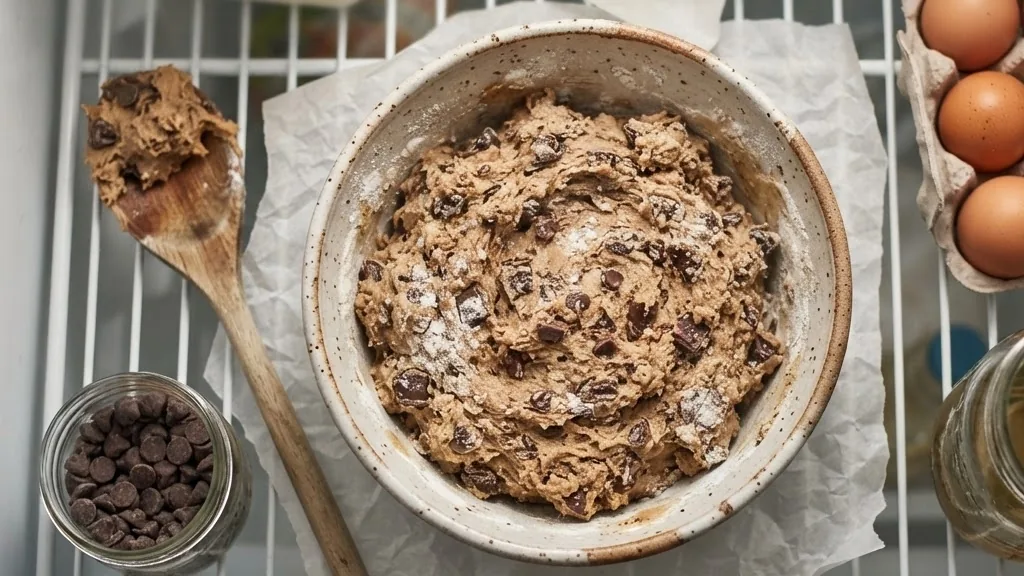
So how long does cookie dough last in the fridge? For most homemade batches, plan on 3 to 5 days when the dough is wrapped tight and your refrigerator sits at or below 40 degrees F (4 degrees C). The USDA gives a slightly tighter window of 2 to 4 days, and StillTasty suggests using it within 2 days for the best flavor and texture. Batches with fresh dairy or eggs lean toward the shorter end. Below are the real numbers, the food-safety rules that matter, and how to keep dough usable.
The quick numbers you actually need
Here is the short version before we get into detail. Chilled homemade dough is reliably good for 3 to 5 days, and day 4 is a sensible cutoff for anything with raw egg. The USDA lists 2 to 4 days as its refrigerator range, which is the most reliable figure. StillTasty, the food-storage database, is more cautious and puts best quality at 2 days if you want that fresh-baked spring. None of these numbers are magic. They assume a cold fridge, an airtight wrap, and a batch that started with clean hands and fresh ingredients.
Why the spread between 2 and 5 days? Two reasons. First, agencies like the USDA build in a safety cushion, so their 2 to 4 day figure is deliberately conservative. Second, recipes vary wildly. A lean, egg-heavy dough hits the wall faster than a sugar-rich, butter-heavy one. My own habit is to write the mix date on a strip of tape and aim to bake within 4 days. If you drift toward day 5, do a careful smell and look check first, and only push it if the batch was egg-free to begin with.
Store-bought tubes behave differently. A sealed package of refrigerated dough from the grocery store often carries a printed use-by date 2 to 3 weeks out, because it is formulated for shelf stability. Once you crack that seal, though, the clock speeds up and you should finish it within 2 to 3 days, same as a homemade batch. The gap between homemade and commercial dough comes down to processing and packaging, not because one is safer to eat raw. Neither one is, and the reason is explained later.
Why fridge temperature decides everything
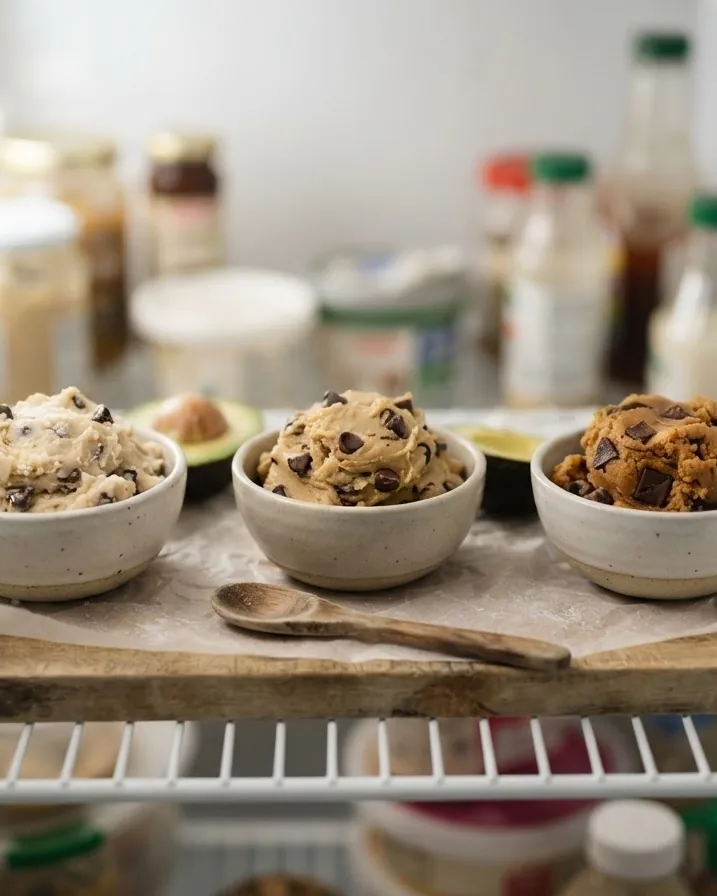
One factor decides how long your dough survives more than any other: temperature. Bacteria multiply fastest in what the FDA calls the danger zone, roughly 40 to 140 degrees F. Keep your refrigerator at or below 40 degrees F (4 degrees C) and that growth slows to a crawl. According to the FDA, you should use a refrigerator thermometer to confirm real temperature rather than trusting a dial, because door shelves and crowded shelves run warmer than you think.
A cheap thermometer clipped near the back of the middle shelf should read about 37 degrees F, which is right where you want it. If your dough sits in the door, move it deeper into the fridge where the cold is steady. And do not let a bowl of dough linger on the counter while you clean up. My rule is simple: no more than 2 hours at room temperature, total, across a whole session. Past that, the safety margin shrinks quickly, so it is better to bake it off or freeze it.
Fridge placement is worth a second thought. Every time you open the door, warm kitchen air rushes in, and shelves in the door swing through the widest temperature range anywhere in the unit. That is a fine spot for condiments, but a poor one for a bowl of dough you want to keep at a steady chill. Push your container to the back of a lower or middle shelf where cold pools and stays put. Also give the air room to move. A fridge crammed wall to wall cannot circulate cold evenly, so a few pockets end up warmer than the thermometer near the front suggests.
Storage container and wrapping matter more than you expect
Wrapping is where a lot of good dough goes to waste. Air is the enemy here. Left exposed, its surface dries into a crust, picks up onion or garlic odors from last night’s dinner, and can develop off flavors within about 24 hours. Press plastic wrap directly onto the dough surface so there is no air pocket, then slide the whole thing into an airtight container or a zip-top bag. StillTasty recommends the same approach, covering with foil or wrap to stop the dough from drying out.
For a soft drop-cookie batter, pack it into a lidded container and smooth the top flat. For a stiffer dough, shape it into a disc or a log first, then double-wrap. A disc chills faster and more evenly than a big lump, so its outer layer is not sitting warm while its center catches up. A well-wrapped batch not only lasts closer to that 5-day mark, it also bakes better because it has not lost moisture to the cold, dry fridge air.
Container choice makes a real difference too. Glass and hard plastic with a tight gasket lid seal better than a loose lid or a bowl draped with a towel. If you use a zip-top bag, flatten the dough and squeeze out as much air as you can before sealing, which shrinks the space where moisture and odors collect. Label the container on masking tape with both the dough type and the date, because two similar-looking discs of pale dough are impossible to tell apart on day 3. That small habit prevents baking a savory herb dough by mistake, thinking it was sugar cookie.
Fridge life by dough type
Not every batch keeps for the same number of days. The ingredients change the math. High-sugar, low-moisture doughs hold up longest, while anything with fresh fruit, cream cheese, or extra dairy spoils faster. Here is a rough guide, all assuming storage at or below 40 degrees F.
| Dough type | Typical fridge life | Notes |
|---|---|---|
| Sugar cookie | 3 to 5 days | High sugar helps it keep |
| Chocolate chip | 3 to 4 days | Butter and egg, use by day 4 |
| Shortbread | 4 to 5 days | Low moisture, very stable |
| Oatmeal | 2 to 4 days | Oats and raisins draw moisture |
| Cream cheese or fruit-filled | 2 to 3 days | Dairy and fruit spoil first |
| Egg-free or vegan | Up to 5 days | No egg means a longer margin |
Treat these as starting points, not guarantees. A batch of browned butter cookies holds for about 4 days because the sugar and fat lock in moisture, but still give it a sniff before scooping. If you added something perishable that is not in the list, default to the shorter window. When two rules conflict, the more cautious one wins.
How sugar and fat change the timeline
There is real food science behind those ranges. Sugar is a natural preservative because it binds water, and water is what microbes need to grow. That is why a sweet sugar-cookie or shortbread base tends to keep a day or two longer than a leaner, less-sweet recipe. It is the same principle that lets jam and honey sit on a shelf for a long time. More sugar means less free water for bacteria and mold to use.
Fat plays a double role. Butter and oil trap moisture, which keeps the dough pliable and helps it bake up tender, so a rich batch resists drying out in the fridge. One catch is that fat can oxidize over time and turn rancid, which is what gives old dough that faint crayon or stale-nut smell. In the fridge over a handful of days this is rarely the issue, but it becomes the limiting factor once you push a batch toward its freezer limit. So sugar buys you time on the microbe side, and fat buys you texture while slowly working against you on flavor.
Signs your cookie dough has gone bad
Dates are a guide, but your senses are the real test. Before baking anything that has been chilling for a few days, run through a quick check. If a batch fails any one of these, it goes in the trash. Do not taste-test to decide, because raw dough is exactly the food you should not sample, and a nibble will not tell you whether harmful bacteria are present anyway.
- Smell: Fresh dough smells buttery and faintly sweet. A sour, yeasty, or spoiled-dairy odor means it is done.
- Color: Gray, green, or dark patches are a warning. White fuzzy spots are mold, so discard the whole batch right away.
- Texture: A slimy or sticky-wet film on the surface is bad news, and so is dough that has gone hard, dry, and crumbly.
- Time: If you honestly cannot remember when you made it and it is past day 5, do not gamble. Toss it.
One important note: you cannot see or smell the bacteria that cause food poisoning. Dough can look and smell perfectly fine and still make you sick if it sat too warm or too long. The sensory checks above catch obvious spoilage, but they are a backstop, not a substitute for tracking the calendar and keeping the fridge cold. When in doubt, throw it out is a boring rule, and it is also the right one.
The raw egg and raw flour risk you should not ignore
This is the part people skip, and it matters most. Raw cookie dough is not safe to eat, and the reason is not only egg. Raw flour is a raw agricultural product that has not been treated to kill germs. The FDA is blunt about it: never eat or taste raw flour, dough, or batter, because flour can carry E. coli and Salmonella. Grinding the grain and bleaching the flour do not kill those bacteria, so that risk rides along all the way into your mixing bowl.
This is not a theoretical worry. Since 2009 there have been several outbreaks in the United States tied to raw flour and raw flour products, and the CDC linked a Salmonella outbreak to raw cookie dough in May 2023. Add raw eggs, which can carry Salmonella of their own, and you have two separate hazards in one bowl. The FDA and USDA both advise against eating any of it before baking, and against letting kids play with raw dough as a craft material for the same reason.
You might wonder about heat-treating flour at home to make it safe. The appeal is clear, but the FDA specifically says do not try it, because home methods may not reach or hold a temperature high enough to kill all the bacteria reliably. If you want the raw-dough experience, buy or make edible cookie dough that uses commercially heat-treated flour and pasteurized or omitted eggs. That product is engineered to be eaten uncooked. A standard baking batch is not, no matter how good it tastes off the spoon.
Handling matters too. After you work with flour, dough, or eggs, wash your hands, utensils, bowls, baking pans, and countertops with warm, soapy water. Flour is a fine powder that drifts and settles, so it is easy to spread invisibly across a counter. Cleaning up well protects the next thing you make and keeps raw-flour bacteria from hitching a ride onto a salad or a snack. It takes 2 min and it is worth every second.
Freezing cookie dough for the long haul
When you know you will not bake within a few days, freeze instead of gambling on the fridge. Frozen dough keeps its best quality for 2 to 3 months, and the USDA points to about 2 months for both homemade and commercial dough. Held at a steady 0 degrees F it stays safe well beyond that, but the texture and flavor slowly fade, and past 3 months butter starts to pick up freezer odors. So label everything with the date and try to work through it in that window.
What makes freezing worthwhile is portioning before you freeze, not after. Scoop the dough into balls, freeze them solid on a tray so they do not stick together, then transfer the frozen balls to a labeled bag. From there you can bake as few as one or two at a time straight from frozen, usually adding 2 to 3 min to the normal bake time. There is no thawing, no waste, and no half-used tub going stale in the fridge. It is one of the most useful habits for a home baker.
A few dough styles freeze better than they chill. Slice-and-bake logs, shortbread, and sturdy sugar-cookie dough come back beautifully. Anything with a wet filling, a fresh fruit swirl, or a delicate meringue element can turn watery or grainy after a long freeze, so those are better baked fresh within a couple of days. When you do freeze, double-wrap against freezer burn: parchment or plastic against the dough, then a bag or foil over that. That extra layer keeps butter from soaking up the stale, cold-metal smell a freezer develops over weeks. Thaw logs in the fridge overnight before slicing, and bake balls straight from frozen.
Scooped balls versus logs: which to chill
How you shape the dough before chilling changes how you use it later. For drop cookies, scooped balls are usually the best choice, because portions are ready and you can pull exactly what you need. For slice-and-bake styles like shortbread or these snickerdoodle cookies, a log is the way to go, since it gives clean, even rounds. Roll the dough into a tight cylinder, wrap it in parchment and then foil, and chill it 30 to 60 min before slicing so the edges cut cleanly.
For the fridge specifically, either shape works within the same 3 to 5 day window, so pick based on how you plan to bake. Balls chill and firm up fastest, which is handy when a recipe wants a rest before baking. Logs save space and slice into uniform cookies that bake evenly. Whichever you choose, wrap it the same careful way, keep it cold, and note the date somewhere you will actually see it. A strip of masking tape on the container prevents a guessing game later.
Common storage mistakes that cut dough life short
Most dough that spoils early was let down by one avoidable slip, not by a bad recipe. Each of these slips is common, so a quick mental checklist helps. Run through it whenever you tuck a batch away and you will squeeze the full 3 to 5 days out of nearly every mix.
- Leaving dough uncovered or loosely draped, so the surface dries and picks up fridge odors within about 24 hours.
- Parking the container in the door, where the temperature swings every time someone grabs the milk.
- Putting a warm bowl straight into the fridge, which raises the internal temperature and makes the compressor work harder.
- Skipping the date label and then playing a guessing game on day 4 or day 5.
- Refreezing dough that already thawed in the fridge, which degrades texture and stacks up the food-safety risk.
None of these are dramatic on their own, but they stack. A loosely covered bowl in a warm door with no date on it can go from fresh to questionable a day or two ahead of schedule. Fix the easy ones first: wrap tight, push it deep into a cold shelf, and write the date down. Those three moves cost nothing and protect the whole batch.
Bringing chilled dough back before you bake
Cold dough behaves differently in the oven, and knowing how to handle it saves a tray of flat or misshapen cookies. Straight from the fridge, most dough is firm and holds its shape well, which is often exactly what you want for cut-outs and slice-and-bake logs. For drop cookies, though, very cold dough can spread unevenly, so let scooped balls sit at room temperature for about 10 to 15 min to take the deep chill off before they go in. That short rest gives a more even bake without pushing the dough into the danger zone.
Do not rush it with heat. Softening dough in the microwave or near a warm oven starts to melt the butter, which ruins the structure and, more importantly, warms it into that 40 to 140 degrees F range where bacteria wake up. A short countertop rest is all you need. If the dough has been chilling for a few days and looks a little dry on top, that surface layer will usually bake in fine, but if it has hardened into a crust, trim it off rather than working it back in. And once more, taste nothing raw along the way.
A simple routine that keeps dough safe
Put it all together and the system is easy. Mix with clean hands and fresh ingredients, shape into balls or a log, press wrap onto the surface, and seal it in an airtight container. Get it into a fridge you have confirmed is at or below 40 degrees F (4 degrees C), and use it within 3 to 5 days, sooner for anything rich in dairy or egg. If that window is going to slip, freeze the portioned dough for up to 2 to 3 months instead. And never taste it raw. Follow that and you will waste far less and bake with confidence.
Frequently asked questions
Can I still bake cookie dough that has been in the fridge for a week?
That is not advisable. A week is past the safe 3 to 5 day range for homemade dough, and the USDA caps its refrigerator guidance at 4 days. Baking does kill most bacteria, but toxins some bacteria produce are not destroyed by oven heat, and a week-old batch may already smell or feel off. If it slipped past day 5, freeze future batches earlier and treat this one as compost. It is not worth the risk of a stomach bug for a tray of cookies.
Does refrigerating cookie dough make the raw dough safe to eat?
No. Chilling only slows bacteria, it does not kill them, so cold raw dough carries the same E. coli and Salmonella risk from raw flour and raw egg that room-temperature dough does. The FDA is clear that no amount of refrigeration makes raw flour or raw dough safe to sample. The only way to make a standard batch safe is to bake it fully. If you want something to eat by the spoonful, use a proper edible dough made with heat-treated flour and no raw egg.
Does dough with cream cheese or fresh fruit last as long in the fridge?
No, it does not. Perishable add-ins like cream cheese, fresh fruit, or extra dairy shorten the safe window to about 2 to 3 days rather than the usual 3 to 5. Those ingredients hold more free moisture and spoil faster, which gives bacteria and mold an easier start. Keep this dough at or below 40 degrees F, wrap it tightly, and lean toward baking it sooner rather than later. If a fruit-filled batch smells at all sour or shows any surface change, do not bake it, just discard it and start fresh.
How can I tell if my fridge is actually cold enough?
Buy an inexpensive refrigerator thermometer and place it near the back of a middle shelf, not in the door. Let it settle for a few hours, then read it. You want at or below 40 degrees F (4 degrees C); around 37 degrees F is a good target. If it reads warmer, turn the dial colder, avoid overpacking the shelves so air can circulate, and keep the door closed as much as you can. A cold, steady fridge is what lets your dough reach that full 3 to 5 day window instead of quitting early.