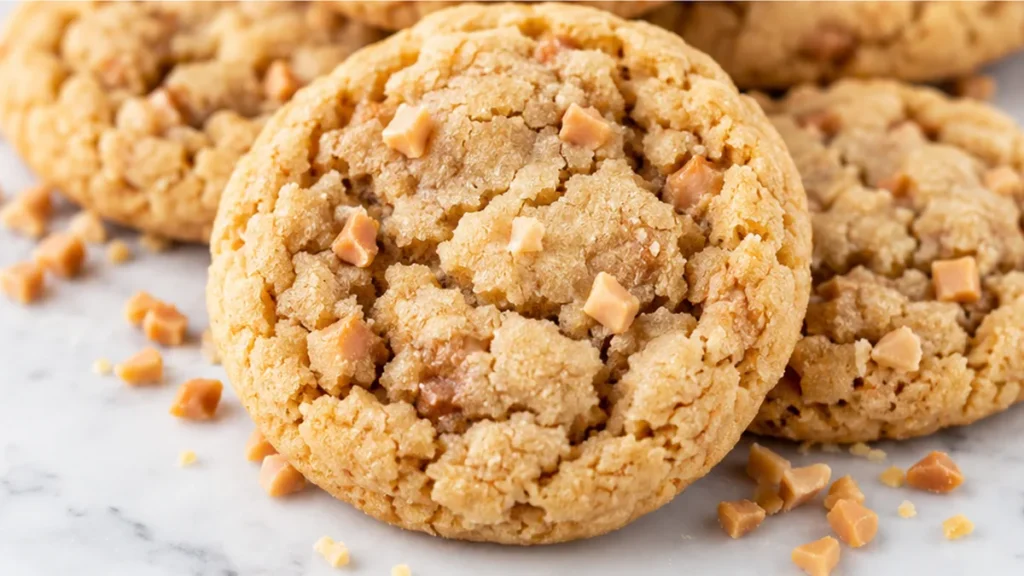
Chewy toffee cookies are all about the right balance of sugars and baking time. This recipe ensures a chewy center with perfectly golden edges.
Key takeaways
- Use softened butter for proper texture.
- Balance brown and granulated sugars for chewiness.
- Mix carefully to avoid tough cookies.
- Chill dough to prevent excessive spreading.
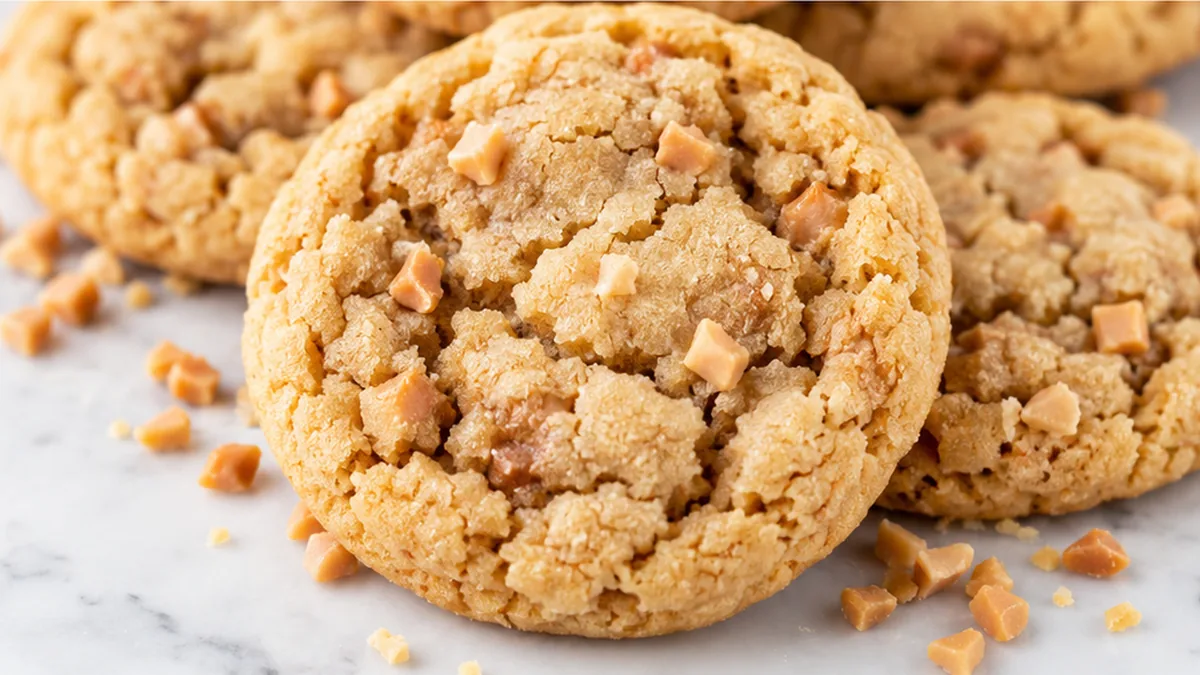
Chewy Toffee Cookies: Your New Favorite Indulgence!
Ingredients
Method
- Preheat the oven to 350° F (180°C).
- In the bowl of a stand mixer, cream together the butter and sugars until smooth, light in color and fluffy. This will take a few minutes.
- Scrape the sides of the bowl and mix in the egg and vanilla.
- Once completely combined, stop the mixer and add in the flour, rolled oats, baking soda, and salt.
- Once the dry ingredients are almost mixed together, add in the toffee bits. Mix until completely incorporated.
- Portion out the dough into 3 tbsp portions (#24 scoop) and arrange on a parchment or silicone lined cookie sheet.
- Bake at 350°F (180°C) for 11-13 minutes, or until the cookie dough has spread and the edges are turning golden brown.
- Allow the cookies to cool on the pan for 10 minutes.
Video
Notes
Understanding the Role of Butter in Chewy Toffee Cookies
Butter is a crucial ingredient in chewy toffee cookies, as it contributes to the overall texture and flavor. When using 1 cup (222g) of softened salted butter, the fat content helps achieve a rich, chewy consistency. The melting point of butter is approximately 32-35°C (90-95°F), which means it starts to liquefy when mixed with sugar, creating a smooth batter. This process is essential for proper emulsification, allowing the sugars to dissolve and integrate fully, which leads to a tender cookie. It’s important to use softened butter rather than melted, as this maintains the structure and helps create a chewy texture.
How Sugar Types Affect the Texture of Your Cookies
In the recipe, both brown sugar and granulated sugar are used, with 1 cup (246g) of brown sugar and 1/2 cup (115g) of granulated sugar. Brown sugar contains molasses, which not only adds moisture but also contributes to a chewier texture due to its hygroscopic nature, meaning it attracts and retains moisture. In contrast, granulated sugar helps with the spread and crispiness of the cookie edges. The ratio of these sugars can significantly affect the final product; for instance, increasing brown sugar will yield an even chewier cookie, while increasing granulated sugar will produce a crisper result. Understanding this balance is key to mastering the chewy texture of these cookies.
Importance of Proper Mixing Techniques
Mixing the ingredients correctly is vital for achieving the desired texture in chewy toffee cookies. Overmixing can lead to a tough cookie due to gluten development, while undermixing might result in uneven distribution of ingredients. The ideal mixing method involves creaming the softened butter and sugars together until light and fluffy, which typically takes about 2-3 minutes. This process incorporates air into the batter, helping the cookies rise properly. After adding the egg and vanilla extract, mix just until combined before incorporating the dry ingredients. This careful approach ensures that the cookies remain chewy and tender.
Identifying Common Baking Issues and Their Solutions
When baking chewy toffee cookies, several common issues may arise:
- Issue: Cookies spread too much.
- Cause: The butter may be too warm or the dough not chilled.
- Fix: Chill the dough for at least 30 minutes before baking.
- Issue: Cookies are too dry.
- Cause: Overbaking or too much flour.
- Fix: Reduce baking time or measure flour accurately using the spoon-and-level method.
- Issue: Cookies are too tough.
- Cause: Overmixing the dough.
- Fix: Mix just until combined and avoid overworking the dough.
- Issue: Lack of toffee flavor.
- Cause: Insufficient toffee bits.
- Fix: Ensure to use the full 8 oz bag of toffee bits for optimal flavor.
Unique Characteristics of Chewy Toffee Cookies
One of the standout features of chewy toffee cookies is the combination of textures they offer. The chewy interior contrasts beautifully with the crunchy bits of toffee, which can melt slightly during baking, creating pockets of sweetness. This combination is not commonly found in other cookie varieties, making these cookies a unique indulgence. Additionally, the use of rolled oats adds a subtle chewiness and complexity to the texture, enhancing the overall experience. The interplay between the toffee bits and the cookie base creates a delightful treat that stands out from traditional chocolate chip cookies.
How to Prepare Chewy Toffee Cookies Ahead of Time
Making chewy toffee cookies ahead of time can be a game changer for busy bakers. To prepare the dough in advance, mix all your ingredients as per the recipe, then shape the dough into balls and place them on a baking sheet lined with parchment paper. Freeze the cookie balls for about 1-2 hours until solid, then transfer them to a resealable freezer bag. When you’re ready to bake, simply preheat your oven and bake the frozen cookie balls directly from the freezer, adding a couple of extra minutes to the baking time. This method preserves the texture and flavor, ensuring your cookies remain chewy and delicious.
Understanding the Impact of Ingredient Quality on Flavor
The quality of your ingredients significantly affects the final taste of your chewy toffee cookies. For instance, using high-quality butter enhances the rich, creamy flavor, while fresh eggs contribute to a better texture. The type of brown sugar also plays a crucial role; dark brown sugar provides a deeper molasses flavor than light brown sugar. Additionally, the freshness of your toffee bits can influence the overall taste. Always opt for premium brands to ensure that the flavor of the toffee shines through in every bite. The better the ingredients, the more indulgent your cookies will be.
Adjusting Baking Times Based on Oven Variations
Ovens can vary significantly in temperature accuracy, which can affect baking results. To achieve the perfect chewy texture in your toffee cookies, it’s essential to monitor the baking time closely. If your oven runs hot, you may need to reduce the baking time by a couple of minutes, while a cooler oven might require a longer baking duration. Always check for doneness by looking for a golden edge and a slightly underbaked center, as the cookies will continue to set as they cool. Consider investing in an oven thermometer to ensure consistent results.
Pairing Chewy Toffee Cookies with Beverages and Desserts
Chewy toffee cookies are versatile and can be paired with a variety of beverages and desserts to enhance your indulgence. For a classic combination, serve them warm with a glass of cold milk; the richness of the cookies contrasts beautifully with the coolness of the milk. Alternatively, a robust cup of coffee or a rich hot chocolate complements the sweetness of the toffee. For dessert pairings, consider serving them alongside vanilla ice cream or a scoop of caramel gelato to elevate the dessert experience. These pairings not only enhance the flavors but also create a delightful treat for any occasion.
Understanding the Impact of Ingredient Ratios on Texture
The texture of chewy toffee cookies is significantly influenced by the ratios of the ingredients used. For instance, the balance between brown sugar and granulated sugar plays a crucial role. Brown sugar, with its higher moisture content due to molasses, contributes to a chewier texture, while granulated sugar adds crispness. A common ratio for achieving the ideal chewiness is 2:1 brown sugar to granulated sugar. Additionally, the amount of flour and oats can affect the density and chewiness. A higher flour content can lead to a drier cookie, while the oats provide a delightful chew and added texture. To achieve the perfect chewy toffee cookie, consider adjusting the flour to oat ratio, experimenting with different types of oats (such as quick oats versus old-fashioned), and maintaining the recommended proportions of butter and sugars.
Batch Scaling and Its Effects on Baking
Scaling your chewy toffee cookie recipe can be a practical approach for gatherings or meal prep. However, it’s essential to understand how batch size affects baking. When increasing the recipe, maintain the same ingredient ratios to preserve texture and flavor. For example, doubling the recipe requires not just doubling the ingredients but also adjusting baking time and temperature. Larger batches may require longer baking times, as the heat takes longer to penetrate the center of the cookie dough. Conversely, if you halve the recipe, you might need to reduce the baking time slightly. Always check for doneness by observing the edges—golden brown is a good indicator. Additionally, using multiple baking sheets can lead to uneven baking; it’s advisable to rotate the sheets halfway through baking to ensure even heat distribution.
How to Store Chewy Toffee Cookies for Optimal Freshness
To maintain the delicious chewy texture and flavor of your toffee cookies, proper storage is essential. After baking, allow the cookies to cool completely on a wire rack. Once cooled, store them in an airtight container at room temperature. This will keep them soft and chewy for about 5 to 7 days. For longer storage, consider freezing the cookies. Place them in a freezer-safe bag or container, separating layers with parchment paper to prevent sticking. In the freezer, they can last up to 3 months. When ready to enjoy, simply thaw at room temperature or pop them in the microwave for a few seconds to regain their softness.
Understanding the Role of Ingredient Quality in Chewy Toffee Cookies
The quality of ingredients directly impacts the final product of your chewy toffee cookies. For instance, using high-quality butter enhances the flavor significantly, as it contributes to the cookie’s richness and moisture. Opt for fresh, high-quality toffee bits as well, as stale or low-quality toffee can affect the texture and taste. The freshness of eggs also plays a crucial role; fresher eggs improve the structure and stability of the cookie. Additionally, consider the flour used; all-purpose flour should be unbleached for the best results, as bleached flour can alter the cookie’s texture. By prioritizing quality ingredients, you ensure that your cookies not only taste better but also achieve the desired chewy consistency.
Pro tips
- Don’t overmix the dry ingredients; mix until just combined before adding toffee bits to ensure tender cookies.
- For perfectly round cookies, use a cookie scoop to ensure uniform size and even baking.
- If your cookies are spreading too much, try chilling the dough for 20-30 minutes before baking. I once had a batch spread into one giant cookie because my butter was too warm, a quick chill solved it.
These Toffee Cookies are a testament to simple ingredients creating extraordinary flavor. Enjoy them warm, straight from the oven, or share them with loved ones for a truly memorable treat. Happy baking!
Frequently asked questions
Why are my chewy toffee cookies spreading too much?
This can happen if the butter is too warm or if the dough isn’t chilled. To fix this, chill the dough for at least 30 minutes before baking.
How do I achieve a chewier texture in my cookies?
Using a higher ratio of brown sugar to granulated sugar will enhance chewiness due to the moisture retained by brown sugar. Additionally, avoid overmixing the dough.
What can I do if my cookies are too dry?
Dry cookies often result from overbaking or too much flour. Ensure accurate measurements and check for doneness a few minutes early to avoid drying out.
Can I substitute the toffee bits in this recipe?
Yes, you can substitute with chocolate chips or chopped nuts, but keep in mind that this will change the flavor profile. The toffee bits provide a unique sweetness and texture that may not be replicated.
More from Oatmeal Cookies →