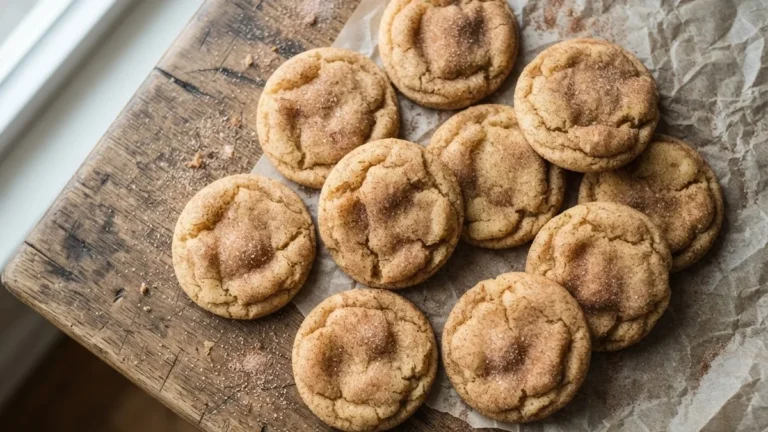
Cinnamon roll soft cookies capture the warm brown-sugar-and-cinnamon flavor of a bakery cinnamon roll without the yeast, the rising, or the rolling, and the best versions also nail the soft, pillowy texture and that faint tang from the dough. The trouble is that most recipes pick one shortcut and skip the parts that make a cinnamon roll taste like a cinnamon roll. There are actually three ways to build these, each with a different payoff, and once you know them you can pick the cookie you want every time.
Here is the fast answer. Cinnamon roll soft cookies are soft, thick cookies built on a slightly tangy dough, loaded with cinnamon-sugar, and finished with cream cheese frosting. For the softest, most cinnamon-roll-like result, use cream of tartar for tang and lift, swirl a cinnamon-butter-brown-sugar filling through the dough instead of just mixing cinnamon in, chill before baking, and bake at 375F for 8 to 9 minutes so the centers stay underbaked and soft.
Why Cream of Tartar Is the Secret Ingredient
The single thing that turns a plain cinnamon cookie into something that actually tastes like a cinnamon roll is cream of tartar. It does two jobs. As an acid, it reacts with baking soda to give the cookies a tender, soft lift, the same chemistry that makes snickerdoodles puffy. Just as important, it adds a subtle tang that mimics the slight sourness of a yeasted cinnamon roll dough. Without it, you get a sweet cinnamon cookie that is fine but flat in character. With it, you get that bakery cinnamon roll note.
Use about 1/2 teaspoon of cream of tartar per 2 cups of flour, paired with 1/4 teaspoon of baking soda. If you skip the cream of tartar, the cookies will not be ruined, but they will miss the tang and end up a touch denser. It is worth including, because it is the difference between a cookie that reminds you of a cinnamon roll and one that just tastes like cinnamon.
Three Ways to Build a Cinnamon Roll Cookie
This is where the popular recipes split, and none of them explain the tradeoffs. There are three methods, and they give you different cookies.
| Method | What you get | Effort |
|---|---|---|
| Cinnamon mixed into dough | Uniform cinnamon flavor, no gooey ribbon | Easiest |
| Cinnamon-sugar disc on top | A visible swirl spot, flavor concentrated up top | Medium |
| Frozen filling folded in | A real gooey cinnamon ribbon through the cookie | Most work, best payoff |
If you want fast and reliable, mix the cinnamon and a little brown sugar straight into the dough. The flavor is even and the cookies never leak. If you want them to look the part, press a thin disc of cinnamon-sugar onto each dough ball before baking. And if you want the real thing, the gooey swirl of melted cinnamon-brown-sugar-butter running through a soft cookie, make a filling, freeze it, and fold marble-sized bits into the dough. That last option comes closest to the center of a cinnamon roll.
The Pinwheel Version If You Want a True Swirl
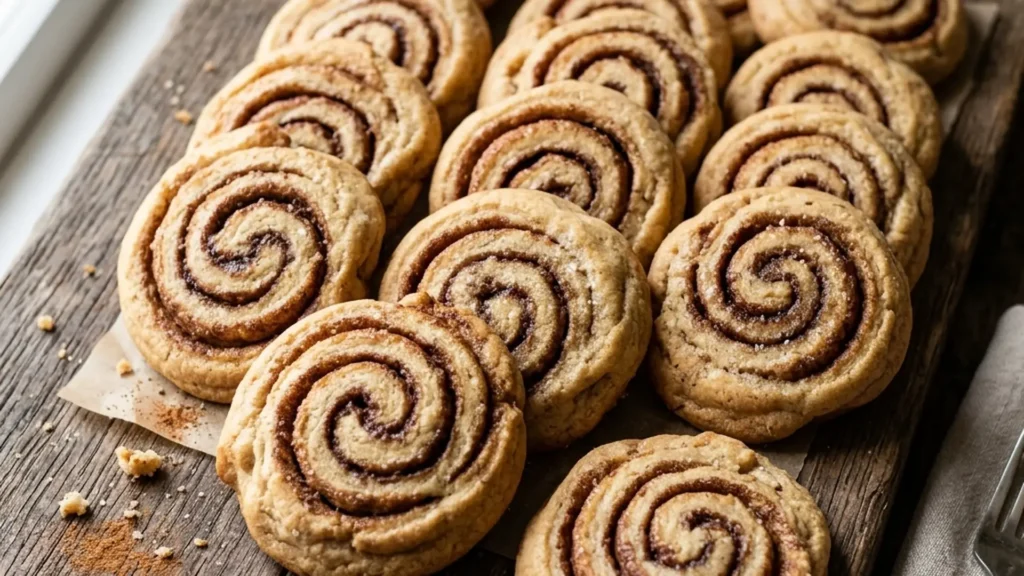
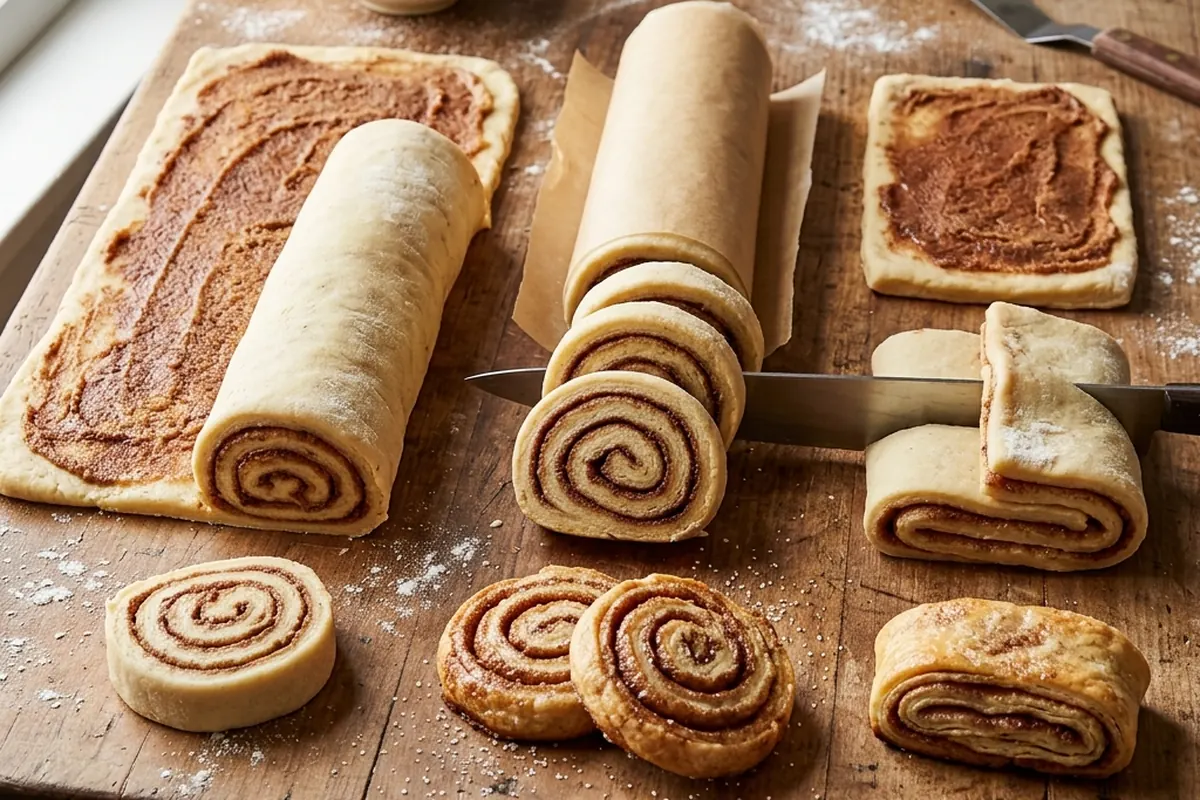
There is a fourth, fancier route worth knowing if you want cookies that actually look like little spirals: the pinwheel. You roll the dough into a rectangle, spread the cinnamon filling over it, roll it into a log like an actual cinnamon roll, chill the log, then slice it into rounds and bake. Each slice shows a perfect spiral, and the bake gives you crisp edges with a soft, swirled center.
The pinwheel takes more time and a firmer, more sliceable dough, so it is less about soft-and-pillowy and more about the visual. Roll the dough between two sheets of parchment to about a quarter inch thick, spread a thin even layer of the cinnamon-butter-brown-sugar paste, and roll it up tightly from the long edge. Chill the log at least an hour, or freeze it briefly, so it slices cleanly without squashing. Slice rounds about a half inch thick with a sharp knife, wiping the blade between cuts. These bake a little firmer than the scooped versions, so if you want them soft, pull them a minute early and store them airtight. Make the pinwheel for a tin that looks impressive and the scooped gooey-filling version when you just want a soft cookie warm.
How to Make the Cinnamon Filling That Does Not Leak
The gooey-ribbon method has one failure point: the filling melts, runs out of the cookie, and burns into hard caramel on the pan. Here is how to stop that. Mix 4 tablespoons softened butter, 1/2 cup packed brown sugar, 1.5 tablespoons cinnamon, and 1 tablespoon flour into a paste. That tablespoon of flour is the trick; it binds the filling so it stays put instead of liquefying and escaping. Then roll the filling into marble-sized balls and freeze them solid for at least 20 minutes.
Fold the frozen filling balls gently into your chilled dough so they smear into ribbons rather than dissolving. Because they go in frozen, they hold their shape through the early bake and melt into pockets of gooey cinnamon instead of leaking out. If your filling still feels too loose, add another teaspoon of flour. This single fix matters: baked without the flour and without freezing, the filling leaks and leaves burnt sugar on the sheet pan.
Step by Step Cinnamon Roll Soft Cookies
Cream 1 cup softened unsalted butter with 3/4 cup granulated sugar and 1/4 cup packed brown sugar until light, about 2 minutes. Beat in 2 eggs and 2 teaspoons vanilla. Whisk together 2.75 cups all-purpose flour, 1/2 teaspoon cream of tartar, 1/4 teaspoon baking soda, 2 teaspoons baking powder, 1.5 teaspoons cinnamon, and 1/4 teaspoon salt. Fold the dry into the wet until just combined.
Chill the dough 30 minutes. Scoop 2-tablespoon balls, fold in your frozen cinnamon filling bits if using the gooey method, and bake at 375F for 8 to 9 minutes until the edges are set but the centers still look soft and underdone. They finish setting on the hot pan, so do not overbake or you lose the softness. Cool completely before frosting, because warm cookies melt cream cheese frosting into a puddle.
The Ingredients That Decide Soft vs Cakey
Soft and chewy is a choice, not luck, and a few ingredients tip the balance. Butter should be softened and creamed, not melted, because creaming whips in air that keeps the cookies tender and tall. Melted butter pushes these toward dense and flat, which is the wrong direction for a pillowy cinnamon roll cookie. Bring your butter to a cool room temperature where it dents under a finger but does not smear.
Sugar choice matters too. The mix of granulated and brown sugar is deliberate: granulated gives structure and a little spread, while brown sugar brings moisture and that caramel note that ties into the cinnamon. If you push the ratio toward more brown sugar, the cookies get softer and chewier but spread a touch more. Eggs add structure and moisture; room-temperature eggs blend into creamed butter smoothly, while cold eggs can break the mixture and give you a denser, greasier cookie.
Flour is where most cakey cookies go wrong. Too much flour, almost always from scooping straight out of the bag, gives you a dry, bready cookie instead of a soft one. Spoon the flour into your measuring cup and level it off, or weigh it; 2.75 cups of all-purpose should land around 330 grams. The cream of tartar and the slight underbake do the rest of the work to keep the texture soft and tender.
The Cream Cheese Frosting
Cinnamon roll cookies want cream cheese frosting, not a plain glaze, because the slight tang of the cheese echoes the tang of the dough and the whole thing reads as a cinnamon roll. Beat 4 ounces softened cream cheese with 6 tablespoons softened butter until smooth, add 2 teaspoons vanilla and 2 cups powdered sugar, and thin with 1 to 2 teaspoons of milk until spreadable or drizzle-able.
Frost only fully cooled cookies. If you want them to look like miniature cinnamon rolls, pipe the frosting in a spiral from the center out. A dusting of extra cinnamon-sugar over the wet frosting seals the look and adds one more hit of flavor. For a thinner glaze instead, drop the butter and use milk to loosen the cream cheese and sugar into a pourable icing.
Your Cinnamon Matters More Than You Think
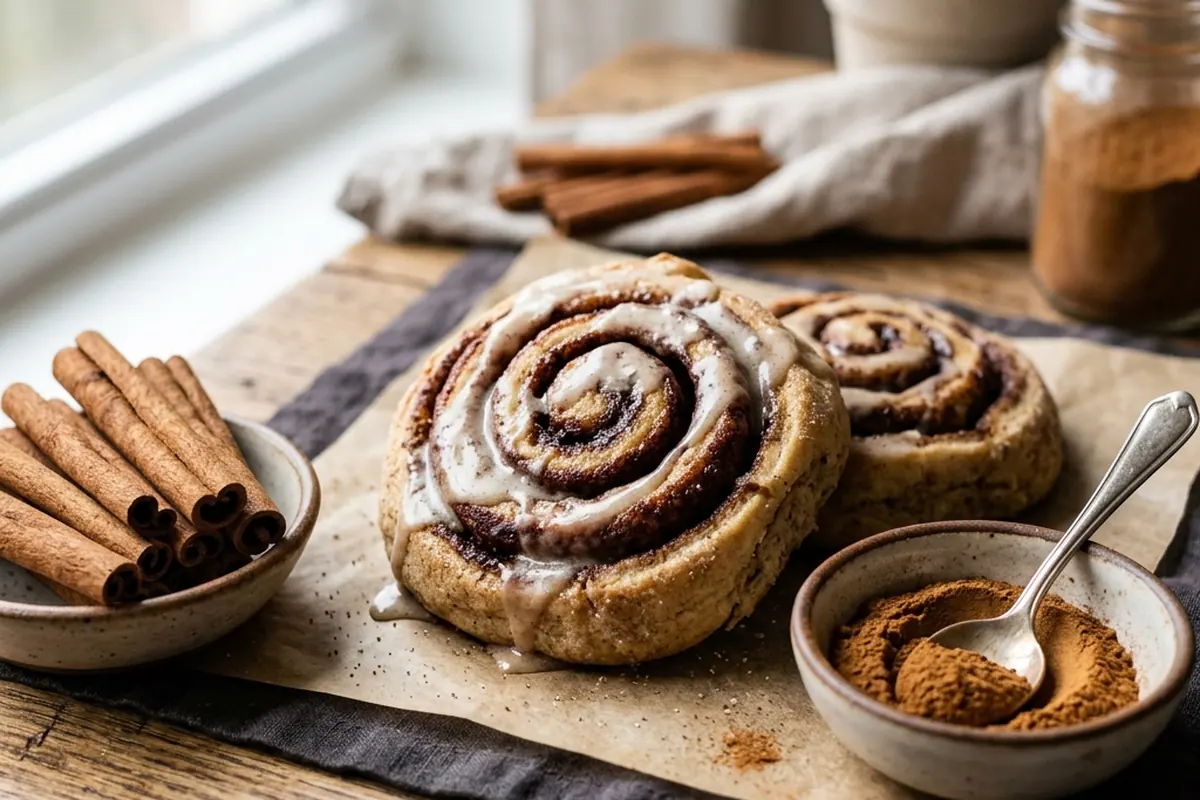
The cinnamon you use changes these cookies more than people expect. Most grocery cinnamon is cassia, which is bold, spicy, and a little hot, and it works well here because it stands up to the sugar and butter. Ceylon cinnamon, sometimes called true cinnamon, is milder, sweeter, and more floral, and it can get lost in a loaded cookie. For cinnamon roll cookies, cassia is the better choice because you want the cinnamon to be unmistakable.
Freshness matters as much as type. Ground cinnamon loses its punch within a year or so of opening, and stale cinnamon tastes dusty and flat no matter how much you use. If your cinnamon has been in the cabinet for two years, that is probably why your cookies taste muted. Buy a fresh jar, and do not be shy with the amount; these cookies want a confident 1.5 to 2 teaspoons in the dough plus more in the filling. Toasting the cinnamon briefly with the brown sugar in the filling also wakes it up and deepens the flavor.
Troubleshooting Cinnamon Roll Soft Cookies
If your cookies spread thin and flat, your butter was too warm or you skipped the chill. Cold dough on a cool sheet keeps them thick. If they came out cakey rather than soft and chewy, you used too much flour or too much baking powder; spoon and level your flour and stick to the leavening amounts. If the filling burned on the pan, your filling was too loose or not frozen, so add flour and freeze it first.
If the cookies taste like cinnamon but not like a cinnamon roll, you are probably missing the cream of tartar tang or the brown sugar, both of which carry that yeasted, caramel character. And if your frosting slid right off, you frosted warm cookies; let them cool completely and the frosting will set and hold.
High-Altitude and Make-Ahead Notes
Above roughly 3,000 feet, reduce the baking powder slightly, add 1 to 2 tablespoons of flour for structure, and raise the oven to about 385F so the cookies set before they over-spread in the thinner air. Bon Appetit has a useful explainer on how altitude affects baking chemistry if you want the full reasoning (Bon Appetit).
For make-ahead, the most important rule is to frost the day you serve. Cream cheese frosting slowly softens the cookies and they go from soft-and-fresh to damp over a couple of days. Bake and freeze unfrosted cookies, or freeze raw dough balls for up to 3 months and bake from frozen with an extra minute or two. Then frost just before serving so the contrast between the soft cookie and the tangy frosting stays sharp. America’s Test Kitchen has solid guidance on freezing cookie dough and how to bake straight from frozen without losing texture (America’s Test Kitchen).
Storage and Variations
Unfrosted cinnamon roll cookies keep 3 to 4 days airtight at room temperature; a slice of bread in the container keeps them soft. Frosted cookies are best within 2 to 3 days and should be refrigerated because of the cream cheese, then brought back to room temperature before eating so the frosting softens.
For variations, fold in 1/2 cup chopped toasted pecans for a pecan-roll spin, or add 1/3 cup raisins soaked in warm water for ten minutes and drained for a classic cinnamon-raisin character. Swap a teaspoon of the cinnamon for pumpkin pie spice in the fall, which leans on the same warm-spice logic as these pumpkin snickerdoodles. A handful of toffee bits in the dough plays beautifully against the cinnamon and the tangy frosting if you want something a little more decadent. If you like a jammy center instead of a frosting top, take the thumbprint approach from these raspberry walnut thumbprint cookies and fill the well with the cinnamon paste before baking. And if your brown sugar has hardened, the quick fixes in the guide on how to soften brown sugar will get the filling smooth again.
Frequently Asked Questions
What makes cinnamon roll cookies taste like cinnamon rolls?
Three things: cream of tartar for a faint tang, a gooey cinnamon-brown-sugar-butter ribbon or filling, and cream cheese frosting on top. Plain cinnamon mixed into a sugar cookie tastes like a cinnamon cookie; those three elements make it read as a cinnamon roll.
Do I need cream of tartar?
It is not strictly required, but it gives the cookies their soft texture and the subtle tang that mimics a yeasted cinnamon roll. Use 1/2 teaspoon per 2 cups flour with 1/4 teaspoon baking soda. Without it the cookies are denser and miss that signature note.
Why does my cinnamon filling leak out and burn?
The filling is too loose or too warm. Add 1 tablespoon of flour to the cinnamon-butter-brown-sugar mix to bind it, roll it into balls, and freeze them before folding them into the dough. Frozen, bound filling stays inside the cookie and melts into pockets instead of running out.
Can I make these without rolling or yeast?
Yes, that is the whole appeal. There is no yeast, no rising, and no rolling. You either mix cinnamon into the dough, press a cinnamon-sugar disc on top, or fold in a frozen filling for a swirl. All three are far faster than making actual cinnamon rolls.
How do I keep them soft?
Underbake slightly so the centers stay soft, include cream of tartar, and store them airtight with a slice of bread. Pull them at 8 to 9 minutes while the centers still look underdone and let them finish on the hot pan.
Should I frost them ahead of time?
No. Cream cheese frosting slowly softens the cookies and they turn damp after a day or two. Bake and store unfrosted, then frost the day you plan to serve so the cookie stays soft and the frosting stays fresh and tangy.
What kind of cinnamon is best for these cookies?
Use cassia cinnamon, the standard grocery-store type, because its bold, slightly spicy flavor holds up against the sugar and butter. Milder Ceylon cinnamon can get lost. Make sure your cinnamon is fresh, since ground cinnamon fades within about a year and stale cinnamon tastes flat.
Can I freeze cinnamon roll cookie dough?
Yes. Scoop the dough into balls, freeze them solid on a tray, then bag them for up to 3 months. Bake straight from frozen and add 1 to 2 minutes. Freeze the cinnamon filling separately as well, since frozen filling is what keeps the gooey ribbon from leaking.
Bottom Line
Cinnamon roll cookies are easy, but easy and great are not the same thing. The great ones earn the name by using cream of tartar for tang, building in a real gooey cinnamon ribbon instead of just dusting in spice, and topping with cream cheese frosting added the day you serve. Pick your method from the three above based on how much swirl you want, keep the centers underbaked, and you get a soft, warm, genuinely cinnamon-roll cookie every time you bake.