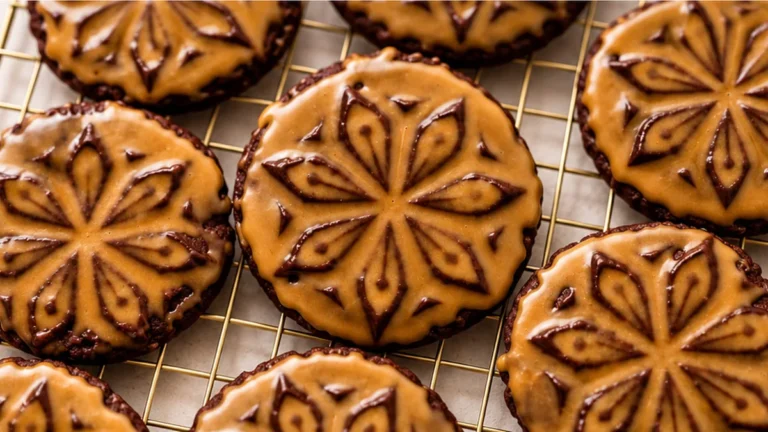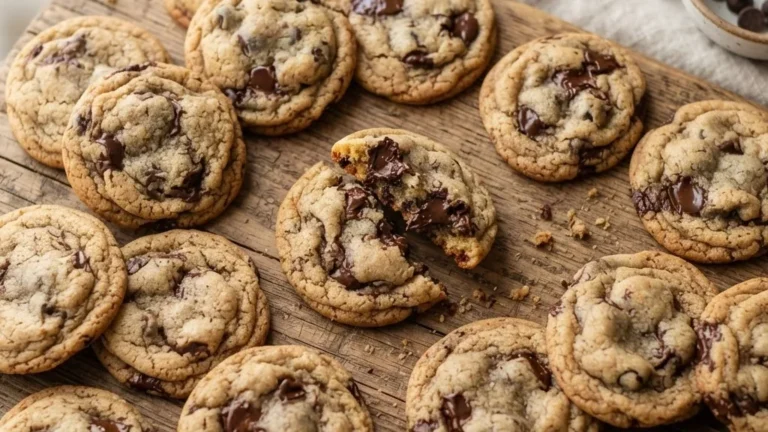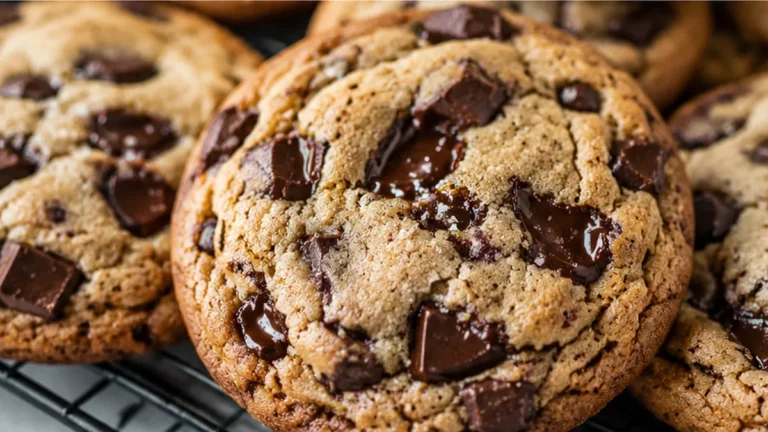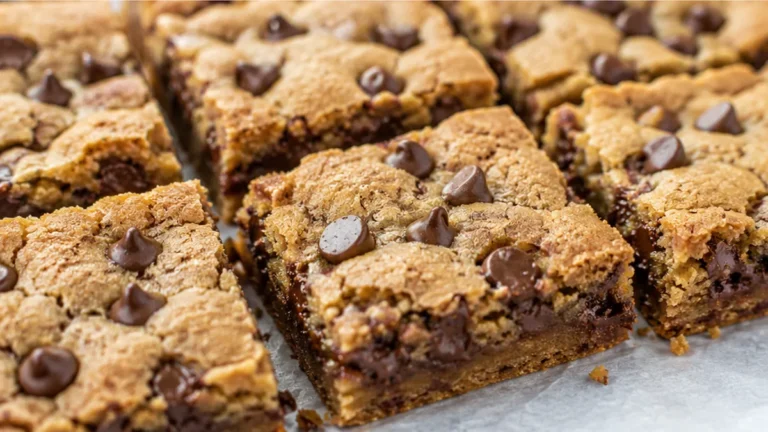
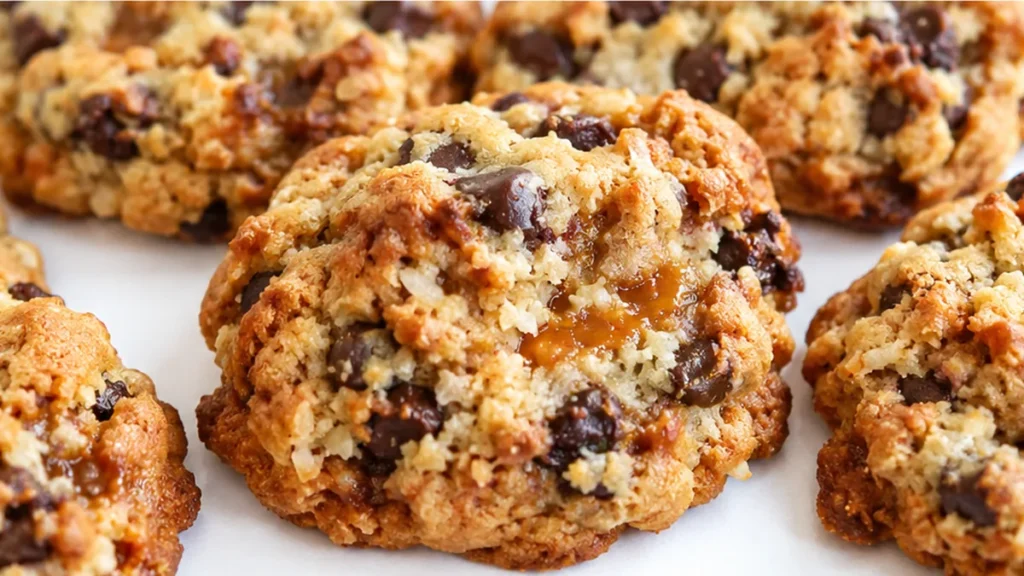
Caramel coconut chocolate chip cookies are a delicious twist on a classic favorite. This recipe features rich caramel and toasted coconut for added flavor.
Key takeaways
- Use unsweetened coconut for better control over sweetness
- Ensure butter is at the right temperature to prevent spreading
- Select high-quality chocolate for enhanced flavor
- Balance sugar levels by adjusting for the sweetness of caramel
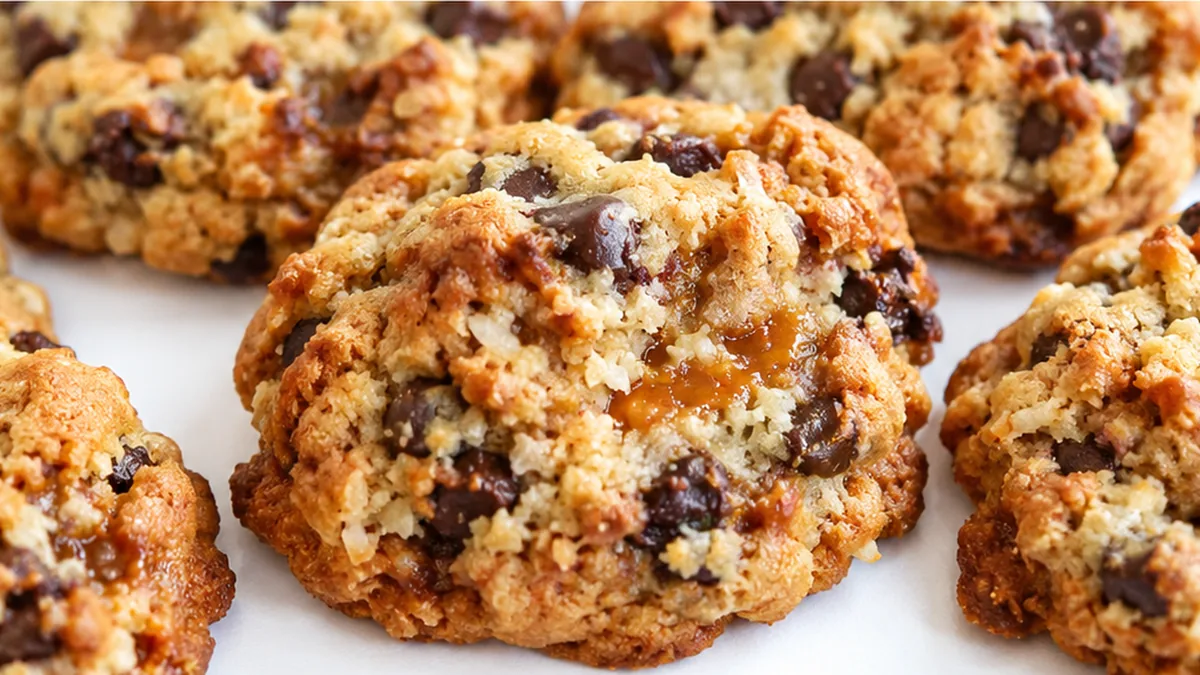
Caramel Coconut Chocolate Chip Cookies
Ingredients
Method
- Preheat your oven to 375°F (190°C) and line a large baking sheet with parchment paper.
- In a medium bowl, whisk together the all-purpose flour, baking powder, baking soda, and salt until evenly combined.
- In a large mixing bowl, cream together the softened butter, light brown sugar, granulated sugar, and vanilla extract until pale and fluffy. Mix in the large egg until well incorporated.
- Add the dry flour mixture to the butter mixture. Fold until just combined, then add the shredded coconut. Do not fully incorporate the flour before adding the coconut.
- Scoop large mounds of dough (about 4.5 oz each, or use two scoops from a 2-oz scoop) and place them onto the prepared baking sheet, leaving rustic shapes. Chill for 30 minutes.
- Bake for 10 minutes, then reduce the oven temperature to 350°F (175°C) and bake for an additional 3-5 minutes, or until the edges are golden brown and the centers are still slightly soft. Let cool on the baking sheet for 3 minutes before transferring to a wire rack to cool completely.
Understanding the Role of Coconut in Flavor and Texture
Coconut adds a unique flavor and texture to caramel coconut chocolate chip cookies. The shredded coconut provides chewiness, while its natural sweetness complements the rich caramel and chocolate. When using unsweetened coconut, the balance of flavors will shift, requiring adjustments in sugar content to maintain sweetness. For optimal texture, ensure the coconut is evenly distributed throughout the dough, as this will prevent clumping and ensure a consistent bite. Toasting the coconut lightly before adding it to the batter can enhance its flavor, bringing out a nutty aroma that pairs beautifully with chocolate and caramel.
Why Your Cookies Might Spread Too Much
If your cookies spread excessively during baking, it could be due to several factors. One common issue is the temperature of the butter; if it’s too soft, the dough will lose structure. Aim for a butter temperature of around 18-21°C (65-70°F) for optimal creaming. Additionally, overmixing the dough can incorporate too much air, leading to spreading. To counteract this, mix the dough just until the ingredients are combined. If you’re using a high-fat content butter, consider reducing the overall fat in the recipe slightly to maintain shape.
Choosing the Right Chocolate for Maximum Impact
The type of chocolate you select can significantly influence the overall success of your caramel coconut chocolate chip cookies. Dark chocolate chips offer a rich contrast to the sweetness of the caramel and coconut, while milk chocolate provides a creamier, sweeter profile. For a more gourmet touch, consider using chocolate bars chopped into chunks, which will melt beautifully and create pockets of gooey chocolate. Aim for chocolate with at least 60% cocoa content for a balanced flavor that stands up to the sweetness of the cookies.
Achieving the Perfect Balance of Sweetness
Balancing the sweetness in your cookies is crucial to prevent them from becoming cloying. The caramel adds significant sweetness, so it’s essential to adjust the sugar content in the dough accordingly. If using store-bought caramel, check the label for sugar content; homemade caramel can allow for more control over sweetness levels. Additionally, consider using a mix of brown sugar and granulated sugar; brown sugar adds moisture and depth of flavor, while granulated sugar helps with the cookie’s structure. A good starting point is to reduce the sugar by about 20% if you’re adding a generous amount of caramel.
How to Prepare Dough in Advance for Caramel Coconut Chocolate Chip Cookies
Making the dough ahead of time can be a game-changer for busy bakers. To prepare the dough in advance, mix all your ingredients as per the recipe instructions, then wrap the dough tightly in plastic wrap or store it in an airtight container. You can refrigerate the dough for up to three days, which allows the flavors to meld and develop a deeper taste. If you plan to store it longer, consider freezing the dough. Shape it into individual cookie balls, place them on a baking sheet, and freeze until solid. Once frozen, transfer them to a freezer bag. They can be stored for up to three months. When ready to bake, simply place the frozen dough balls on a baking sheet and bake directly from the freezer, adding a couple of extra minutes to the baking time.
Understanding the Impact of Ingredient Quality on Flavor
The quality of ingredients used in caramel coconut chocolate chip cookies can significantly affect the final outcome. For example, using high-quality chocolate chips will enhance the overall flavor profile. Look for chocolate with at least 60% cocoa content for a rich taste. Similarly, the type of coconut—sweetened versus unsweetened—can alter the sweetness and texture of the cookies. Freshly shredded coconut tends to provide a more pronounced coconut flavor and chewier texture compared to pre-packaged options. Additionally, the type of butter used can impact the cookies’ richness; unsalted butter allows you to control the saltiness better, while European-style butter has a higher fat content, resulting in a richer cookie.
Scaling the Recipe for Larger Gatherings
If you’re looking to scale your caramel coconut chocolate chip cookies recipe for a larger gathering, it’s essential to maintain the ratios of the ingredients. For instance, if doubling the recipe, ensure you double all ingredients, including the baking soda and salt, to maintain the same flavor profile. Also, consider the baking time; larger batches may require longer baking times, so monitor your cookies closely to avoid over-baking. If your oven has limited space, bake in batches, allowing the trays to cool slightly between uses. Properly scaling the recipe ensures that you don’t compromise on the taste and texture of these delicious cookies.
Pairing Suggestions for Caramel Coconut Chocolate Chip Cookies
Pairing your caramel coconut chocolate chip cookies with the right accompaniments can elevate your dessert experience. A glass of cold milk is a classic choice, as it complements the sweetness of the cookies. For a more sophisticated pairing, consider serving them with a scoop of vanilla or coconut ice cream, which enhances the creamy texture and flavor. Additionally, a drizzle of warm caramel sauce over the cookies can intensify the caramel flavor and create a decadent dessert. For a beverage pairing, a light coffee or a coconut-infused cocktail can provide a refreshing contrast to the sweetness, making for a delightful tasting experience.
Understanding the effects of chilling the dough on texture
Chilling the dough for caramel coconut chocolate chip cookies is crucial for achieving the desired texture. When the dough is chilled, the fat solidifies, which helps prevent the cookies from spreading too much during baking. Ideally, you should chill the dough for at least 30 minutes, but up to 2 hours can enhance the flavors further. This resting period allows the flour to hydrate fully, resulting in a chewier texture. If you skip this step, you may end up with thinner, crispier cookies that lack the soft center characteristic of a well-made cookie.
Adjusting baking times and temperatures for different ovens
Every oven behaves differently, which can significantly affect the baking of caramel coconut chocolate chip cookies. A common issue is uneven baking, leading to some cookies being overbaked while others remain undercooked. If your cookies are browning too quickly, consider lowering the temperature by 10-20 degrees Celsius (18-36 degrees Fahrenheit) and extending the baking time slightly. Conversely, if your cookies are not browning enough, increasing the temperature can help achieve that golden color while ensuring the inside remains soft. Using an oven thermometer can help you gauge the actual temperature inside your oven for more accurate baking results.
How to customize the flavor profile with different add-ins
While caramel and coconut are the stars of these cookies, experimenting with different add-ins can elevate their flavor profile. For instance, adding a pinch of sea salt can enhance the sweetness of the caramel, creating a delightful contrast. Alternatively, incorporating nuts such as chopped pecans or almonds can add a crunchy texture and a nutty flavor that complements the coconut. Dried fruits like cranberries or apricots can introduce a tartness that balances the sweetness. However, be mindful of the moisture content in your add-ins, as this can affect the dough consistency and final texture of the cookies.
Maximizing Freshness and Texture: Best Practices for Storing Cookies
To ensure your caramel coconut chocolate chip cookies maintain their delightful texture and flavor, proper storage is essential. After baking, allow the cookies to cool completely on a wire rack. Once cooled, store them in an airtight container at room temperature. This method helps retain moisture, keeping the cookies soft for up to a week. For longer storage, consider freezing the cookies. Place them in a single layer on a baking sheet to freeze them individually before transferring to a freezer-safe container. This prevents them from sticking together and allows you to take out only what you need. Frozen cookies can last for up to three months. When ready to enjoy, simply thaw at room temperature or warm them in the oven for a few minutes to restore their original texture.
Scaling Up for Larger Gatherings: Adjusting Ingredients and Baking Times
When preparing caramel coconut chocolate chip cookies for a larger crowd, scaling the recipe is straightforward, but it requires some attention to detail. Doubling or tripling the recipe is typically feasible, but ensure you adjust your mixing and baking times accordingly. For instance, when increasing the batch size, the dough may require a longer mixing time to ensure even distribution of ingredients. Additionally, if you’re using multiple baking sheets, rotate them halfway through baking to ensure uniform cooking. Monitor the cookies closely, as larger batches may need slight adjustments in baking time; keep an eye on them after the initial bake time to prevent over-baking. Always test a small batch first if you are unsure about the adjustments.
Pro tips
Pro tip: Best served immediately while hot!
Frequently asked questions
What can I do if my cookies are too dry?
If your cookies turn out dry, it’s likely due to too much flour or insufficient moisture. Ensure you’re measuring flour correctly, using the spoon-and-level method. Adding a tablespoon of milk or an extra egg yolk can help improve moisture without altering the texture significantly.
How can I prevent my cookies from burning?
To prevent burning, keep an eye on the baking time and check for doneness a few minutes early. If your oven tends to run hot, consider lowering the temperature by 10-15°C (20-30°F) and extending the baking time slightly. Using parchment paper can also help distribute heat more evenly.
Can I use a different type of sweetener?
Yes, you can substitute granulated sugar with alternatives like coconut sugar or brown sugar, but keep in mind that these may alter the flavor and texture. Coconut sugar will give a deeper, caramel-like flavor, while brown sugar adds moisture. Adjust the amount to taste, as these sweeteners can vary in sweetness.
What should I do if my dough is too sticky?
If your dough is too sticky to handle, refrigerate it for about 30 minutes. Chilling will firm up the butter and make it easier to scoop. If the dough remains sticky after chilling, you can gradually add more flour, one tablespoon at a time, until the desired consistency is reached.
More from Chocolate Chip Cookies →