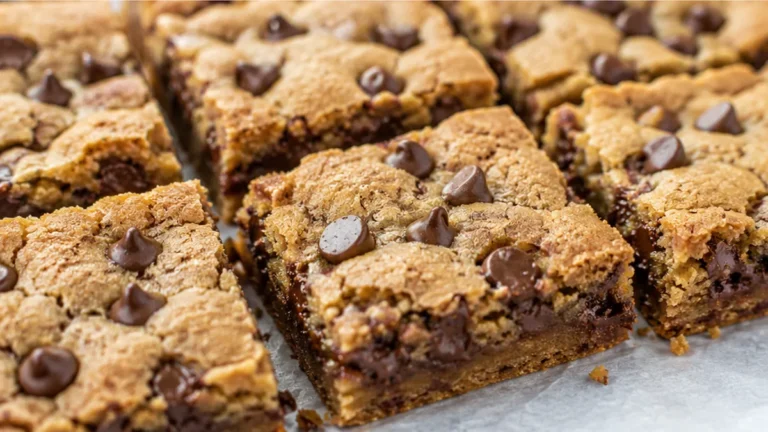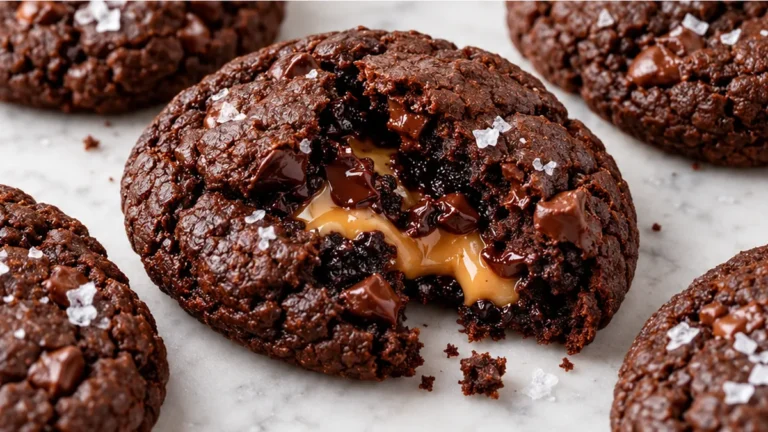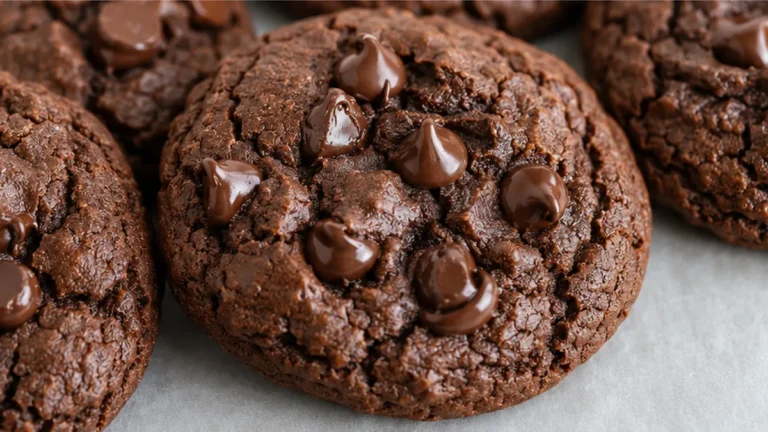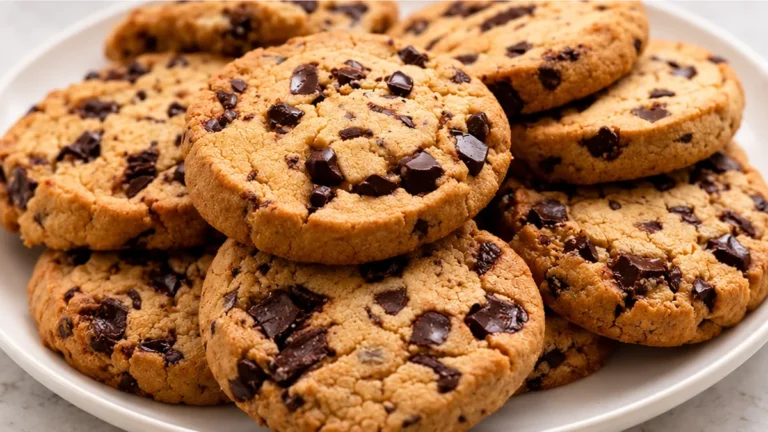
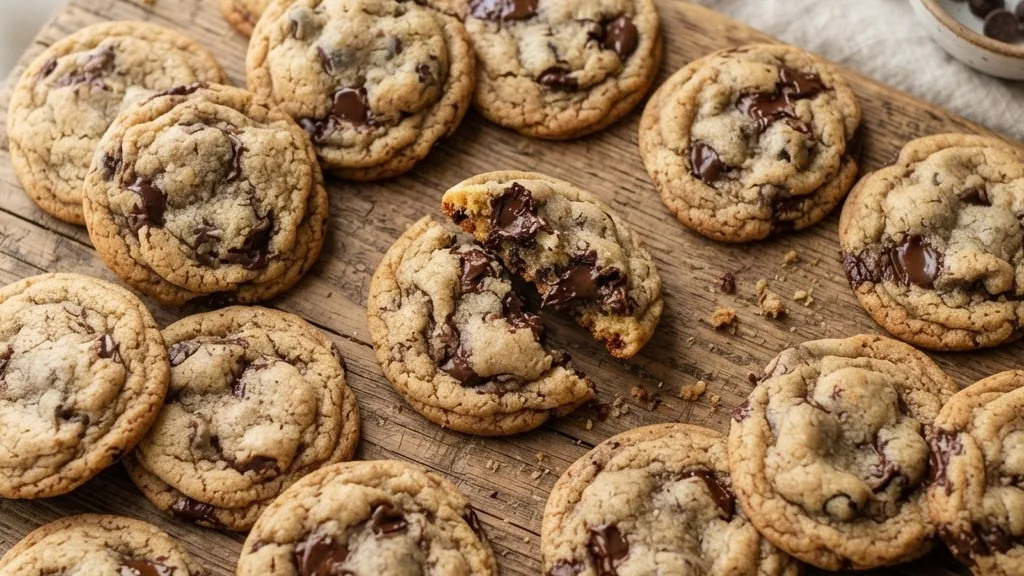
Yes, you can bake chocolate chip cookies without brown sugar, and they still taste great. It is a handy fix whenever the brown sugar box turns up empty or rock hard. You swap in the same amount of white granulated sugar, one to one, and the dough comes together the usual way. The trade is texture: the batch bakes up crisper, flatter, and a shade paler, with a cleaner, sweeter taste instead of that deep toffee note. Below is why that happens and how to nudge the chew back if you miss it.
Can you make chocolate chip cookies without brown sugar?
Short answer: absolutely. Brown sugar is not magic, and it is not the only sweetener that works in a cookie. It is simply white sugar with molasses mixed back in, so pulling it out does not break the recipe. You replace it by weight or by volume at a one to one ratio. If a formula calls for 100 g of packed brown sugar, use 100 g of plain white sugar in its place and carry on. The dough will look a touch lighter and feel slightly less sticky, which is normal.
The results are good enough that an all-white version is worth keeping in regular rotation. If you like a candy-studded cookie, these M and M cookies use the same base idea and take swaps well. The point is that brown sugar is a flavor and moisture choice, not a structural must. Once you know what it contributes, you can decide when to skip it and when it is worth a trip to the store.
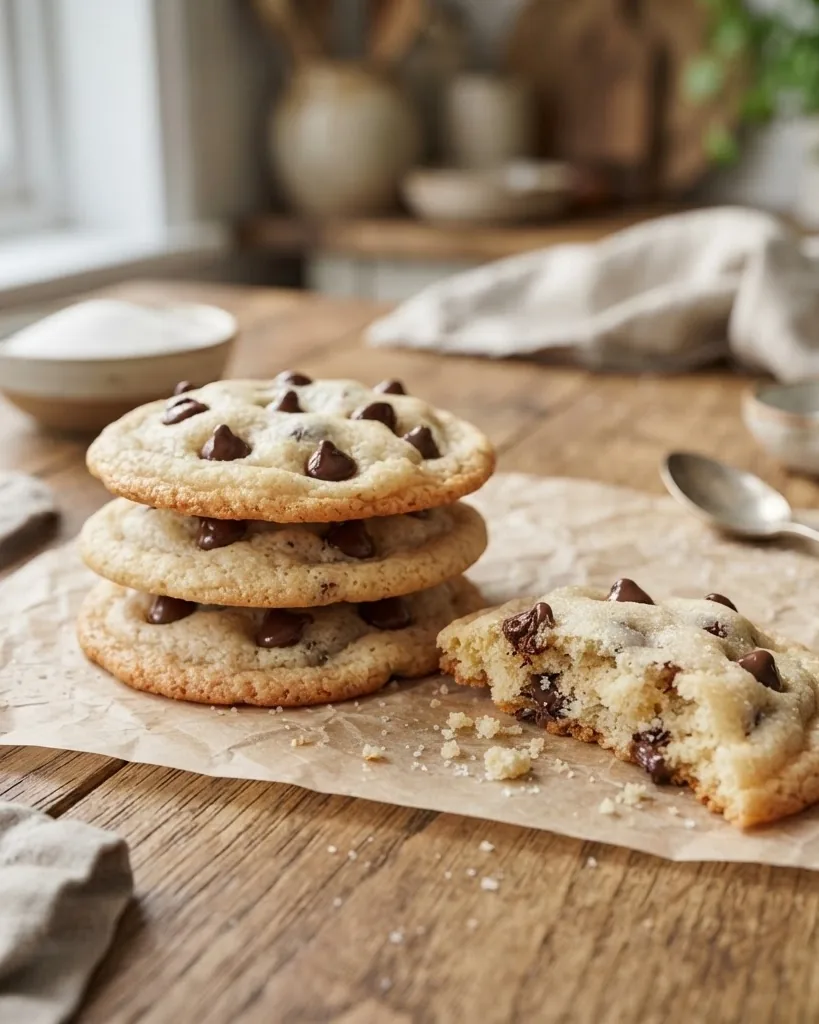
What brown sugar really does: molasses, moisture, and chew
Brown sugar is granulated white sugar with molasses stirred back in. Light brown sugar is roughly 200 g of white sugar plus about 1 tablespoon, or 15 ml, of molasses per cup. Dark brown sugar carries closer to 2 tablespoons, near 30 ml. That molasses is the whole story. It is where the color, the moisture, and the caramel flavor come from, and it is why two nearly identical doughs can bake into two very different cookies.
Molasses brings water and invert sugars, mostly glucose and fructose, into the dough. According to bakers at King Arthur Baking, invert sugars hold onto moisture and slow the way sugar recrystallizes as a cookie cools. That is the science behind a bendy, chewy middle that stays soft on day two. Plain white sugar has none of these traits, so a cookie made only with it sets firmer and dries out a little faster once it leaves the oven.
There is a chemistry angle too. Molasses is mildly acidic, so brown sugar lowers the pH of your dough. King Arthur Baking points out that recipes leaning on brown sugar often pair it with baking soda, because the acid and the soda react and release carbon dioxide. That gas changes how the dough puffs and then spreads. Take the brown sugar out and you soften that reaction, which is one more reason an all-white batch behaves differently on the tray.
What changes when you leave brown sugar out
Here is what to expect from an all-white batch, so nothing surprises you when the tray comes out. None of these are flaws. They are just a different style of cookie, and plenty of people prefer it. If you grew up on the thin, crisp, snappy kind, you may actually like this version more than the thick and gooey one.
- Texture: crisper edges and a firmer bite, with less of the soft, chewy center that molasses provides.
- Spread: the dough tends to spread wider and bake flatter, since there is less moisture holding it upright.
- Color: a paler, blonder cookie, because there is no molasses to drive that golden-brown tone.
- Flavor: a cleaner, more straightforward sweetness, without the toffee or caramel depth of a brown-sugar dough.
- Shelf life: they can stiffen a bit faster over a day or two, so they are best fresh or stored airtight.
The all-white version is the crunchy cousin. It is the one to choose for dunking in coffee or stacking in a lunchbox without it squishing. For a thick, soft, bakery-style round, brown sugar earns its keep. Neither is better in a general sense. It comes down to the bite you are chasing on a given afternoon.
The ingredient list, in grams
This is the standard base. It fills one standard batch, around 20 to 24 cookies depending on how big you scoop. Weighing in grams beats cups here, because sugar and flour pack unevenly and the balance matters more once brown sugar is gone. If you only have cups, spoon the flour in and level it rather than scooping straight from the bag, which packs too much.
- 200 g all-purpose flour
- 150 g white granulated sugar
- 115 g unsalted butter, softened
- 1 large egg, room temperature
- 1 teaspoon vanilla extract
- Half a teaspoon baking soda
- Half a teaspoon fine salt
- 180 g chocolate chips or chopped chocolate
A few notes on the amounts. The 150 g of white sugar replaces the mix of white and brown you would see in a classic recipe, kept at a one to one swap. The 115 g of butter is about one stick, and softened means it dents under a finger but is not greasy or melting. The baking soda still matters even without the acidic brown sugar, since the vanilla, egg, and chocolate carry a little acidity of their own, and the soda helps with browning and lift on the tray.
How to make chocolate chip cookies without brown sugar in 7 steps
This method is deliberately plain, because the swap does the work and you do not need any special technique. Total hands-on time is about 15 minutes, plus a rest in the fridge that is strongly suggested. Read through once before you start so the fridge chill does not catch you off guard near the end.
- Cream the butter and the 150 g of white sugar together for 2 to 3 min, until pale and fluffy. This beats air in and helps the flat, all-white dough rise a little.
- Beat in the egg and vanilla until smooth and glossy, scraping the bowl once so nothing hides at the bottom.
- Whisk the 200 g of flour, baking soda, and salt in a separate bowl, then add to the wet mix in two goes.
- Mix only until no dry streaks remain. Overmixing here builds gluten and toughens the crumb, so stop early.
- Fold in the 180 g of chocolate by hand with a spatula, keeping a few pieces back to press on top.
- Chill the dough for at least 30 min, and up to a day. This firms the butter and cuts the spread that white sugar encourages.
- Scoop onto lined trays, leaving room to spread, and bake at 180 C, which is 350 F, for 10 to 12 min until the edges are set and lightly golden.
Pull them when the centers still look a touch underdone. They keep cooking on the hot tray for a few minutes, and this carryover is your friend for keeping some softness in an all-white cookie. Let them rest on the tray for 5 min before moving them, or they may tear. If you skipped the chill and they spread into one giant sheet, scoot the edges in with a spoon the moment they leave the oven while they are still soft.
How to add the chew back without brown sugar
If you want the crisp edges of a white-sugar cookie but miss the chewy middle, you have a few easy levers. The simplest is to rebuild a little brown sugar right in the bowl. Stir about 1 tablespoon, or 15 ml, of molasses into every 200 g of white sugar and you have made light brown sugar yourself. Use 2 tablespoons, near 30 ml, for a darker, deeper batch. This gives back the moisture and the caramel note without a store run.
No molasses on hand? Honey and maple syrup both add moisture and help chew, since they behave a bit like the invert sugars in molasses. Because they are liquids, you have to rebalance. A rough guide from sources like King Arthur Baking and Healthline is to use about two-thirds cup, near 160 ml, of the liquid sweetener per cup of brown sugar you are replacing, then cut another liquid in the recipe by about a quarter cup, near 60 ml, to keep the dough from going slack.
One more trick that costs nothing: underbake slightly and pull the tray a minute early. Even a straight white-sugar dough stays chewier in the center if you stop the bake while the middle is pale. Chilling the dough longer, up to a full day, also helps, because the flour hydrates and the cookies hold their shape instead of spreading thin. Between molasses, a liquid sweetener, and a shorter bake, you can land almost anywhere on the crisp-to-chewy scale you want.
Brown sugar substitutes at a glance
When you are standing at the counter mid-recipe, you want the swap and the ratio fast. Here is a short table worth taping inside a pantry door. All of these work in a drop cookie, though each shifts the flavor and texture a little. The white-sugar-plus-molasses option is the closest match, since it literally rebuilds brown sugar from its two parts.
| Substitute | Ratio for 1 cup brown sugar | Notes |
|---|---|---|
| White sugar only | 1 cup (1 to 1) | Crisper, flatter, paler; cleanest swap |
| White sugar + molasses | 1 cup + 1 tablespoon (15 ml) | Rebuilds light brown sugar; closest match |
| Coconut sugar | 1 cup (1 to 1) | Dry sugar, swaps evenly; mild caramel tone |
| Maple syrup | About 2/3 cup (160 ml) | Cut other liquid by about 1/4 cup (60 ml) |
| Honey | About 3/4 cup | Reduce other liquid 3 to 4 tablespoons; browns fast |
Coconut sugar is a good one-for-one dry swap when you want a hint of that toasty flavor without opening a jar of molasses. It behaves like a granulated sugar, so you do not have to rebalance the liquids at all. The syrups take a bit more care, but they reward you with real chew. Whichever you pick, start with the ratio above and adjust next time based on the batch you get, since ovens and humidity nudge every dough.
With brown sugar vs without: a side by side
To make the choice concrete, here is how the same base dough behaves with brown sugar versus with all white sugar. Side by side, the differences between the two are easy to see.
| Trait | With brown sugar | Without (all white sugar) |
|---|---|---|
| Texture | Soft, chewy center | Crisp edges, firmer bite |
| Spread | Thicker, holds shape | Wider, flatter |
| Color | Golden brown | Pale, blonde |
| Flavor | Caramel, toffee depth | Clean, straightforward sweetness |
| Best for | Thick bakery-style rounds | Dunking, lunchboxes, crisp fans |
| Bake time at 180 C | 11 to 13 min | 10 to 12 min |
Notice the bake time shifts a touch. An all-white dough spreads thinner and sets a bit sooner, so check it about a minute earlier and trust your eyes over the timer. Once the edges look set and just golden, they are done, even if the middle still seems soft. That soft middle firms up as the cookie cools, which is exactly what you want.
A quick nutrition note from USDA and FDA
People often ask if skipping brown sugar makes a cookie healthier. Not really, since you swap in the same weight of white sugar. Both are sugar and land in about the same place calorie-wise. According to the USDA FoodData Central database, white granulated sugar carries about 387 calories per 100 g, with essentially all of it from carbohydrate and no fat. You can look up the exact entry at the USDA FoodData Central site if you want the full breakdown for your own math.
Molasses is not a health food either, but it does bring trace minerals along with its flavor. A tablespoon of blackstrap molasses runs about 58 calories and supplies roughly 293 mg of potassium and 3.4 mg of iron, which is more than plain white sugar offers. That is a small bonus, not a reason to pour it in. The amount you would add to a cookie dough is tiny, so treat the minerals as a rounding error rather than a selling point.
For the bigger picture on sugar, the FDA sets a Daily Value for added sugars of 50 g per day on a 2,000 calorie diet, which works out to about 10 percent of daily calories. A couple of these cookies fit into that budget with room to spare, but a whole tray does not, whichever sugar you use. You can read how added sugars appear on the label at the FDA nutrition site, which explains the grams and percent Daily Value you see on packages.
Tips for the best all-white batch
A handful of small habits make the biggest difference. None of them take extra time, and together they turn a decent crisp cookie into a really good one. If you only adopt one, make it the chill, since that single step fixes most spread problems on its own.
- Chill the dough. Even 30 min in the fridge firms the butter and stops the thin, greasy spread that white sugar can cause.
- Weigh your flour. Too much flour is the top reason cookies come out dry, and an all-white dough shows it faster.
- Use a light metal tray. Dark pans brown the bottoms quickly, which is rough on an already crisp cookie.
- Underbake by a minute. Pull them pale in the center at 10 to 12 min and let carryover heat finish the job.
- Add a pinch more salt. Flaky salt on top balances the clean sweetness that white sugar leaves front and center.
If you catch the baking bug and want to branch out, the same swap logic works across most drop cookies. My monster cookies are a good next stop, since they lean on oats and mix-ins that carry plenty of flavor even when you dial the brown sugar down or out. Start with the base here, get comfortable reading the dough, and you will find yourself adjusting sweeteners by feel rather than by rule before long.
Flavor boosters when the toffee note is missing
The thing people miss most in an all-white batch is not the texture, it is the flavor. Molasses gives brown sugar that faint caramel warmth, and plain white sugar tastes cleaner and flatter by comparison. The good news is you can build depth back in through other ingredients without touching the sugar at all. These tricks stack, so use one or layer a few, and taste as you go.
Browned butter is the top pick. Instead of just softening the 115 g of butter, melt it in a pan and cook it until the milk solids turn golden and smell nutty, about 5 min, then cool it before creaming. It adds a toasted, almost caramel flavor that fills the gap molasses leaves. Just know that melted butter also spreads more, so chill this dough a full 30 min or longer to keep the cookies from going thin.
A second easy win is more vanilla and a real pinch of salt. Bump the vanilla to a heaping teaspoon and add flaky salt on top of each scoop before baking. Salt does not make cookies salty in these amounts; it sharpens the sweetness and makes the chocolate taste more like chocolate. A little espresso powder, a quarter teaspoon, does the same for the cocoa notes without adding a coffee flavor you can name. Small moves, big payoff.
Common mistakes and how to avoid them
Most all-white cookie problems trace back to two or three habits, and once you fix them the batches come out right every time. These are all common mistakes, so none of this is theoretical. Read the list before your next tray and you will skip a lot of trial and error.
- Skipping the chill. This is the number one cause of flat, greasy cookies. Give the dough at least 30 min in the fridge, no exceptions, since white sugar spreads more than brown.
- Scooping flour from the bag. That packs in too much and dries the crumb. Weigh 200 g, or spoon and level if you must use cups.
- Butter too warm. If it is melting or oily, the cookies puddle. Softened means it dents but holds a shape.
- Overbaking. An all-white cookie crisps fast. Pull at 10 to 12 min while the center looks pale, and let carryover finish it.
- Crowding the tray. These spread wide, so leave a good gap or they fuse into one slab.
If a batch does go wrong, it is rarely a total loss. Cookies that spread too thin still taste fine crumbled over ice cream, and ones that came out too pale can go back in for another minute or two. The best fix, though, is prevention, and almost all of it comes down to cold dough and an honest look at your flour. Nail those and the rest falls into place.
How to store them and keep them fresh
All-white cookies stiffen a little faster than brown-sugar ones, since there is less molasses moisture holding them soft. Store them in an airtight container at room temperature and they hold well for about 3 to 4 days. If you want to keep some softness, drop a small piece of bread into the container; the cookies pull moisture from it and stay tender for an extra day or two. It is an old trick and it genuinely works.
The dough itself freezes well, which is an easy way to keep fresh cookies on hand without baking a full batch at once. Scoop the chilled dough into balls, freeze them solid on a tray, then bag them. Bake straight from frozen at 180 C, adding 2 to 3 min to the time. Baked cookies freeze too, for up to 3 months in a sealed bag, and thaw on the counter in under an hour. That way a crisp, fresh cookie is never more than a short wait away.
Frequently asked questions
Can I use only white sugar in any chocolate chip cookie recipe?
In most cases, yes. Swap the brown sugar for the same weight of white granulated sugar, one to one, and the recipe still works. Expect a crisper, flatter, paler cookie with a cleaner taste. If the recipe leaned heavily on brown sugar for chew, add 1 tablespoon, or 15 ml, of molasses per 200 g of white sugar to bring some of that softness back without changing anything else.
Why did my cookies turn out flat and thin without brown sugar?
White sugar holds less moisture and encourages spread, so an all-white dough naturally goes wider and thinner. The fix is almost always chilling. Rest the dough at least 30 min, or up to a day, so the butter firms up and the flour hydrates. Baking on a cool, light tray and pulling the cookies at 10 to 12 min, while the centers are still pale, also keeps them from melting into one flat sheet.
Is brown sugar or white sugar healthier in cookies?
They are close enough that it barely matters. Per the USDA, both are almost pure sugar with similar calories, and swapping one for the other does not meaningfully change the numbers. Brown sugar carries a trace of minerals from molasses, but the amount in a cookie is tiny. The FDA guidance to keep added sugars near 50 g a day applies either way, so portion size matters far more than which sugar you choose.
What is the closest substitute for brown sugar?
White sugar plus molasses, because that is literally what brown sugar is. Stir 1 tablespoon, near 15 ml, of molasses into 200 g of white sugar for light brown sugar, or 2 tablespoons, near 30 ml, for dark. If you have no molasses, coconut sugar swaps one to one as a dry sugar, while honey and maple syrup work as liquid options as long as you cut another liquid to keep the dough balanced.