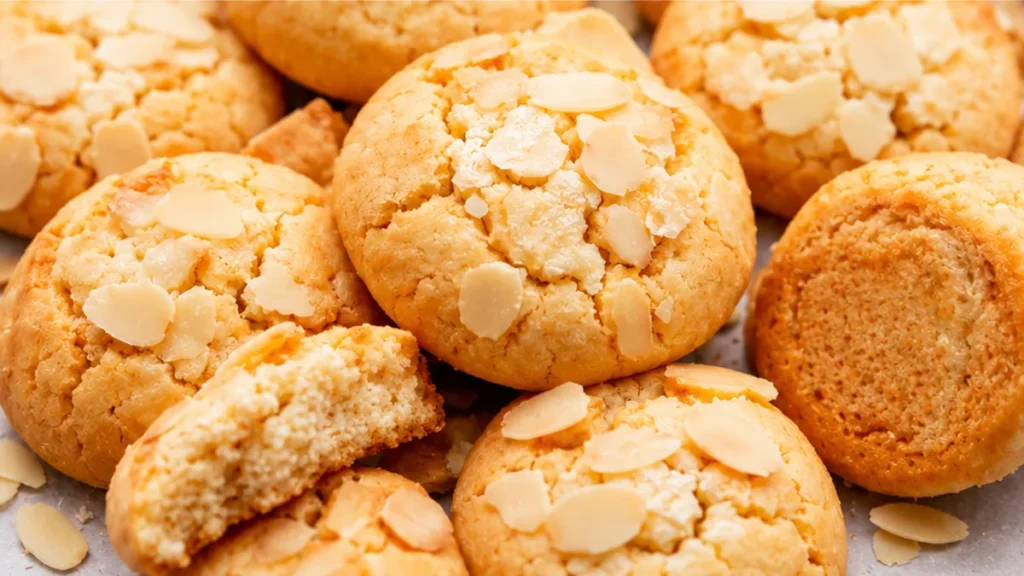
These crave worthy greek almond cookies are easy to make and packed with flavor. Using almond flour gives them a unique texture and taste.
Key takeaways
- Use ground almonds for moisture and flavor.
- Chill the dough to prevent excessive spreading.
- Monitor baking time closely to avoid dryness.
- Consider flavor enhancers like vanilla or citrus zest.
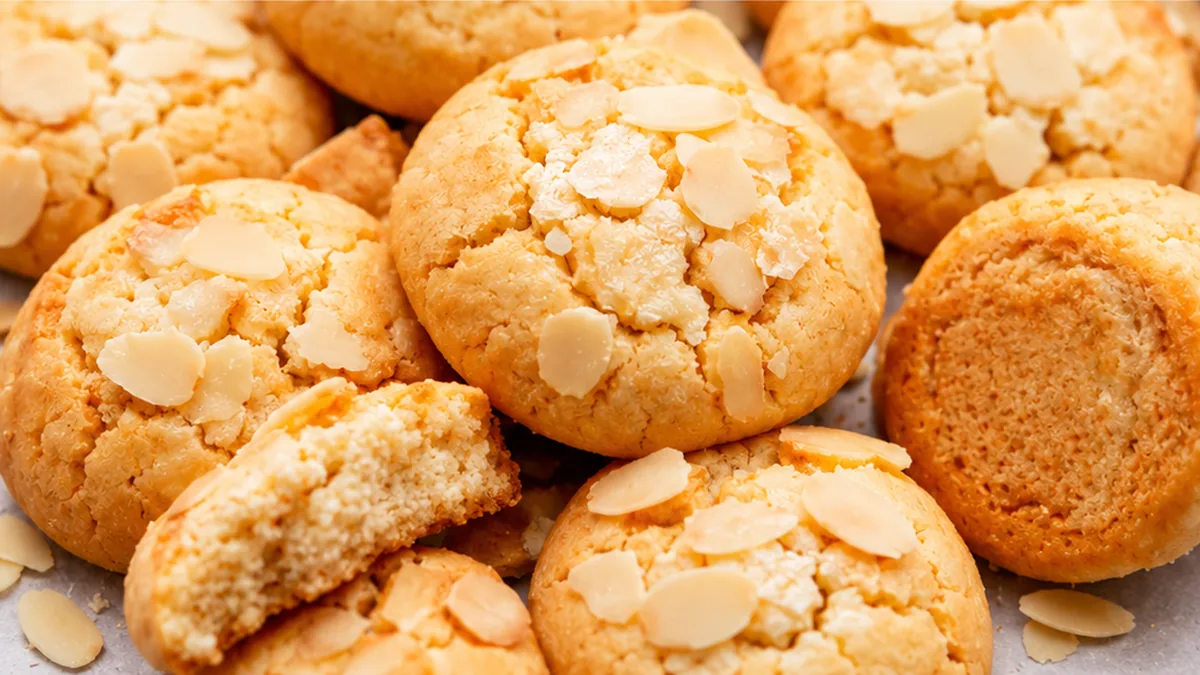
Crave-worthy Greek Almond Cookies!
Ingredients
Method
- Preheat the oven to 350°F (180°C), or 325°F (160°C) for fan-forced. Lightly grease or spray 2 large trays and line with parchment paper.
- Roast the blanched almonds for 7 minutes on a small tray, shaking once halfway. Cool the almonds on the tray. Bash or blitz the cooled almonds using a food processor or a ziplock bag and rolling pin until they resemble coarse sand with some small lumps.
- In a large bowl, cream the softened unsalted butter and white sugar until light and fluffy. Beat in the large egg and vanilla extract until well combined.
- In a separate bowl, whisk together the plain flour, baking powder, and cooking salt. Gradually add the dry ingredients to the wet ingredients in three batches, mixing until just combined after each addition. Beat in the prepared almond bits.
- Roll the dough into approximately 30 balls, each about 2 tablespoons (use a #40 scoop if you have one). Slightly flatten each ball. Brush the tops of the flattened cookies with the lightly whisked egg white and then sprinkle with almond flakes.
- Bake for 20 minutes, or until the biscuits are light golden around the edges. Let them cool on the trays for a few minutes before transferring to a wire rack to cool completely.
Understanding the Role of Almonds in Greek Cookies
Almonds are a fundamental ingredient in Greek almond cookies, contributing both flavor and texture. They provide a rich, nutty taste that complements the sweetness of the cookies. The use of ground almonds instead of flour results in a denser, more moist cookie. The fat content in almonds also aids in creating a tender crumb, as the natural oils keep the cookie from drying out. Typically, a ratio of about 1:1 ground almonds to sugar is used, ensuring that the cookies retain their signature texture while achieving the desired sweetness.
Common Issues and Their Solutions
When making Greek almond cookies, several common issues may arise:
- Issue: Cookies spread too much during baking.
Cause: Too much liquid or not enough almond flour can lead to excessive spreading. Ensure you are using the correct measurements and consider chilling the dough for 30 minutes before baking. - Issue: Cookies are too dry.
Cause: Overbaking is often the culprit. Monitor the baking time closely; cookies should be lightly golden but still soft when removed from the oven. - Issue: Cookies lack flavor.
Cause: Insufficient flavoring agents, such as vanilla or almond extract. Adding a teaspoon of vanilla or a few drops of almond extract can enhance the flavor profile significantly.
Ingredient Swaps and Their Impact
There are several swaps you can make in this recipe, each with its own effect:
- Using powdered sugar instead of granulated sugar: This can create a more tender cookie due to the finer texture, but it may also make the dough slightly more difficult to handle.
- Replacing some almond flour with coconut flour: This adds a unique flavor and a hint of chewiness but requires adjusting the liquid content as coconut flour absorbs more moisture.
- Substituting honey for sugar: This will add a different sweetness and moisture level, resulting in a chewier cookie. However, it may also require reducing the liquid elsewhere in the recipe to maintain the right texture.
The Unique Aspect of Greek Almond Cookies
What sets Greek almond cookies apart from other cookies is their use of ground almonds as the primary ingredient, which is less common in many cookie recipes. This not only gives them a distinct flavor but also makes them suitable for gluten-free diets. Additionally, the traditional method often involves incorporating a touch of orange or lemon zest, which brightens the flavor and gives these cookies a refreshing twist that is characteristic of Greek desserts.
Understanding the Impact of Ingredient Quality on Texture
The quality of ingredients plays a crucial role in achieving the desired texture of Greek almond cookies. For instance, using fresh almonds instead of stale ones can significantly enhance the flavor and crunchiness. Freshly ground almond flour will yield a lighter texture, while older flour may lead to denser cookies. Additionally, the freshness of the eggs contributes to the overall rise and structure of the cookies. Aim for eggs that are at room temperature, as they incorporate better into the batter, leading to a more uniform texture.
Adapting Recipes for Different Serving Sizes
Scaling the recipe for Greek almond cookies is straightforward but requires careful adjustments to maintain the balance of flavors and textures. When doubling or halving the recipe, ensure that the ratios of sugar, flour, and almonds remain consistent. For example, if you double the recipe, using 200 grams of almonds instead of 100 grams helps keep the almond flavor prominent. Additionally, the baking time may vary slightly; larger batches might need a few extra minutes in the oven, while smaller batches could bake faster. Keep an eye on the cookies to ensure they achieve a golden brown color without overbaking.
Equipment Variations and Their Effects on Baking
The choice of baking equipment can influence the outcome of Greek almond cookies. Using a dark baking sheet may cause the bottoms to brown more quickly, while a light-colored sheet promotes even baking. If using a convection oven, reduce the baking temperature by about 20°C (or 25°F) to prevent over-browning. Moreover, the type of mixer used can affect the mixing process: a stand mixer typically provides a more consistent blend compared to a hand mixer, which might require more attention to ensure all ingredients are well incorporated.
Seasonal Ingredients and Their Influence on Flavor
Seasonal variations in ingredients can significantly affect the flavor profile of Greek almond cookies. For example, using locally sourced almonds during their peak season can enhance the nutty flavor and freshness. In contrast, out-of-season almonds might taste bland. Similarly, incorporating seasonal spices, like cinnamon or nutmeg, can add warmth and depth to the cookies, making them more suitable for winter festivities. Adjusting the recipe to include these seasonal elements can elevate the traditional cookie into a unique seasonal treat.
Understanding the Best Practices for Storing Greek Almond Cookies
When it comes to storing Greek almond cookies, the method you choose can significantly affect their texture and flavor. Ideally, these cookies should be stored in an airtight container to maintain their crispness. Room temperature storage is suitable for up to a week, but if you want to keep them longer, consider freezing them. To freeze, place the cookies in a single layer on a baking sheet until solid, then transfer them to a freezer-safe container. This method helps prevent them from sticking together and preserves their texture. When ready to enjoy, simply thaw them at room temperature for about 30 minutes. This careful approach ensures that the cookies remain fresh and delicious for weeks.
Scaling the Recipe for Larger Gatherings
Scaling your Greek almond cookies recipe can be a straightforward process, but there are nuances to consider for the best results. If you decide to double or triple the batch, keep in mind that the baking time may vary slightly. For instance, larger quantities may require an additional few minutes in the oven, as the heat distribution can change. It’s advisable to check for doneness by looking for a golden-brown color and a firm texture. Additionally, ensure your mixing bowl is large enough to accommodate the increased volume, and consider using multiple baking sheets to allow for even baking. This method ensures that you can serve these delightful cookies to a larger group without compromising their quality.
Pairing Greek Almond Cookies with Beverages
Pairing Greek almond cookies with beverages can elevate your tasting experience significantly. The nutty flavor of the almonds complements various drinks beautifully. For a classic pairing, consider serving them with Greek coffee, as the strong, rich flavor of the coffee balances the sweetness of the cookies. Alternatively, a cup of herbal tea, such as chamomile or mint, can enhance the aromatic profile of the cookies. For a more adventurous pairing, try them with a sweet dessert wine like Vin Santo, which harmonizes with the almond flavor and provides a delightful contrast. These pairings not only enhance the flavors but also create a memorable experience for anyone enjoying these crave-worthy treats.
How to Achieve the Perfect Texture in Greek Almond Cookies
The texture of Greek almond cookies is crucial to their appeal. Achieving the right balance between crispness and chewiness requires attention to several factors. Firstly, the grind of the almonds plays a significant role. Finely ground almonds yield a smoother texture, while coarsely ground almonds add a delightful crunch. Aim for a grind that is consistent, ideally around 150-200 grams of almonds to maintain the cookie’s structure. Additionally, the moisture content in your dough can affect the final texture. A dough that is too wet may spread too much during baking, resulting in flat cookies. To counter this, ensure that your egg whites are whipped to stiff peaks before folding them into the almond mixture, which helps to stabilize the dough. Baking time also influences texture; typically, a baking temperature of 180°C (350°F) for about 15-20 minutes is ideal. Monitor closely to prevent overbaking, which can lead to dry cookies. Lastly, allowing the cookies to cool on the baking sheet for a few minutes before transferring them to a wire rack will help them set properly, enhancing their overall texture.
Scaling Your Greek Almond Cookie Recipe for Different Occasions
Scaling a recipe can be a daunting task, but with Greek almond cookies, it can be straightforward if approached correctly. When increasing the quantity, maintain the same ratios of ingredients to ensure consistent results. For instance, if you double the recipe, use 300 grams of almonds, 2 egg whites, and adjust the sugar accordingly. Keep in mind that the baking time may vary slightly with larger batches; cookies may need an additional 2-5 minutes in the oven. If you’re baking multiple trays, rotate them halfway through the baking time to ensure even cooking. Conversely, if you’re looking to make a smaller batch, you can successfully halve the recipe without compromising the quality. However, be cautious with very small quantities, as measuring small amounts of ingredients like sugar or flour can lead to inaccuracies. Using a kitchen scale can help achieve the precision needed for smaller batches. Lastly, consider the occasion; for festive gatherings, you might want to incorporate seasonal flavors or spices, such as cinnamon or nutmeg, to elevate the traditional almond flavor.
Pro tips
Pro tip: Best served immediately while hot!
Frequently asked questions
Can I use whole almonds instead of ground almonds?
While you can use whole almonds, they will need to be finely ground to achieve the right texture. Whole almonds will not provide the same moisture and tenderness as ground almonds in this recipe.
How should I store leftover cookies?
Store the cookies in an airtight container at room temperature for up to a week. For longer storage, consider freezing them, which can extend their shelf life for up to three months.
Can I make these cookies vegan?
Yes, you can make these cookies vegan by substituting eggs with a flaxseed or chia seed mixture. Use one tablespoon of ground flaxseed or chia seeds mixed with three tablespoons of water for each egg.
What can I serve with Greek almond cookies?
These cookies pair well with coffee or tea. They can also be served alongside a dollop of Greek yogurt or a drizzle of honey for added flavor.
More from Sugar & Cut-Out Cookies →