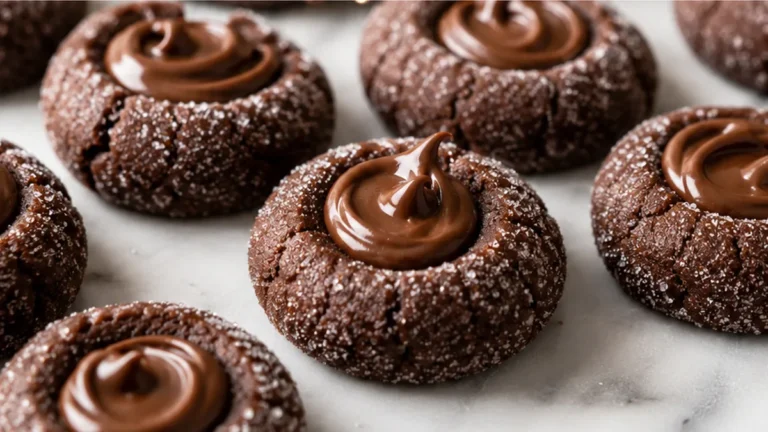
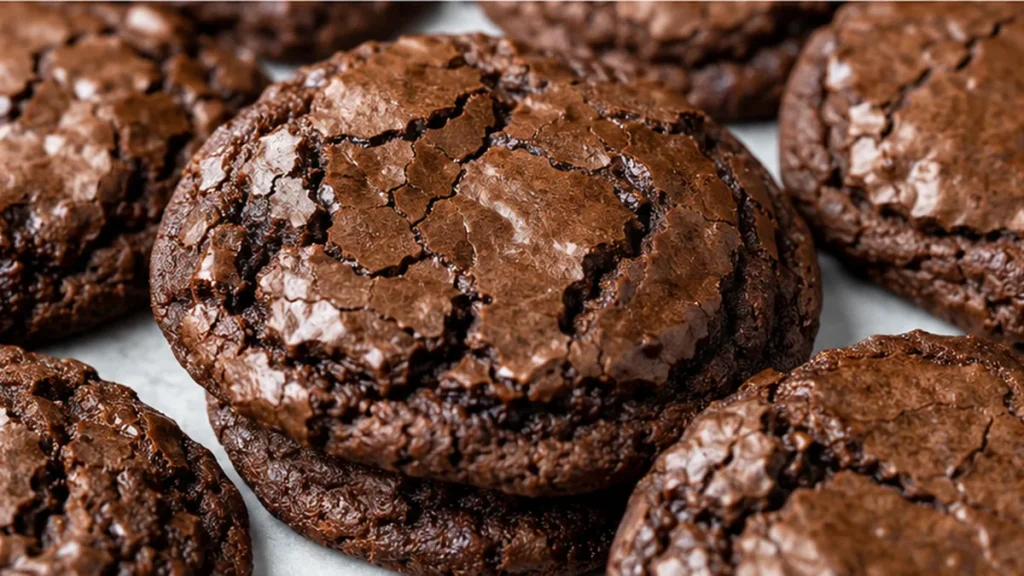
The secret to the perfect brownie cookie lies in achieving that signature crinkle top while maintaining a deeply fudgy, chewy interior. This recipe nails it by using quality chocolate and a precise balance of ingredients. These brownie cookies are ideal for anyone craving intense chocolate flavor in a delightful cookie form. Mastering these brownie cookies is straightforward. The key is the careful melting of chocolate and butter, and not overbaking to ensure that coveted gooey center and crackled surface.
Key takeaways
- Use high-quality bittersweet chocolate for rich flavor.
- Avoid overmixing to maintain chewiness.
- Rest the dough for at least 30 minutes for better texture.
- Adjust ingredients for dietary needs without compromising too much on taste.
Chewy Brownie Cookies
Ingredients
- ⅔ cup (95g) all-purpose flour
- 3 tbsp (18g) cocoa powder
- ½ tsp baking powder
- 6 oz (170g) bittersweet chocolate (70% cocoa) coarsely chopped
- ⅓ cup (75g) salted butter
- 2 large eggs, at room temperature
- 1 cup (200g) granulated sugar
- ½ tsp pure vanilla extract
- heaped ¼ tsp fine salt
- flaky sea salt for topping
Instructions
- Preheat oven to 350°F (175°C). Line two large baking sheets with parchment paper.
- Whisk together flour, cocoa powder, and baking powder in a medium bowl.
- Melt bittersweet chocolate and salted butter together in a heatproof bowl, stirring until smooth.
- In a large bowl, beat eggs and granulated sugar until lightened, about 1 minute. Stir in vanilla extract and fine salt.
- Whisk the warm melted chocolate mixture into the egg mixture until combined. Fold in the dry ingredients until just combined.
- Use a cookie scoop to portion dough onto prepared baking sheets, leaving space between cookies.
- Bake for 9-11 minutes until edges are set but the center is still gooey. Let cool on the baking sheets for 5 minutes.
- Sprinkle with flaky sea salt while warm.
Video
Notes
Understanding the Chocolate Quality for Brownie Cookies
The choice of chocolate significantly impacts the flavor and texture of brownie cookies. Using high-quality bittersweet chocolate (70% cocoa) ensures a rich, deep chocolate flavor. The fat content in chocolate also contributes to the chewiness of the cookie. Aim for chocolate with around 30-35% cocoa butter for optimal results.
Achieving the Perfect Chewy Texture
The key to chewy brownie cookies lies in the balance of ingredients and baking time. The ⅓ cup of salted butter combined with eggs creates a rich base that promotes chewiness. Ensure that you mix the batter until just combined to prevent overworking the gluten, which can lead to a tougher texture. Bake at 350°F (175°C) for about 10-12 minutes, allowing the cookies to set while remaining soft in the center.
Why Overmixing Can Ruin Your Cookies
Overmixing the batter can lead to dense, cakey cookies rather than the desired chewy texture. When flour is mixed too vigorously, gluten develops, resulting in a tougher cookie. To avoid this, mix the dry ingredients gently into the wet ingredients until just combined. This technique preserves the cookie’s tenderness.
Adjusting for Dietary Preferences and Ingredients
- Gluten-Free Option: Substitute all-purpose flour with a 1:1 gluten-free flour blend. Expect a slightly different texture but still chewy.
- Dairy-Free Alternative: Replace butter with a dairy-free margarine or coconut oil. This may impart a subtle coconut flavor.
- Sweetness Level: Reduce granulated sugar to ¾ cup for a less sweet cookie, enhancing the chocolate flavor.
- Vegan Version: Use flax eggs (1 tbsp ground flaxseed mixed with 2.5 tbsp water per egg) and replace butter with coconut oil. The texture may be slightly different but still delightful.
Why Resting the Dough Matters
Letting the cookie dough rest for at least 30 minutes in the refrigerator allows the flavors to meld and the fats to solidify. This results in a thicker, chewier cookie. Chilling the dough also helps prevent the cookies from spreading too much during baking, maintaining their shape and enhancing the overall texture.
How to Properly Store Brownie Cookies for Freshness
To maintain the chewy texture of brownie cookies, store them in an airtight container at room temperature. This prevents moisture loss and keeps them soft. If you want to keep them for longer, consider freezing them. Wrap each cookie individually in plastic wrap and place them in a freezer-safe bag. They can last up to three months in the freezer. When ready to eat, thaw at room temperature or warm them slightly in the microwave for a few seconds.
Scaling the Recipe for Different Occasions
This brownie cookie recipe can easily be scaled to accommodate different serving sizes. To double the recipe, simply multiply each ingredient by two, ensuring you maintain the same ratios. For smaller batches, halve the ingredients while keeping the baking time similar, but monitor closely. The baking time may slightly decrease for smaller batches, so check for doneness around 8-10 minutes. Adjusting the batch size allows you to cater to parties, gifts, or personal cravings without compromising on quality.
Understanding Equipment Differences in Baking Brownie Cookies
The type of baking sheet and oven can significantly influence the outcome of brownie cookies. Using a light-colored, non-stick baking sheet promotes even baking and prevents over-browning. If using a dark baking sheet, reduce the baking time by 1-2 minutes to avoid excessive crisping. Additionally, if your oven has hot spots, rotate the baking sheet halfway through for uniform baking. Always preheat the oven to ensure the cookies start baking at the right temperature, typically around 350°F (175°C).
Pairing Brownie Cookies with Beverages and Sides
Brownie cookies have a rich, chocolatey flavor that pairs well with various beverages. A glass of cold milk is a classic choice, enhancing the cookie’s sweetness. For adults, consider pairing with a robust coffee or espresso that complements the chocolate’s depth. Alternatively, a scoop of vanilla ice cream can elevate the dessert experience, creating a delightful contrast in temperature and texture. Seasonal pairings, like pumpkin spice lattes in autumn, can also enhance the enjoyment of these cookies.
How to Make Brownie Cookies Ahead of Time
Preparing brownie cookies ahead of time can be a game-changer for busy bakers. To make the dough in advance, follow the recipe up to the point of chilling the dough. After mixing, wrap the dough tightly in plastic wrap or place it in an airtight container. The dough can be refrigerated for up to 3 days or frozen for up to 3 months. When ready to bake, if frozen, allow the dough to thaw in the refrigerator overnight. This resting period not only enhances the flavor but also allows the dough to become more manageable.
Understanding the Impact of Ingredient Quality on Brownie Cookies
The quality of ingredients significantly influences the final taste and texture of brownie cookies. Using high-quality bittersweet chocolate (preferably 70% cocoa) ensures a rich, deep flavor. Similarly, fresh eggs and quality butter will enhance the overall richness. If using lower-quality chocolate, you may notice a lack of depth in flavor and a different texture. Always check the expiration dates on your ingredients, as stale components can lead to disappointing results.
Scaling Your Brownie Cookie Recipe for Larger Gatherings
Scaling the brownie cookie recipe is straightforward. If you need to double or triple the recipe, maintain the same ratios of ingredients. However, be mindful of the mixing and baking times. Larger batches may require longer mixing to ensure even distribution of ingredients. When baking, use multiple baking sheets, but avoid overcrowding the oven, as this can lead to uneven baking. Adjust the baking time as necessary, checking for doneness a few minutes early, especially if using larger pans.
Choosing the Right Equipment for Perfect Brownie Cookies
The equipment you use can greatly affect the outcome of your brownie cookies. A high-quality mixing bowl, preferably stainless steel or glass, helps with even mixing. Silicone spatulas are excellent for folding in ingredients without overmixing, which is crucial for maintaining the chewy texture. Use a cookie scoop for uniform sizing, ensuring even baking. Additionally, a reliable oven thermometer can help maintain accurate baking temperatures, as oven calibration can vary and affect the final product.
Why your brownie cookies may turn out too cakey
One common issue with brownie cookies is achieving the desired chewy texture. If your cookies are turning out cakey, it may be due to an imbalance in the flour-to-fat ratio. The recipe calls for ⅔ cup (95g) of all-purpose flour, which is crucial for structure. If you accidentally add too much flour, the cookies can become dry and crumbly. To maintain chewiness, ensure you’re measuring your flour accurately, using the spoon-and-level method. Additionally, overbaking can also lead to a cakey texture; aim for a baking time of around 10-12 minutes at 350°F (175°C). Remove them from the oven when the edges look set but the center is still soft.
Why using the right chocolate is essential for flavor
The choice of chocolate significantly affects the flavor profile of your brownie cookies. In this recipe, 6 oz (170g) of bittersweet chocolate (70% cocoa) is used to provide depth and richness. Using lower-quality chocolate or chocolate with a higher sugar content can lead to overly sweet cookies lacking in the complex flavors that dark chocolate offers. For the best results, choose high-quality chocolate with at least 60-70% cocoa content. This will not only enhance the taste but also improve the texture. If you prefer a less intense chocolate flavor, you can substitute with semi-sweet chocolate, but be aware that this may result in a sweeter cookie.
How to Adjust Baking Time for Different Oven Types
Baking times can vary significantly depending on the type of oven used. Conventional ovens typically require a baking time of 10-12 minutes at 350°F (175°C) for chewy brownie cookies. However, if you’re using a convection oven, reduce the temperature by 25°F (about 15°C) and check for doneness around 8-10 minutes. This is because convection ovens circulate hot air, leading to faster baking. Always keep an eye on the cookies towards the end of the baking time; they should appear set around the edges but slightly soft in the center, as they will continue to cook after being removed from the oven.
Understanding the Role of Chocolate in Flavor and Texture
The choice of chocolate is crucial in brownie cookies, as it directly impacts both flavor and texture. Using high-quality bittersweet chocolate (70% cocoa) provides a rich, deep chocolate flavor and contributes to the chewy texture. If you opt for a lower cocoa percentage, such as semisweet chocolate, you may find the cookies sweeter and less intense in chocolate flavor. Additionally, the cocoa butter content in different chocolates affects the fat ratio in the dough, which can alter the final texture. For instance, using a chocolate with higher cocoa butter will yield a softer, fudgier cookie, while a chocolate with lower fat may create a denser, less chewy cookie. Always melt the chocolate with the butter to ensure a smooth emulsion, which is key to achieving the desired consistency.
Pro tips
- Use good quality bittersweet chocolate (70% cocoa) for the best flavor.
- Don’t overbake; the center should still be slightly gooey when you remove them from the oven.
- Letting the dough rest for 5-10 minutes if too runny helps achieve the perfect pudding-like consistency.
- Sprinkle with flaky sea salt immediately after baking to enhance the chocolate flavor.
Try these chewy crinkle top brownie cookies for an unforgettable chocolate treat. They are simple to make and always a crowd-pleaser.
Frequently asked questions
Can I use chocolate chips instead of bittersweet chocolate?
Yes, you can use chocolate chips, but they may not melt as smoothly as coarsely chopped chocolate. This can affect the texture and richness of the cookies.
How do I know when the brownie cookies are done baking?
The cookies are done when the edges look set and the center appears slightly underbaked. They will continue to firm up as they cool.
What happens if I bake the cookies for too long?
Baking the cookies for too long will result in a dry texture. Aim for a baking time of 10-12 minutes for the best chewy consistency.
Can I freeze the dough for later use?
Yes, you can freeze the cookie dough. Shape it into balls, freeze on a baking sheet, then transfer to a freezer bag. Bake from frozen, adding a couple of minutes to the baking time.
More from Chocolate Chip Cookies →