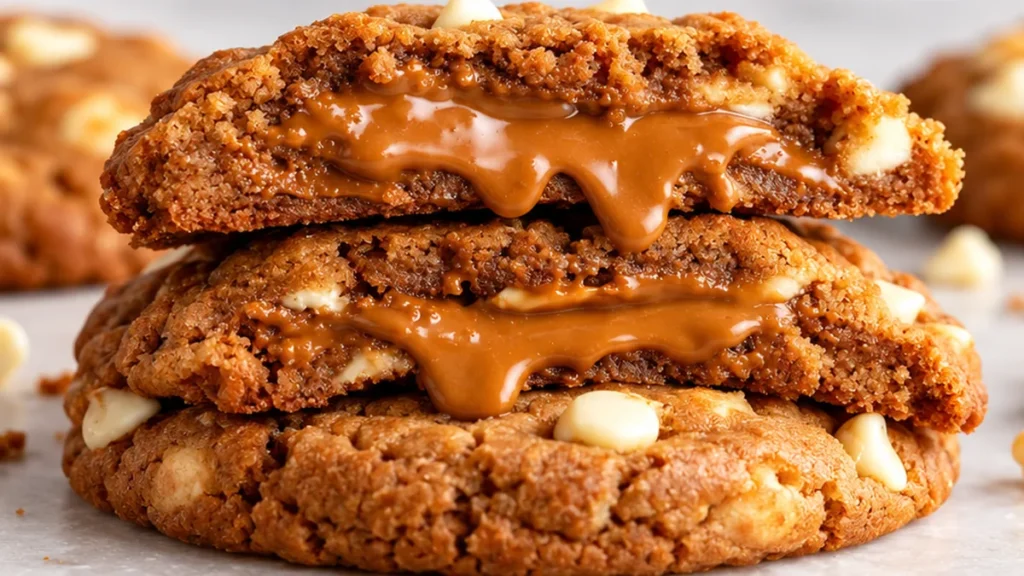
Biscoff stuffed cookies are a delicious treat that combines soft cookie dough with a creamy Biscoff filling. This recipe is straightforward and yields perfect results.
Key takeaways
- The unique flavor of biscoff spread enhances the cookie experience.
- Chilling the dough helps prevent excessive spreading.
- Using brown sugar adds moisture and depth to the flavor.
- The contrast between the soft cookie and gooey filling is key to success.
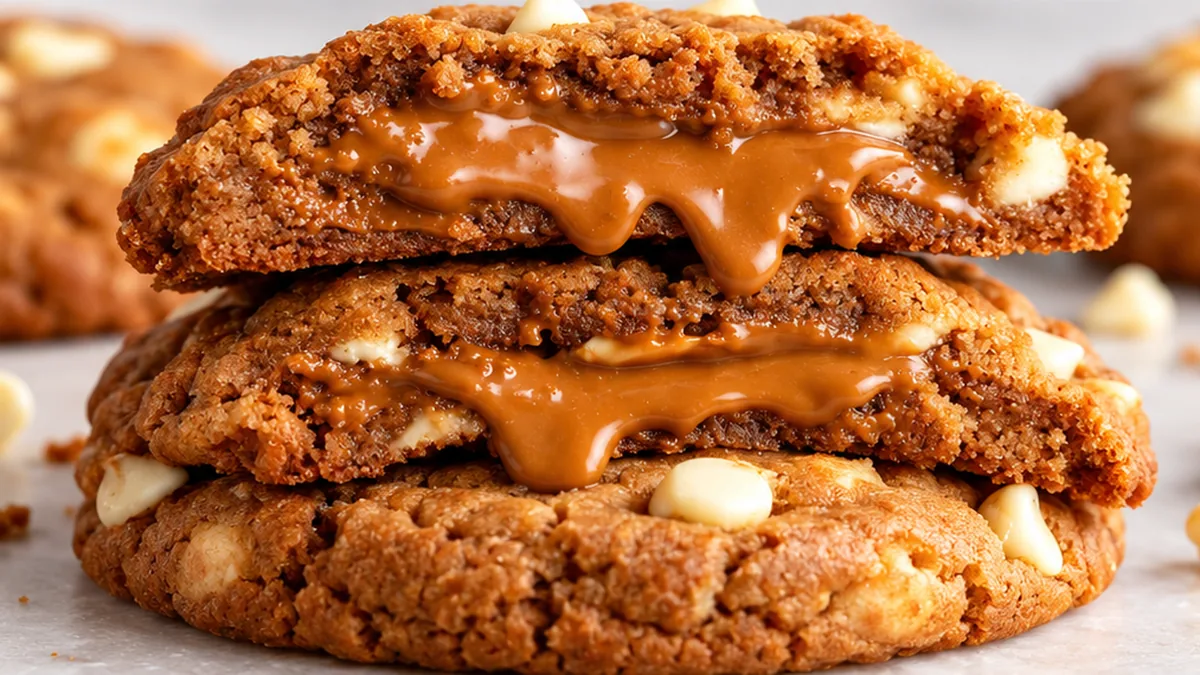
Biscoff Stuffed Cookies: Melty Perfection!
Ingredients
Method
- Dollop Biscoff onto a paper-lined plate or small tray, spreading into 1.25cm/1/2″ thick discs. Freeze for 1 hour until firm.
- Brown the butter in a silver saucepan over medium-high heat for 4 to 5 minutes until foamy and nutty. Immediately pour into a heatproof bowl and cool to room temperature (approximately 45 minutes).
- Hand mix the cooled brown butter with sugar, then add the egg and vanilla. In a separate bowl, whisk together the dry ingredients and spices, then gradually add to the wet mixture. Fold in chocolate chips if using.
- Portion the dough into 8 equal pieces. Flatten each piece, place a frozen Biscoff disc in the center, and carefully wrap the dough around it, sealing completely.
- Refrigerate the stuffed cookie dough balls for 12-24 hours (minimum 2 hours).
- Bake from fridge cold on lined trays at 180°C/350°F (170°C fan) for 19 minutes. If desired, top with more chocolate while hot.
- Cool on the tray for 20 minutes before serving.
- Enjoy your pure melty perfection!
Understanding the Role of Biscoff in Cookies
Biscoff cookies are known for their unique caramelized flavor and crunchy texture, which can significantly enhance your cookie experience. When used as a filling, the biscoff spread creates a melty, gooey center that contrasts beautifully with the soft cookie exterior. This dual texture is key to achieving the perfect biscoff stuffed cookies. The spread’s sugar content also contributes to the overall sweetness of the cookie, making it essential to balance the other ingredients to avoid overwhelming sweetness.
Common Issues and How to Fix Them
Even the best recipes can encounter problems. Here are some common issues you might face with biscoff stuffed cookies and how to address them:
- Issue: Cookies spread too much during baking. Fix: Ensure your butter is at the right temperature. If it’s too soft, it can lead to excessive spreading. Chill the dough for at least 30 minutes before baking.
- Issue: The cookies are too dry. Fix: Check that you are measuring flour correctly. Too much flour can lead to dry cookies; spoon and level your flour rather than scooping it directly from the bag.
- Issue: Biscoff filling is too hard. Fix: If the biscoff spread is too thick, warm it slightly in the microwave for a few seconds to make it easier to work with.
- Issue: Cookies are not flavorful enough. Fix: Consider adding a pinch of salt to the dough to enhance the flavors. Salt balances sweetness and can elevate the overall taste.
Ingredient Swaps and Their Effects
Sometimes, you may want to make adjustments to the recipe based on availability or dietary preferences. Here are some swaps you can consider:
- Swap: Use brown sugar instead of white sugar. Effect: This will add moisture and a deeper caramel flavor to your cookies.
- Swap: Substitute almond flour for all-purpose flour. Effect: This will create a denser cookie with a nutty flavor, but may require adjustments in liquid ingredients.
- Swap: Replace butter with coconut oil. Effect: This will impart a subtle coconut flavor and create a slightly different texture.
- Swap: Use a different cookie spread, like Nutella. Effect: This will change the flavor profile entirely, but will still provide a deliciously melty center.
Unique Characteristics of Biscoff Stuffed Cookies
Biscoff stuffed cookies stand out due to their unique flavor profile. The biscoff spread not only adds sweetness but also a hint of spice, reminiscent of gingerbread. This is particularly appealing during the colder months, making them a perfect seasonal treat. Additionally, the combination of soft cookie dough with a gooey center creates a delightful contrast that is hard to resist, setting them apart from standard chocolate chip or peanut butter cookies.
Understanding the Best Techniques for Stuffing Cookies
Stuffing cookies, particularly with Biscoff spread, requires careful technique to ensure that the filling is evenly distributed and doesn’t leak out during baking. One effective method is to create a small disc of cookie dough, place a dollop of Biscoff in the center, and then encase it with another layer of dough. This technique ensures that the filling is protected and provides a melty center. Additionally, chilling the dough for at least 30 minutes before baking helps the cookies maintain their shape and prevents the filling from spilling out. The ideal baking temperature for stuffed cookies is around 180°C (350°F), which allows for even cooking without burning the edges.
Scaling the Recipe for Larger Gatherings
When scaling the recipe for larger gatherings, it’s essential to maintain the correct ratios of ingredients to ensure consistent results. For instance, if doubling the recipe, simply double all ingredients, but be cautious with the baking time. Larger batches may require slightly longer baking times, so keep an eye on the cookies to avoid overbaking. It’s also beneficial to bake in batches rather than overcrowding the oven, which can lead to uneven baking. If you plan to make a large batch, consider using a kitchen scale for precise measurements, especially for flour and sugar, as small discrepancies can affect the final texture.
Equipment Considerations for Perfect Cookies
The type of equipment used can significantly impact the outcome of Biscoff stuffed cookies. Using a heavy-duty baking sheet can help distribute heat more evenly, leading to better browning and texture. Non-stick baking mats or parchment paper can prevent sticking and aid in easy removal. Additionally, a cookie scoop can ensure uniform size, which is crucial for even baking. If using a convection oven, reduce the baking temperature by about 20°C (approximately 25°F) to prevent over-browning. It’s also advisable to use a stand mixer for creaming butter and sugar, as it incorporates air more efficiently, resulting in a lighter cookie.
Seasonal Adjustments for Flavor and Texture
Seasonal adjustments can enhance the flavor and texture of Biscoff stuffed cookies. In the fall, consider incorporating spices such as cinnamon or nutmeg into the dough to complement the caramel notes of Biscoff. During the summer, adding a pinch of sea salt can enhance the flavor profile and provide a contrast to the sweetness. The quality of ingredients can also vary with the seasons; for instance, fresh butter will yield a creamier texture compared to older stock. Always taste your ingredients, especially the Biscoff spread, as variations in quality can affect the overall flavor of the cookies.
How to Prepare Biscoff Stuffed Cookies in Advance
Making biscoff stuffed cookies ahead of time can be a game changer, especially for busy bakers. You can prepare the cookie dough and shape it into balls, then freeze them for later use. To do this, place the cookie dough balls on a baking sheet lined with parchment paper, ensuring they are spaced apart. Freeze them until solid, then transfer the frozen dough balls to an airtight container or freezer bag. They can be stored in the freezer for up to three months. When you’re ready to bake, simply bake them straight from the freezer, adding a couple of extra minutes to the baking time. This method ensures you always have fresh cookies on hand without the need for last-minute preparation.
Understanding the Impact of Ingredient Quality on Biscoff Stuffed Cookies
The quality of ingredients plays a crucial role in the final outcome of biscoff stuffed cookies. For instance, using high-quality butter can enhance the flavor and texture of the cookies. It is advisable to use unsalted butter for better control over the salt content. Similarly, the type of flour used affects the cookie’s structure; all-purpose flour is generally preferred for its balanced protein content, but using cake flour can yield a softer cookie. Additionally, the freshness of the biscoff spread is essential; older jars may not have the same creamy consistency and flavor intensity. Always check for the expiration date and opt for the freshest ingredients to achieve the best results.
Pairing Suggestions to Elevate Your Biscoff Stuffed Cookies Experience
When serving biscoff stuffed cookies, consider pairing them with beverages that complement their rich flavors. A glass of cold milk is a classic choice, enhancing the sweetness and creaminess of the cookies. For a more sophisticated pairing, try serving them with a cup of coffee or espresso; the bitterness of the coffee balances the sweetness of the cookies beautifully. If you’re looking for something unique, consider pairing the cookies with a scoop of vanilla or caramel ice cream. The combination of warm cookies and cold ice cream creates a delightful contrast that is sure to impress your guests. Additionally, drizzling a bit of melted chocolate over the cookies before serving can add an extra layer of indulgence.
Understanding the Impact of Temperature on Cookie Texture
The temperature of your ingredients plays a crucial role in the texture of biscoff stuffed cookies. For optimal results, butter should be softened but not melted, ideally around 21-24°C (70-75°F). This allows for better incorporation of air, leading to a lighter cookie. If the butter is too cold, the dough will not spread properly, resulting in dense cookies. Conversely, if the butter is too warm, it may cause the cookies to spread excessively, leading to a flat texture. Aim for a dough temperature of about 25-27°C (77-81°F) before baking. Additionally, chilling the dough for at least 30 minutes can enhance the flavor and texture, as it allows the flour to fully hydrate and the flavors to meld.
How to Achieve the Perfect Stuffing Ratio
Getting the right amount of Biscoff filling in your cookies is essential for achieving that melty perfection. A common mistake is to overstuff the cookies, which can lead to filling oozing out during baking. Aim for about 15-20 grams of Biscoff spread per cookie. To ensure a balanced ratio, flatten the cookie dough balls slightly before adding the filling, then encase the filling by folding the dough over it and rolling it back into a ball. This technique not only keeps the filling contained but also ensures an even distribution of flavor with every bite. If you find that the filling is still leaking, consider using a thicker layer of cookie dough or chilling the filled cookies before baking to firm up the dough.
Pro tips
Pro tip: Best served immediately while hot!
Frequently asked questions
Can I use homemade biscoff spread for this recipe?
Yes, homemade biscoff spread can be used as a filling. Just ensure that it has a similar consistency to store-bought spread for the best results.
What should I do if my cookies are too hard?
If your cookies turn out too hard, they may have been overbaked. Reduce the baking time slightly next time and check for doneness a few minutes earlier.
How can I store leftover biscoff stuffed cookies?
Store the cookies in an airtight container at room temperature for up to a week. For longer storage, consider freezing them, ensuring they are well-wrapped.
Can I add nuts to the cookie dough?
Yes, adding chopped nuts can provide a nice crunch and additional flavor. Just be mindful of the balance with the biscoff filling to maintain the desired texture.
More from Chocolate Chip Cookies →