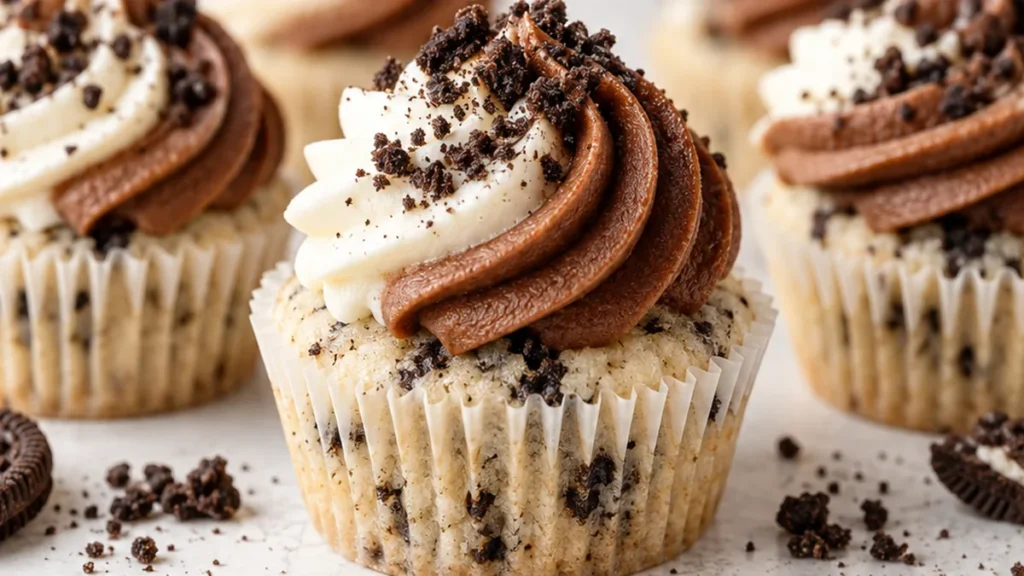
Cookies cream cupcakes are a delicious treat that combines rich chocolate and creamy frosting. This recipe features Oreo cookies for added flavor.
Key takeaways
- Use precise measurements for a balanced batter.
- Avoid overmixing to maintain a light texture.
- Incorporate crushed cookies for unique flavor and texture.
- Adjust baking time to prevent dryness.
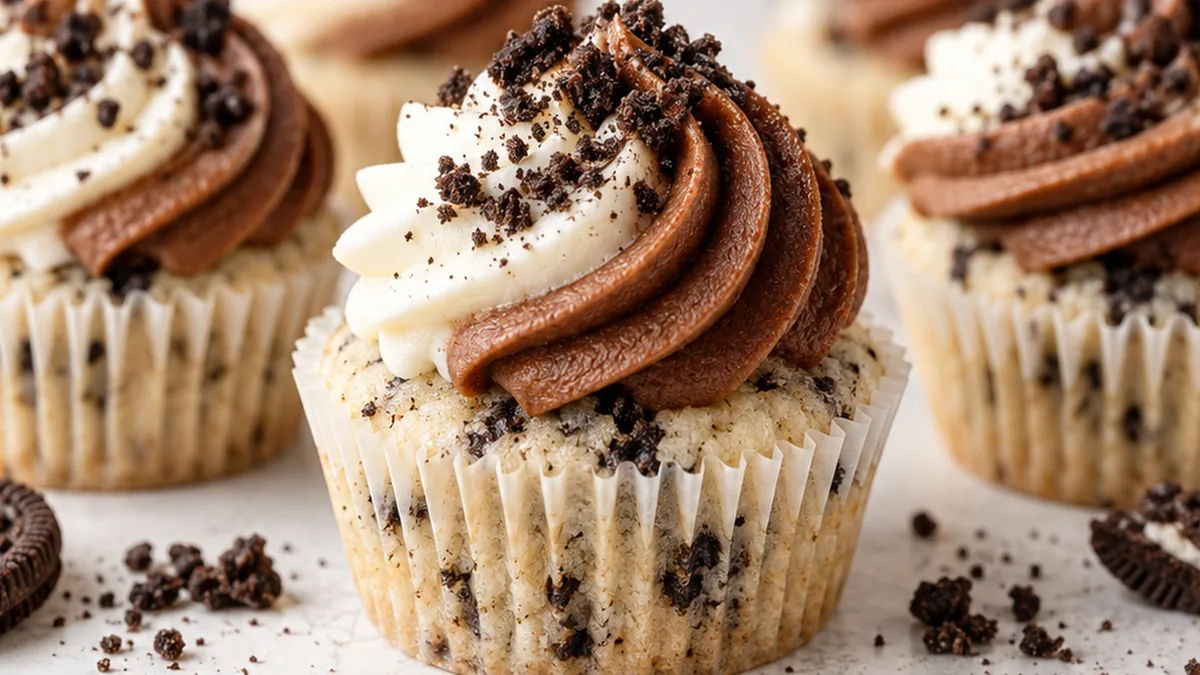
Cookies & Cream Cupcakes: Pure Bliss!
Ingredients
Method
- Preheat the oven to 350°F (177°C). Line a 12-cup muffin pan with cupcake liners. Whisk the cake flour, baking powder, baking soda, and salt together.
- Beat the butter and sugar until creamed, about 3 minutes. Add egg whites, beat for 2 minutes. Add sour cream and vanilla, beat for 1 minute.
- Slowly pour in the milk with the dry ingredients on low speed until just combined. Fold in the crushed Oreos.
- Spoon batter into liners, filling 2/3 full. Bake for 19–22 minutes, or until a toothpick comes out clean.
- Cool cupcakes in the pan for 20 minutes, then remove to a rack to cool completely before frosting.
Understanding the Structure of Cookies and Cream Cupcakes
The foundation of cookies and cream cupcakes lies in the balance between the moistness of the cake and the richness of the frosting. A successful cupcake requires precise measurements of flour, sugar, and fat. The typical ratio for cupcake batter is about 1:1:1 for flour, sugar, and fat, with the addition of leavening agents to ensure a light texture. For optimal results, the batter should be mixed just until combined to avoid over-developing gluten, which can lead to a dense texture.
Common Issues and Their Solutions
One common problem when making cookies and cream cupcakes is the tendency for the cupcakes to dome excessively. This can occur if the oven temperature is too high or if the batter is overmixed. To prevent this, ensure the oven is preheated to the correct temperature, usually around 180°C (350°F), and mix the batter gently. Another issue is dry cupcakes, which may result from overbaking. It’s essential to check for doneness a few minutes before the suggested baking time, as ovens can vary.
Failure: Cupcakes are too dense.
Cause: Overmixing the batter. Solution: Mix just until ingredients are combined, and avoid beating too vigorously.
Failure: Cupcakes have an uneven rise.
Cause: Uneven oven temperature. Solution: Rotate the cupcake tray halfway through baking to ensure even heat distribution.
Failure: Frosting is too runny.
Cause: Too much liquid or insufficient powdered sugar. Solution: Gradually add powdered sugar until the desired consistency is reached.
Failure: Cupcakes stick to the liners.
Cause: Insufficient greasing or using low-quality liners. Solution: Use high-quality liners or lightly grease them before filling with batter.
Ingredient Swaps for Cookies and Cream Cupcakes
While the classic version of cookies and cream cupcakes uses standard ingredients, there are several swaps that can enhance or modify the flavor and texture. For instance, substituting part of the all-purpose flour with cake flour can yield a lighter cupcake. However, this may result in a slightly different texture, so it’s essential to maintain the overall ratio of dry to wet ingredients.
Swap: All-purpose flour for cake flour.
Expected Result: Lighter, fluffier texture. Trade-off: Slightly less structure, which may affect the frosting’s adherence.
Swap: Unsweetened cocoa powder for part of the flour.
Expected Result: A chocolate flavor profile. Trade-off: Adjust sugar content to balance the bitterness of the cocoa.
Swap: Greek yogurt for part of the butter.
Expected Result: A moist cupcake with a tangy flavor. Trade-off: The frosting may require additional sugar to balance the acidity.
Swap: Vanilla extract for almond extract.
Expected Result: A nutty flavor that complements the cookies. Trade-off: The flavor profile will be significantly altered, which may not appeal to everyone.
Unique Aspects of Cookies and Cream Cupcakes
What sets cookies and cream cupcakes apart from other cupcake varieties is the incorporation of crushed cookies into both the batter and the frosting. This addition creates a delightful texture and enhances the flavor profile. The ideal cookie for this recipe is a classic chocolate sandwich cookie, which provides a rich chocolate flavor and a satisfying crunch. The cookies should be crushed into small pieces, but not so fine that they turn into powder, as this can affect the overall texture of the cupcakes.
How to Prepare Cookies and Cream Cupcakes in Advance
Making cookies and cream cupcakes ahead of time is a practical way to save time on the day of serving. The cupcake batter can be prepared and stored in the refrigerator for up to 24 hours before baking. This allows the flavors to meld and can even improve the texture. Just be sure to bring the batter back to room temperature before baking. For the frosting, it can be made a few days in advance and stored in an airtight container in the fridge. When ready to use, simply re-whip the frosting to restore its texture. The assembled cupcakes can be stored at room temperature for up to two days, or in the refrigerator for about a week, but the texture may change slightly due to the moisture from the frosting.
Scaling the Recipe for Larger Gatherings
If you need to scale your cookies and cream cupcakes recipe for a larger gathering, it’s essential to maintain the correct ratios of ingredients to ensure consistent quality. For instance, if you double the recipe, you should also double the baking time, but start checking for doneness a few minutes earlier than the original time. Additionally, consider using multiple baking trays to avoid overcrowding, which can lead to uneven baking. If you’re aiming for mini cupcakes, adjust the baking time down by about 5-7 minutes. Scaling also means you might need to adjust your mixing equipment; larger batches may require a stand mixer for proper aeration.
Choosing the Right Equipment for Perfect Cupcakes
The equipment you use can significantly impact the outcome of your cookies and cream cupcakes. For mixing, a stand mixer is preferred as it provides consistent mixing and aeration, essential for achieving a light and fluffy cupcake. Use a cupcake pan with a non-stick coating or line it with paper liners to ensure easy removal. An ice cream scoop can help portion the batter evenly into the cups, ensuring uniform baking. An oven thermometer is also a valuable tool, as it guarantees that your oven is at the right temperature, preventing underbaking or overbaking.
Seasonal Variations for Cookies and Cream Cupcakes
While cookies and cream cupcakes are delicious year-round, you can adapt them to reflect seasonal ingredients or themes. For example, in the fall, adding a hint of pumpkin spice to the batter can enhance the flavor profile while keeping the cookie components intact. In the summer, incorporating fresh berries into the frosting or as a garnish can provide a refreshing contrast. Additionally, consider using seasonal-themed cookie brands, such as gingerbread cookies during the holidays, to create a festive twist on the classic recipe. These adaptations not only elevate the flavor but also make your cupcakes visually appealing for seasonal events.
Understanding the Role of Cream in Cookies and Cream Cupcakes
The cream used in cookies and cream cupcakes is essential for achieving a rich, smooth texture that complements the crunchy cookie pieces. When incorporating cream, it’s important to consider the fat content; for instance, using heavy cream (around 36% fat) will yield a denser, richer frosting compared to lighter creams. This fat content not only affects mouthfeel but also plays a crucial role in emulsifying the ingredients. A good rule of thumb is to use a ratio of about 1:2 of cream to sugar for frosting, ensuring that the mixture remains spreadable yet firm enough to hold its shape. Additionally, the temperature of the cream matters; room temperature cream incorporates more easily into the frosting, preventing lumps and ensuring a smooth consistency.
How to Customize Cookies and Cream Cupcakes for Different Occasions
Customizing cookies and cream cupcakes can elevate them for special occasions. For instance, adding seasonal flavors or colors can enhance their appeal. During the fall, incorporating pumpkin spice into the batter can create a festive twist, while summer may call for a hint of citrus zest to brighten the flavor profile. Another approach is to adjust the cookie type; using chocolate chip cookies instead of traditional Oreos can change the texture and flavor significantly. When scaling the recipe for larger gatherings, it’s crucial to maintain the same ratios of ingredients to ensure consistency in taste and texture. For instance, doubling the recipe should ideally involve using the same proportions of flour, sugar, and cream to avoid any discrepancies in the final product.
Understanding the Importance of Ingredient Temperature in Cookies and Cream Cupcakes
The temperature of your ingredients plays a crucial role in the final texture and flavor of cookies and cream cupcakes. For optimal results, ensure that the butter and eggs are at room temperature before mixing. This allows for better emulsification, resulting in a lighter and fluffier cupcake. Cold ingredients can lead to a dense texture as they do not incorporate air effectively. Aim for a butter temperature of around 21-24°C (70-75°F) and eggs at similar temperatures to achieve the best emulsion. If you forget to pull your butter out in advance, you can soften it in the microwave on a low setting, but be cautious not to melt it, as this will affect the structure of your batter.
How to Achieve the Perfect Frosting Consistency for Cookies and Cream Cupcakes
The frosting on cookies and cream cupcakes is as important as the cupcake itself, providing a creamy and sweet contrast. To achieve the perfect frosting consistency, start with softened butter, around 21°C (70°F). Incorporate powdered sugar gradually, mixing until smooth. The addition of heavy cream can help achieve a lighter, fluffier texture. If your frosting is too thick, add a tablespoon of cream at a time until the desired consistency is reached. Conversely, if it’s too thin, add more powdered sugar until it thickens. The right frosting should hold its shape but be soft enough to spread easily.
Pro tips
Pro tip: Best served immediately while hot!
Frequently asked questions
What type of cookies work best for cookies and cream cupcakes?
Classic chocolate sandwich cookies are ideal for this recipe, as they provide a rich flavor and the perfect crunch. Ensure they are crushed into small pieces for even distribution in the batter and frosting.
How can I prevent my cupcakes from sticking to the liners?
To prevent sticking, use high-quality liners and consider lightly greasing them before filling with batter. This helps ensure easy removal after baking.
Can I make these cupcakes ahead of time?
Yes, you can bake the cupcakes ahead of time and store them in an airtight container at room temperature for up to two days. Frost them just before serving for the best texture.
What should I do if my frosting is too runny?
If your frosting is too runny, gradually add more powdered sugar until you achieve the desired consistency. Ensure that all ingredients are at room temperature for the best results.
More from Sugar & Cut-Out Cookies →