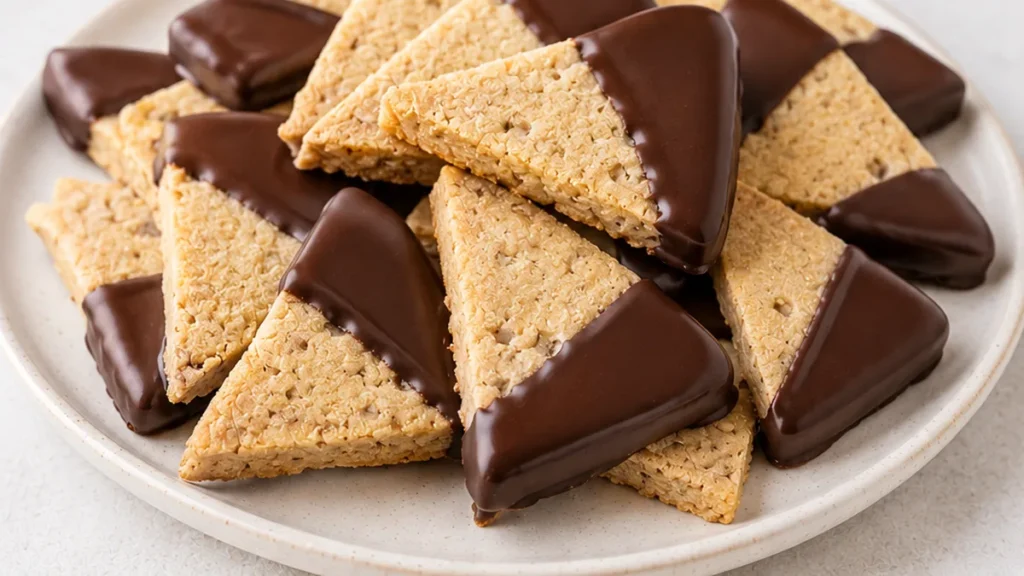
Chocolate shortbread cookies are a timeless classic, offering a perfect blend of buttery crumb and rich chocolate. This recipe is designed to be incredibly simple, ensuring a melt-in-your-mouth experience with minimal effort. The dough comes together quickly in the food processor, which makes this a go-to for last-minute cravings. If you love shortbread and crave that extra touch of indulgence, this chocolate shortbread recipe is for you. It’s perfect for holiday platters, afternoon tea, or simply a sweet treat to brighten your day.
Key takeaways
- Creaming butter and sugar until light and fluffy is crucial for tender shortbread.
- Mix flour in gently to avoid developing gluten, which causes toughness.
- Ensure chocolate is properly melted or tempered for a smooth, glossy coating.
- Bake until edges are lightly golden; cookies will firm up as they cool.
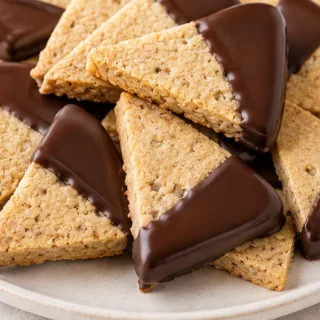
Chocolate Dipped Shortbread Cookies
Ingredients
- 2 sticks (227 grams) unsalted butter, at room temperature
- 3/4 cup (150 grams) light brown sugar
- 1/2 teaspoon fine sea salt
- 1 cup (100 grams) oats, old fashioned or quick cooking
- 1 1/2 cups (191 grams) all purpose flour
- 4 ounces (113 grams) semisweet or bittersweet chocolate
Instructions
- Preheat oven to 350°F (175°C). Line an 8 by 8-inch square baking pan with parchment paper or foil, leaving an overhang.
- Process all ingredients except the chocolate in a food processor until a smooth, soft, and slightly sticky dough forms.
- Press the dough evenly into the prepared pan. Bake for about 25 minutes, or until very lightly golden brown and set. Let cool completely. Remove the sheet of shortbread from the pan and cut into squares, then into triangles.
- In a medium microwave-safe bowl, microwave the chocolate for 45 seconds, then stir. Continue heating in 30-second bursts, stirring between bursts, until the chocolate is smooth.
- Dip each cookie in the melted chocolate, allowing excess to drip off. Place on a parchment-lined baking sheet and allow the chocolate to set.
- Store the cookies in an airtight container at room temperature for up to 5 days.
Notes
The Technique That Makes It
The success of these chocolate shortbread cookies hinges on two key techniques: proper creaming and controlled baking. Creaming the room temperature butter with light brown sugar and salt until light and fluffy incorporates air, which contributes to the cookie’s tender texture and slight lift. Avoid over-creaming, which can lead to tough cookies. The addition of oats provides a subtle chewiness and nutty flavor, but it’s crucial to use all-purpose flour to bind the ingredients and create the classic shortbread crumb. Overmixing the flour will develop gluten, resulting in a tough cookie rather than a tender, crumbly one. Therefore, mix the dry ingredients into the creamed butter mixture just until combined. For the chocolate dipping, ensure the chocolate is tempered or melted gently to achieve a smooth, glossy finish that sets firmly without becoming brittle. Using a double boiler or microwave on low power in short intervals prevents scorching.
Troubleshooting
- Cookies are too crumbly and falling apart: This often indicates insufficient mixing of the wet and dry ingredients, or that the butter was too cold. Ensure butter is at true room temperature and mix until just combined, but don’t underwork the dough to the point it won’t hold together.
- Cookies are too hard or tough: Overmixing the flour develops gluten, leading to toughness. Mix the flour in gently until just incorporated. Also, ensure you are not overbaking; cookies continue to firm up as they cool.
- Chocolate coating is dull or streaky: The chocolate may not have been tempered properly or was overheated. Re-melt the chocolate gently, ensuring it doesn’t exceed 110-115°F (43-46°C) for semisweet/bittersweet, and stir until smooth.
- Cookies spread too much during baking: This can happen if the butter was too soft or the oven temperature was too low. Ensure butter is softened but not melted, and verify oven temperature with an oven thermometer.
Substitutions
- Butter: For a slightly different flavor profile, you can substitute half of the unsalted butter with salted butter, omitting the added salt. The texture may be slightly less tender.
- Brown Sugar: Granulated sugar can be used, but the cookies will be crisper and less moist, with a less pronounced caramel note.
- Oats: While oats add a unique texture, they can be omitted entirely. Increase the all-purpose flour by 1/4 cup (32 grams) to compensate for the lost bulk and binding.
- Chocolate: Milk chocolate or white chocolate can be used for dipping. Note that milk chocolate is sweeter, and white chocolate has a lower melting point, requiring careful handling.
Pro tips
– Don’t overmix the shortbread dough; process until just combined to keep it tender, preventing a tough texture. Overmixing can develop the gluten too much. – Ensure the shortbread is completely cool before dipping in chocolate. Warm cookies will cause the chocolate to melt and slide off, preventing a clean set. – For easy cleanup and perfectly set chocolate, use parchment paper on your baking sheet after dipping. If the chocolate is taking too long to set, pop the tray into the fridge for 10-15 minutes. – Store the finished chocolate shortbread in an airtight container at room temperature for up to 5 days, or freeze for up to 2 months. Thaw at room temperature before serving.
This chocolate shortbread recipe delivers on simplicity and incredible flavor. Whether for a special occasion or an everyday indulgence, these cookies are sure to become a favorite. Enjoy the perfect balance of buttery shortbread and rich chocolate in every bite!
More from Sugar & Cut-Out Cookies →
Frequently asked questions
What is the ideal room temperature for the butter?
Butter should be softened but not greasy or melted. It should yield easily to gentle pressure from your finger, typically around 65-68°F (18-20°C). This allows it to cream properly with the sugar, incorporating air for a tender texture.
Can I use a food processor to mix the dough?
While a food processor can combine ingredients quickly, it risks overmixing the flour and developing gluten, leading to tough cookies. For shortbread, hand-mixing or using a stand mixer on low speed is preferred to maintain a tender crumb.
How do I know when the shortbread is baked enough?
Bake until the edges are lightly golden brown and the centers appear set, not wet. The cookies will continue to firm up as they cool on the baking sheet. Overbaking will result in hard, dry cookies.
What is the best way to dip the cookies in chocolate?
Melt the chocolate gently using a double boiler or microwave in short intervals. Dip about two-thirds of each cooled cookie into the melted chocolate. Place on parchment paper to set. For a cleaner look, you can use a fork to lift and drain excess chocolate.