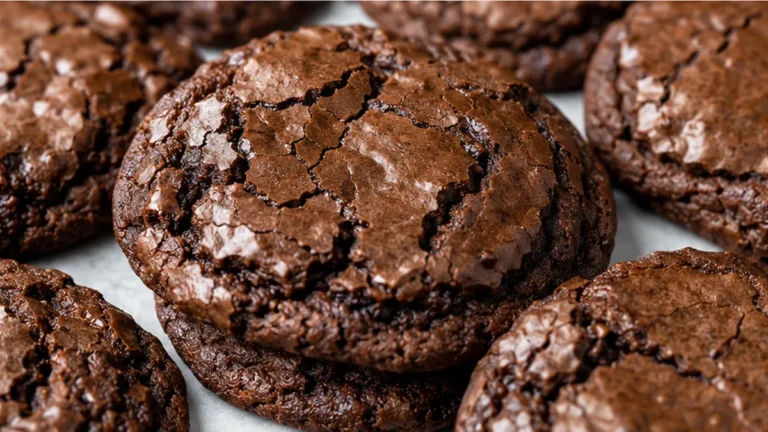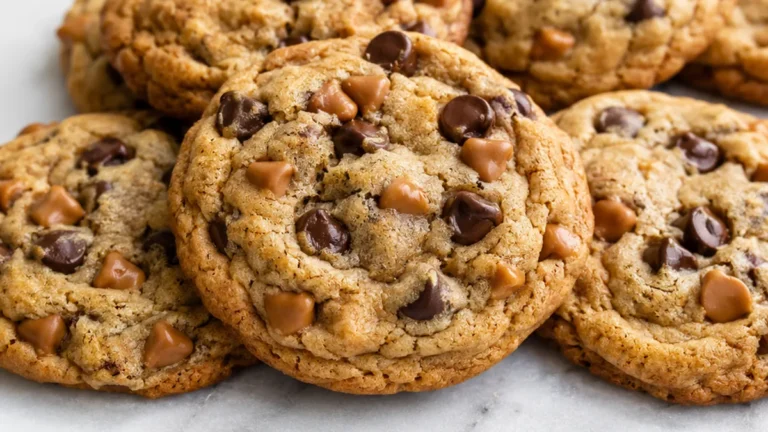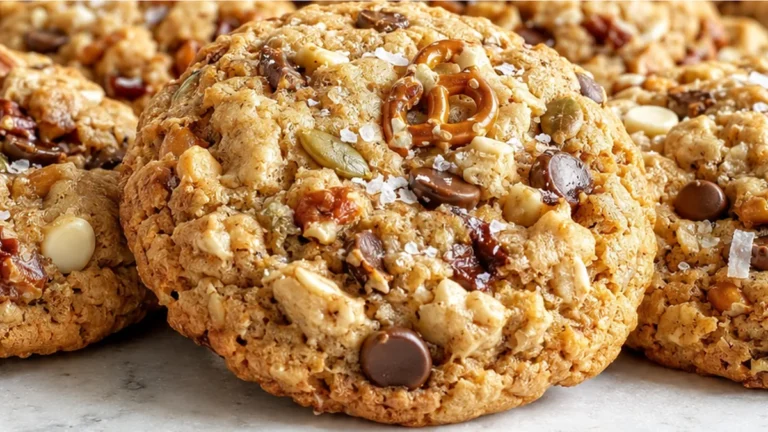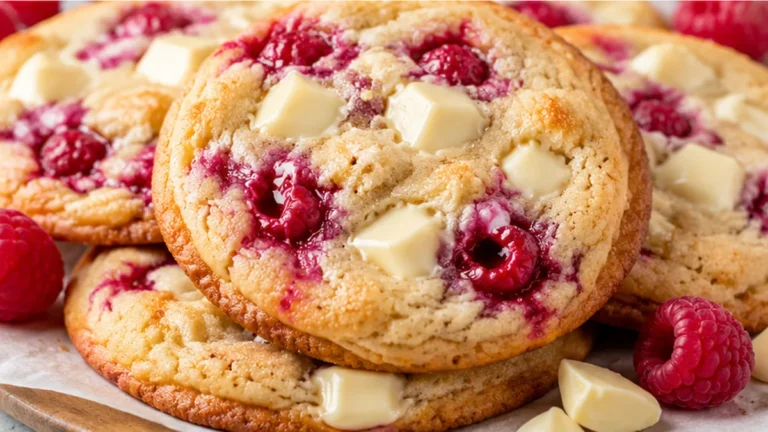
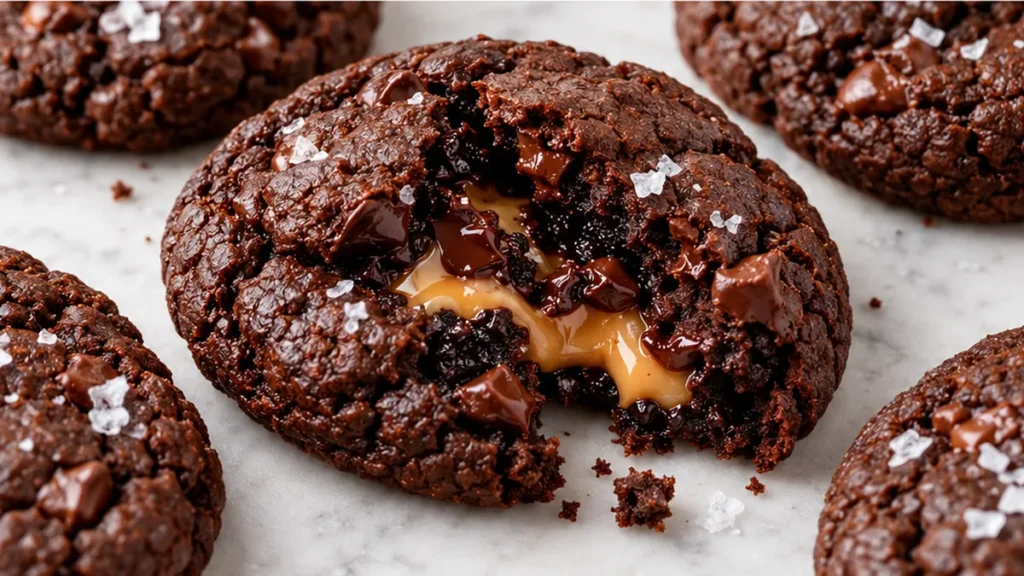
These salted caramel dark chocolate cookies are a perfect blend of rich chocolate and sweet caramel. Follow this straightforward recipe for a delicious treat.
Key takeaways
- Use a proper ratio of sugars for optimal texture.
- Monitor ingredient temperatures for best results.
- Experiment with substitutions for unique flavors.
- Flaky sea salt enhances the sweet and salty contrast.
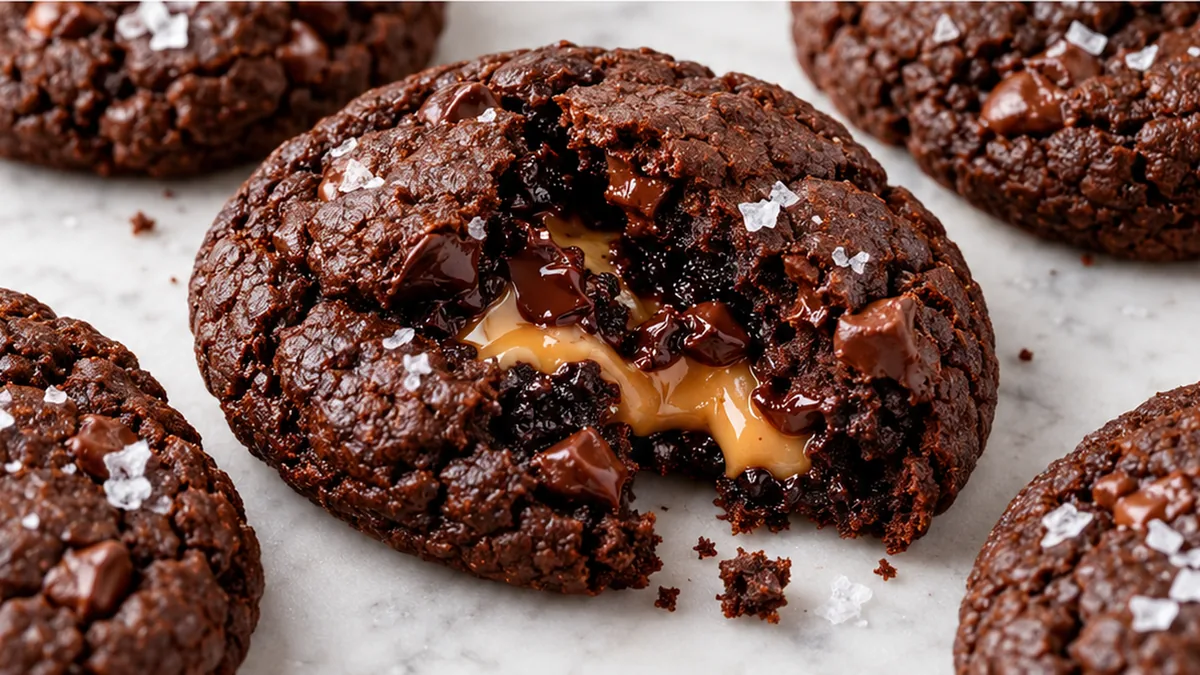
Salted Caramel Dark Chocolate Cookies
Ingredients
Method
- This cookie dough requires at least 3 hours of chilling, but overnight is preferred for easier handling.
- In a large bowl, beat the butter, granulated sugar, and brown sugar on medium-high speed for about 3 minutes until fluffy and light. Add the egg and vanilla, then beat until combined, scraping the bowl as needed.
- In a separate bowl, whisk the flour, cocoa powder, baking soda, and salt. Slowly add the dry ingredients to the wet on low speed until combined. The dough will be thick. Beat in the milk, then the dark chocolate chips on medium-high speed. The dough will be sticky. Cover and chill for at least 3 hours or up to 3 days.
- Remove dough from the refrigerator and let sit at room temperature for 10 minutes. Preheat oven to 350°F (177°C). Line baking sheets with parchment paper.
- Scoop 2 Tablespoons (40g) of dough, divide in half, and roll each half into a ball. Make a thumb indent in one ball, place a caramel candy in the center, then top with the other dough ball and seal. Repeat for all cookies.
- Arrange stuffed cookie dough balls 2
- Bake for 10-12 minutes, or until edges are set and centers are still soft. Let cool on baking sheets for a few minutes before transferring to a wire rack to cool completely.
The Science Behind Perfecting Salted Caramel Dark Chocolate Cookies
To achieve the ideal texture and flavor in salted caramel dark chocolate cookies, understanding the role of each ingredient is crucial. The balance of sugars, fats, and flour is essential. For example, using brown sugar adds moisture and a deeper flavor due to its molasses content, while granulated sugar contributes to the spread of the cookie. The ratio of flour to fat should generally be around 2:1 for cookies to ensure they hold their shape while remaining chewy.
Additionally, the temperature of your ingredients matters. Butter should be softened but not melted, ideally around 21-24°C (70-75°F). This temperature allows for proper creaming with sugars, which incorporates air into the batter and results in a lighter texture. Aim for a dough temperature of about 18-20°C (65-68°F) before baking, which can be achieved by chilling the dough for 30 minutes.
Common Issues and Their Solutions
Even experienced bakers can encounter issues when making salted caramel dark chocolate cookies. Here are some common problems and their solutions:
- Issue: Cookies spread too much.
- Fix: This often occurs due to warm butter or too little flour. Ensure your butter is at the correct temperature and consider adding a bit more flour.
- Issue: Cookies are too dry.
- Fix: This can happen if the dough is over-mixed or if too much flour is added. Mix just until combined and measure flour accurately.
- Issue: Caramel is too hard or too soft.
- Fix: Monitor the cooking temperature of the caramel closely. For a chewy consistency, cook it to around 115°C (240°F); for a firmer caramel, aim for 120°C (248°F).
Ingredient Substitutions and Their Effects
Making substitutions in your cookie recipe can lead to different textures and flavors. Here are some viable swaps:
- Substitution: Use coconut oil instead of butter.
- Effect: This will create a slightly denser cookie with a subtle coconut flavor.
- Substitution: Replace half of the all-purpose flour with whole wheat flour.
- Effect: This adds nuttiness and increases fiber, but may result in a drier cookie.
- Substitution: Use dark chocolate chips instead of semi-sweet.
- Effect: This will enhance the chocolate flavor and create a more intense cookie.
Unique Characteristics of Salted Caramel Dark Chocolate Cookies
What sets salted caramel dark chocolate cookies apart from other cookie recipes is the combination of sweet and salty flavors, which creates a complex taste profile. The addition of flaky sea salt on top enhances the sweetness of the caramel and the richness of the dark chocolate. This contrast is not only flavorful but also elevates the overall eating experience. Furthermore, the use of dark chocolate provides a depth that pairs beautifully with the caramel, making each bite a delightful balance of flavors.
How to Properly Store Salted Caramel Dark Chocolate Cookies
Storing salted caramel dark chocolate cookies correctly is essential to maintain their texture and flavor. Ideally, these cookies should be stored in an airtight container at room temperature. This prevents them from drying out and helps retain their chewy interior. If you want to keep them fresh for longer, consider refrigerating them, but ensure they are well-wrapped to avoid absorbing any odors. For even longer storage, you can freeze the cookies. Place them in a single layer on a baking sheet to freeze individually before transferring them to a freezer-safe bag. This method allows you to enjoy fresh cookies anytime by thawing them at room temperature for about 30 minutes.
Scaling the Recipe for Larger Gatherings
When scaling the recipe for larger gatherings, it’s crucial to maintain the correct ratios of ingredients to ensure the cookies turn out as intended. For instance, if you double the recipe, use double the amounts of each ingredient, including the eggs, which can sometimes be tricky. Instead of adding two whole eggs, consider using three eggs for a better texture, as the additional moisture can help maintain the cookie’s chewiness. Also, be mindful of baking times; larger batches may require a longer baking time, so check for doneness a few minutes earlier than you would for a single batch.
Choosing the Right Equipment for Baking
The equipment used for baking salted caramel dark chocolate cookies can significantly influence the final product. Using a dark, non-stick baking sheet can lead to a quicker browning of the cookies, which may not be ideal if you prefer a softer texture. Conversely, using a light-colored baking sheet helps distribute heat more evenly, resulting in a more consistent bake. Additionally, ensure your mixing bowls are large enough to handle the dough, especially when making larger batches. A stand mixer can be beneficial for thoroughly mixing the dough, but a hand mixer or even mixing by hand can also yield excellent results if done correctly.
Pairing Suggestions for Serving
Salted caramel dark chocolate cookies are not only delicious on their own but also pair well with various accompaniments. Serving them with a scoop of vanilla ice cream creates a delightful contrast of temperatures and textures. The creaminess of the ice cream complements the rich chocolate and salted caramel flavors. For a more sophisticated touch, consider pairing these cookies with a glass of red wine or a dark roast coffee, as the bitterness of the coffee enhances the sweetness of the caramel. Additionally, serving them alongside fresh fruit can provide a refreshing balance to the richness of the cookies.
Understanding the Role of Temperature in Baking Cookies
Temperature plays a crucial role in the baking process of salted caramel dark chocolate cookies. When butter is melted, it creates a different texture than when it is creamed. For optimal results, the butter should be at room temperature, around 20°C (68°F), which allows for better incorporation of air and results in a lighter texture. Additionally, chilling the dough for at least 30 minutes before baking can enhance the flavors and improve the cookie’s structure. This resting period allows the flour to hydrate fully and the fats to solidify, which helps in maintaining the shape during baking.
The Impact of Ingredient Quality on Flavor
The quality of ingredients significantly affects the flavor profile of salted caramel dark chocolate cookies. Using high-quality dark chocolate with a cocoa content of 60-70% will impart a richer taste and a more complex flavor. Similarly, using fresh, high-quality sea salt enhances the balance of sweetness and bitterness in the cookies. When using caramel, opt for homemade or artisanal varieties, as these will provide a deeper flavor compared to mass-produced options. The freshness of the eggs and butter also plays a role; using organic or farm-fresh products can elevate the overall taste of the cookies.
Batch Scaling: Adapting the Recipe for Different Occasions
Scaling the recipe for salted caramel dark chocolate cookies can be straightforward, but it requires careful consideration of ingredient ratios and baking times. If doubling the batch, keep the proportions of the ingredients the same, but monitor the baking time closely. Larger batches may require additional time in the oven, so check for doneness a few minutes earlier than expected. When scaling, ensure that your mixing bowl is large enough to accommodate the increased volume, and consider using a stand mixer for ease. For very large batches, it may be beneficial to bake in batches to maintain consistent results.
Understanding the Impact of Ingredient Quality on the Final Texture
The quality of ingredients plays a crucial role in the texture and flavor of salted caramel dark chocolate cookies. For instance, using high-quality dark chocolate with a cocoa content of 70% or higher can enhance the depth of flavor. Conversely, lower-quality chocolate may yield a waxy texture and less pronounced taste. Similarly, the type of flour used affects gluten development; all-purpose flour provides a balanced structure, while cake flour can yield a softer cookie. Additionally, fresh eggs contribute to a better rise and moisture retention. When selecting butter, opting for unsalted, high-fat butter can improve the cookie’s richness and flavor profile. In baking, precision matters; using a kitchen scale to measure ingredients ensures consistency in texture and taste.
Batch Scaling for Different Occasions
Scaling the recipe for salted caramel dark chocolate cookies requires careful consideration of ingredient ratios and baking times. For example, if you want to double the batch, maintaining the same proportions of butter, sugar, and flour is essential to avoid altering the texture. When increasing the batch size, keep in mind that larger quantities may require slight adjustments in baking time. Cookies baked on a larger sheet may need an additional minute or two to ensure even cooking. Furthermore, if you plan to make the dough ahead of time, consider chilling it for at least 30 minutes before baking to enhance the flavor and prevent spreading. This resting period allows the flour to hydrate and the flavors to meld, resulting in a superior cookie.
Pro tips
Pro tip: Best served immediately while hot!
Frequently asked questions
Can I use milk chocolate instead of dark chocolate?
Yes, you can use milk chocolate instead of dark chocolate. However, the flavor profile will be sweeter and less intense. Adjust the amount of sugar in the recipe if you prefer a less sweet cookie.
How do I store leftover cookies?
Store leftover cookies in an airtight container at room temperature for up to one week. For longer storage, consider freezing them in a single layer and then transferring to a freezer-safe bag.
What can I do if my caramel is too hard?
If your caramel turns out too hard, you can try reheating it gently with a little cream or water to soften it. Just be careful not to overheat it, as it can become grainy.
Can I make the dough ahead of time?
Absolutely! You can prepare the dough in advance and refrigerate it for up to 3 days or freeze it for up to 3 months. Just make sure to wrap it tightly to prevent freezer burn.
More from Chocolate Chip Cookies →