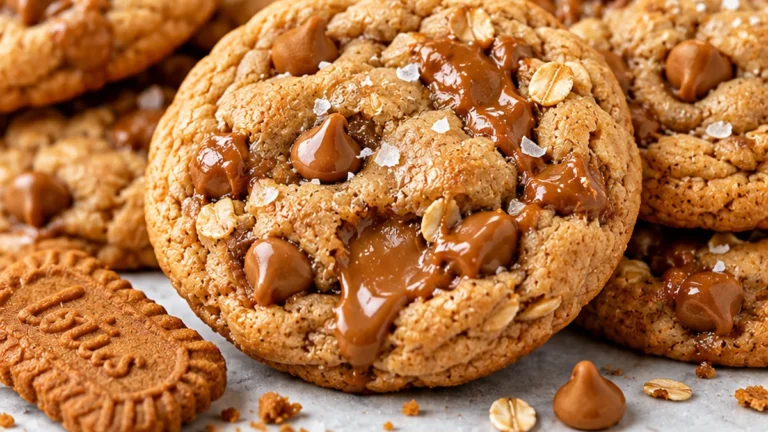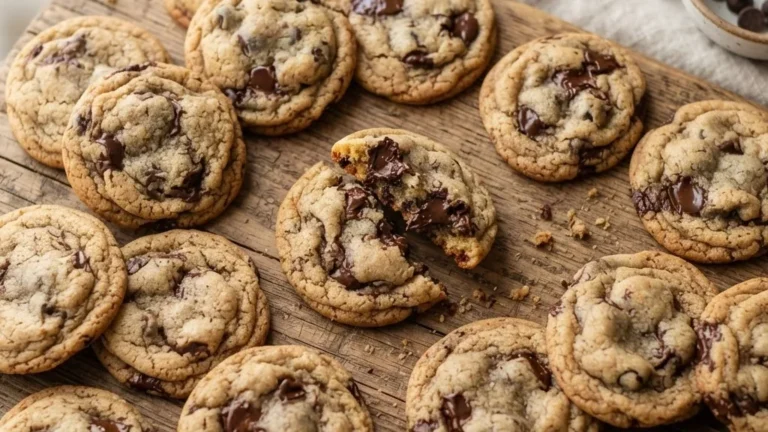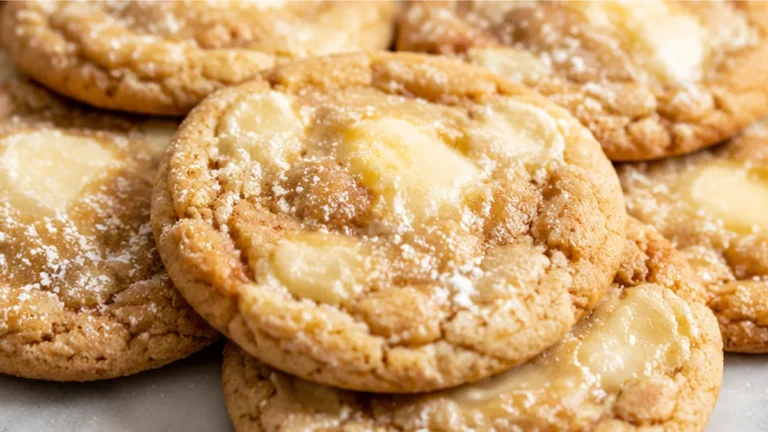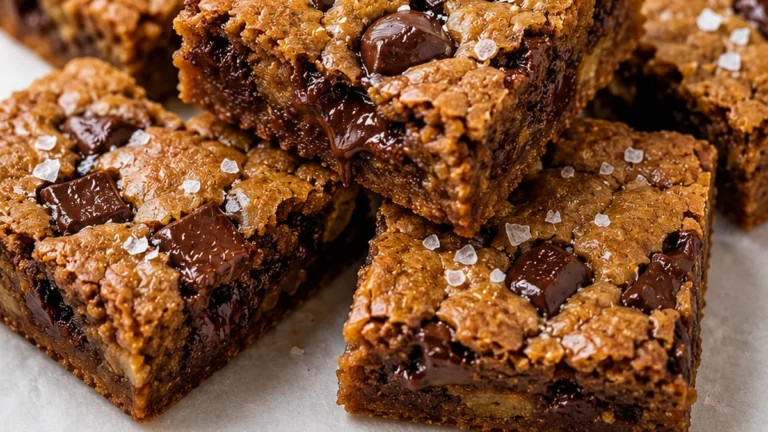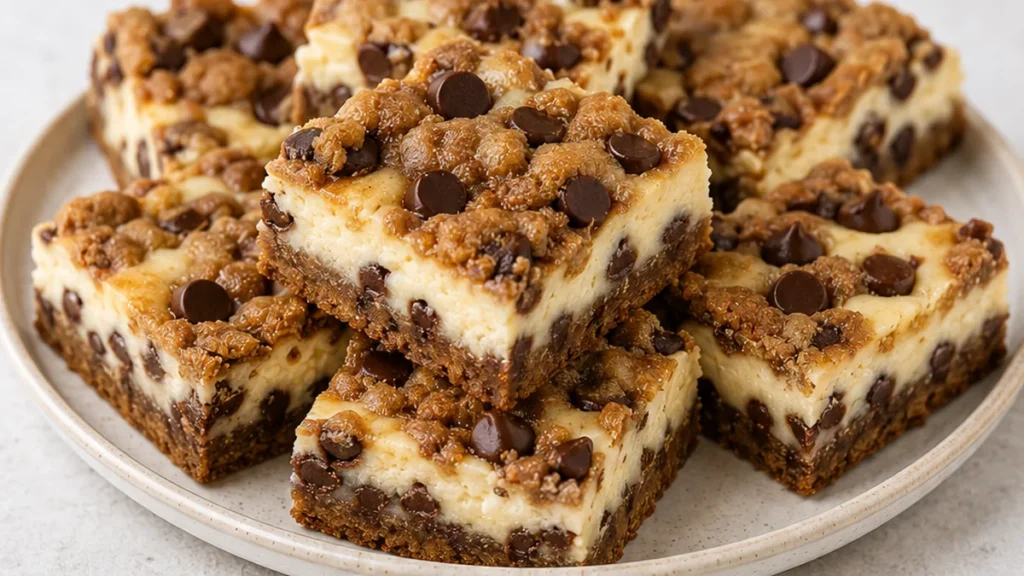
These irresistible cheesecake bars are the ultimate dessert for anyone who loves the classic combination of cookies and cream. These bars feature a rich, chewy chocolate chip cookie base and topping, sandwiching a luscious, tangy cheesecake filling, making them a truly unforgettable treat. I’ve found that the secret to the perfect texture in these cheesecake bars lies in using room-temperature ingredients for both the cookie dough and the cheesecake batter, ensuring a smooth, uniform consistency that bakes beautifully. They’re perfect for potlucks, parties, or simply satisfying that sweet craving.
Key takeaways
- Use butter at cool room temperature (67°F) for optimal creaming and texture.
- Cream butter and sugars thoroughly to incorporate air for chewiness.
- Do not over-mix the dry ingredients to avoid developing too much gluten.
- Brown sugar is key for moisture and chewiness; adjust baking time to prevent over-baking.
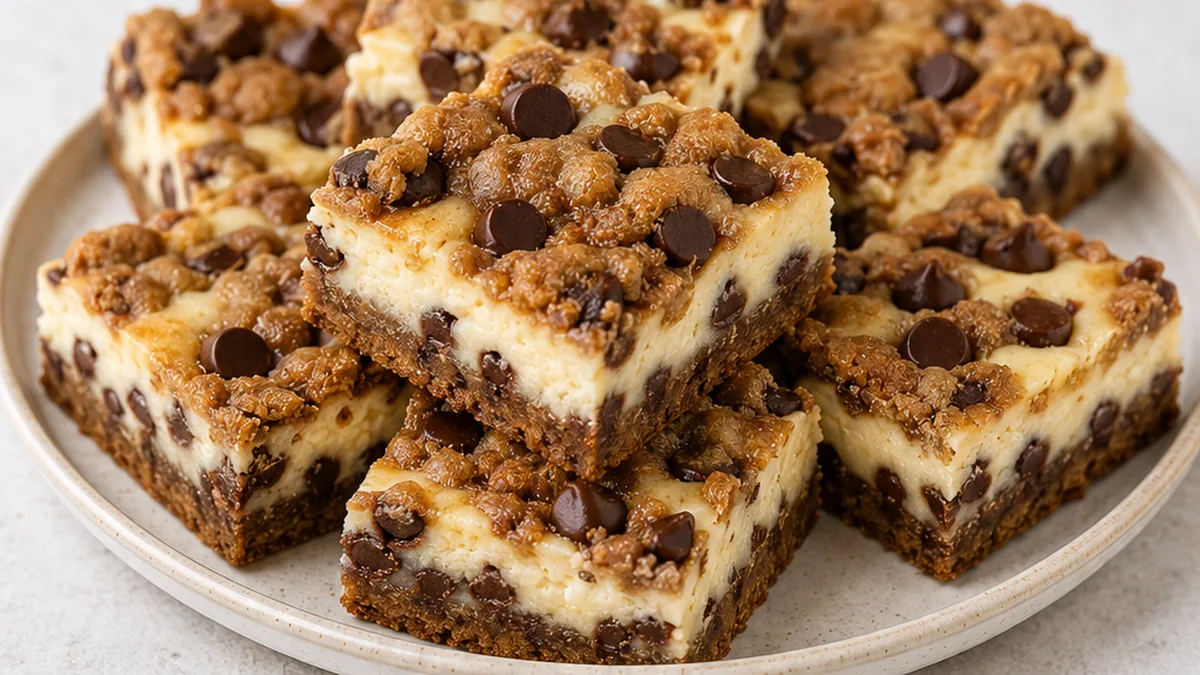
Chewy Chocolate Chip Cheesecake Bars
Ingredients
Method
- Preheat oven to 325°F. Line a 9×13-inch metal baking pan with parchment paper, leaving an overhang. Spray with nonstick spray.
- Prepare the cookie dough: In a medium bowl, whisk together the flour, salt, baking soda, and baking powder.
- In the bowl of an electric mixer fitted with the paddle attachment, beat the butter, dark brown sugar, and granulated sugar until lightened in color and fluffy in texture, about 3 minutes. Scrape down the sides and bottom of the bowl. Beat in the eggs, one at a time, until smooth and creamy. Beat in the vanilla, then scrape down the sides and bottom of the bowl. On low speed, gradually add in the dry ingredients. Fold in chocolate chips with a rubber spatula. Place cookie dough in fridge while you make the cheesecake layer.
- Prepare the cheesecake batter: In the bowl of an electric mixer fitted with the paddle attachment, beat the cream cheese and sugar, scraping down the sides and bottom of the bowl, until completely smooth and creamy, about 3 minutes. Add the eggs, one at a time, and beat until fully combined. Scrape down the sides and bottom of the bowl. Beat in the vanilla and salt. Set aside.
- Assemble: Press two-thirds of the cookie dough into an even layer in the prepared pan. Pour the cheesecake batter over the cookie dough and spread evenly. Drop the remaining cookie dough in small spoonfuls over the cheesecake layer. It doesn’t have to be perfect; the dough will spread during baking.
- Bake for 35-40 minutes, or until the edges are golden brown and the cheesecake is set but still slightly jiggly in the center. A toothpick inserted into the cookie dough portion should come out with moist crumbs. Let cool completely in the pan on a wire rack before lifting out with the parchment paper overhang and cutting into bars. Refrigerate for at least 2 hours before serving for best results.
Notes
The Technique That Makes Chewy Chocolate Chip Cheesecake Bars
The magic behind these chewy chocolate chip cheesecake bars lies in a few key techniques that ensure a perfect balance of textures and flavors. Firstly, the butter temperature is crucial. Using butter at a ‘cool room temperature’ (around 67°F or 19°C) is vital. This temperature allows the butter to be creamed effectively with the sugars, incorporating air for a lighter texture, but it’s not so warm that it melts. Melted butter would lead to a greasy bar with a dense, cakey texture rather than the desired chewiness. Creaming the butter and sugars until light and fluffy is the next critical step. This process aerates the mixture, contributing to the overall structure and chewiness. Over-mixing after adding the flour can develop the gluten too much, resulting in tough bars. Therefore, mix the dry ingredients into the wet ingredients only until just combined. Finally, the ratio of brown sugar to granulated sugar plays a significant role. The higher proportion of dark brown sugar, with its molasses content, contributes moisture and chewiness, while granulated sugar provides structure and crispness. Properly incorporating the chocolate chips at the end ensures they are distributed evenly without overworking the dough.
- Bars are too cakey or dry: This often happens if the butter was too warm, leading to over-creaming, or if the dry ingredients were over-mixed, developing too much gluten. Ensure butter is at the correct cool room temperature and mix the flour mixture in only until just combined.
- Bars are greasy: This is typically a sign of butter that was too soft or melted. Using butter at the specified cool room temperature prevents this.
- Cheesecake layer is cracking or uneven: While this recipe doesn’t have a distinct cheesecake layer, if you were to adapt it for a layered bar, over-baking the cheesecake component would cause cracking. For these bars, over-baking the entire mixture will lead to dryness. Bake until the edges are set and a toothpick inserted into the center comes out with moist crumbs attached.
- Bars are too hard or brittle: This can occur from over-baking or using too much granulated sugar relative to brown sugar. Ensure you follow the baking time closely and adhere to the sugar ratios for optimal chewiness.
- All-purpose flour: You can substitute half of the all-purpose flour with whole wheat flour for a slightly nuttier flavor and denser texture. The chewiness might be slightly reduced.
- Dark brown sugar: Light brown sugar can be used, but the bars will be less chewy and moist due to the lower molasses content. You could add an extra tablespoon of molasses to compensate.
- Semisweet chocolate chips: Milk chocolate chips or dark chocolate chunks can be substituted. Milk chocolate will make the bars sweeter, while dark chocolate chunks will provide larger pockets of intense chocolate flavor. White chocolate chips are also an option but will significantly alter the overall flavor profile.
- Unsalted butter: Salted butter can be used, but reduce the added salt in the recipe to 1/2 teaspoon to account for the salt in the butter. The texture may be slightly different depending on the fat content.
Pro tips
- Don’t overmix the cheesecake batter once the eggs are added; mix just until combined to prevent cracks. Overmixing can incorporate too much air, leading to a cracked surface.
- For perfectly set cheesecake bars, ensure they are fully cooled at room temperature, then chilled in the refrigerator for at least 2 hours. I personally find that chilling them overnight yields the best texture and makes them much easier to cut cleanly.
- Store leftover cheesecake bars in an airtight container in the refrigerator for up to 5 days, or freeze for up to 1 month. Thaw frozen bars in the refrigerator before serving.
These Chocolate Chip Cookie Cheesecake Bars are a surefire way to impress with minimal effort. Their irresistible combination of flavors and textures makes them a delightful treat for any occasion. Try them out and enjoy the perfect fusion of two beloved desserts!
More from Chocolate Chip Cookies →
Frequently asked questions
What does ‘cool room temperature’ mean for the butter?
Cool room temperature for butter is typically around 67°F (19°C). It should feel firm but yield slightly when pressed, not melted or greasy. This temperature is ideal for creaming with sugar to incorporate air without making the dough too soft.
Can I use a different type of chocolate chip?
Yes, you can substitute semisweet chocolate chips with milk chocolate, dark chocolate chunks, or even white chocolate chips. Each will alter the sweetness and flavor intensity. Dark chocolate chunks will offer larger pockets of chocolate, while milk chocolate will make the bars sweeter.
Why are my bars cakey instead of chewy?
Cakey bars usually result from over-mixing the flour, which develops gluten, or using butter that was too warm. Ensure you mix the dry ingredients only until just combined and use butter at the specified cool room temperature.
How do I know when the bars are perfectly baked?
The bars are ready when the edges are set and lightly golden brown, and a toothpick inserted into the center comes out with moist crumbs attached, not wet batter. Avoid over-baking, which leads to dryness and hardness.